Mossad chief comments on policy of assassinations in rare interview
October 14, 2019 2 Comments
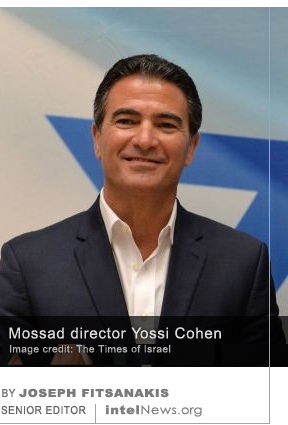 Yossi Cohen, the chief of the Mossad —Israel’s main external intelligence agency— said he has authorized “more than a few” assassinations during his tenure and warned that more may be on the way. Cohen, 57, who took command of the Mossad in 2016, spoke last week to Mishpacha, a magazine aimed at ultra-orthodox Jews. His comments were covered widely by Israeli media over the weekend.
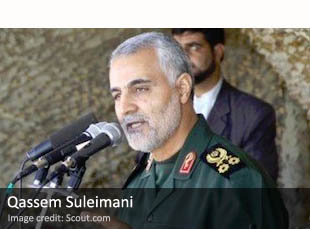
Cohen was asked to respond to recent allegations made by the Iranian government that Israel worked with “Arab countries” to assassinate General Qassem Suleimani, the head of the Quds Force, an elite paramilitary unit in Iran’s Islamic Revolutionary Guard Corps (IRGC). Suleimani claimed that several individuals were arrested last month in connection with the alleged plot. He also said that Israel tried to kill him and Hassan Nasrallah, leader of the Lebanese Hezbollah group, in 2006.
The head of the Mossad told Mishpacha that Suleimani had not “necessarily committed the mistake yet that would place him on the prestigious list of Mossad’s assassination targets”. However, “he knows very well that his assassination is not impossible” because “the infrastructure he built presents a serious challenge for Israel”, said Cohen. Regarding Nasrallah, Cohen said that the Hezbollah strongman “knows we have the option of eliminating him”. When asked why the Mossad had not exercised that option, Cohen said he preferred not to answer.
In regards to Hamas, the Palestinian militant group that controls the Gaza Strip, Cohen admitted that the Mossad has been behind a string of assassinations of Hamas officials around the world in recent years. “If there is one target that we eliminate without hesitation, it is Hamas officials abroad. [These range] from local agents to those who manage acquisitions of weapons pointed towards Israel”, said Cohen. He added that there had been “more than a few assassinations” in recent years, but not all were admitted to by Hamas. “The enemy has changed tactics. It is not quick to attribute assassination to us, for its own reasons”, said the Mossad chief.
► Author: Joseph Fitsanakis | Date: 14 October 2019 | Permalink








 intelNews.org
Analysis: Middle East on verge of new regional war as US kills top Iran general
January 3, 2020 by Joseph Fitsanakis 7 Comments
The United States, Israel and Saudi Arabia have targeted Soleimani for assassination for over a decade. In 2019 alone, Iran reported over half a dozen alleged plots to kill the general, the most recent of which was in early October. Soleimani’s killing is therefore not surprising. Moreover, Washington’s move rests on a number of crucial calculations by the White House, which help explain why US President Donald Trump made the decision to kill Soleimani, and why he did so now.
In the not-too-distant past, some of America’s tactical security goals aligned with Soleimani and his Quds Force —an elite unit inside the Islamic Revolutionary Guard Corps, which is tasked with exporting the Iranian Revolution abroad. The Iranian paramilitary unit helped Washington deal with the Afghan Taliban in the days after the 9/11 attacks, and its proxies in Iraq and Syria helped the US and its allies deliver fatal blows to the Islamic State. But in doing so, Tehran solidified its power within Iraq, turning its government into a satellite of Iran. The rise of the Popular Mobilization Forces (PMF), the Iranian-supported militias in Iraq, is largely a replay of the rise of Hezbollah, Iran’s paramilitary proxy in Lebanon, in the 1980s. Having painted themselves into a corner, America’s political leadership had to act. It chose to do so by essentially ‘decapitating’ the Quds Force, which is the main conduit between Iran and the PMF. It is worth noting that Abu Mahdi al-Muhandis, the deputy head of the PMF, was also killed in the same strike. Washington’s hope is that these killings can somehow prevent —or at least curtail— the Lebanization of Iraq. Read more of this post
Filed under Expert news and commentary on intelligence, espionage, spies and spying Tagged with Analysis, assassinations, Iran, Iraq, Islamic Revolutionary Guard Corps, Joseph Fitsanakis, Newstex, Qassem Suleimani, Quds Force, United States