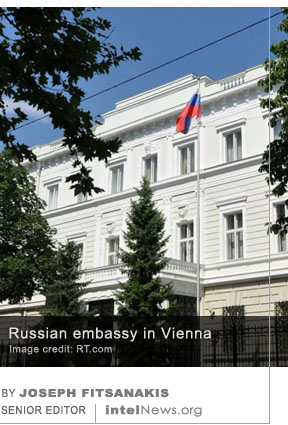
Russia expels Austrian diplomat in tit-for-tat move involving espionage claims

Russian embassy in AustriaRussia has expelled a diplomat stationed at the Austrian embassy in Moscow, just hours after the Austrian Ministry of Foreign Affairs expelled a Russian diplomat from Austria, allegedly for engaging in espionage. Austrian officials reportedly gave the unnamed Russian diplomat until Tuesday, September 1, to leave Austrian soil, in a move that surprised observers, given the close relations between Austria and Russia in recent years.

The Russian diplomat is accused by the Austrian authorities of engaging in “behavior that violated the Vienna Convention on Diplomatic Relations”. The Austrian Ministry of Foreign Affairs did not elaborate on the accusations against the diplomat, and refused to name him. However, the Vienna-based Kronen Zeitung newspaper, said on Monday that the Russian diplomat had carried out “industrial espionage” for several years. According to the paper, the Russian had recruited an Austrian citizen who worked for a technology firm to spy for Moscow. Austrian authorities arrested the man, who promptly identified the Russian diplomat as handler. The paper also said that, according to some sources, the man turned himself in to the authorities.

Later on Monday, the Russian Foreign Ministry summoned Johannes Aigner, Austria’s ambassador to Russia, and “strongly protested the unjustified course of action to cancel the accreditation of a Russian diplomat and order him to leave Austrian soil”. Moscow said in a statement its decision to expel an Austrian diplomat was “guided by the principle of reciprocity”. It is not known at this time how this incident will affect bilateral relations between Russia and Austria, which have been among Moscow’s warmest with a Western country in recent years.

Author: Joseph Fitsanakis | Date: 25 August 2020 | Permalink
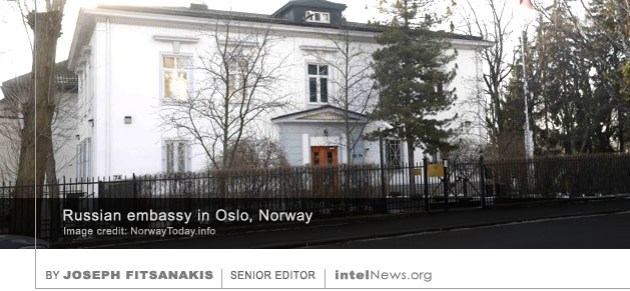
Norway expels Russian diplomat in espionage case involving Norwegian citizen

Russian embassy OsloThe government of Norway expelled a Russian diplomat on Wednesday, accusing him of committing espionage in a case that involves a Norwegian citizen, who has been arrested on charges of spying for Russia. Meanwhile local media named the Norwegian citizen involved in the case, while the Russian diplomat was also named yesterday in media reports.
As intelNews reported yesterday, a Norwegian citizen was arrested on Saturday, reportedly after he met with a Russian intelligence officer in an Oslo restaurant. The arrest of was announced on Monday by the Norwegian Police Security Service (PST), Norway’s counterintelligence agency. Norwegian authorities said the man had “access to information that would be of interest to foreign nations” through his work in the private sector.

On Wednesday, Norwegian media identified the man as Dr. Harsharn Singh Tathgar, a 50-year-old naturalized Norwegian citizen, who was born in India. Tathgar reportedly received his PhD in 2001 from the Norwegian University of Science and Technology in Trondheim, after completing research on the properties of nickel and magnesium in the department of Materials Technology. According to the PST, Tathgar has admitted sharing restricted information with the Russian diplomat. According to the judge who remanded Tathgar in custody on Monday, the Indian-born Norwegian man received from the Russians monetary compensation for his services that was “not insignificant”. It is also believed that Tathgar met his alleged Russian handler several times in the past year, or even longer.

The Russian diplomat was not arrested along with Tathgar, because he holds diplomatic immunity. However, he now appears to have been declared persona non grata in Norway. Representatives from Norway’s Ministry of Foreign Affairs told reporters on Wednesday the Norwegian government had “informed the Russian ambassador that one of his employees is unwanted in Norway and has been asked to leave the country”. The diplomat has been named as Aleksandr Stekolshchikov. He reportedly served as Deputy Trade Representative at the Russian embassy in Oslo. He now stands accused by the Norwegian government of engaging in “activities that are not in accordance with his role and status as a diplomat”. He has been given until the end of the week to leave the country.

Meanwhile, the Russian embassy in Oslo has filed a complaint with Norwegian authorities, claiming that a bag Stekolshchikov was carrying when he was confronted by the PST was illegally searched, despite his diplomatic status. The Russians also claim Stekolshchikov was “unjustly detained” by the PST following “a meeting with a Norwegian citizen”. Moscow is now accusing the Norwegian Foreign Ministry of violating the diplomatic status of its embassy personnel. Oslo has denied these accusations.

Author: Joseph Fitsanakis | Date: 20 August 2020 | Permalink

Norway arrests man for espionage that harmed ‘fundamental national interests’

Norway Police Security ServiceAuthorities in Norway will not release the name of a man who was arrested on Saturday, reportedly after he met with a Russian intelligence officer in Oslo. The arrest of the unnamed man, who is a Norwegian citizen, was announced on Monday by the Norwegian Police Security Service, Norway’s counterintelligence agency.
A prosecutor for the agency, Line Nyvoll Nygaard, told reporters that the man was observed by counterintelligence officers as he met with the alleged Russian intelligence officer at a restaurant. Little information is known about him. He is said to be in his 50s. According to Nygaard, he is believed to have “access to information that would be of interest to foreign nations” through his work.

The case is thought to be of significance, given that Norway’s Prime Minister, Erna Solberg, was notified about it over the weekend. According to reports in the Norwegian media, the case is about industrial espionage. The man is believed to be working, or to have worked, for DNV GL, a major provider of technical advice and services for energy companies around the world. The company is also a major force in the global shipping industry as an accredited registrar, meaning that it is licensed to classify and categorize ships.

According to Nygaard, the espionage case is significant enough to pose “a major threat to the core national interests of Norway”. The government will seek the maximum prison penalty of 15 years, she said. The man is currently being detained and will soon be facing a custody trial that is expected to take place in secret.

Author: Ian Allen | Date: 19 August 2020 | Permalink

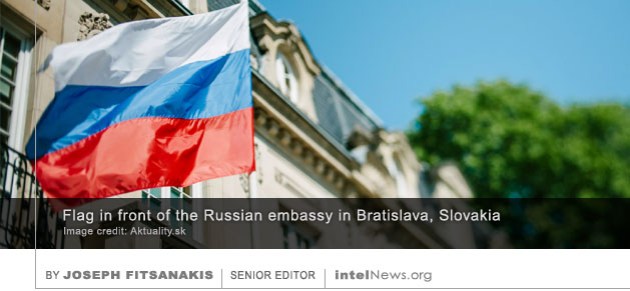
Slovakia expels three Russian diplomats in connection with 2019 murder in Berlin

Russian embassy in SlovakiaThree Russian diplomats have been ordered to leave Slovakia, reportedly in connection with the killing in Germany of a Chechen former separatist, which many believed was ordered by Moscow. On Monday, the Foreign Ministry of Slovakia confirmed media reports that three Russian diplomats had been declared ‘unwanted persons’ and ordered to leave the country.
The three diplomats are stationed at Russia’s embassy in Bratislava. They are believed to be intelligence officers operating under diplomatic cover. A spokesman from the Slovak Foreign Ministry issued a statement on Monday, citing “information from the Slovak intelligence services”, according to which the three Russians engaged in “activities [that] were in contradiction with the Vienna convention on diplomatic relations”. Additionally, said the statement, Slovak authorities had uncovered “an abuse of visas issued at the Slovak general consulate in St. Petersburgh, and in this connection a serious crime was committed on the territory of another European Union and North Atlantic Treaty Organization member state”.

The statement did not elaborate on the specifics of the “serious crime”, but Slovak media report that it refers to the killing last August of Zelimkhan Khangoshvili, a leading figure in the Second Chechen War, which pitted the Russian military against groups of Muslim fighters in the North Caucasus between 1999 and 2009. Khangoshvili, a Muslim born in Georgia, was a bodyguard of Aslan Maskhadov, the self-described leader of the Muslim separatists in the Northern Caucasus. In 2015, Khangoshvili sought political asylum in Germany after two men tried to kill him in Tbilisi. The German authorities initially placed him on a terrorism watch list, but removed him after he began to collaborate with German counterterrorist agencies and participate in programs designed to de-radicalize Muslim youth. He was shot in broad daylight in Berlin by a man wearing a wig and carrying a pistol fitted with a silencer. Officials from the Berlin prosecutor’s office said at the time there were “indications the deed was pre-planned and may have political motives behind it”. It is now believed that at least one of the men suspected of involvement in planning Khangoshvili’s killing had traveled from Russia to the European Union on a visa issued by the Slovakian consulate in St. Petersburgh.

The three Russian diplomats have reportedly been told that they have until this coming Sunday to leave Slovakia. The Russian embassy in Bratislava said it would not comment on the expulsions. Kremlin officials have strongly denied that the Russian government had any ties to the killing of Khangoshvili. Moscow has vowed to expel an equal number of Slovak diplomats from the Russian capital in the coming days.

Author: Joseph Fitsanakis | Date: 11 August 2020 | Permalink

Belarus arrests 33 Russians, accuses Kremlin of trying to subvert upcoming elections

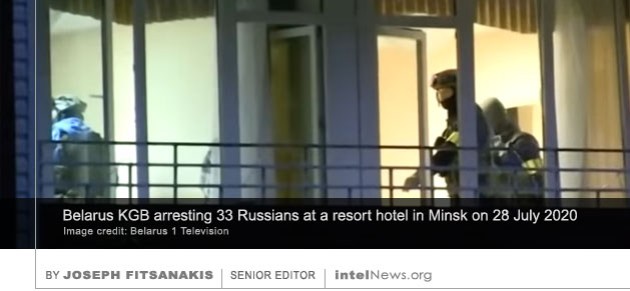
Belarus KGBBelarussian secret services announced on Wednesday the arrest of 33 Russian citizens, who are allegedly members of a Kremlin-backed private military firm. The government of Belarus accuses the Russians of trying to subvert next month’s presidential elections on behalf of Moscow. The 33 Russians were charged with terrorism against the state on Thursday. They are allegedly employees of Wagner Group, a private Russian military company that some believe is in reality a private paramilitary wing of the Russian Armed Forces. However, the Kremlin has denied these accusations and says it has no connections with Wagner.
On Wednesday the state-owned Belarus 1 television channel aired footage of the 33 Russians being placed under arrest by the Belarussian State Security Committee (KGB). The arrests were later confirmed by Andrey Rawkow, secretary of the Security Council of Belarus, an interdepartmental body that supervises national security operations in the country. Rankow said the Investigative Committee, Belarus’ primary investigating authority, had determined that the 33 had entered the country as part of a 200-strong group of Russians working for Wagner, in order to “destabilize the situation during the election campaign”.

Rankow was referring to the upcoming presidential elections of August 9, in which the country’s authoritarian leader, Alexander Lukashenko, will be seeking a sixth term in office. Since the collapse of the Soviet Union and the independence of Ukraine in 1991, Lukashenko has ruled the country with an iron fist. This time, however, partly because of the growing coronavirus crisis, his leadership is in dispute more than ever before and opposition protests have gripped the country in recent months.

Meanwhile, the close relationship between Minsk and Moscow has suffered numerous setbacks since 2018, as Russia’s economic struggles have forced the Kremlin to curtail its financial outreach to Belarus. There have been differences between the two countries over the price of energy that Belarus imports from Russia each year. Sensing his faltering support among the population, which is broadly mistrustful of Moscow, Lukashenko has campaigned on a largely anti-Russian ticket this time around, hoping to attract independent voters.

According to Belarussian state television, the 33 Russians were found in possession of Sudanese currency and a Sudanese smartphone card. Sudan is one of the Wagner Group’s most active areas of operation, according to some observers, and in the past the company has used Belarus as a transit center from which it coordinates its operations in the African continent. There were also reports in the state-owned Belarussian media that the 33 Russians were connected with the jailed husband of Sviatlana Tsikhanouskaya, a leading opposition presidential candidate. Tsikhanouskaya’s husband, Syarhey Tsikhanouski, is a blogger with substantial social-media following among younger voters. Some now suspect that the government will use this opportunity to bar Tsikhanouskaya from running for office.

Late on Wednesday, Belarus’ state-owned Belta news agency published the names and birth dates of all 33 Russian suspects. Soon afterwards, the government of Ukraine said its intelligence agency, the Security Service of Ukraine (SBU), had asked it to file extradition requests for the 33 Russians, who are believed to have worked with separatists in eastern Ukraine in recent years.

Author: Joseph Fitsanakis | Date: 31 July 2020 | Permalink

Britain to ‘modernize’ counterespionage laws following criticism from parliament

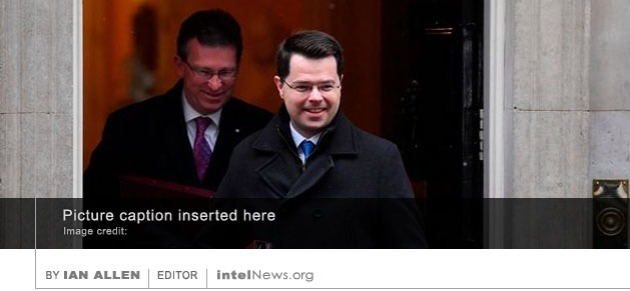
James BrokenshireSenior United Kingdom officials have said the country will seek to “modernize” its laws on counterespionage, after a long-awaited parliamentary report criticized the government for failing to stop Russian spy operations. Earlier this week saw the release of the report by the British Parliament’s Intelligence and Security Committee. The report [.pdf] focuses on Russia. It concludes that British intelligence agencies remain incapable of combating espionage and psychological operations by Russian spy agencies, of which many aim to influence British politics on a mass scale.
On Wednesday Britain’s Minister of State for Security, James Brokenshire, pushed back against the report’s findings that the government had failed to manage the thread posed by Russian intelligence activities on British soil. Speaking during an extraordinary meeting of parliament to discuss the report, Brokenshire rejected claims that a succession of British conservative administrations went out of their way to avoid investigating Russian spy activities. He claimed that the activities of the Kremlin remained one of Britain’s “top national security priorities”. During the same meeting, British Prime Minister Boris Johnson told members of parliament that “no country in the Western world is more vigilant in countering Russia” than the United Kingdom.

Some government officials said the government now plans to implement a new Espionage Bill, which is currently in the drafting stage, and is expected to provide the authorities with more powers to combat foreign espionage. Additionally, Whitehall is considering initiating a large-scale review of the Official Secrets Act and redrafting it so as to include a foreign agent registration clause. The proposed clause would resemble the Foreign Agent Registration Act in the United States, which requires those working or lobbying on behalf of a foreign government —except accredited diplomats— to register with the authorities.

This would allow British authorities to arrest, deport or imprison those found working on behalf of foreign powers, even if they are never caught committing espionage or transmitting classified information to a foreign entity.

Author: Ian Allen | Date: 23 July 2020 | Permalink

Analysis: British report into Russian meddling leads to uncomfortable conclusions

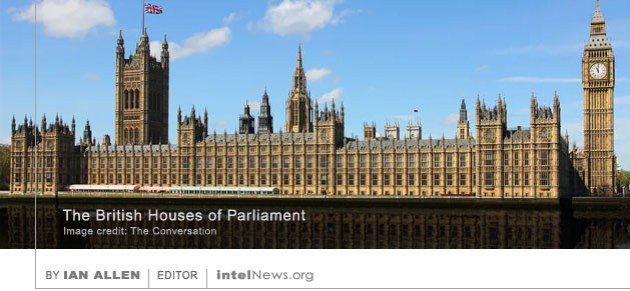
British parliamentBritain is abuzz today with news of the long-awaited release of the Parliament’s report [.pdf] into Russian meddling in British politics. The report is the work of the Parliament’s Intelligence and Security Committee. Since 2013, the Committee has been appointed to oversee the work of Britain’s intelligence agencies. Almost all of its meetings are conducted behind closed doors, and its reports are vetted by the spy agencies prior to release. By law, the Committee cannot make its reports public without previously submitting them for approval to the Office of the Prime Minister.

In the past it has taken no more than 10 days for the Committee’s reports to be approved by the prime minister. This particular report, however, which concerns —among other things— Russian meddling into British politics, took considerably longer. It was given to the prime minister on October 17. But by November 6, when parliament was dissolved in preparation for the election that brought Boris Johnson to power, it had not been approved. It finally came out yesterday, after numerous and inexplicable delays. Many speculated that the government did not want to deal with the uncomfortable conclusions in the report.
Like all reports of its kind, this one will be politicized and used by Britain’s major parties against their rivals. But behind the politicking, the report makes for uncomfortable reading indeed. It shows that, not just British, but Western intelligence agencies as a whole, remain incapable of combating online psychological operations from foreign state actors —primarily Russia— aiming to influence Western politics on a mass scale.

This is ironic, because Western spy agencies used to be really good on Russia. In fact, during the Cold War that is all they did. Many years have passed since then, and many leading Western experts on Russia have either retired or died. Additionally, the attacks of September 11, 2001, turned the attention of Western spy agencies to terrorism by groups like al-Qaeda, and away from Russia. Meanwhile, back in Moscow, President Vladimir Putin, a former KGB officer, rebuilt the state and sought to reclaim Russia’s lost international prestige. This plan includes a page from the old KGB playbook: destabilizing Western nations through psychological operations that accentuate existing extremist tendencies from the left or right. Read more of this post

Austrian financier dubbed ‘world’s most wanted man’ hiding under Russian protection

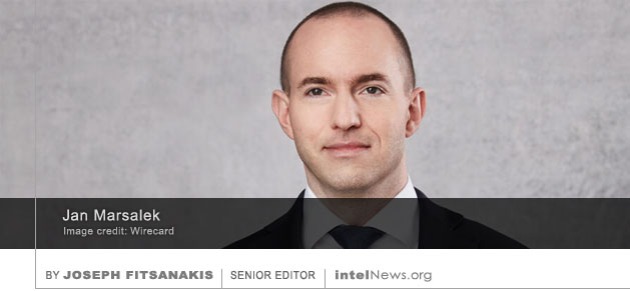
Jan MarsalekAn Austrian financier, who disappeared following the outbreak of a massive financial scandal in Germany last month, and is wanted by several Western spy agencies, is reportedly hiding under Russian protection. The financier, Jan Marsalek, dubbed by some as “the world’s most wanted man”, is connected with the sudden collapse of Wirecard AG in Germany last month.
Wirecard (est. 1999) was a German provider of financial services, such as mobile phone payment processing and other electronic payment transaction systems. The company also issued physical and virtual credit and pre-paid cards. But on June 25, the company declared itself insolvent, after an audit revealed that nearly €2 billion ($2.3 billion) in cash deposits were missing from its accounts. Soon afterwards, the company’s share value lost over 70 percent of its value and its management team, including its chief executive officer, Markus Braun, stepped down.

On June 22, Braun was arrested, and a criminal investigation was launched following reports that the missing €2 billion probably never existed in the first place. Meanwhile, German police sought to arrest Marsalek, who had worked as Wirecard’s chief operating officer since 2010. Marsalek, 40, was also in charge of Winecard’s operations in Asia and specifically the Philippines, where the fictitious €2 billion was reportedly deposited.

On June 18, after getting fired from his job, Marsalek told colleagues that he was leaving immediately for Manilla, in order to track down the missing funds and clear his name. However, he never arrived there, as he seemed to disappear into thin air on the way. An investigative report by The Financial Times revealed that Marsalek never made use of his airline ticket to the Philippine capital, and that the immigration records that showed him entering the country and then flying from there to China had been forged. This was later confirmed by the Philippines government.

According to the investigative website Bellingcat, Marsalek never went to the Philippines, but instead fled to Belarus via Estonia. By the time he arrived in Minsk, the Austrian financier was reportedly “a person of interest” to at least three Western spy agencies, and is now believed to have links to Russian intelligence. Bellingcat said Marsalek has made over 60 trips to Russia since 2010, in some cases staying on Russian soil for just a few hours before flying back to Germany. He is also wanted by several European governments on charges of embezzlement and fraud.

On Sunday, German financial newspaper Handelsblatt said Marsalek had been located in Russia and was allegedly staying at a villa outside Moscow, under the protection of Russian military intelligence. The newspaper claimed that the Austrian financier was being protected by officers of the Main Directorate of the General Staff of the Russian Armed Forces, which is commonly known as GRU. According to Handelsblatt, the current tension in relations between Russia and Belarus made it “too risky” for the Kremlin to keep Marsalek in the Belarussian capital. The decision was therefore made to secretly transport him to Moscow.

The German newspaper said it found out about Marsalek’s whereabouts from sources including “financiers, judges and diplomats”. On Monday the Russian government said it had no information about Marsalek’s current whereabouts. It also denied that the Austrian financier has any ties to its intelligence services.

Author: Joseph Fitsanakis | Date: 21 July 2020 | Permalink

News you may have missed #911

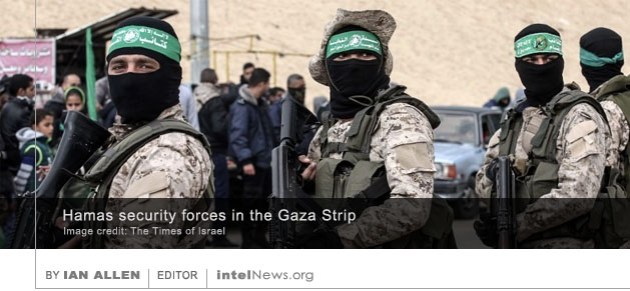
HamasAnalysis: The outstanding issue of the Libyan intelligence services. The post of Chief of the Libyan Intelligence Service of Tripoli’s Government of National Accord (GNA) is still vacant. Therefore, this is an optimal situation for the Head of Tripoli’s government, who is currently pro tempore Director of the GNA agencies, while the struggle for the next Intelligence Service director is intensifying.

Hamas admits one of its number spied for Israel before defecting. Hamas deputy leader Moussa Abu Marzouk has confirmed Arabic media reports that Hamas commander Mohammad Abu Ajwa collaborated with and subsequently defected to Israel. The defection was first reported by Al-Arabiya, which said that Israel’s Mossad spy agency had recently facilitated the escape of senior commander Mohammad Abu Ajwa. According to Al-Arabiya, Abu Ajwa had previously led Hamas’s naval special forces.

Russia used US intelligence to target dissidents in Europe. Russia routinely exploited a US policy of increased information sharing to target Chechen dissidents, according to three law-enforcement and intelligence officials in Europe. The practice emerged after the Trump administration backed a policy of sharing more secret information with Russia, in hope of strengthening relations.

Belgium knew about Russian bounty offered to Taliban, defense minister says

Belgian German AfghanistanBelgium’s spy services were aware of financial rewards that Russia allegedly offered to the Taliban in exchange for killing American and other Western troops in Afghanistan, according to Belgium’s defense minister. Late last month, three leading American newspapers, The New York Times, The Washington Post and The Wall Street Journal alleged that the White House had been briefed about an alleged Russian bounty program that was in existence in Afghanistan. According to the allegations, the Main Directorate of the General Staff of the Russian Armed Forces, known as GRU, had offered Taliban fighters financial rewards in exchange for killing American and other North Atlantic Treaty Organization (NATO) troops. Both the White House and the Kremlin denied the allegations, with US President Donald Trump dismissing them as “fake news” and “a hoax”.

On Wednesday, Philippe Goffin, who serves as Belgium’s Minister of Foreign Affairs and Minister of Defense, told the Belgian Federal Parliament that his office was aware of the Russian bounty program. The minister was speaking before the parliament’s Committee on National Defense, where he responded to questions from committee members. According to Goffin, he had been briefed on the matter by the General Intelligence and Security Service (SGRS), Belgium’s military intelligence organization. He said the SGRS was “aware of Russian support for the Taliban in Afghanistan” and offered evidence that “confirmed Russian interference there”. He added that the Belgian intelligence services had linked “only one incident” to the Russian bounty program. It had occurred in April of 2019, and had resulted in the deaths of three American soldiers, he said.

Belgium is a founding member of NATO and hosts the alliance’s headquarters in its capital, Brussels. The country until recently participated in the NATO joint force in Afghanistan, but recalled its troops home in May due to the coronavirus pandemic.

Author: Joseph Fitsanakis | Date: 17 July 2020 | Permalink

Russia arrests space agency employee for giving secrets to NATO country

Ivan SafronovRussia’s security service has arrested the media advisor to the director of the country’s space agency, accusing him of supplying military secrets to a spy agency of an unnamed Western country. The Russian Federal Security Service (FSB) announced on Tuesday the arrest of Ivan Safronov, a former journalist specializing in military affairs.
Safronov was the military correspondent for the Russian newspaper Kommersant, which is described by some as the Russian equivalent of Britain’s Financial Times. He then worked as a military affairs reporter for Vedomosti, a Moscow-based financial daily, which has a reputation for independence from the Kremlin. He briefly represented the paper in the Kremlin pool of journalists, who accompany the Russian President Vladimir Putin on official trips.

Safronov resigned from Vedomosti last spring, along with several of his colleagues, following a dispute with the newspaper’s management over editorial freedom. In May he was hired by the Russian space agency, the Roscosmos State Corporation for Space Activities, where he now works as a media advisor for Dmitry Rogozin, the agency’s director-general.

On Tuesday, the FSB issued a statement to the press saying it had arrested Safronov for carrying out espionage for a foreign country. The statement said Safronov had “collected and surrendered to [the foreign nation’s] representative state secrets and information about military-technical cooperation and about the defense and security of the Russian Federation”. According to the FSB, the person that Safronov is alleged to have shared state secrets with is an intelligence officer of a North Atlantic Treaty Organization member state. However, the Russian security agency did not name the country in its statement to the media.

Also on Tuesday, the FSB published video footage showing Safronov being arrested by a group of plainclothes FSB agents outside his Moscow apartment. The agents are seen approaching Safronov and searching him before putting him inside an unmarked van and driving away. He has not been seen in public since, and some have suggested that Russian authorities have not permitted lawyers to contact him.

Following the statement by the FSB, reports in the Russian media claimed that Safronov had been approached repeatedly by security officers in the past and questioned about his work as a journalist. Some of Safronov’s colleagues have said on social media that he was arrested due to his political views, rather than alleged espionage activities. Meanwhile, Roscosmos director Rogozin told Russian media that Safronov did not have access to classified information, so it was unlikely that his arrest was related to his work at the space agency.

Safronov’s trial is expected to take place behind closed doors, due to the nature of the charges he is facing. If found guilty, he could face up to 20 years in prison.

Author: Joseph Fitsanakis | Date: 08 July 2020 | Permalink

As debate centers on Afghanistan, Russian forces challenge US troops in Syria

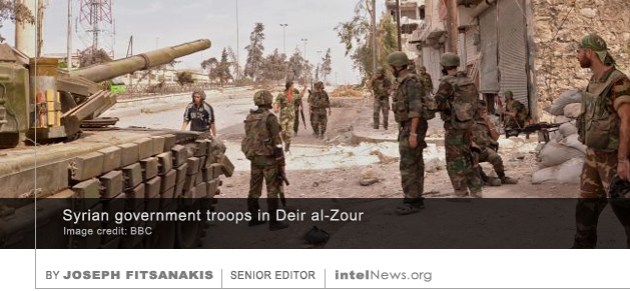
Deir al-Zour SyriaAs an intense debate rages in the United States about Moscow’s alleged subversion of American military goals in Afghanistan, sources warn that Russia is increasingly challenging Washington’s troops in Syria. Recent reports have alleged that the Kremlin has been offering financial rewards to Taliban fighters encouraging them to kill US troops in Afghanistan. The Russian government has denied these allegations, while the White House claims it was never briefed about this by the Intelligence Community.
Some experts suggest, however, that Russia’s growing involvement in Afghanistan may be part of a wider effort by Moscow to test the limits of American military presence in Asia. This can be seen as a predictable response by the Russians, given that US President Donald Trump has repeatedly indicated he is not a fan of substantial American military involvement abroad. According to a new report by Politico, Russia’s challenge can be observed, not only in Afghanistan, but also in Syria, where American and Russian troops have been present in the same battlespace for over five years now.

In the past, the two militaries have kept open lines of communication to ensure that they stay clear from each other, thus avoiding a major escalation between the two nuclear-armed nations. Consequently, despite supporting opposing sides in the war, Russian and American troops have not directly challenged each other, with very few exceptions. Presently Russian forces continue to support of the Syrian President, Bashar al-Assad, while several hundred US forces are working closely with Kurdish fighters, who control territory in eastern Syria.

Despite the pullout of most American troops from the region in the past two years, the US maintains a force of nearly 1,000 soldiers in the Deir al-Zour region of eastern Syria. These are closely coordinating with Kurdish peshmerga, whose primary tasks include guarding the region’s lucrative oil fields, thus starving the government of President al-Assad of a major source of revenue. In the past, Russian troops have rarely ventured in the Kurdish-controlled region, in full knowledge of the US military presence there. Lately, however, brushes between American and Russian troops in Deir al-Zour have been “increasingly frequent”, according to Politico, which cited “two current US officials and one former US official” in its report. Read more of this post

News you may have missed #909 – Insurgency edition

Al-Hawl refugee campSouth African intelligence concerned about spread of insurgency in Mozambique. This is the first public expression of concern from the South African government that the violence in neighboring Mozambique could spread. Previously, the South African Parliament was informed the matter was only to be discussed behind closed doors. Earlier in June, the South African military reportedly participated in Operation COPPER, in support of the Mozambican Defense Force.
US intelligence says Russia offered Afghans Bounties to kill US troops. American intelligence officials have concluded that a Russian military intelligence unit secretly offered bounties to Taliban-linked militants for killing coalition forces in Afghanistan — including targeting American troops — amid the peace talks to end the long-running war there, according to officials briefed on the matter. The intelligence finding was briefed to President Trump, and the White House’s National Security Council discussed the problem at an interagency meeting in late March, the officials said.

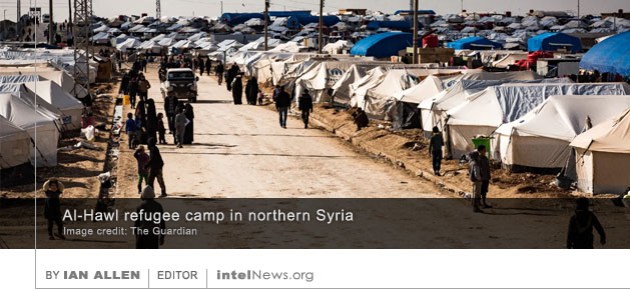
Analysis: The security risk posed by ISIS women smuggling their way out of camp Hol. While a debate rages in Europe over whether or not ISIS women and their children can be repatriated to their European home countries, some women have been taking things into their own hands and returning via illegal smuggling networks, creating new and serious security issues with which European officials must now grapple.

Russia accuses its top Arctic scientist of giving China submarine secrets

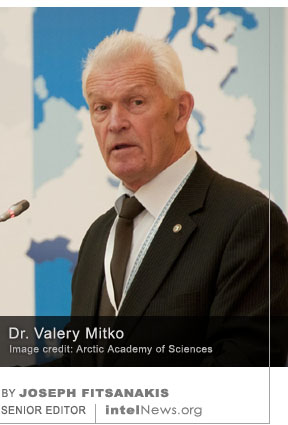
Valery MitkoRussian prosecutors have accused one of the country’s most respected hydroacoustics specialists, and globally recognized expert on the Arctic region, of spying for Chinese intelligence. This development highlights the competitive relationship between the two neighboring countries, who in recent years have tended to work together against what they perceive as a common threat coming from the United States.


The scientist in question is Dr. Valery Mitko, a St. Petersburgh-based hydroacoustics researcher, who is also president of Russia’s Arctic Academy of Sciences. Investigators with the Federal Security Service (FSB), Russia’s domestic security and counterintelligence agency, are accusing Dr. Mitko, 78, of having provided classified documents to Chinese intelligence.

The FSB first detained Dr. Mitko in February, when he returned from a stint as a visiting professor at Dalian Maritime University. Located in China’s northeastern Liaoning province, near the North Korean border, Dalian Maritime University is considered China’s foremost higher-education institution on maritime subjects, with many of its research projects funded directly by the Chinese Ministry of Transport. According to sources, Dr. Mitko gave a series of lectures at Dalian University in early 2018.

Upon arriving back to Russia from China, Dr. Mitko was detained and placed under house arrest. The FSB now claims that the Russian scientist gave the Chinese classified information relating to the underwater detection of submarines. The agency alleges that Dr. Mitko received payments in return for sharing this information with Chinese spies. However, Dr. Mitko’s lawyers argue that the information he shared with the Chinese “came from open sources”, and that he never knowingly came in contact with Chinese intelligence operatives.

There have been several arrests of Russian academics in recent years, who have been accused by the FSB of providing China with classified information. Last week saw the release from prison of Vladimir Lapygin, a 79-year-old avionics researchers, who was jailed in 2016 for allegedly giving China classified information on Russian hypersonic aircraft designs. In 2018, Russian authorities charged Viktor Kudryavtsev, a researcher at a Russian institute specializing in rocket- and spacecraft design, with passing secret information on spacecraft to researchers at the Von Karman Institute for Fluid Dynamics in Belgium. The FSB claimed that some of that information ended up in Chinese hands.

If convicted of the crime of espionage against the Russian state, Dr. Mitko faces a prison sentence of up to 20 years. He denies the charges against him.

Author: Joseph Fitsanakis | Date: 16 June 2020 | Permalink

Austrian court finds unnamed retired Army colonel guilty of spying for Russia

Igor Egorovich ZaytsevA court in Austria has found a retired Army colonel guilty of providing classified military information to Russia, following a closed-door trial. Interestingly, the alleged spy’s name has not been made public. Some Austrian media have been referring to him as “Martin M.”.

The retired colonel was arrested in November of 2018, reportedly after having recently retired following a long military career. Austria’s Defense Ministry said at the time that the arrest came after a tip given to the Austrian government by an unnamed European intelligence agency from a “friendly country”. Martin M. reportedly served in peacekeeping missions in the Golan Heights and Cyprus before being posted at one of the Austrian Armed Forces’ two headquarters, located in the western city of Salzburg. It was around that time, say prosecutors, that the unnamed man began spying for Russia. Starting in 1992, he was in regular contact with his Russian handler, who was known to him only as “Yuri”.

“Yuri” was later identified by Austrian authorities as Igor Egorovich Zaytsev, who is allegedly an intelligence officer for the Main Directorate of the General Staff of the Russian Armed Forces. Known as GRU, the organization is Russia’s primary military-intelligence agency. The Austrian government has issued an international arrest warrant for a Zaytsev.

Zaytsev reportedly trained Martin M. in the use of “sophisticated equipment”, according to the Austrian prosecutor, which he used to communicate classified information to Moscow. He is thought to have given Russia information on a range of weapons systems used by the Austrian Army and Air Force, as well as the personal details of high-ranking officers in the Austrian Armed Forces. Austrian media initially reported that the alleged spy was paid nearly $350,000 for his services to Moscow.

During his trial, Martin M. reportedly admitted that he had received payments form the Russians to provide information. But he claimed that the information he gave them was already publicly available. His legal team compared his role to that of a “foreign correspondent” for a news service. The court, however, did not accept that argument and on Tuesday sentenced Martin M. to three years in prison.

Soon after his sentencing, the defendant was released on parole, after the court counted the 18 months he has served behind bars since his arrest as part of his prison sentence. His legal team said they plan to appeal the sentence.

Author: Joseph Fitsanakis | Date: 11 May 2020 | Permalink