Saudi Arabia’s recently deposed crown prince reportedly under house arrest
June 30, 2017 1 Comment
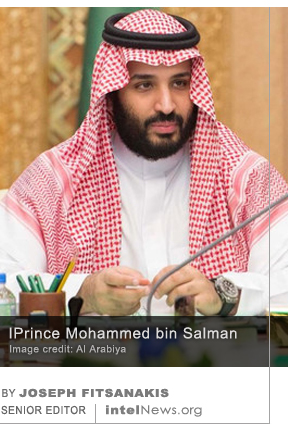 One of Saudi Arabia’s most powerful men, who until last week was first in line to the throne, is reportedly under house arrest. If true, this development would reveal a deep and growing division within the ruling House of Saud. Until the early hours of June 21, Crown Prince Mohammed bin Nayef, 57, was the officially appointed successor to the Saudi ruler, King Salman. In addition to running the country’s feared security services, Prince Nayef was close to Washington, and is a trusted friend of numerous American intelligence officials. But on June 21, King Salman announced radical changes to the line of succession to the throne, stunning the Saudi establishment and international observers alike. The announcement, which came shortly after midnight, completely deposed Prince Nayef from the line of succession.
In Prince Nayef’s place, the King appointed his favorite son, Mohammed bin Salman, 31, who is now the new crown prince. Prince Salman was virtually unknown until 2015, when his father became monarch. He quickly appointed him to Secretary of Defense in the oil kingdom. Since that time, Prince Salman —the world’s youngest defense minister— has been tasked with overseeing Saudi Arabia’s oil monopoly, and finding ways to diversify the country’s economy. Additionally, he has raised eyebrows at home and abroad, by promoting an aggressive foreign policy in Yemen and Syria. He is also believed to have spearheaded Riyadh’s aggressive foreign-policy maneuvers in relation to Iran and Qatar.
Since the day of the surprise announcement, Prince Nayef has virtually disappeared from public life. It subsequently emerged that he was also fired from his post as Minister of Interior, and replaced by one of his nephews. According to The New York Times, the reason for the prince’s disappearance is that he has been virtually under house arrest. Citing “four current and former American officials” and an unspecified number of “Saudis close to the royal family”, The Times said on Wednesday that Prince Nayef has been “confined to his palace” in the coastal city of Jeddah. The paper alleged that, as soon as he went to his palace in the early hours of Wednesday, the prince found that his trusted security guards had been secretly dismissed and replaced with men who are loyal to Prince Salman.
Sources in the Saudi government, who are close to the king, have dismissed The Times’ report as “baseless and false”. However, no member of Prince Nayef’s inner circle has come forward to dismiss the allegations about his house arrest. If true, the reports would suggest that there is a deep split inside the Saudi royal family and that Prince Nayef, along with members of his immediate family, are being kept in isolation from their supporters.
Meanwhile, there have been no comments from Western governments on Prince Nayef’s surprise dismissal. Regular intelNews readers will recall a leaked German intelligence report from 2015, in which Prince Salman —who is now first in line to the throne— was described as spearheading an “impulsive policy of intervention”. The report, authored by the German Federal Intelligence Service, known as BND, warned that Prince Salman’s radical maneuvers were jeopardizing the Kingdom’s relationship with important regional allies and with Washington. Things have changed since then, however, with the ascent of Donald Trump to the White House. The new American president and his senior aides have repeatedly expressed strong support for King Salman and his son.
► Author: Joseph Fitsanakis | Date: 30 June 2017 | Permalink
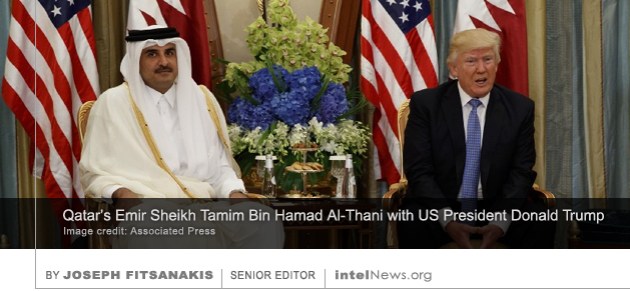 A former director of Qatar’s intelligence agency broke ranks with the government of Qatar and accused Doha of supporting terrorism. He also warned that the United States, which has a base in Qatar, would not allow the presence of foreign troops there.
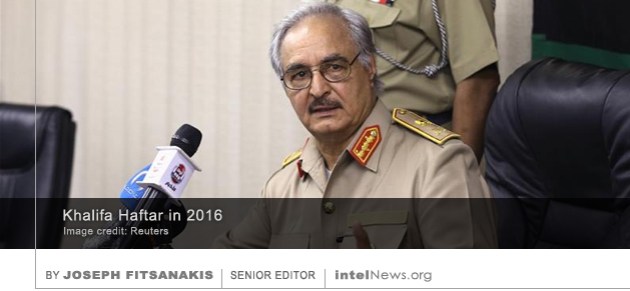 Secret military assistance from the United Arab Emirates and Saudi Arabia, which violates United Nations sanctions, is helping Libya’s eastern-based rebels prevail in the civil war there, according to a new report. Libya has remained in a state of anarchy since 2011, when a popular uprising backed by the West and its allies led to the demise of the country’s dictator, Muammar Gaddafi. Currently the strongest faction in the post-2011 Libyan Civil War is the eastern-based Tobruk-led Government, which is affiliated with the Libyan National Army (LNA). The commander of the LNA is Field Marshal Khalifa Haftar, an old adversary of Colonel Gaddafi, who lived in the US under Washington’s protection for several decades before returning to Libya in 2011.
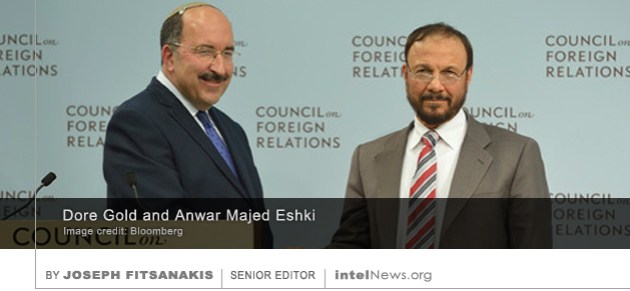 Representatives from Israel and Saudi Arabia have publicly admitted for the first time that they met secretly to discuss their common foe Iran, even though Saudi Arabia does not officially acknowledge Israel’s existence. The admission was made at a symposium held on Thursday at the Council on Foreign Relations, a foreign-policy think tank based in Washington, DC.










 intelNews.org
US spies confirm Qatar’s claims that its media were hacked by Emirates to spark crisis
July 18, 2017 by Joseph Fitsanakis Leave a comment
The Qatari government has dismissed the embargo as unjust and has claimed that Sheikh al-Thani’s controversial interview was fake, and was placed on the country’s state-owned news agency and social media as a result of a computer hack. It has also claimed to have evidence of a number of iPhones that were used from locations in Saudi Arabia and the Emirates to launch the hacks on its networks. Qatari officials have also said that an investigation into the incident is underway, but their claims have been criticized as outlandish by Qatar’s regional rivals.
Now, however, a report by The Washington Post claims that American officials have uncovered evidence that Qatar’s allegations of a computer hack are true. The paper cited “US intelligence and other officials” who spoke “on the condition of anonymity”. The officials said that US intelligence agencies recently became aware of a meeting of senior UAE state administrators that took place on May 23 in Abu Dhabi. At the meeting, the officials discussed a plan to hack Qatari news websites and social media, in order to post incendiary messages that could be used to spark a row between Qatar, the Saudi government and its allies. The alleged computer hacks is reported to have taken place on the following day. According to The Post, the only thing that US intelligence is unsure about is “whether the UAE carried out the hacks itself or contracted to have them done” by a third party.
The Post said that several US intelligence agencies, including the Central Intelligence Agency and the Federal Bureau of Investigation, refused to comment on its report. The paper received a response from the UAE embassy in Washington, DC, which said that the Emirates had “no role whatsoever in the alleged hacking described in the article”.
► Author: Joseph Fitsanakis | Date: 18 July 2017 | Permalink
Filed under Expert news and commentary on intelligence, espionage, spies and spying Tagged with computer hacking, diplomacy, Middle East, News, Qatar, Saudi Arabia, United Arab Emirates