Ex-CIA analyst accused of spying for South Korea had prior warnings from FBI, CIA
July 22, 2024 3 Comments
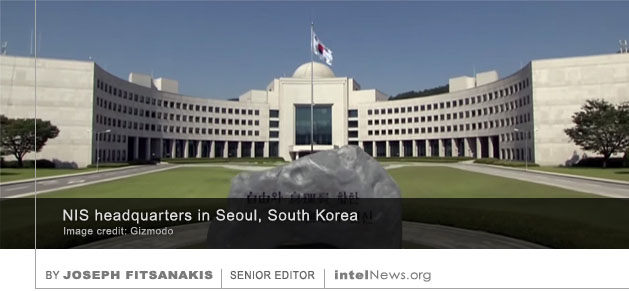 A FORMER INTELLIGENCE ANALYST for the Central Intelligence Agency (CIA), who is married to a high-profile columnist for The Washington Post, remains under arrest for allegedly spying for South Korea. According to an indictment unsealed last Tuesday in the Southern District of New York, the former CIA analyst is Sue Mi Terry, 54, of New York. Terry is a naturalized American citizen born in Seoul, South Korea, who grew up in Virginia and received a PhD from Tufts University in Massachusetts.
Terry joined the CIA in 2001 but resigned in 2008, allegedly “in lieu of termination” because her employer “had ‘problems’ with her contact with” officers from South Korea’s National Intelligence Service (NIS). After leaving the CIA, Terry worked briefly for the National Security Council and the National Intelligence Council, before transitioning to academia. Her most recent post was that of a senior fellow at the Council on Foreign Relations, where she became known as an exert on East Asian affairs with a focus on the Korean Peninsula. For over a decade, Terry has made frequent appearances on television and radio, as well as on several podcasts. She is married to the Washington Post columnist Max Boot.
The Department of Justice accuses Terry of failing to register under the Foreign Agents Registration Act and deliberately conspiring to violate that law, thus effectively operating as an unregistered agent of a foreign power. The indictment claims that Terry was gradually recruited by the NIS, beginning in 2013, two years after she stopped working for the United States government. Terry allegedly continued to work for the NIS for a decade, during which she was handled by NIS intelligence officers posing as diplomats in South Korea’s Washington embassy and permanent mission to the United Nations in New York.
It is alleged that throughout that time Terry provided her NIS handlers with access to senior US officials, disclosed “nonpublic US government information” to the NIS, and promoted pro-South Korean policy positions in her writings and media appearances. In return, Terry is alleged to have received luxury goods, free dinners at expensive restaurants, and nearly $40,000 in “covert” funding, nominally to operate a public policy program on Korean affairs. It is worth noting that, according to the unsealed indictment, the Federal Bureau of Investigation warned Terry that she should be wary of being approached by NIS officers seeking to offer her funding. Read more of this post
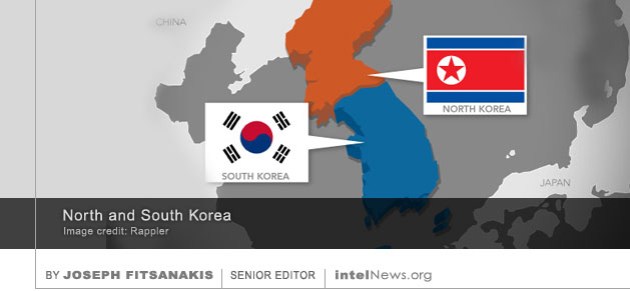 NORTH KOREA APPEARS TO have suspended a long-standing radio station, known for broadcasting content targeted at South Koreans, which also aired encrypted messages intended for North Korean spies abroad. Radio Pyongyang was founded by Korean communist forces in the 1940s. In 1950 it formed part of the North Korean state’s official media propaganda arm.
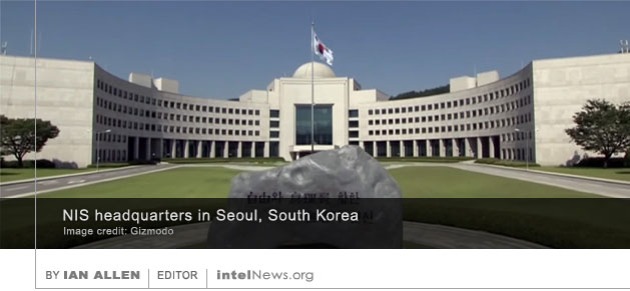 IN A SURPRISING MOVE that has stirred curiosity across Asia, South Korean President Yoon Suk Yeol has abruptly ousted the entire senior leadership of the National Intelligence Service (NIS), a powerful entity in the country. The
 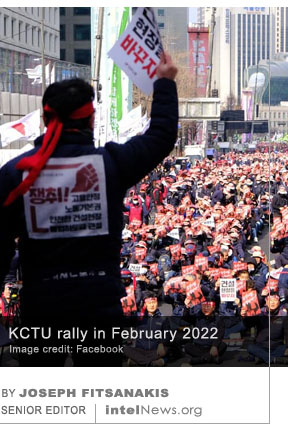 SOUTH KOREAN PROSECUTORS have charged four senior members of one of the country’s largest trade unions with espionage on behalf of North Korea. The move, which is seen as highly controversial by South Korea’s liberal opposition, has come a few months after the conservative administration of President Yoon Suk Yeol
 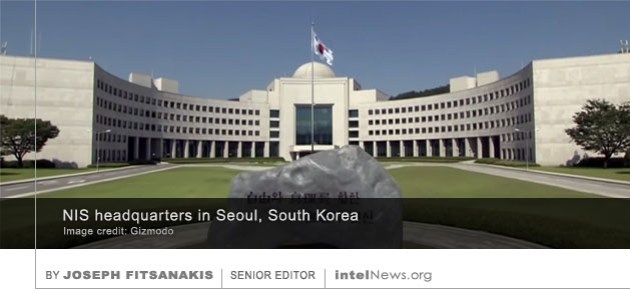 TENSION IS MOUNTING BETWEEN the government and opposition forces in South Korea, as the conservative administration of President Yoon Suk Yeol appears to be behind an effort to probe alleged links between senior liberal political figures and North Korean intelligence. The effort, which some commentators
 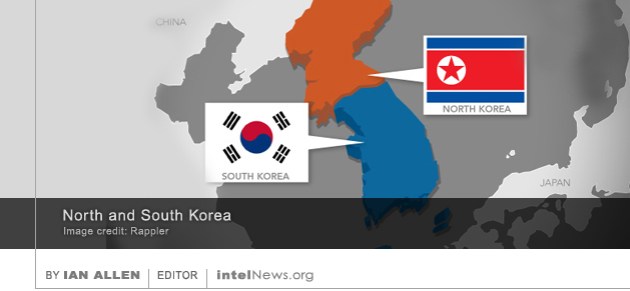 SOUTH KOREAN AUTHORITIES HAVE busted an alleed spy ring run by a North Korean handler, who remains at large. Two men have been arrested so far in connection with the ring. One of them, identified only as “Lee”, is
  THE INTELLIGENCE CHIEFS OF the United States, Japan and South Korea are to meet behind closed doors this week. The meeting will take place nearly two years after a major diplomatic spat between Japan and South Korea threatened to significantly harm intelligence cooperation between them. In November of 2019, the South Korean government threatened to terminate the General Security of Military Information Agreement (GSOMIA). The agreement was initiated in 2016 under American tutelage, with the aim of facilitating the sharing of intelligence between South Korea and Japan about North Korea’s missile and nuclear programs.
 A NORTH KOREAN ACTING ambassador, who is believed to be the son of one of the most senior officials of the ruling Workers’ Party of Korea (WPK), reportedly defected with his family to South Korea, according to sources. Two South Korean news outlets, the Yonhap News Agency and the Maeil Business Newspaper, reported the alleged defection on Monday. They both cited sources in the South Korean government.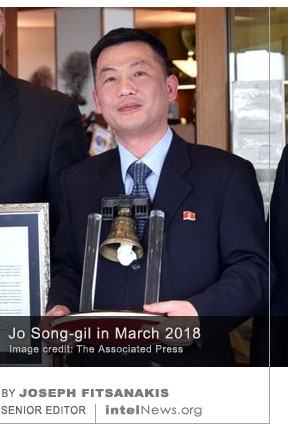
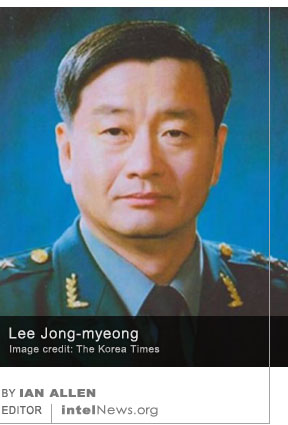 A former deputy director of South Korea’s spy agency has been given a prison sentence for diverting funds from the agency’s clandestine operations budget, in order to aid South Korea’s disgraced former President, Lee Myung-bak, who has himself been sentenced to 15 years in prison.
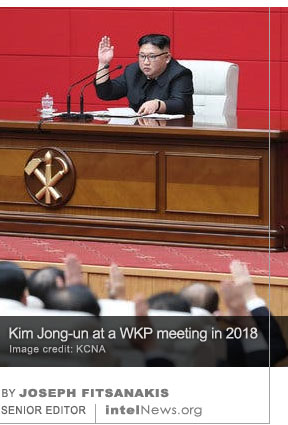
 Officials in South Korea and China have cast doubt on rumors circulating in recent days that North Korean Supreme Leader Kim Jong-un may be dead or close to dying. The rumors about Kim’s demise began to circulate on April 15, when the North Korean leader failed to participate at an official ceremony held to mark the birthday of his grandfather. Known as the Day of the Sun —a public holiday in North Korea— the annual event commemorates the birth of the country’s founder, Kim il-Sung.
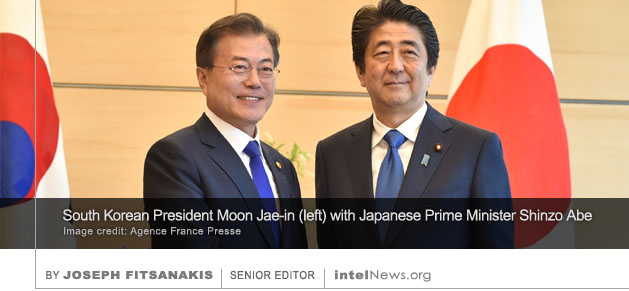 South Korea appears determined to reject calls from the United States to maintain an intelligence-sharing agreement with Japan, as relations between Seoul, Tokyo and Washington continue to experience tensions. The South Korean government has been issuing warnings since August that it will
 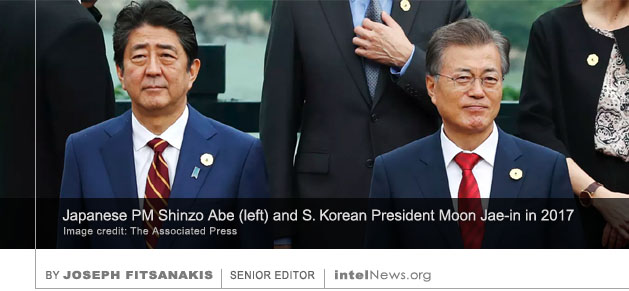 South Korea has formally terminated an intelligence-sharing agreement with Japan, as relations between the two countries have reached their lowest point since they formally recognized each other in 1965. Seoul’s decision is the latest move in a tit-for-tad row sparked by the use of forced Korean labor by Japan in World War II. South Korea is demanding financial compensation for the use of slave labor, including sex slaves, by Japanese occupation troops during Korea’s annexation by Japan from 1910 until 1945. Last month, Tokyo responded to a mass boycott of Japanese goods by South Korean consumers by limiting the export of electronics to be used in South Korea’s ship-building industry. A few days ago, Tokyo also removed South Korea from the list of countries with the ability to fast-track their exports to Japan.
 The spy agency of South Korea has dismissed media reports that North Korea had several of its top nuclear negotiators executed or sent to labor camps, but has not rejected rumors of a major reshuffle in Pyongyang. In early June, media reports in Seoul claimed that North Korea had executed at least five of its senior nuclear negotiators and imprisoned several others. Prior to these reports, rumors of executions of North Korean nuclear negotiators had circulated in international diplomatic circles since February, but no specific allegations had surfaced in the news media. That changed when Chosun Ilbo, South Korea’s highest-circulation newspaper, alleged that at least






 intelNews.org
South Korea’s top HUMINT agency probes potentially catastrophic data breach
July 29, 2024 by intelNews 1 Comment
Formed under American tutelage in 1946, KDIC is today considered South Korea’s most secretive intelligence agency. It operates under the Defense Intelligence Agency (DIA), which makes it part of the Ministry of National Defense’s chain of command. Unlike DIA’s civilian counterpart, the National Intelligence Service, KDIC rarely surfaces in unclassified news reporting, and it almost never issues press releases. Its operations primarily involve HUMINT activities, thus making it South Korea’s most active HUMINT-focused agency.
Predictably, KDIC’s primary intelligence target is North Korea. The agency gathers much of its intelligence on the North through an extensive network of undercover officers operating with diplomatic credentials. KDIC also handles non-official cover (NOC) operatives, who are located mostly in Asia. There have been periodic claims in the unclassified literature that some KDIC NOCs have operated inside North Korea at times –though such claims remain speculative.
On Saturday, the Seoul-headquartered Yonhap News Agency alleged that classified information relating to KDIC had been “leaked”. According to Yonhap, the leak included personally identifiable information about KDIC official and non-official cover personnel stationed abroad. The report claimed that the leak was discovered by South Korean authorities a month ago, and that the discovery had resulted in the recall of several KDIC undercover operatives serving overseas “due to concerns over their identities being exposed”.
The Yonhap report claimed that, according to an ongoing probe, the leak may have originated from a personal laptop computer belonging to a civilian KDIC employee. The employee has since claimed that the laptop had been hacked, but some investigators believe the suspect may have “intentionally left the laptop vulnerable to hacking by North Koreans”.
According to an official statement released on Sunday by the Ministry of National Defense, the case is “currently under investigation by military authorities”.
► Author: Joseph Fitsanakis | Date: 29 July 2024 | Permalink
Filed under Expert news and commentary on intelligence, espionage, spies and spying Tagged with Defense Intelligence Agency (South Korea), HUMINT, KDIC (South Korea), Korea Defense Intelligence Command, News, non-official-cover, North Korea, official cover, South Korea