Group of 13 North Korean defectors say they were ‘forcibly kidnapped’ by South
July 18, 2018 Leave a comment
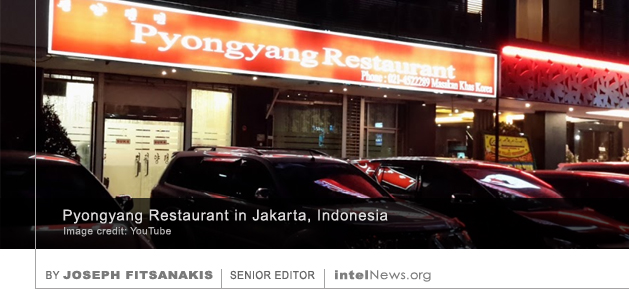 A group of 12 female North Korean restaurant workers and their male manager claim that their widely advertised defections in 2016 were fake, and that they were in fact abducted by South Korea’s spy services. The North Korean government maintains a chain of North Korea-themed restaurants throughout Asia, which operate as popular tourist attractions across Southeast Asia. The state-owned restaurants help provide the cash-strapped regime in Pyongyang with desperately needed foreign funds. The North Korean staff —almost all of them female— who work at these restaurants are carefully vetted and chosen to represent the reclusive regime abroad. Some observers claim that these restaurants serve “as a main front to conduct intelligence gathering and surveillance [against foreign] politicians, diplomats, top corporate figures and businessmen”.
In April of 2016, the entire staff of a North Korean restaurant in the Chinese city of Ningbo defected. They disappeared all of a sudden, and reappeared a few days later in South Korean capital Seoul, where South Korean authorities held a press conference. The South Koreans told reporters that the 13 North Koreans had decided to defect after watching South Korean television dramas, which allegedly caused them to lose faith in the North Korean system of rule. But Pyongyang dismissed the defections as propaganda and claimed that its citizens had been abducted by South Korean intelligence.
Now in a shocking interview published by South Korea’s Yonhap news agency, Ho Kang-il, the male manager of the North Korean restaurant in Ningbo said that he and his staff had been forcibly taken to South Korea. Ho told Yonhap that he had been approached by officers of South Korea’s National Intelligence Service (NIS) who tried to entice him to defect to South Korea. They told him that he could open a restaurant if he chose to lead a new life in the south. Initially Ho said he was interested in the offer. But when he appeared to change his mind, the NIS officers threatened to inform the North Korean embassy in China that he had been speaking with them. Ho also said that the NIS officers blackmailed his staff at the restaurant using similar methods. Consequently, all 13 of them decided to cooperate with the NIS, as they “had no choice but to do what they told [us] to do”, said Ho.
On Sunday, the United Nations’ Special Rapporteur on Human Rights in North Korea, Ojea Quintana, said during a press conference that the UN was concerned about the allegations made by Ho. He also said that some of the North Korean defectors had told UN personnel that they left China without knowledge of where they were being taken by South Korean intelligence. Quintana concluded his remarks by calling for a “thorough investigation” into the alleged abductions of the North Koreans.
► Author: Joseph Fitsanakis | Date: 18 July 2018 | Permalink
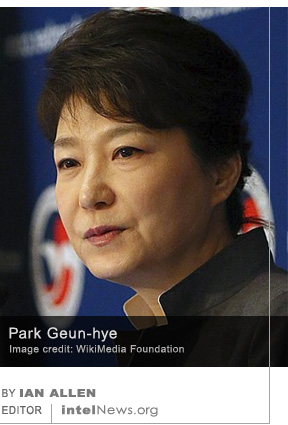 South Korea’s disgraced former president, Park Geun-hye, has been charged with accepting bribes amounting to millions of dollars from the country’s spy agency, according to reports. Park made history in 2013, by becoming the first woman president in South Korean history. However, almost as soon as she assumed office, her administration became embroiled in successive corruption scandals. By 2016, Park’s presidency had been brought to a standstill due to mass protests urging her removal from power, while increasing numbers of officials and administrators were refusing to work with her. She was eventually impeached in 2017, after the Constitutional Court of Korea found that she had violated the country’s laws by promoting the interests of personal friends and private corporations in return for cash and favors. She is currently in custody awaiting trial for 18 different charges, including abuse of power, coercion, blackmail and bribery.
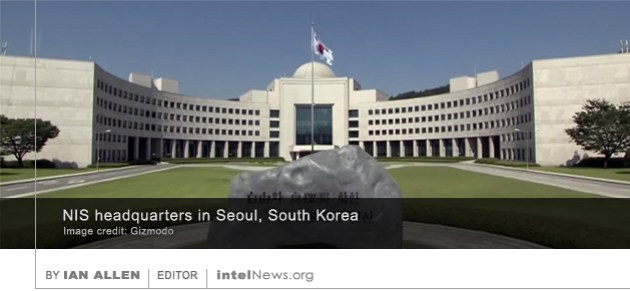 A South Korean prosecutor has charged three former directors of the country’s spy agency of secretly diverting funds from the agency’s clandestine budget to aid the country’s disgraced former President, Park Geun-hye. The three men, Nam Jae-joon, Lee Byung-kee and Lee Byung-ho, headed South Korea’s National Intelligence Service (NIS) between 2013 and 2016, when Mrs. Park was head of state. The conservative politician was impeached late last year, following accusations of corruption, bribing and extortion. In March this year, Mrs. Park’s government was brought down and she is currently in prison, awaiting trial. Her successor in the presidency, leftist politician Moon Jae-in, was elected after pledging to combat corruption in South Korea’s political inner circle.
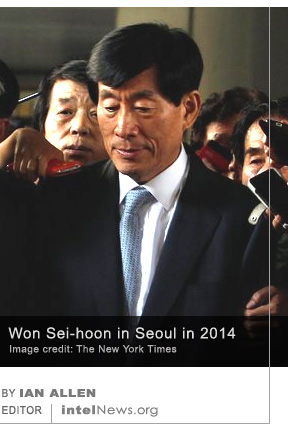 The former director of South Korea’s main intelligence agency has been sent to prison for organizing a large-scale illegal campaign to influence the result of the country’s 2012 presidential election. Won Sei-hoon headed the NIS from 2008 to 2013, during the administration of conservative President Lee Myung-bak. During the 2012 presidential election, Won ordered a group of NIS officers to “flood the Internet” with messages accusing liberal political candidates of being “North Korean sympathizers”. One of those candidates, Moon Jae-in, of the left-of-center Democratic Party of Korea, is now the country’s president. Mr. Moon succeeded his main right-wing rival, Park Geun-hye, who resigned in March of this year following a series of financial scandals. She is now facing charges of bribery, abuse of power, leaking government secrets, and corruption.
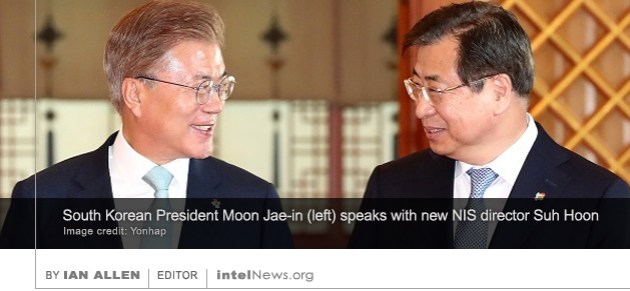 An internal investigation has found that the intelligence agency of South Korea tried to steer the result of the 2012 presidential election in favor of the conservative candidate, and placed liberal politicians under surveillance in the run-up to the election. South Korea’s intelligence agency, the National Intelligence Service (NIS) has fallen into disrepute in recent years, after it was found to have secretly sided with conservative political candidates for public office.
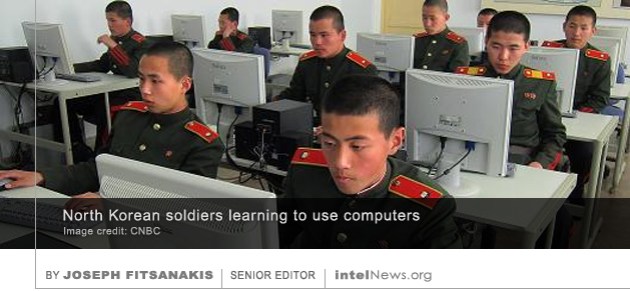 North Korea’s intelligence establishment has shifted its attention from spying for political gain to spying for commercial advantage –primarily to secure funds for the cash-strapped country, according to a new report. Since the 1990s, the Democratic People’s Republic of Korea (DPRK) has used computer hacking in order to steal political and military secrets from its rivals. But there is increasing evidence that Pyongyang is now deploying armies of computer hackers in order to steal cash from foreign financial institutions and internet-based firms. This is the conclusion of a new report by the Financial Security Institute of South Korea, an agency that was set up by Seoul to safeguard the stability of the country’s financial sector.
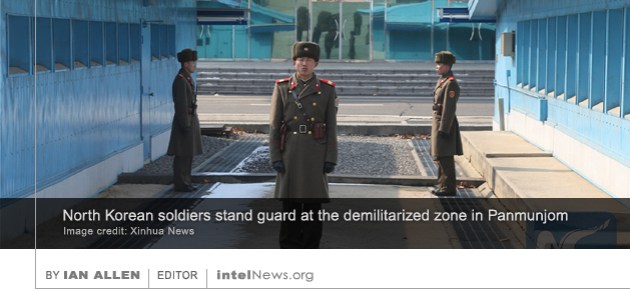 The director of the United States Central Intelligence Agency made an unannounced visit to South Korea over the weekend, to discuss the rising tensions in the Korean Peninsula with his South Korean counterpart and other senior officials. A spokesperson from the US embassy in Seoul made an official
 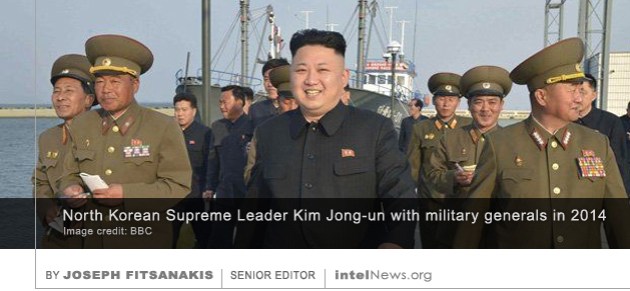 Observers of North Korean politics raised alarm bells over the weekend, as it emerged that Supreme Leader Kim Jong-un fired his spy chief, interfering for the first time with a state institution that had not until now experienced major purges. The news circulated on Friday, following a report by South Korea’s Ministry of Unification —Seoul’s government department responsible for promoting the reunification of Korea. The ministry said that, according to its sources in the North, General Kim Won-hong had been dismissed from his post as Minister for State Security.
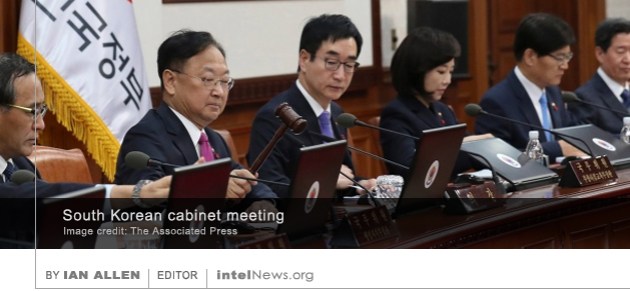 In a move that highlights the thaw in relations between South Korea and Japan, the two nations appear to be closer than ever to entering an intelligence agreement with each other. In 2014, Washington, Seoul and Tokyo signed a trilateral intelligence-sharing agreement on regional security issues, with the United States acting as an intermediary. But a proposed new agreement between South Korea and Japan would remove the US from the equation and would facilitate direct intelligence-sharing between the two East Asian nations for the first time in history.
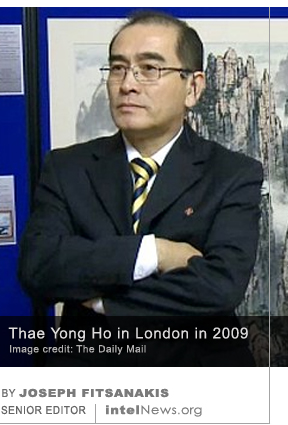 A high-ranking North Korean diplomat, who defected with his wife and children in London, and is now in South Korea, is from a privileged family with a long revolutionary pedigree in North Korean politics. South Korea’s Ministry of Unification confirmed on Wednesday that Thae Yong-Ho, the second-in-command at the North Korean embassy in the United Kingdom, had defected with his wife and children and had been given political asylum in South Korea. As intelNews
 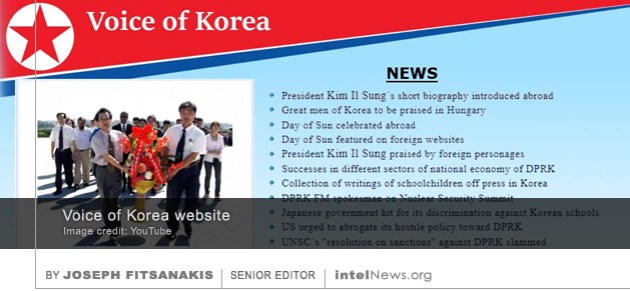 In a development that is reminiscent of the Cold War, a radio station in North Korea appears to have resumed broadcasts of encrypted messages that are typically used to give instructions to spies stationed abroad. The station in question is the Voice of Korea, known in past years as Radio Pyongyang. It is operated by the North Korean government and airs daily programming consisting of music, current affairs and instructional propaganda in various languages, including Arabic, Chinese, Spanish, French, English, and Russian. Last week however, the station interrupted its normal programming to air a series of numbers that were clearly intended to be decoded by a few select listeners abroad.
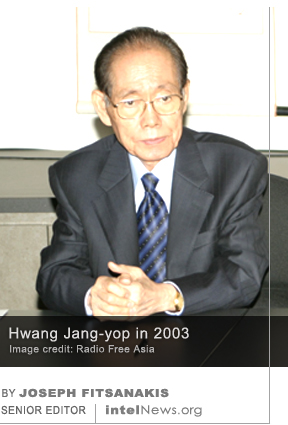 An appeals court in Seoul has upheld the conviction of a South Korean member of a spy cell that planned to assassinate the most senior North Korean defector to the South. The man, identified in media reports only by his last name, Park, is a South Korean citizen who allegedly helped a North Korean spy cell “based in China” plan the assassination of Hwang Jang-yop. In 1997, Hwang caused a sensation on both sides of the border when he defected to the South. A former secretary of the Korean Workers’ Party, Hwang was Pyongyang’s primary theorist and the ideological architect of juche, the philosophy of self-reliance, which is North Korea’s officially sanctioned state dogma. He was also believed to have ideologically mentored North Korean Supreme Leader Kim Jong-il, the father of the country’s current Supreme Leader, Kim Jong-un. Until his






 intelNews.org
Son of South Korean foreign minister defects to North Korea
July 8, 2019 by Joseph Fitsanakis 1 Comment
But by 1980, Choe had fallen out with the South Korean military government and was subsequently pushed out of the ruling Democratic Republican Party of Korea. He moved to the United States with his wife, Ryu Mi-yong, from where in 1986 the couple defected to North Korea. Soon after his defection, Choe was appointed director of North Korea’s Committee for the Peaceful Reunification of the Fatherland under the ruling Workers’ Party of Korea (WPK). Until her death in 2012, Ryu served as chairwoman of the Chondoist Chongu Party, a nationalist North Korean political party that supports the policies of the ruling WPK.
North Korean media reported that Choe and Ryu’s son, Choe In-guk, arrived at the Pyongyang Sunan International Airport on July 6. The North Korean state-run news website Uriminzokkiri published several photographs of the 73-year-old Choe being greeted by a welcoming committee of North Korean government officials holding flowers and gifts. Choe is reported to have given a brief speech upon his arrival in Pyongyang, praising North Korea’s leader and lamenting not having defected earlier in his life. The defector added that he intended to devote the remainder of his life to continue the work of his parents and to push for the reunification of the two Koreas.
On Sunday, South Korean Ministry of Unification confirmed that Choe had defected to North Korea from the United States. The Ministry also said that Choe had not obtained permission to travel to North Korea, which is required of all South Korean citizens who wish to cross the border between the two countries. It appears that Choe first traveled to the United States and for there to a third country —possibly China— before entering North Korea. South Korean officials announced that an investigation into his defection has been launched.
► Author: Joseph Fitsanakis | Date: 08 July 2019 | Permalink
Filed under Expert news and commentary on intelligence, espionage, spies and spying Tagged with Choe Deok-sin, Choe In-guk, defectors, News, North Korea, Ryu Mi-yong, South Korea