S. Korean spy agency admits error, says ‘executed’ N. Korean general is alive
May 13, 2016 Leave a comment
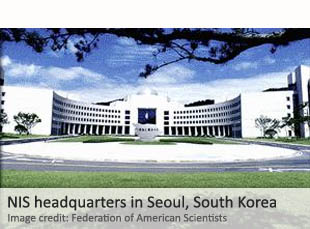
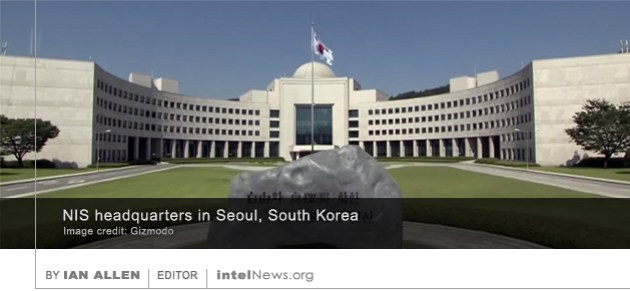 The intelligence agency of South Korea has admitted it made an error when it claimed earlier this year that North Korean authorities had executed one of the regime’s most prominent military figures. On February 10, South Korean newspapers printed a series of articles suggesting that Pyongyang had executed General Ri Yong-gil, who led the Korean People’s Army (KPA), holding post that was equivalent to the United States’ chairman of the Joint Chiefs of Staff. The articles said at the time that the information about General Ri’s execution came directly from the National Intelligence Service (NIS), South Korea’s primary external spy agency. The general had allegedly been executed after being found guilty of “factionalism, abuse of power and corruption”. The reports added that General Ri had turned into an alcoholic and was in poor health as a result. Speculation as to the reason for General Ri’s alleged execution brought up the possibility that he had led an opposition faction within the KPA. This, in turn, led some analysts to speculate that the administration of Kim Jong-un was close to collapse.
However, after the seventh congress of the Workers’ Party of Korea (WPK), which concluded on Monday, not only has the view of Kim’s rule as weak been overturned, but General Ri appears to have come back from the dead. On May 10, the Rodong Sinmun, the official newspaper of the Central Committee of the WPK, announced that General Ri had been appointed member of the WPK’s Central Military Commission. The announcement also said that the General would also be a candidate member of the Political Bureau of the WPK Central Committee, in accordance with the Committee’s wishes. It appears, therefore, that, not only is General Ri alive and well, but that he also features prominently the inner sanctum of the WPK’s political leadership.
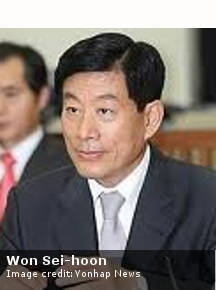
Soon after Rodong Sinmun’s announcement, Hong Yong-pyo, South Korea’s Minister of Unification, told reporters in Seoul that the government would have to “check the details” of General Ri’s fate. An anonymous South Korean government official told newspapers that the NIS had assumed General Ri had been purged because he “hadn’t been seen for some time”. But critics of the government in Seoul accused the conservative administration of President Park Geun-hye of using “skewed perceptions” of the regime in Pyongyang in order to block negotiations with North Korea, and urged “some serious soul-searching” regarding the dependability of the NIS. IntelNews regulars will recall that Won Sei-hoon, who headed the NIS from 2008 to 2013, was jailed last year for interfering with national elections in order to further Park’s electoral power.
► Author: Ian Allen | Date: 13 May 2016 | Permalink
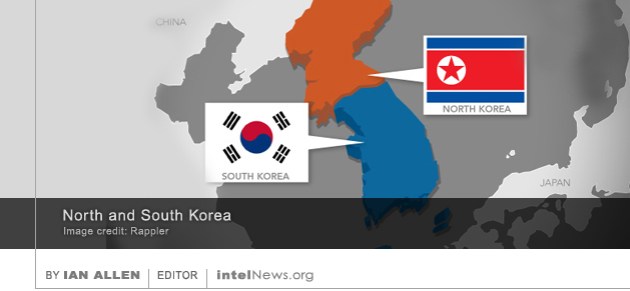 A North Korean intelligence official who sought refuge in South Korea last year is the most high profile defector to the South since the end of the Korean War in 1953, according to authorities in Seoul. An announcement issued by the South Korean government last week said the defector is a colonel in the Korean People’s Army who worked for the
 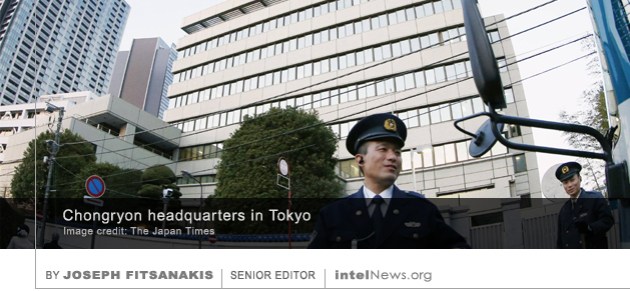 A Korean resident of Japan, who was arrested in South Korea for credit card fraud, was allegedly a handler of North Korean sleeper agents operating in South Korea, Japan and China, according to police in Seoul. Pak Chae Hun, 49, was arrested on Tuesday at his home in Seoul by officers of the Public Security Bureau of the Metropolitan Police Department. A statement issued by South Korean police said Pak was until recently an associate professor at Korea University, a higher-education institution based in the Japanese capital Tokyo. The University is funded directly by the government of North Korea through Chongryon, a pro-Pyongyang organization otherwise known as the General Association of Korean Residents in Japan. The group represents tens of thousands of ethnic Koreans living in Japan, who are ideologically affiliated with Pyongyang.
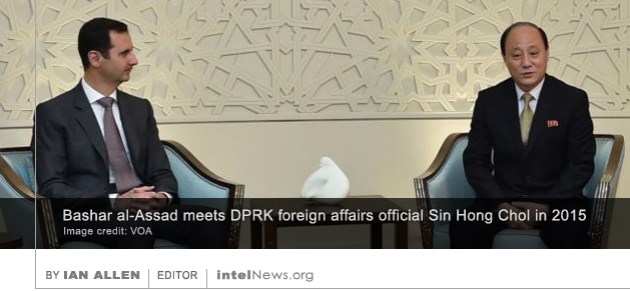 A powerful South Korean parliamentary committee has accused the North Korean government of ties to the Islamic State, an allegation that is vehemently denied by Pyongyang. On November 18, members of the Intelligence Committee of the National Assembly of Korea stated in a press conference that they believed North Korea had “possible ties to ISIS”. They were referring to the Islamic State of Iraq and Syria, which calls itself Islamic State. On Monday, North Korea’s state-run media blasted the South Korean allegations as “slander and fabrications”, and said they threatened to derail collaboration efforts between Seoul and Pyongyang.









Jail for man involved in planned assassination of senior North Korean defector
May 18, 2016 by Joseph Fitsanakis Leave a comment
In October 2010, a few months before Hwang’s death, South Korean authorities revealed that two self-confessed North Korean spies, Tong Myong Kwan and Kim Myung Ho, had allegedly admitted to posing as defectors. Seoul said that Tong and Kim, who were both 36 at the time, were on an assassination mission assigned to them by the intelligence unit of the North Korean Ministry of Defense. The two reportedly stated under interrogation that they were selected for the mission in 2004 and were trained for six years in spy trade craft, as well as techniques of assimilating in life in South Korea, which apparently included “watching South Korean soap operas to gain a better understanding of South Korean society”.
At the time of Tong and Kim’s arrest, South Korean authorities had stated that the two alleged North Korean spies had been assisted by at least two South Korean citizens. One has never been named. The other, Park, was indicted last year of providing logistical support to foreign spies who were plotting to kill Hwang, in return for ₩25 million ($21,000). His legal team appealed the sentence, saying he had been framed by the North Koreans. But on Tuesday, the Seoul High Court rejected the Park’s appeal and upheld his original 3-year jail sentence.
► Author: Joseph Fitsanakis | Date: 18 May 2016 | Permalink
Filed under Expert news and commentary on intelligence, espionage, spies and spying Tagged with assassinations, defectors, Hwang Jang-yop, Kim Myung Ho, News, North Korea, North Korean Ministry of Defense, South Korea, Tong Myong Kwan