Israel reportedly trying to recover spy’s remains from Syria
December 16, 2024 2 Comments
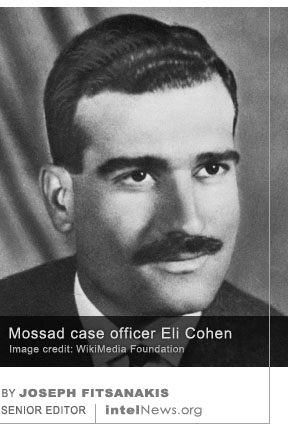 ISRAELI OFFICIALS ARE REPORTEDLY trying to recover the remains of Eli Cohen, an Israeli spy who was hanged in Syria in 1965, after his espionage activities were discovered. Born in Alexandria in 1924, Cohen was an Egyptian Jew, whose family immigrated to Israel after 1949. After joining the Mossad, Israel’s primary external intelligence agency, Cohen became a katsa, or case officer.
The spy agency utilized Cohen’s fluency in Arabic and Spanish and sent him to Argentina, where he built his intelligence cover under the name Kamel Amin Thaabet. He pretended to be a Syrian businessman whose family had immigrated to Argentina in the 1920s. While in Argentina, Cohen became an active member of the Arab and Syrian diasporas and joined the Syrian Ba’ath Party.
In 1962, shortly before Ba’athist officers seized power in Syria, the Mossad instructed Cohen to relocate to Damascus. While there, Cohen became a well-known socialite with close connections to the administration of Syrian President Amin al-Hafiz. However, in 1965, Cohen’s espionage was uncovered by Syrian counterintelligence, who utilized technical countermeasures provided by Soviet intelligence. Cohen was convicted of espionage and publicly executed by hanging in Damascus on May 18, 1965.
Since Cohen’s execution, the Syrian state has rejected requests to reveal the location of his tomb and the whereabouts of his remains. On at least two instances, Israel, which views Cohen as a national hero, has offered to exchange Syrian and other Arab prisoners of war in return for the spy’s remains, but Damascus has rebuffed these offers. There are rumors that Syrian authorities regularly relocate Cohen’s remains so as to prevent Israel from covertly retrieving them.
According to reports from Middle Eastern media, since the fall of the administration of former Syrian President Bashar al-Assad, Israeli officials have been in negotiations to gain access to Cohen’s remains. The negotiations are allegedly taking place between Israeli government representatives and former members of the Assad regime, who have knowledge of the whereabouts of the late spy’s remains. In a television interview last week, Eli Cohen’s widow, Nadia, implied that Mossad Director David Barnea is personally involved in the ongoing negotiations.
► Author: Joseph Fitsanakis | Date:16 December 2024 | Permalink
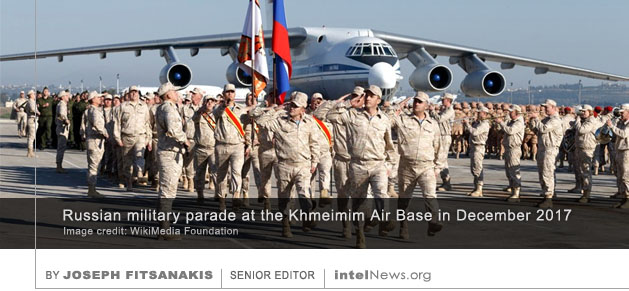 THERE ARE CONFLICTING REPORTS about the fate of Russia’s military bases in Syria, following the complete collapse of the 54-year-long Assad dynasty. Late on Sunday it was
  facility outside of the former Soviet Union. Furthermore, it constitutes the sole warm-port fueling and repair facility that is exclusively available to the Russian Navy. It is home to the Russian naval group in Syria, which consists of a submarine and five warships.
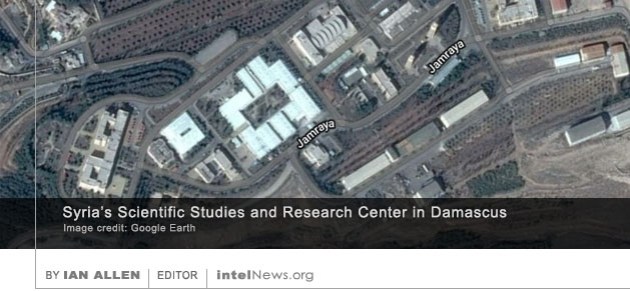 THE TOP SCIENTIST IN Syria’s chemical weapons program, reputed to be among the world’s deadliest, spied for the United States Central Intelligence Agency for 14 years, according to a new book by Pulitzer Prize-winning reporter Toby Warrick. The claim is included in Warrick’s
  A SYRIAN INTELLIGENCE OFFICIAL, who was denied political asylum in France due to claims he committed serious war crimes, received protection from Austria with assistance from Israel, according to a report. This was
  American forces remain in Syria without a clear goal in sight, as the conflict there nears its 10-year anniversary, and with Russia having emerged as the principal guarantor of security in the war-torn country, according to insiders. In an
 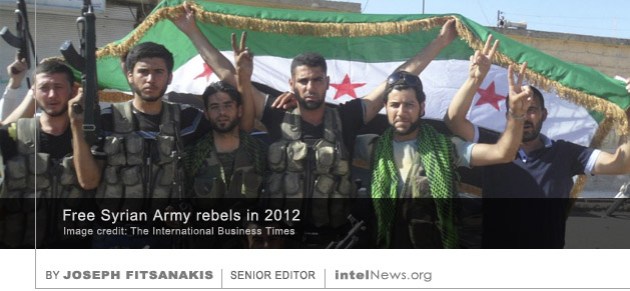 Turkey’s spy agency systematically downplayed the Islamist views of men seeking to join a Syrian rebel group, which was supported by the United States Central Intelligence Agency on account of its moderate leanings. The United States
  • In-fighting erupts between Syrian intelligence and army in Damascus. Violent clashes broke out between Syrian regime intelligence forces and local militias affiliated with the army’s 4th Division and national defense in Damascus’ countryside, local media sources reported. Sporadic fighting
 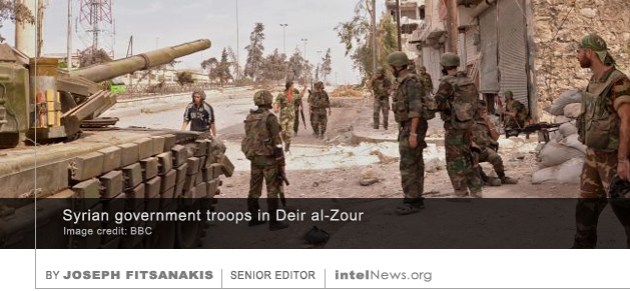 As an intense debate rages in the United States about Moscow’s alleged subversion of American military goals in Afghanistan, sources warn that Russia is increasingly challenging Washington’s troops in Syria. Recent
 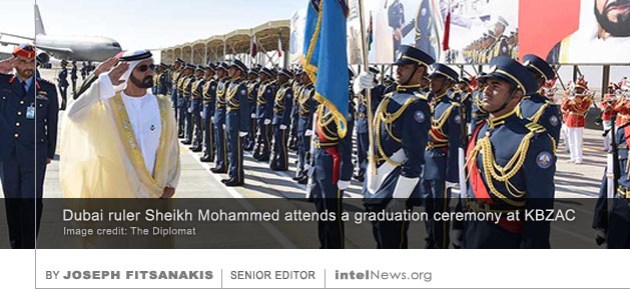 The United Arab Emirates, one of the United States’ closest Arab allies, is training Syrian intelligence and military officers and is giving financial aid to government-owned civilian facilities in Damascus, a report claims. The UAE broke off diplomatic relations with Damascus at the beginning of the Syrian civil war in 2011. But relations between the two countries were restored in 2018, when the oil kingdom reopened its embassy in the Syrian capital.
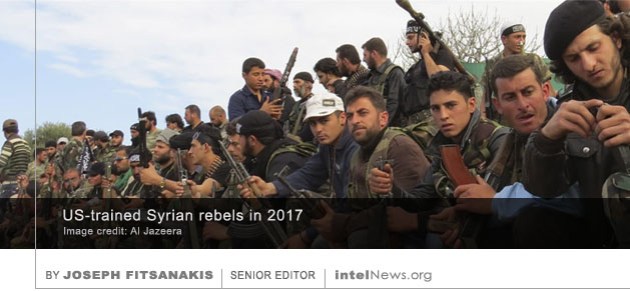 The United States government is unable to account for nearly $716 million in weapons it gave to various Syrian groups during the war against the Islamic State, according to a Department of Defense audit. The weapons were procured under the Counter Islamic State of Iraq and Syria Train and Equip Funds (CTEF) program, which was administered by the US Pentagon in 2017 and 2018. The CTEF program cost the US taxpayer a total of $930 million.
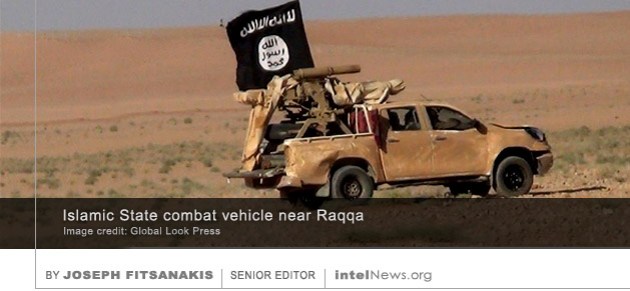 The Islamic State remains committed to its goals and continues to utilize ample funding sources, according to a new report by the United Nations. The report warns that the militant Sunni group, which was previously known as the Islamic State of Iraq and Syria (ISIS), is quickly reasserting itself in the Middle East.
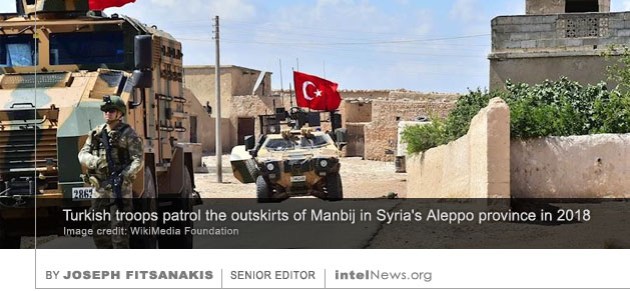 In a move that surprised observers, the intelligence chiefs of Turkey and Syria —two bitter rivals in the ongoing Syrian civil war— met in Russia on Monday. The meeting was held in Moscow and was acknowledged by officials from both sides, making it the first explicit contact between Turkish and Syrian intelligence in over a decade.
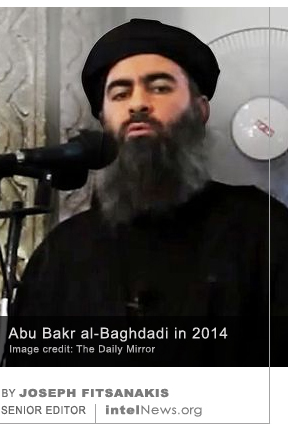 The Islamic State’s Syrian hideout that housed the group’s leader until his demise on October 26, was equipped with a frequently used internet connection, according to Arab media reports. Abu Bakr al-Baghdaid, the self-proclaimed caliph of the Islamic State, was killed by United States soldiers in Barisha, a village in the Syrian province of Idlib, which is located
 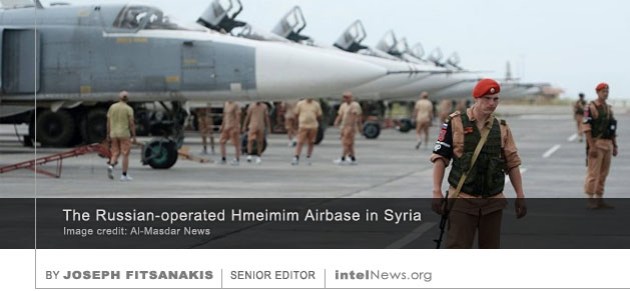 Authorities in Turkey were concerned that Russia might bomb the presidential palace in Ankara in 2015, to retaliate against the downing of a Russian fighter jet by the Turkish military, according to an intelligence report. On November 25 of that year, a Russian Sukhoi Su-24M attack bomber was shot down by a Turkish F-16 fighter jet over the Syrian-Turkish border. Ankara claimed that the Russian aircraft had violated Turkish airspace for longer than five minutes and had failed to respond to 10 warning messages communicated by radio. By the time the Russian plane was fired upon it was nearly 1.5 miles inside Turkish airspace, according to Turkey’s Ministry of Defense. But the Kremlin claimed that the downed aircraft had been flying a mile south of the Turkish border when it was shot down.






 intelNews.org
Analysis: Assad’s collapse in Syria was a strategic surprise to Israel
December 20, 2024 by intelNews 7 Comments
Israeli intelligence assessed that, despite the shocks it had suffered in recent months, the so-called Axis of Resistance against Israel —mainly Hezbollah, Syria, and Iran— was stable. A scenario of rapid collapse of the government in Syria had not been assessed as a possibility, or even given a low probability tag. That was primarily because the Assad family had governed Syria for almost 60 years.
Following the Assad regime’s collapse, the focus of Israel’s intelligence is on analyzing the intentions of the major rebel organization, Hayat Tahrir al-Sham, and understanding how —if at all— it will lead the new administration in Syria. Israel is also examining developments in southern Syria, as well as what is happening at the Syrian and Russian military bases in Latakia and Tartus. Moreover, the IDF is monitoring the activities of Iranian elements in Syria, including on the border with Lebanon, to prevent the possibility of military equipment being transferred from Syria to Hezbollah.
It is clear to Israel that Turkey stands behind the Hayat Tahrir al-Sham organization and that Ankara armed and supported the group for a significant period. What is less clear is whether and how Turkey’s involvement in Syria could threaten Israel’s interests, given that Israel’s relations with Turkey have deteriorated dramatically in recent years.
Assad was a key member of the pro-Iranian Axis of Resistance. Following his fall from power, Iran and Hezbollah could lose their main logistical hub for producing, transferring, and storing weapons, as well as training their forces and militias. Additionally, Syria under Assad constantly posed the threat of turning into yet another battlefront against Israel. Without Assad, Russia could lose its grip on Syria —the only country in the Middle East where Russian influence dominates that of the United States. The Russians could also lose access to their military bases in Syria, which offered the Russian Navy access to the waters of the Mediterranean.
Despite the fall of the bitter enemy that was Assad’s Syria, and the deep shock suffered by the Iranian-led Axis of Resistance camp that has been dominant in the Middle East in recent decades, Israeli intelligence is not optimistic about the emerging situation in post-Assad Syria. Syria is a collection of minorities —Druze, Kurds, Alawites, and Christians— that have been artificially joined together despite carrying bitter, bloody scores. The latter may erupt sharply, especially against the Alawites. Concepts such as liberal politics, civil society, or a cohesive nation-state, have never existed inside Syria.
It follows that Israel is very concerned about the emerging uncertainty in Syria. Immediately after the fall of Assad, the IDF strengthened its defenses on the Golan Heights border to ensure that the chaos in Syria did not spill over into Israel. Meanwhile, Israel is in contact —both directly and through intermediaries— with several Syrian rebel groups, including Hayat Tahrir al-Sham. The Israeli message at this stage is a demand that the rebels not approach the border, along with a warning that, if they violate the separation of forces agreement, Israel will respond with force.
And a final note: assessments in relation to the Syrian regime’s collapse continue to emerge in the IDF and the Israeli intelligence community. These assessments concern the extent to which the lessons of October 7 have been sufficiently analyzed and assimilated within Israel. Specifically, there are questions about whether this new intelligence surprise in Syria may stem from the fact that an in-depth investigation into the lessons of October 7 has yet to be carried out during the 14 months of the war with Hamas.
► Author: Avner Barnea* | Date: 20 December 2024 | Permalink
Dr. Avner Barnea is research fellow at the National Security Studies Center of the University of Haifa in Israel. He served as a senior officer in the Israel Security Agency (ISA). He is the author of We Never Expected That: A Comparative Study of Failures in National and Business Intelligence (Lexington Books, 2021).
Filed under Expert news and commentary on intelligence, espionage, spies and spying Tagged with Analysis, Avner Barnea, Hayat Tahrir al-Sham, Iran, Israel, News, Syria, Turkey