Man who attended Charlottesville far-right rally tried to derail passenger train

Amtrak trainA man who attended the “Unite the Right” rally in Charlottesville, Virginia, with members of a neo-Nazi organization, has been charged with terrorism offences after he tried to derail a passenger train. Taylor M. Wilson, of St. Charles, Missouri, was arrested by federal law enforcement officials on October 22, after he attempted to sabotage a passenger train with 175 people aboard in rural Nebraska. According to the Federal Bureau of Investigation, Wilson entered the train’s engine room and pulled the emergency brakes, thus bringing the train to a sudden halt. He was eventually subdued by a train conductor and other railway employees, who successfully prevented him from reaching for a loaded revolver that he had with him. Following his arrest, police found in his backpack a box of ammunition, a knife, a hammer, and a full-face respirator mask with a filter.

Now the FBI says that Wilson boarded the train intent on carrying out a terrorist assault, and that he pulled the train’s breaks “with intent to harm those aboard”. In court documents that were unsealed last week, FBI agents state that a search of Wilson’s property in Missouri uncovered a large weapons cache consisting of fifteen firearms, some of which were automatic. Nearly 1,000 rounds of ammunition were also confiscated from Wilson’s house, where federal officers also found literature published by American white supremacist organizations like the National Socialist Movement. According to the indictment, some of the weapons and white nationalist literature had been hidden inside a concealed compartment located behind a refrigerator unit.

It appears that Wilson obtained most of his firearms legally and that he had been issued a concealed carry permit. However, the FBI claims that Wilson’s firearms “have been used for, or obtained in anticipation of engaging in, or planning to engage in, criminal offenses against the United States”. In addition to this claim, the FBI indictment states that Wilson traveled to Charlottesville, Virginia, in August of last year to attend the “Unite the Right” rally, which was organized by various white supremacist, white nationalist, neo-Nazi and militia groups. The FBI says that it has statements from Wilson’s associates and at least one family member, who claim that the accused traveled to Charlottesville as part of a contingent of a neo-Nazi group.

Author: Ian Allen | Date: 08 January 2018 | Permalink

Analysis: Despite tragic deaths, New York attack reveals a weakened ISIS

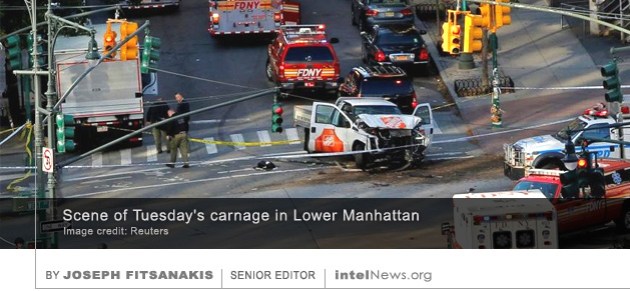
Lower Manhattan attackNews reports hastened to describe Tuesday’s atrocity in Lower Manhattan as “the worst terror attack in New York since September 11, 2001”. The comparison may be numerically accurate. Moreover, the deaths caused by the attack are nothing short of tragic. But if the Islamic State’s deadliest response to its retreat in the Middle East is a clumsy truck driver armed with a pellet gun, then Americans have little to fear from the terrorist group.

For months now, Western counter-terrorism experts have been bracing for a change of tactics by the Sunni group, which in 2014 controlled territory in Iraq and Syria equal to the size of England. The prevailing theory in security circles is that, as the Islamic State is forced to retreat in the Middle East, it will unleash waves of sleeper cells against Western targets abroad. This concern is logical, given the militant group’s obsession with its public image. At every turn since its dramatic rise in 2013, the Islamic State has consciously tried to project an appearance of strength that is far greater than its actual capabilities. In its public statements, the group has consistently extolled its ability to strike at distant targets regardless of its territorial strength in the Middle East. This applies especially to attacks by the Islamic State in Europe, which have tended to come in response to intense media speculation that the group’s territorial hold may be weakening.

One presumes that a terrorist attack in New York, a symbolic site in the ‘war on terrorism’, would aim to do just that: namely project an image of continuing strength and convince global audiences that the group remains potent. Yet, despite the tragic loss of eight lives, Tuesday’s attack in Manhattan did nothing of the sort.

To begin with, an attack on cyclists with a rented utility vehicle is hardly ground-breaking at this point. In the past 18 months, we have seen similar types of attacks in London (on two separate occasions), in Barcelona’s Las Ramblas mall, in downtown Berlin, and in Nice, where a 19-ton cargo truck was used to kill 86 people. Terrorist groups are by nature conservative in their operations, preferring to use low-tech, time-tested methods to dispense violence, rather than risk failure by breaking new ground. But at a time like this, when the very existence of the Islamic State hangs in the balance, one would think that the group would consciously try to intimidate its opponents by showing off some kind of revolutionary new weapon. That did not happen on Tuesday.
Additionally, the perpetrator of the attack, Uzbek immigrant Sayfullo Saipov, is hardly an inspiring figure for Islamic State supporters. After running over a group of unsuspecting cyclists, the 29-year-old Florida resident clumsily smashed his rented truck head-on into a vehicle that was far larger and heavier than his own, thus completely destroying his vehicle’s engine and effectively disabling his only weapon. He then jumped out of the truck, apparently wielding a pellet gun and a paintball gun. Mobile phone footage captured from a nearby building shows Saipov walking in a disoriented manner through Manhattan traffic before being shot by police officers. If —as it seems— the Islamic State was behind that attack, it would mean that modern history’s most formidable terrorist group failed to get a pistol in a country where firearms are in some cases easier to secure than nasal decongestant.

Choice of weapon aside, one does not need to be a counter-terrorism expert to conclude that Saipov lacked basic operational and planning skills. His attack behavior shows that he had failed to carry out even rudimentary prior reconnaissance of the area where he launched his attack. He even appears to have failed to read Tuesday’s New York Post. Had he done so, he would have known that the heavily attended annual Village Halloween Parade was scheduled to take place on the very same street, just two hours after he launched his deranged attack.
Once again, the question is: if the Islamic State does not utilize its deadliest and most capable operatives now, when its very existence in its Middle Eastern stronghold is being directly challenged, then when will it do so? By all accounts, the militant group’s leaders are well-read on recent history. They are therefore fully aware that, in the post-9/11 age, clumsy, low-tech, limited terrorist strikes by lone-wolf operatives lack the capacity to intimidate civilian populations, especially in New York.

Western counter-terrorism agencies and citizens alike should remain vigilant; but early evidence shows that the Islamic State is simply too weak to launch sophisticated, large-scale strikes against Western targets abroad. As I have argued before, the threat level would change if the militant group acquires chemical weapons or other tools of mass terrorism. For now, however, it is safe to state that the Islamic State’s capabilities do not pose anything close to an existential threat to the West.

► About the author: Dr. Joseph Fitsanakis is Associate Professor in the Intelligence and National Security Studies program at Coastal Carolina University. Before joining Coastal, Dr. Fitsanakis built the Security and Intelligence Studies program at King University, where he also directed the King Institute for Security and Intelligence Studies. He is also deputy director of the European Intelligence Academy and senior editor at intelNews.org.

CIA warned Barcelona police two months ago about possible Islamist attack

BarcelonaThe United States Central Intelligence Agency recently warned Spanish authorities that the Islamic State planned to attack Barcelona, according to Spanish media. The disclosure follows Thursday’s dramatic events in the Catalan capital, where a white van deliberately drove into a crowd in the pedestrian mall of La Rambla, killing at least 16 people and injuring more than 100. The attack was followed by reports early on Friday that Catalan police had shot dead four suspects who were planning a second strike.

In the hours following the attack, several observers noted that Barcelona was always an obvious target for the Islamic State, given that the group had already perpetrated terrorist attacks in Berlin, London, Paris and Brussels. They also raised questions about the low level of police presence and the absence of anti-vehicle barrier systems in Barcelona —one of Europe’s busiest tourist destinations. Late on Thursday, the Catalan newspaper El Periódico reported that, two months ago, the CIA alerted the Mossos d’Esquadra, the autonomous police and security service of Catalonia, of a possible terrorist attack by the Islamic State. According to the Barcelona-based daily, the CIA even mentioned La Rambla as the main target of Islamist militants.

Even before the CIA issued its warning, the Islamic State had directed several threats against Spain since 2014, when the group first appeared in Syria. As El Periódico said, the group’s followers “consider themselves obligated to re-establish Islam” in areas that were ruled by Muslim leaders in the past. For much of the medieval period, Spain and Portugal were known as Al-Andalus, and were ruled by a succession of Muslim caliphs. The Spanish daily also reported that a Twitter account associated with the Islamic State issued several warnings against Spain two weeks ago. Specifically, on July 30, the account twitted a series of messages that read: “We will implement the caliphate in Spain and will recover our land. Impending attack on Al-Andalus, God willing”. Similar threats had been issued a year ago on social media, but were later disregarded after they failed to materialize, said El Periódico.

Author: Joseph Fitsanakis | Date: 18 August 2017 | Permalink

Russian spy services raid bomb lab in Moscow, foil large-scale suicide plot

ISIS RussiaRussian intelligence services say they have foiled a large-scale bomb plot, after raiding an explosives laboratory belonging to the Islamic State and arresting four suspects. The four men were allegedly planning to target the Moscow Metro transit system and a busy shopping center in the Russian capital. In a statement released to the media this morning, the Russian Federal Security Service (FSB) did not specify the intended targets of the plotters. But it said it had arrested four people during an early morning raid at an explosives laboratory located in the Moscow suburbs. The FSB said that its officers confiscated large quantities of peroxide-based explosives that resemble the material used by the Islamic State in the November 2015 attacks in Paris, the March 2016 attacks in Brussels, and last May’s suicide bombing in Manchester.

One of the men arrested has been named by the FSB as Akbarzhon A. Dzhalilov, 22, a Kyrghyz-born Russian citizen. The other three men, who have not yet been named, are all from former Soviet Republics of Central Asia. Russian media reported that the Moscow cell was being commanded and directed by the Islamic State in Syria. Two Russian-speaking men from the Russian Caucasus, who are located in Syria, are thought to have been handling the cell’s activities. Russian intelligence services estimate that at least 2,500 Russian citizens have move to the Middle East to join jihadist groups in the past three years.

Had it been carried out, the attack would have been added to a growing list of terrorist incidents against Russia since 2015, which are related to the Kremlin’s decision to enter the Syrian Civil War. In October of that year, the Islamic State claimed responsibility for the bombing of Metrojet Flight 9268, a chartered commercial flight operated by Russian company Kogalymavia. The chartered airliner went down over Egypt’s Sinai Peninsula, killing all 217 passengers and crew on board —the worst disaster in Russian aviation history. In November of 2016, the FSB reportedly foiled another attack by five members of the Islamic State in Moscow. In February of this year, a seven-member Islamic State cell was busted in Yekaterinburg, Russia’s fourth-largest city, while it was planning attacks in several metropolitan areas, including Moscow and St. Petersburg. In April, the North Caucasus-based Imam Shamil Battalion claimed responsibility for a suicide attack in the St. Petersburg Metro transit system, which killed 15 train passengers. The group, whose existence was unknown before the St. Petersburgh attack, said it supported al-Qaeda and perpetrated the attack in retaliation for Moscow’s involvement in the Syrian Civil War.

Author: Ian Allen | Date: 14 August 2017 | Permalink

Rare case of female lone-wolf dissident republican ends in conviction in N. Ireland

Christine ConnorA British court has convicted a lone-wolf female dissident Irish republican, who plotted attacks against police officers after using Facebook to lure two men into joining a fictitious militant organization. Her two male accomplices took their own lives in recent months. The rare case centers on Christine Connor, a 31-year-old resident of Northern Ireland and self-described dissident republican.

The term ‘dissident republican’ refers to secessionist militants who campaign for the union between Northern Ireland —which currently belongs to the United Kingdom— and the Republic of Ireland, which gained its independence from the United Kingdom in 1922. In 1998, after a decades-long armed campaign, the majority of Irish republicans surrendered their weapons and accepted the terms of the Good Friday agreement, which outlines a peaceful resolution to the problem of Northern Ireland’s status. But some republican activists rejected the agreement and vowed to continue to use violence to achieve the union of Northern Ireland with the Republic of Ireland. These are known as dissident republicans and typically support a number of paramilitary secessionist groups, such as the Continuity Irish Republican Army and the Real Irish Republican Army.

But Christine Connor did not belong to any of these groups. Instead, she used Facebook to create a fictitious dissident republican organization called ‘United Struggle’, and declared war on the Police Service of Northern Ireland. She then created another fictitious social media account using the image of Sanne Alexandra Andersson, a Swedish model and fashion personality. Connor then used her fake online persona to lure two men into joining the militant organization that she claimed to lead. One of them was Stuart Downes, an Englishman from the town of Shrewsbury, near the Welsh-English border. She convinced him to build explosive devices, which the police described as “sophisticated, fully functioning bombs”. In May of 2003, Connor used the devices in an unsuccessful attempt to kill two police officers in north Belfast.

The lone-wolf militant used her fake social media accounts to lure another man, an American called Zachary Gelvinger, into joining ‘United Struggle’. Gelvinger, who sent hundreds of dollars to Connor’s organization, had his home searched by the Federal Bureau of Investigation, and was arrested in the United Kingdom while attempting to visit Connor in prison, in July of 2013. Downes, the Englishman, was arrested by police in Shrewsbury shortly after making a phone call from a public phone box to claim responsibility on behalf of ‘United Struggle’ for Connor’s failed attempt to kill the police officers in Belfast. Tragically, Downes killed himself in June of 2016. Gelvinger, the American member of ‘United Struggle’, killed himself in May of this year.

Remarkably, neither of the two men had any connection to Northern Ireland or any previous involvement in republican politics in or out of the United Kingdom. Last month, Connor pleaded guilty to a score of offenses, including terrorism. Last Tuesday, she was sentenced to 16 years in prison.

Author: Ian Allen | Date: 22 June 2017 | Permalink

Opinion: Trump’s silence over Tehran attacks exposes US policy conundrums

IranThe security map of the Middle East changed within a few hours on Wednesday, when the Islamic State managed to strike Iran for the first time. Six assailants —five men and a woman— stormed the Islamic Consultative Assembly, which serves as the parliament of Iran, and the mausoleum of the founder of the Islamic Republic, Ayatollah Khomeini. By the time they killed themselves, or were killed by security forces, the six had murdered 12 people and injured over 60. The Islamic State, which carried out the attack, had warned for several months that it would launch a direct assault at the heart of the world’s largest Shiite state. It tried to do so before, several times, and failed. But Wednesday’s attack was the first time it managed to do so successfully.
It is certainly ironic that Iran, one of the world’s most prolific sponsors of terrorism, boasts of being one of the most terrorism-free countries in the Middle East. Indeed, Wednesday’s bloody strike was the largest terrorist attack in Tehran’s history after the early years of the 1979 Islamic Revolution. It is a remarkable record that many of Iran’s neighbors, such as Iraq or Syria, can only dream of. Moreover, Iran’s claim that its regional rival Saudi Arabia is responsible for Wednesday’s attack is both outlandish and absurd. It is true that militant Wahhabism, Saudi Arabia’s state religion, is at the root of the Islamic State’s doctrine. But the fanatics of the Islamic State direct as much ire against Saudi Arabia as they do against Iran. They accuse the former of being apostates —Muslim traitors who side with infidels— and the latter of being heretics that must be annihilated. Read more of this post

Islamic State faces imminent financial collapse, claims new study

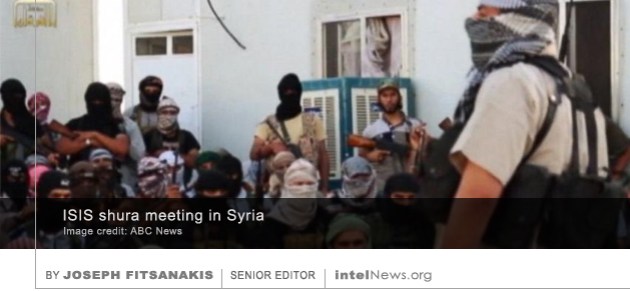
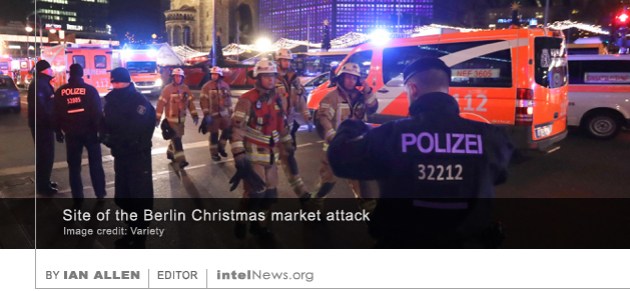
ISIS meetingThe Islamic State is facing imminent financial collapse, according to a new study conducted by a London-based research group in association with one of the world’s leading international accounting firms. The recently launched report is entitled Caliphate in Decline: An Estimate of Islamic State’s Financial Fortunes. The analysis that forms the basis of the report was conducted by scholars at the International Center for the Study of Radicalization, a research center that operates out of the Department of War Studies at King’s College in London. The report’s authors were joined by financial analysts at Ernst & Young, a British-based company that is often referred to as one of the world’s ‘big four’ accounting firms.
The report challenges the widely accepted claim that the Islamic State is the wealthiest terrorist organization in history. Its authors argue that the organization’s wealth is connected to its function as “a quasi-state”, with a geographical territory under its control and a subject population that lives in it. Territorial control, say the report’s authors, allows the Islamic State to amass significant revenue from sources like direct and indirect taxation, extraction of natural resources, and confiscation of property from citizens, among others. Even though much of the Islamic State’s financial activity is hidden, the study uses open sources to make the claim that the group’s income in 2014 was close to $2 billion. Last year, however, the overall income amassed from all sources dropped to less than $900 million, an estimated reduction of 45 percent, say the researchers.

The reason for the drop is that the financial revenue model of the Islamic State is directly linked to its territorial control. In comparison to the peak of its power in the spring of 2014, the Islamic State has today lost control of over 60 percent of its territory in Iraq and nearly a third of its territory in neighboring Syria. As coalition forces are beginning to retake Mosul, the Islamic State is facing the potential loss of the caliphate’s commercial capital. These developments will continue to seriously erode the group’s tax base and severely limit its revenue streams. There are no signs, say the researchers, that the Islamic State has been able to devise new forms of revenue streams that are not connected to direct territorial control. However, the authors of the study warn that a potential financial collapse of the Islamic State will not prevent the organization from carrying out terrorist activities in the Middle East and beyond.

Author: Joseph Fitsanakis | Date: 01 March 2017 | Permalink

German security agencies had watched Berlin market attacker for a year

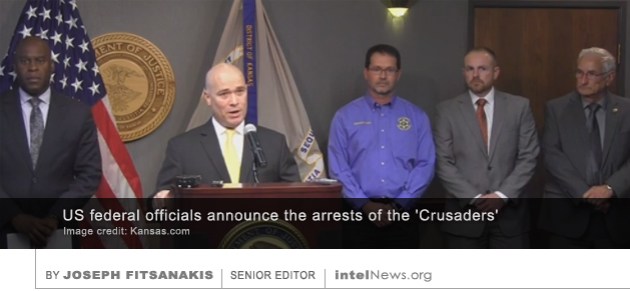
Berlin Christmas market attackThe central suspect in the Berlin Christmas market attack had been on the radar of German security agencies since January of this year, because he had links with radical Islamists and sought to buy guns for a terrorist attack. Anis Amiri, 23, left his native Tunisia in 2011, soon after the outbreak of the so-called Arab Spring there. He lived in Italy for three years before arriving in Germany in July 2015. In April of this year, he applied for an asylum in Germany. According to German authorities, Amiri was arrested multiple times in Tunisia for drug-related offenses. He is also believed to have used at least six different aliases since moving to Europe, and to have claimed to be a citizen of Lebanon and Egypt at different times.
On Wednesday, German newspaper Süddeutsche Zeitung revealed that Amiri’s cell phone and email accounts had been monitored by German security agencies at least since January of this year. The decision to monitor his telecommunications was reportedly taken by officials at Germany’s Center for Terrorism Defense (GTAZ). The agency functions as a fusion center for intelligence cooperation between German police and spy services. The newspaper said that Amiri was deemed suspicious because of his connections with several radical Islamists, who were arrested in Germany in recent months. They include Abu Walaa, a vocal supporter of the Islamic State who was captured in Northern Germany in November. According to anonymous German officials, Amiri had also told friends that he was seeking people to help him purchase weapons and use them to carry out attacks on civilians in Europe.

Last summer, Amiri was involved in a scuffle between rival drug gangs in Berlin, in which at least one knife was used. But he disappeared for several weeks when police tried to question him about it. He was eventually arrested and questioned by police in Berlin. It was discovered that, according to one German official, Amiri “was highly mobile”, moving between Berlin and northern Germany every few weeks. But, according to the Süddeutsche Zeitung, German authorities did not have enough evidence against him to keep him in detention. Shortly after Amiri’s arrest and subsequent release, German authorities decided to turn down his application for asylum due to security concerns. He was due to be deported from Germany before December 31. The German police is now offering up to €100,000 for Amiri’s capture.

Author: Ian Allen | Date: 22 December 2016 | Permalink

Members of far-right group arrested in Kansas face WMD terrorism charges

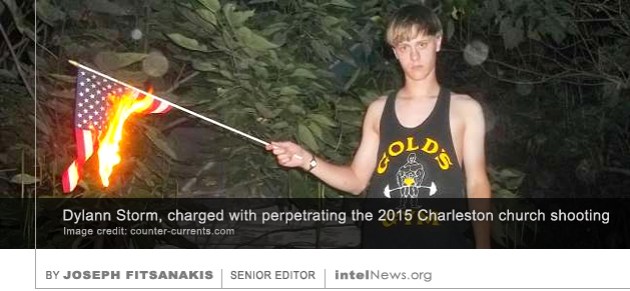
Federal arrestsFederal authorities in the United States have charged three men with conspiring to use a weapon of mass destruction with the intention of blowing up an apartment complex in a predominantly Muslim neighborhood in Kansas. The men, Patrick Eugene Stein, Curtis Allen and Gavin Wright, who called themselves ‘the Crusaders’, allegedly wanted to spark a religious war between Christians and Muslims in the United States. They were arrested last week in simultaneous raids conducted by the Federal Bureau of Investigation, after they obtained guns and chemicals for making bombs. According to the US Department of Justice, the terrorism suspects planned to build a device similar to the ammonium nitrate-based bomb used by Timothy McVeigh in 1995 to blow up the Alfred P. Murrah Federal Building in Oklahoma City.
Recordings of telephone conversations between members of the ‘Crusaders’ reveal their desire to use the attack to entice militia groups across America to take up arms against the government. They also expressed a desire to “wake people up” and turn Americans against Islam and Muslims. It appears that the three men began planning their attack in early 2016. By early summer, they had selected as their primary target an apartment complex housing many Muslim immigrants from Somalia, located in Garden City, Kansas. According to court documents, the group planned to detonate explosives hidden inside cars parked across from the two main entrances to the apartment building. Knowing that one of the apartments is used as a makeshift mosque by the residents of the complex, the ‘Crusaders’ allegedly planned to detonate the bombs during the traditional Muslim prayer time on a Friday. The goal, according to the indictment, was to kill as many people as possible.

But the FBI had been monitoring the group after receiving a tip-off by a man who said he had attended the ‘Crusaders’ planning meetings and was concerned about their violent intentions. The FBI promptly put together a sting operation, in which FBI agents posing as far-right militants offered to sell the group guns. Soon afterwards, the girlfriend of Curtis Allen, one of the ‘Crusaders’, contacted the authorities saying her boyfriend had physically abused her. She then showed police officers a room in her house where Allen had reportedly stored weapons and chemicals for manufacturing explosives. Realizing that the militant group was close to launching a strike, the FBI decided to move in and arrest its members last week. All of them are currently being held without bail and face life in prison if convicted.

Author: Joseph Fitsanakis | Date: 20 October 2016 | Permalink

Comment: Far-right militancy just as dangerous as Islamist extremism

Dylann RoofMany in the United States associate terrorism with contemporary versions of militant Islam. The data, however, tells a different story: since 2002, domestic extremists who hold far-right ideologies have struck more often and have killed more people than Islamic-inspired radicals. This blog has argued in the past that American counterterrorism policy creates a security vacuum by over-concentrating on Islamic-inspired radicals and largely ignoring domestic terrorist groups. In an insightful article published earlier this year in Newsweek magazine, Kurt Eichenwald, a 20-year veteran of investigative reporting and author of The Informant, argues that far-right radicalism is a bigger threat to American security than Islamic militancy, including the Islamic State.
Eichenwald cites a report by Duke University’s Triangle Center on Terrorism and Homeland Security, which was based on surveys from 382 law enforcement groups across the US. The report, published in June of last year, argues that American “law enforcement agencies […] consider anti-government violent extremists, not radicalized Muslims, to be the most severe threat of political violence” they face. He also points to increasing incidents of surveillance of Muslim schools, religious and community centers in nearly a dozen states by members of far-right militia groups for what informants describe as “operational purposes”.

American counterterrorism specialists understand that the term “far-right militancy” encompasses thousands of groups of various sizes and capabilities, which are both wildly diverse and constantly evolving, says Eichenwald. Most experts separate the members of these groups into three distinct categories, namely violent racists, anti-federalist (or anti-government) radicals, and religious fundamentalists. These factions, which include dozens of sub-factions, do not usually work together and even have adversarial relations with each other. Violent racists operate as members of groups such as the Ku Klux Klan in mostly rural and semi-urban settings. In urban environments, neo-Nazi and skinhead groups are more prevalent than the KKK. Anti-government radicals join armed militias that espouse various ideologies representing the so-called “sovereign citizens” worldview —namely the belief that federal, state or local laws are tyrannical and do not apply to them. The final category, religious fundamentalists, are members of various Christian identity groups that prioritize the Bible over the US Constitution and support the violent imposition of Christian religious codes on social life.

The list of these groups is growing, says Eichenwald, largely in reaction to economic pressures caused by the deep recession of 2007. The ascendency of Barack Obama to the US presidency has also radicalized the racist-oriented far right, he says, which overlaps to some extent with the militia movement. In 2008 there were 42 organized militia groups operating in the US. Today there are 276, he says, referring to information provided by the Alabama-based Southern Poverty Law Center. There is no doubt that Islamic fundamentalism poses clear dangers to US security. But, as Eichenwald argues, this country has been extremely lucky to have avoided a repeat of the 1995 attack on the Oklahoma Federal Building, which was carried out by a white supremacist guided by militant anti-government ideas. A repeat of such a massacre in recent years has not been due to lack of trying, says Eichenwald, and ignoring the problem will not make it go away.

Author: Joseph Fitsanakis | Date: 06 October 2016 | Permalink

Flow of foreign fighters to ISIS drops to near zero, intel assessments show

ISIS meetingThe transfer of foreign fighters into Iraq and Syria to join the Islamic State and other Sunni militant groups has been all but eliminated in countries across the world, according to intelligence assessments. In previous years, it has been estimated that nearly as many as 2,000 foreign recruits, both men and women, crossed into Syria each month, mainly from Turkey, with the intention of joining armed Sunni groups. By the end of 2015, it was believed that over 30,000 foreign nationals from close to 90 countries had entered Syria and Iraq to fight for one of the Sunni-inspired opposition groups taking part in the Syrian civil war. Most of these foreign recruits joined the Islamic State, which is also known as the Islamic State of Iraq and Syria (ISIS).

But current intelligence assessments produced by analysts in the US Intelligence Community suggest that the total inflow of foreign recruits has trickled down to a total of just 50 since the beginning of 2016. Many European countries, notably Belgium and Britain, have not seen any of their nationals leaving for Syria or Iraq this year, while fewer than 10 Americans have done so since January. According to The Washington Post, which last week published a report on the subject, this unprecedented trend is largely attributable to the shrinking territory —and presumably operational strength— of the Islamic State. Some experts note that, like al-Qaeda before it, the Islamic State is now seen as “failing entity” by Sunnis, prompting many aspiring jihadists to not wish to be associated with the group. It has also becoming more difficult for individuals to enter Syria, as Western governments and Turkey have grown progressively vigilant of young men and women seeking to travel to regional warzones. The Islamic State has also lost its control over regions that are adjacent to Turkey’s borders, which discourages Turkish and Syrian smugglers from attempting to transfer people across the notoriously porous border.

But even though the decline is sustainable, and marks “an important milestone” in multinational endeavors to combat the growth of the Islamic State, The Washington Post notes that it also raises critical questions about the future of Western security. Specifically, the paper wonders whether the terrorism threat from the Islamic State is easing, or if it is “morphing into a more dangerous new phase”, in which potential recruits are instructed to attack Western targets and former recruits disperse into conflict-prone areas across the world to spread the jihad there.

Author: Joseph Fitsanakis | Date: 12 September 2016 | Permalink

New information points to previously unknown ISIS intelligence agency

ISIS meetingThe Islamic State has set up a secretive intelligence agency whose task is to set up sleeper cells abroad and has already sent “hundreds of operatives” to Europe and Asia, according to information emerging from interrogations of suspects. According to The New York Times, the information about the intelligence agency comes from “thousands of pages” of intelligence files from American, French, Belgian, Austrian and German agencies. The documents include information from interviews with captured members or defectors from the Islamic State, which is otherwise known as the Islamic State in Iraq and Syria (ISIS).

Citing unnamed American military and intelligence officials, The Times says the ISIS intelligence agency goes by the name Emni. It appears to be a multilevel organization that includes domestic and external operational components. It is headed by Abu Muhammad al-Adnani, the most infamous Syrian official in the Islamic State, who has also served as the group’s information director and head of its special forces units. Emni’s external unit is tasked with conducting terrorist operations abroad. These are the responsibility of several lieutenants, who are permitted to recruit the most capable members of ISIS from around the world. These recruits are typically placed in units according to nationality and language skills. They are then trained and deployed in small cells that remain in touch with Emni’s headquarters but operate in relative independence from the agency.

According to ISIS defectors, Emni began deploying cells abroad in 2014, focusing primarily on Europe and Asia, including the Middle East. Allegedly, Emni cells have been or are currently operational in Germany, Austria, Spain, France, Belgium, Lebanon, Tunisia, Bangladesh, Malaysia and Indonesia. Close to 30 operatives have managed to carry out 10 attacks around the world, while another 30 have been arrested while preparing them. The Times notes that, if the information about Emni’s tasks is correct, then the recent attackers who launched operations in Europe could have far closer ties to the Islamic State than initially presumed. Interestingly, it appears that Emni is following a different tactic in the United States, where the widespread availability of weapons does not require them to deploy operatives who have received training in Iraq or Syria. Instead, they use the Internet to radicalize potential recruits. Once radicalized, “if they have no prior record, they can buy guns, so we don’t need to have no contact man who has to provide guns for them”, according to a German former member of ISIS.

Author: Joseph Fitsanakis | Date: 09 August 2016 | Permalink

Analysis: Will ISIS claim responsibility for Istanbul airport attack? (updated)

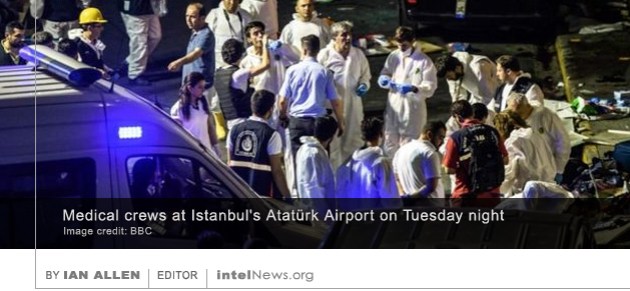
Istanbul Airport TurkeyTurkish security and counterterrorism officials are blaming the Islamic State of Iraq and Syria for Tuesday’s bloody attack at Istanbul’s Atatürk airport, which left at least 41 people dead and nearly 300 injured. But will ISIS claim responsibility for the attack? And if not, why not? ISIS is indeed the most likely culprit of Tuesday night’s terrorist attack. The modus operandi of the three attackers, which some unconfirmed reports suggest Turkey has now confirmed were foreign nationals, matches that of previous ISIS attacks on high-profile international targets. More importantly, the style of the attack does not fit the profile of the secessionist Kurdistan Workers’ Party, known as PKK, which almost always targets uniformed personnel in Turkey.
There is no shortage of motives for ISIS to target Turkey. The militant group wants to destabilize Turkey, which it sees as a prime market for spreading its ideas, especially among the country’s disenfranchised religious working class. The attack at Istanbul’s airport happened in the holy month of Ramadan, the most revered time on the Muslim religious calendar, during which ISIS said would launch a wave of violence around the world. Last but not least, foreign and domestic intelligence agencies had warned the Turkish government in recent weeks of an impending large-scale attack by ISIS, saying that the group was anxious to re-galvanize its supporters after suffering heavy military defeats in Iraq and Syria. Since the start of 2015, experts have connected ISIS to at least seven different attacks on Turkish soil, most of them in large urban centers like Ankara and Istanbul. However, the only attacks the militant group has claimed responsibility for were against Syrian anti-ISIS activists based in southern Turkey. In contrast, ISIS has shied away from officially linking itself with deadly attacks against high-profile targets in Turkey. This latest attack may fall in line with that pattern.

But why would ISIS not claim responsibility for such a media-savvy strike? There is no question that the Sunni Islamist group wants to destabilize Turkey’s economy, a goal that it sees as key to its success. That explains Tuesday night’s attack on one of the country’s busiest transport hubs during the peak of the tourist season. At the same time, however, ISIS is aware that Turkey’s main concern in the Middle East is not Sunni Islamism, but the rise of the PKK and other secessionist Kurdish groups. The latter are some of ISIS’ most formidable military adversaries, and the Islamist group would rather not distract Turkey from its escalating war against the Kurds. What’s more, because Ankara has been paying most of its attention to Kurdish separatists, ISIS has been able to build an extensive network of operatives inside Turkey, and it does not want to see it demolished by Turkish security forces. ISIS is therefore engaged in a delicate balancing act: on the one hand it wants to destabilize Turkey so as to export its sectarian war to one of the world’s most populous Sunni Muslim nations. On the other hand, however, it does not want to alter Turkey’s security priorities, which are mostly focused on Kurdish militias.

What will it mean if ISIS breaks with the typical pattern and does claim responsibility for Tuesday’s attack in Istanbul? That would be equivalent to an official declaration of war by the Islamic State against the Turkish Republic, a call for arms issued to all pro-ISIS networks in Turkey for the opening of a northern front in this widening regional conflict. It could also spell trouble for Turkey’s beleaguered security forces, which will be forced to divide their attention between two foes, the PKK in the east and in urban centers, and ISIS in the south and in popular tourist resorts throughout the country.

Author: Ian Allen | Date: 30 June 2016 | Permalink

Iran says it foiled ‘massive terrorist attack’ by Sunni militants

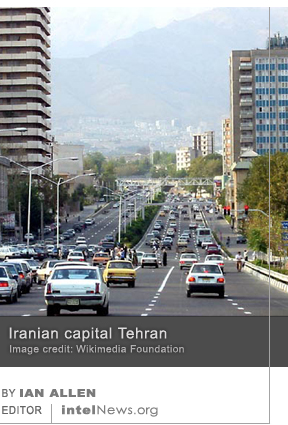
TehranIranian intelligence officials said on Monday that they foiled “one of the largest terrorist attacks ever planned” against the country, allegedly plotted by Sunni militants aiming to inflict mass casualties during the month of Ramadan. A statement by the Islamic Republic’s Ministry of Intelligence said that the attacks had been planned to take place simultaneously in the capital Tehran and several other Iranian cities. Iranian state-owned news agencies reported that an unspecified number of suspects had been arrested and were under interrogation by the authorities.
The statement by the Intelligence Ministry provided few details, but said that the suspects were arrested in several raids conducted across Iran. It added that “a great deal of explosives and ammunition” were confiscated in the raids. The Iranian Students News Agency (ISNA), which has close links with the Iranian government, said that the raids were personally coordinated by Rear Admiral Ali Shamkhani. Shamkhani is secretary of the Supreme National Security Council of Iran, which is effectively the country’s national security council. Another government-controlled news agency, Fars, said that the terrorist plot aimed to attack civilian targets during the holy month of Ramadan, which is the most revered time on the Muslim religious calendar. Iran’s official state news agency, IRNA, reported on Monday that the attacks had been planned for last Thursday, a day in the Iranian religious calendar when festivities are held to commemorate the death of Khadija bint Khuwaylid, the first wife of the Prophet Mohammed.

None of the media reports identified those who were allegedly connected with the planned attacks. However, the reports repeatedly used the term ‘takfir’, a derogatory epithet used to describe Muslims who display militancy against those whom they consider to be ‘unbelievers’. The term is frequently employed by state-owned Iranian media to refer to the followers of the Islamic State, which Iran has been battling for over a year in support of the Syrian government of President Bashar al-Assad. However, IRNA referred to the alleged plotters as “Wahhabi takfiris”, possibly implying a link with Saudi Arabia, where Wahhabism is the state-promoted religious dogma. Relations between Iran and Saudi Arabia have sunk to unprecedented lows in recent years. Last month, Iran said it would not allow religious pilgrims to visit Saudi Arabia for the annual hajj pilgrimage, because the Saudi authorities had not responded to Tehran’s requests to provide security for Iranian pilgrims.

Author: Ian Allen | Date: 21 June 2016 | Permalink

Terrorism most likely cause of EgyptAir disaster, despite no ‘smoking gun’

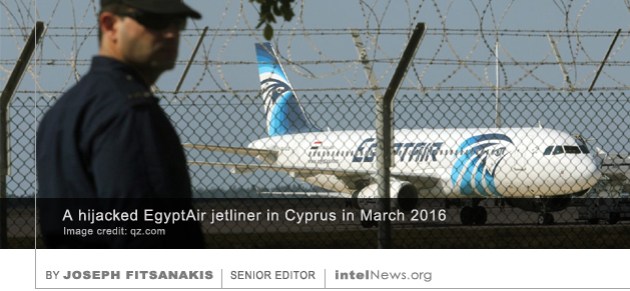
EgyptAirEgypt’s aviation minister has joined the head of Russia’s domestic security service, unnamed US intelligence sources, as well as a host of aviation security experts, in seeing terrorism as the most likely cause behind the EgyptAir MS804 air disaster. That is despite the absence of a clear ‘smoking gun’ and silence from the Islamic State, which leads many to still caution that the possibility of an accident should not be ruled out. The regularly scheduled flight departed Paris, France, late on Wednesday, heading for Cairo, Egypt. But it disappeared from radar screens just minutes after entering Egyptian airspace and is now believed to have crashed into the Mediterranean Sea.


On Thursday, Egypt’s Minster of Aviation, Sherif Fathi, told reporters that, when carefully weighing what is known about the plane’s disappearance, “the possibility of having a different action or a terror attack is higher than the possibility of having a technical failure”. He was soon joined by Alexander Bortnikov, Director of Russia’s Federal Security Service, the FSB, who said that Wednesday’s air disaster was “in all likelihood” caused by an act of terrorism. Asked by reporters if the FSB had evidence pointing to a terrorist attack on the plane, Bortnikov refused to comment.

Also on Thursday, the American network CBS cited an unnamed “US intelligence source” familiar with US investigations into EgyptAir MS804, who said that “all indicators” were that “a catastrophic event took down the airplane”. The network added that American investigators were leaning toward the possibility of an explosion onboard the aircraft because of its chaotic flight path in the moments before its disappearance from radar screens. Additionally, US government sources noted that the aircraft descended “like a rock”, at extremely high speed, which also pointed to a sudden, catastrophic event. In contrast, aircraft engine failure typically results in a much lower rate of descent. Citing “two US government officials” CNN network reported that Washington was operating on the assumption that the EgyptAir flight had been “taken down by a bomb”, despite the absence of a “smoking gun”. Conflicting reports indicated that US reconnaissance satellites did not register evidence of an explosion or flash in the eastern Mediterranean around the time that the jetliner disappeared. However, it was also noted that US satellites monitoring the region were “not calibrated to detect explosions”.

In France, the former director of the country’s Bureau of Investigation and Analysis for Aviation Security (BAE), Jean-Paul Troadec, said that the possibility of an accident was unlikely. “It’s a modern plane, the incident happened in mid-flight in extremely stable conditions. The quality of the maintenance and the quality of the plane are not in question in this incident”, he told Europe 1 Radio, adding that EgyptAir was authorized to operate out of European airports, so “it is not on any blacklist”. Another expert that weighed in on Thursday was CNN’s aviation correspondent Richard Quest. He told the network that, in today’s aviation environment, “planes just do not fall out of the sky for no reason, particularly at 37,000 feet”, adding that the EgyptAir jetliner disappeared while in cruising mode, which is typically the safest segment of any airborne journey.

Meanwhile, intelligence and security services in the Middle East, Europe and the US have been searching for evidence of a claim of responsibility issued by a group such as the Islamic State or al-Qaeda. There are also searches taking place to determine whether cellular or online ‘chatter’ from sources associated with terrorist groups has changed in volume or intensity, but so far no obvious signs of a change have been spotted, according to reports. The last time the Islamic State downed an airplane was when it targeted Metrojet Flight 9268, owned by Russian holiday tour operator Kogalymavia, over Egypt’s Sinai Peninsula. The militant group quickly assumed responsibility for the attack, then 20 days later revealed photographs of the bomb that caused the fatal blast.

Author: Joseph Fitsanakis | Date: 20 May 2016 | Permalink