More facts revealed about mystery sonic attacks on US embassy in Cuba
September 4, 2017 3 Comments
 American officials have revealed more information about a mysterious sonic device that is believed to have caused numerous diplomats to suffer hearing loss and other serious ailments. Last month, the Associated Press reported that the first hearing-loss symptoms were reported by personnel at the US embassy in Havana in the fall of 2016. The news agency said that at least five embassy personnel reported suffering from sudden and unexplained loss of hearing. The symptoms were so serious that caused some American diplomats “to cancel their tours early and return to the United States”, according to the Associated Press.
Now new information has been disclosed by the United States Department of State. It suggests that, although diplomats began reporting hearing-loss symptoms in as early as fall 2016, the incidents continued until mid-August of this year. In a report published on Saturday, the BBC said that the bizarre incidents had not ended “several months ago” as was initially believed. Instead, they continued even after the last week of May, when the US deported two Cuban diplomats from Washington, DC. The move was in response to what Washington believes was a deliberate attempt to sabotage its diplomatic mission in Havana. The American embassy in the Cuban capital reopened in 2015, 54 years after it was closed down following a series of diplomatic rifts between Cuba and the US during the height of the Cold War.
Additionally, the Department of State said on Friday that the number of American diplomats and other US embassy personnel who have reported sonic-related symptoms has increased to 19. State Department spokeswoman Heather Nauert told reporters in Washington that doctors were still evaluating the health of those serving at the US embassy in Havana. She added that new cases of people suffering from sonic-related medical symptoms could not be ruled out. A report from the American Foreign Service Association, which represents members of the United States Foreign Service, said on Friday that its representatives had spoken to 10 people who had received various treatments for ailments related to the alleged sonic attacks in Cuba. It said that many had suffered “permanent hearing loss”, while others were diagnosed with mild brain injuries.
According to media reports, Washington has concluded that the American diplomats were exposed to “an advanced device that was deployed either inside or outside their residences”. But the Cuban government denied that it had anything to do with the American diplomats’ symptoms, and some believe that the alleged “covert sonic device” may have been deployed by an intelligence service of a third country —possibly Russia— without the knowledge of Cuban authorities.
► Author: Joseph Fitsanakis | Date: 04 September 2017 | Permalink
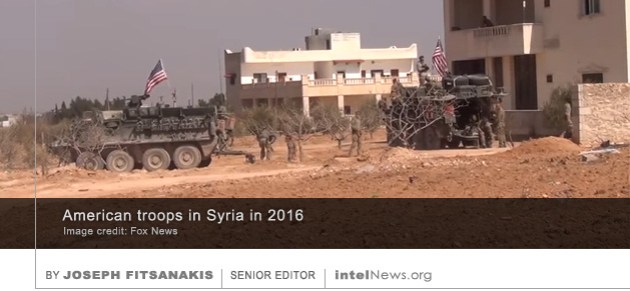 American troops deployed in Syria have exchanged fire with rebels that were until recently supported by the United States Central Intelligence Agency. In 2013, soon after the outbreak of the Syrian Civil War, the then-US President Barack Obama instructed the Central Intelligence Agency to provide covert support to fighters in Syria. Acting on the president’s directive, the CIA promptly joined forces with spy agencies from Britain, France, Saudi Arabia and the United Arab Emirates, to assist fighters affiliated with the Free Syrian Army. At that time, Washington saw the Free Syrian Army and forces affiliated with it as ideologically moderate. It also agreed with the group’s main aim, which was to topple the regime of Syrian President Bashar al-Assad.
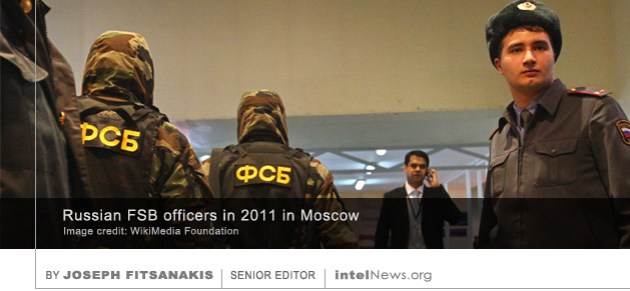 Two senior officers in the Russian intelligence services were charged with treason after they were found to have helped the United States catch two notorious Russian hackers, according to reports in the Russian media. Sergey Mikhailov was a career officer in the Federal Security Service —a descendant of the domestic section of the Soviet-era KGB— which is often referred to as Russia’s equivalent of the United States Federal Bureau of Investigation. Mikhailov had risen through the ranks of the FSB to eventually head the agency’s Center for Information Security. Known in Russia as CIB, the Center is tasked with investigating electronic crime in the Russian Federation.
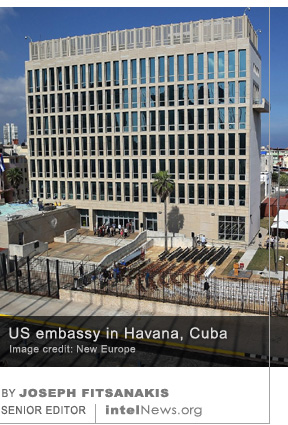 Authorities in Cuba, the United States and Canada are investigating reports that several foreign diplomats stationed in Havana have been experiencing severe hearing loss in recent months.
  The role of the CIA in funding and helping to organize anti-Soviet groups inside the USSR has been known for decades. But, as intelNews explained in
  Recently declassified documents from the archive of the Central Intelligence Agency detail financial and material support given by the United States to groups of armed guerrillas in Soviet Latvia in the 1950s. The documents, initially marked ‘Top Secret’ but now declassified, show that the CIA was aware and supported the activities of an anti-Soviet guerrilla army known as ‘the Forest Brothers’. Known also as ‘the Forest Brethren’, the group was formed in the Baltic States in 1944, as the Soviet Red Army established Soviet control over the previously German-occupied states of Estonia, Latvia and Lithuania. The Soviet Union had previously occupied and annexed the three Baltic countries, in a failed attempt to pre-empt Germany’s eastward military expansion. Groups like the Forest Brothers consisted of the most militant members of anti-Soviet groups in the Baltic States, many of whom were ideologically opposed to Soviet Communism.
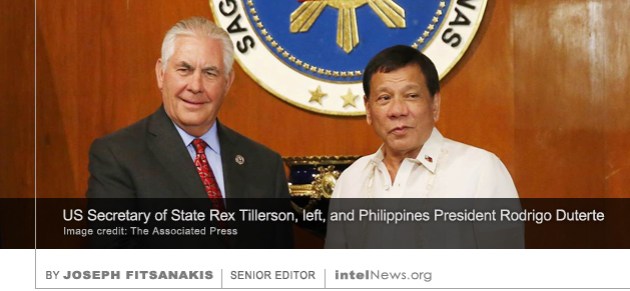 The United States is reportedly weighing plans to launch airstrikes in the Philippines, against militant groups that are affiliated with the Islamic State of Iraq and Syria. However, some American officials are skeptical about reports of possible airstrikes, while Philippine government officials claim no such action is necessary. For more than 40 years, the Philippine army has been fighting a counterinsurgency campaign against secessionist Moros in the country’s southwest. The region is home to most of the Philippines’ Muslim population, which constitutes around 6 percent of the country’s overall population. In recent years, some Muslim secessionist groups, including the most formidable, Abu Sayyaf, have pledged allegiance to the Islamic State of Iraq and Syria, known as ISIS.
 The decision by the White House to terminate American support for rebels in war-torn Syria could backfire by causing the suddenly unemployed fighters to join jihadist organizations, according to experts. The United States’ support for the rebels began in secret in early 2013, after the then US President, Barack Obama, instructed the Central Intelligence Agency to provide covert support to fighters in Syria. The CIA then joined forces with spy agencies from Britain, France, Saudi Arabia and the United Arab Emirates, to assist fighters affiliated with the Free Syrian Army. At that time, Washington saw the Free Syrian Army and forces affiliated with it as ideologically moderate. It also agreed with the group’s main aim, which was to topple the regime of Syrian President Bashar al-Assad.
 Nearly half a billion of American taxpayers’ funds were wasted by contractors hired by the United States government to train Afghan intelligence personnel, according to a scathing report by a Congressional body. The funds were spent between 2010 and 2013 by the US Department of Defense, in order to train several thousand members and a few dozen aspiring trainees of the Afghanistan National Defense and Security Forces (ANDSF). Two companies, Legacy Afghanistan R&D and Afghanistan Source Operations Management, oversaw the training program. It was primarily executed by a contractor, Imperatis Corporation, and a subcontractor, New Century Consulting, at a total cost of $457 million to the US taxpayer.
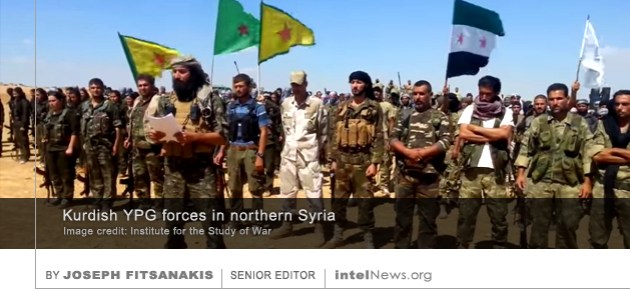 Dozens of Western European and American citizens are participating in the ongoing takeover of Raqqa, the de facto capital of the Islamic State in Syria, despite being prohibited from doing so by their own governments, according to recent news reports. Much has been written about foreign fighters who enter Iraq and Syria in order to join the ranks of the Islamic State, the Sunni militant group that previously went by the name Islamic State of Iraq and Syria (ISIS). But relatively little attention has been paid to the thousands of foreign fighters who have traveled to the region to join the war against ISIS.
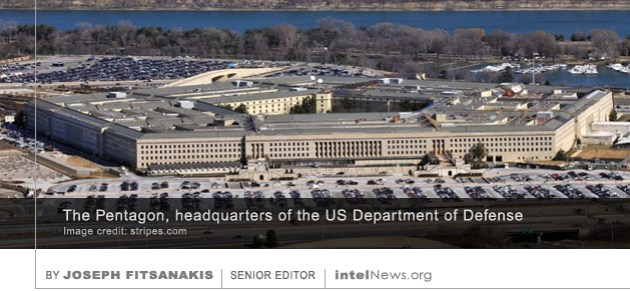 The White House will soon announce its decision to strengthen the United States Cyber Command and separate cyber war operations from intelligence functions, according to insider reports. For many decades, the National Security Agency has been in charge of protecting America’s cyber network and combating online threats. But in 2009, the Administration of US President Barack Obama established a brand new Cyber Command, proposing that the online environment represented a new theater of war. Since that time, the US Department of Defense has been campaigning in favor of strengthening the new Cyber Command and completely removing it from the patronage of the NSA –despite the fact that the latter is also a Pentagon agency.
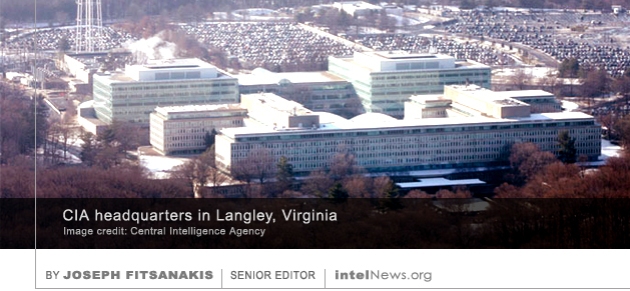 A contractor for the United States Central Intelligence Agency has complained in an interview that no action has been taken in the seven years since he revealed a “billion-dollar fraud” and “catastrophic intelligence failure” within the Agency’s ranks. John Reidy argues that his case illustrates the unreasonable delay that impedes investigations by whistleblowers like him inside the CIA. Individuals like him, he argues, are forced to seek justice through leaks to the media, something which could be avoided if the CIA’s Office of the Inspector General addressed concerns more promptly.
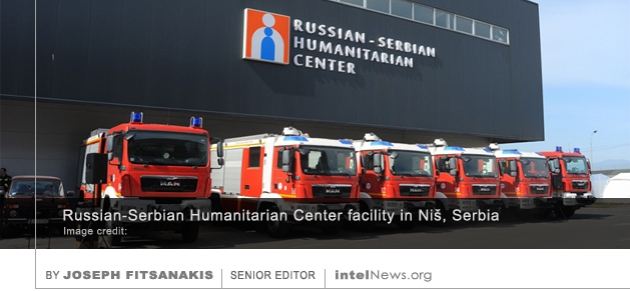 Staff at a Russian disaster relief center in southern Serbia have rejected claims by American officials that the facility operates as an espionage arm of Moscow’s foreign policy in the Balkans. The Russian-Serbian Humanitarian Center was built in 2012, at a cost of nearly $40 million, following an agreement between Belgrade and Moscow. Its
  Russia is planning to expel approximately 30 American diplomats from its territory, and seize buildings and property belonging to the United States Department of State, according to Russian media reports. The expulsions will be in response to the expulsion last December of 35 Russian diplomats stationed in the US by the administration of President Barack Obama. In addition to expelling the diplomats, Washington also reclaimed two “recreational facilities” (in reality intelligence outposts) that were used by the Russians in New York and Maryland. The White House said that the expulsions were ordered in response to alleged efforts by Russia to interfere in the 2016 US presidential election.








Australia rejected CIA request to open embassy in North Korea
September 20, 2017 by Joseph Fitsanakis Leave a comment
Throughout that time, Australia has maintained relatively smooth diplomatic relations with North Korea, but has refrained from opening a residential mission in the communist country. Instead, employees of Australia’s embassy in South Korea occasionally travel to the North to perform diplomatic tasks. But in 2014, the US Department of State reached out to Canberra to request that the Australian government consider the possibility of establishing a permanent residential mission in Pyongyang. According to The Australian, the request came from the CIA, which hoped to use the Australian embassy as a base from where to collect intelligence on the isolated country. The US, which lacks an embassy in North Korea, has always found it difficult to collect intelligence there.
The American request was promptly communicated to the then-Prime Minister Tonny Abbott and his Minister of Foreign Affairs, Julie Bishop. Both appeared willing to consider Washington’s proposal. But the civil servants of the Department of Foreign Affairs and Trade, who were tasked with putting together a cost-benefit analysis of the request, came back with a negative response. They allegedly contacted their colleagues working in other countries who maintain permanent residential diplomatic missions in Pyongyang. They told them that their consular employees are kept in complete isolation from North Korean society and government. Additionally, they are subjected to constant surveillance by the North Koreans, who are extremely suspicious of all foreign diplomats. Moreover, Canberra was worried that opening an embassy in Pyongyang would inevitably be seen by the North Koreans as an invitation to reopen their embassy in Australia. It would require significant effort and resources to monitor the activities of North Korean diplomats, who are notorious for abusing their diplomatic status by engaging in illicit activities of all kinds.
Eventually, therefore, the US request was rejected by Australia’s Department of Foreign Affairs and Trade. The latter concluded that Canberra should not proceed with opening a new embassy in Pyongyang, despite the allegedly “strong suggestion” of the CIA. The matter, said The Australian, never reach the cabinet and Washington never brought it up again.
► Author: Joseph Fitsanakis | Date: 20 September 2017 | Permalink
Filed under Expert news and commentary on intelligence, espionage, spies and spying Tagged with Australia, Australian Department of Foreign Affairs and Trade, CIA, diplomacy, News, North Korea, United States