Trump administration allegedly considering plan to privatize CIA operations

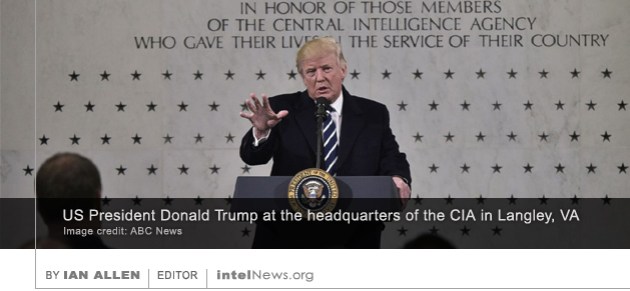
Trump CIAThe United States Central Intelligence Agency and the White House are considering several proposals to hire private companies to carry out covert operations abroad, according to a report. BuzzFeed News said on Thursday that the proposals were communicated to the White House in the summer. The news site, which described the proposed plans as “highly unusual”, quoted “three sources who have been briefed on or have direct knowledge of the proposals”. The sources told BuzzFeed that, if approved, the plans would include the establishment of large intelligence networks in so-called “denied areas” —namely foreign environments deemed hostile. The networks would recruit and handle local agents, carry out psychological operations, capture terrorism suspects and rendition them to the US or third countries. “Islamic extremism” is mentioned as the primary target of the proposals.

According to BuzzFeed, one of the proposals involves Amyntor Group, a private company headquartered in the remote town of Whitefish, in northwestern Montana. The company is staffed by former members of the US Intelligence Community who have security clearances. It specializes in intelligence training and risk assessment. But it also collects and analyzes intelligence and provides counterintelligence services for government agencies in America and what it calls “friendly foreign governments” abroad. The company has reportedly been holding discussions with senior officials in the administration of President Donald Trump in recent weeks, according to two of BuzzFeed’s sources. The same sources say that the move toward privatization of some intelligence operations is being led by a feeling in the Trump administration that the CIA has a negative view of the White House. They claim that the CIA is not prepared to go along with the Trump administration’s efforts to make the agency’s operations more aggressive and, in the words of its new director, Mike Pompeo, “much more vicious”. They therefore see privatization as a way to bypass the resistance and skepticism of the CIA’s upper management.

BuzzFeed said it contacted the CIA about the Amyntor Group proposal, but the agency preferred not to comment. A press officer for the National Security Council, which is chaired by President Trump, said that its members were not aware of the privatization proposals. Amyntor Group commented through one of its lawyers, who told BuzzFeed that any contract signed between the company and the US government would be directed and controlled “by the proper government authority”.

► Author: Joseph Fitsanakis | Date: 01 December 2017 | Permalink

Israeli armed raid in Syria reportedly led to US banning laptops on some flights

Ibrahim al-AsiriA temporary ban issued by United States authorities on laptop computers onboard some commercial flights earlier this year came from a tip by Israeli intelligence, according to a new report. The report was published last week in the American magazine Vanity Fair. It claimed that Israeli commandos carried out a dangerous night-time operation deep inside Syria, in order to acquire physical proof that the Islamic State had  built bombs that were not detectable by X-ray screening systems at airports. But some Israeli intelligence officials became infuriated with Donald Trump after the US President allegedly gave Russia background information about the commando operation, according to the article.
The order to temporarily ban electronic devices larger than cellphones was issued by the US government on March 20, 2017. It applied to direct flights to the US departing from a dozen international airports in the Middle East. In June, the New York Times alleged that the ban was aimed at stopping Islamic State operatives from bringing onboard airplanes bombs disguised as laptop batteries. The paper also said that the information about these bombs had been acquired by Israeli government hackers who had penetrated Islamic State computer systems. But now a new report by Vanity Fair claims that Tel Aviv tipped off the Americans following a commando raid deep inside Syrian territory, which acquired physical evidence of the bombs. The magazine alleges that the raid was carried out by the Sayeret Matkal, an elite unit of the Israel Defense Forces, under the supervision of the Mossad, Israel’s external spy agency. Its target was a highly secretive cell of explosives experts, who were led Ibrahim al-Asiri, a Saudi militant who built bombs for the Yemen-based Al-Qaeda in the Arabian Peninsula. The Mossad shared some of the intelligence from that raid with the Central Intelligence Agency, which in turn told President Trump. That led to the decision to ban laptops from selected flights, until X-ray machines at airports were modified to detect the new type of bomb.

The Vanity Fair article repeats earlier claims that President Trump shared intelligence given to him by the Israelis with Russian Foreign Minister Sergei Lavrov and Russian Ambassador to the United States Sergei Kislyak, when he met them in May of this year. According to Israeli sources, Mr. Trump did not tell the Russian officials that Israel was behind the operation. But he allegedly identified the city in Syria where the raid took place, and in doing so placed the life of an Israeli human asset at risk, according to some. The Israeli government will not comment on these allegations. Additionally, Vanity Fair said that one “former Mossad officer with knowledge of the operation and its aftermath” would not say whether the asset in question had been safely exfiltrated from Syria or even whether he or she was still alive.

► Author: Joseph Fitsanakis | Date: 27 November 2017 | Permalink

US diplomats in Russia to be guarded by firm with ties to senior ex-KGB official

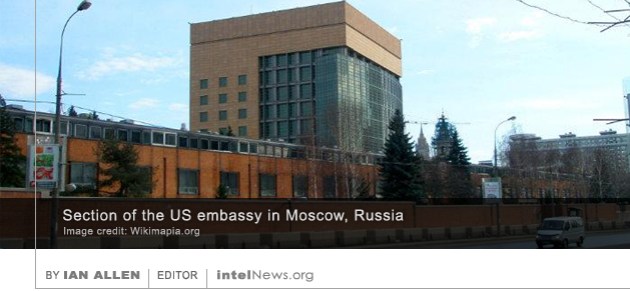
US embassy in RussiaSeveral American diplomatic facilities in Russia, including the United States embassy in Moscow, as well as consulates in other major Russian cities, will be guarded by a firm with ties to a former senior KGB official. The New York Times reported on Tuesday that the company, Elite Security Holdings, is headquartered in Moscow but has offices throughout Europe and the former Soviet republics. The firm has its roots in an earlier venture co-founded by former KGB official Viktor G. Budanov. The 82-year-old Budanov served as director of the KGB’s K Directorate, also known as Second Chief Directorate, which was responsible for counterintelligence. Budanov no longer owns any part of Elite Security Holdings. But his son, Dimitri Budanov, is believed to be in charge of the firm’s headquarters in the Russian capital. The family is known to be politically close to Vladimir Putin, who served together in the KGB with Viktor Budanov in East Germany in the 1980s.
Elite Security Holdings was awarded a no-bid contract by the US Department of State’s Office of Acquisitions —meaning that no other company was solicited by the US government for the contract. The agreement was struck once US diplomatic facilities in Russia were forced by Moscow to cut their staff by 755 employees. That resulted in the firing of many staff members, most of them local Russians, whose job was to guard the perimeters of US diplomatic facilities, screen visitors, and patrol the embassy grounds. To make up for the loss of personnel, the Department of State hired Elite Security Holdings, which is authorized to operate in Russia as a private local company; its staff members are therefore not considered to be employees of Washington. But the private firm retains close links to Budanov, who spent 25 years outthinking the CIA as head of the KGB’s counterintelligence directorate.

The Times spoke to an anonymous US State Department official, who said that Elite Security Holdings personnel would not have access to the embassy’s secure areas. The official also told the paper that all Elite Security Holdings employees had been carefully screened by “relevant national and local agencies” and posed no threat to the security of US diplomatic facilities. The latter would still be primarily protected by US Marines, who are detailed to the Department of State’s Diplomatic Security Service. According to The Times, Elite Security Holdings personnel will work at the US embassy in Moscow, and the consulates in Vladivostok, Yekaterinburg and St. Petersburg.

► Author: Ian Allen | Date: 16 November 2017 | Permalink

US airport screenings failed to detect 70% of hidden weapons in tests

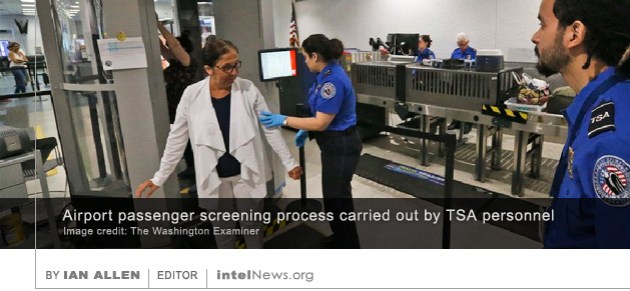
TSA screeningAttempts by undercover investigators to smuggle weapons, explosives and contraband aboard American passenger flights were successful between 70 and 80 percent of the time in the past year, according to reports. The results of the investigations were revealed in Congress behind closed doors on Wednesday of last week, prompting lawmakers to severely criticize the United States Transportation Security Administration (TSA). The TSA was founded in November 2001 in direct response to the tragic events of September 11 of that year. It is primarily concerned with air travel and is responsible for ensuring the safety of the traveling public across the US.
The TSA’s security systems in airports across America are regularly tested by undercover investigators, who are hired to examine and assess the effectiveness of these systems. Last week, several US news media reported that the latest round of tests showed that undercover investigators were more often than not able to sneak dangerous items onboard civilian aircraft. Smuggled items allegedly included guns, explosives and knives, which could be used to carry out hijackings similar to those that brought down four commercial airliners in New York, Washington and Pennsylvania on September 11, 2001. The precise rate of success of the recent tests has not been confirmed, because it has not been released to the public. ABC News said that the rate was close to 80 percent, while CBS reported that it was closer to 70 percent.

Remarkably, similar tests conducted in 2015 were successful 95 percent of the time, meaning that the TSA did considerably better in this year’s tests, despite its abysmally low rate of detection. On Wednesday, members of the US House of Representatives Committee on Homeland Security expressed serious concerns about the TSA’s lack of success. They aired their criticisms in the presence of Vice Admiral Peter Pekoske (ret.) who currently serves as the TSA’s Administrator. Some members of the committee also criticized the insistence of the White House on building a border wall instead of investing in air travel security. On Thursday, the TSA released a statement saying it took the results of the recent tests “very seriously” and that it was already taking active measures to “improve screening effectiveness at [airport] checkpoints” across America.

► Author: Ian Allen | Date: 13 November 2017 | Permalink | Research credit: C.F.

Netanyahu allegedly asked Trump to let spy Jonathan Pollard move to Israel

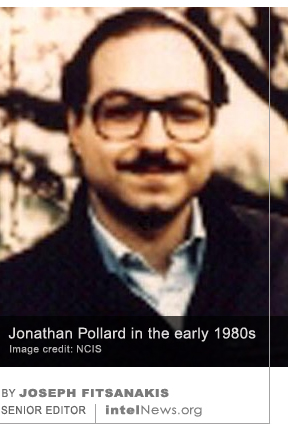
Jonathan PollardIsraeli Prime Minister Benjamin Netanyahu reportedly asked the United States President Donald Trump to allow Jonathan Pollard, an American who spied on his country for Israel in the 1980s, to immigrate to Tel Aviv. Pollard, a former intelligence analyst for the US Navy, was released from an American prison in 2015, after serving 30 years for selling US government secrets to Israel. Throughout Pollard’s time in prison, the government of Israel lobbied for his release, claiming that the convicted spy did not harm American interests, but was simply trying to help Israel. But the US Intelligence Community has consistently rejected Israel’s claims, arguing that Pollard’s activities were severely detrimental to American interests. At the end, successive American presidents refused to pardon Pollard. He was released in November of 2015, after serving his entire 30-year sentence.
Pollard, who was given Israeli citizenship in recognition for his services to the Jewish state, has repeatedly stated his desire to renounce his American citizenship and immigrate to Israel. However, the conditions of his release prevent him from doing so. Since his release, he has been forced to wear a GPS monitoring device at all times and is not allowed to leave his New York apartment between 7:00 p.m. and 7:00 a.m., nor is he allowed to leave the United States for any reason. It is speculated that this restriction is designed to prevent him from accessing close to $1 million in spy wages that his Israeli handlers are reputed to have deposited in a Swiss bank account.

But with a new administration now in Washington, the Israeli government believes that it may be able to press for the relaxation of some of the restrictions imposed on Pollard. According to the Israeli television station Channel 2, Prime Minister Netanyahu has personally lobbied President Trump to allow Pollard to leave America for Israel. According to the report, the Israeli prime minister told Mr. Trump that, if allowed to move to Israel, Pollard would abide by the same restrictions that he currently follows in New York. These reportedly include a strict daily curfew and limitations on foreign travel. Channel 2 said that Israeli is seeking to get custody of Pollard in return for its alleged efforts to re-enter negotiations with Fatah, the Palestinian group that governs the Occupied Territories. The television station said that American officials appear hesitant to allow Pollard to go to Israel. Even if Israel’s request is granted, the American side does not want to link Pollard’s case to the Arab-Israeli peace process, it said.

► Author: Joseph Fitsanakis | Date: 02 November 2017 | Permalink

Russian spies arrested by the FBI in 2010 had targeted Hillary Clinton

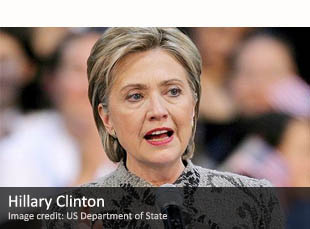
Hillary ClintonA major reason behind the Federal Bureau of Investigation’s decision to arrest ten Russian spies across the United States in 2010 was their increasing proximity to the then-Secretary of State Hillary Clinton, it has been claimed. The spies had been specifically instructed by their handlers in Moscow to target Clinton, who was seen as the most likely successor to US President Barack Obama, according to recently released FBI files. Ten Russian deep-cover spies, who had no official cover and thus no diplomatic immunity, were arrested by the FBI in June 2010, following a ten-year counterintelligence investigation codenamed Operation GHOST STORIES.
The ten had entered the country from various destinations, including Canada, Latin America and Europe. Some were posing as citizens of third countries, while others had fraudulently assumed the names of dead Americans. They had been tasked by the SVR, Russia’s Foreign Intelligence Service, with blending into American society and finding their way into senior policy circles in Washington, DC, and other major decision-making hubs of the US government. US Justice Department documents refer to the SVR spy ring as “the illegals program” or “the Russian illegals program”.

On Sunday, the Washington-based newspaper The Hill said that it was able to shed more light into the Russian illegals program, after accessing recently unsealed FBI documents and interviewing US government officials. The paper said that the SVR had specifically instructed some of the illegals to concentrate on penetrating the Department of State. Their primary goal was to uncover information about the Obama administration’s policy on Russia. A key target of the Russian illegals was US Secretary of State Hillary Clinton, who was seen by Moscow as the leading voice on Washington’s Russia policy. Read more of this post

Revealed: China arrested US diplomat believing him to be CIA officer

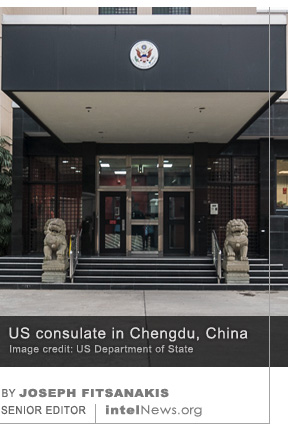
US Consulate ChengduAn American diplomat stationed in China was abducted and interrogated for several hours by Chinese authorities, who believed him to be an officer of the Central Intelligence Agency working under official cover. The alleged abduction took place in early 2016 but was revealed this week by the online news outlet Politico. The website said that the diplomat, who has not been named, was stationed at the United States consulate general in Chengdu, a city of 14 million that is the administrative capital of western China’s Sichuan province. Founded in 1985, the US consulate in Chengdu is one of Washington’s seven diplomatic and consular posts in China. It is staffed by 130 people, approximately 30 of whom are Americans and 100 are locally hired Chinese citizens. The facility’s consular district includes several Chinese provinces, including the politically sensitive Tibet Autonomous Region.
On Wednesday, Politico said it spoke with “more than half a dozen current and former national security officials” in the US, who confirmed that an American diplomat stationed at the Chengdu consulate was abducted and detained for several hours. The website said that the abduction took place in January 2016. The diplomat was reportedly “grabbed off the street” in the middle of the day by plainclothes Chinese officers and driven to a detention facility in an unmarked van. He was allegedly kept there for several hours despite his diplomatic status with full immunity, which protects diplomats from being subjected to arrest and detention in the host country. American officials claim that the Chinese authorities did not notify the US consulate of the diplomat’s whereabouts until several hours later. By that time, the diplomat had been aggressively interrogated and his responses had been filmed by his captors, who claimed that he was an officer of the CIA. He was later released but left the country soon afterwards, according to Politico.

American officials told the website that the diplomat’s abduction was “an unusually bold act” that illustrates an ongoing and increasingly tense confrontation between Chinese and American intelligence services. Several American diplomats told Politico that Chinese authorities followed them around and in some cases broke into their apartments and “searched their rooms and belongings”. According to the news website, Washington responded to the American diplomat’s abduction by issuing a formal protest and threatening to expel Chinese intelligence officers operating in the US with diplomatic cover. However, it is not believed that the threat materialized.

► Author: Joseph Fitsanakis | Date: 13 October 2017 | Permalink

Israel reportedly behind discovery of Russian antivirus company’s spy links

Computer hackingIsraeli spy services were reportedly behind the United States government’s recent decision to purge Kaspersky Lab antivirus software from its computers, citing possible collusion with Russian intelligence. Last month, the US Department of Homeland Security issued a directive ordering that all government computers should be free of software products designed by Kaspersky Lab. Formed in the late 1990s by Russian cybersecurity expert Eugene Kaspersky, the multinational antivirus software provider operates out of Moscow but is technically based in the United Kingdom. Its antivirus and cybersecurity products are installed on tens of millions of computers around the world, including computers belonging to government agencies in the US and elsewhere. But last month’s memorandum by the US government’s domestic security arm alarmed the cybersecurity community by alleging direct operational links between the antivirus company and the Kremlin.
On Tuesday, The New York Times reported that the initial piece of intelligence that alerted the US government to the alleged links between Kaspersky Lab and Moscow was provided by Israel. The American paper said that Israeli cyber spies managed to hack into Kaspersky’s systems and confirm the heavy presence of Russian government operatives there. The Times’ report stated that the Israelis documented real-time cyber espionage operations by the Russians, which targeted the government computer systems of foreign governments, including the United States’. The Israeli spies then reportedly approached their American counterparts and told them that Kaspersky Lab software was being used by Russian intelligence services as a backdoor to millions of computers worldwide. The Israelis also concluded that Kaspersky’s antivirus software was used to illegally steal files from these computers, which were essentially infected by spy software operated by the Russian government.

It was following the tip by the Israelis that he Department of Homeland Security issued its memorandum saying that it was “concerned about the ties between certain Kaspersky [Lab] officials and Russian intelligence and other government agencies”. The memorandum resulted in a decision by the US government —overwhelmingly supported by Congress— to scrap all Kaspersky software from its computer systems. Kaspersky Lab has rejected allegations that it works with Russian intelligence. In a statement issued in May of this year, the company said it had “never helped, nor will help, any government in the world with its cyberespionage efforts”.

► Author: Joseph Fitsanakis | Date: 11 October 2017 | Pemalink

Trump chief of staff’s phone was breached for nearly a year, say sources

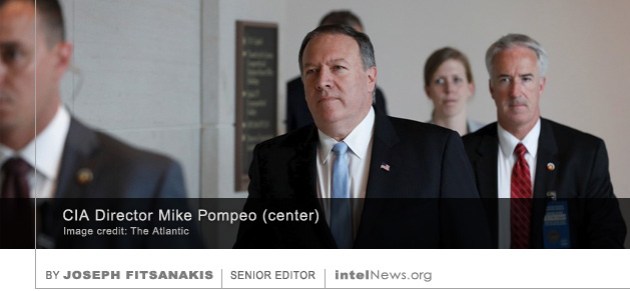
John KellyThe personal cell phone of the White House Chief of Staff John Kelly (photo) was compromised by persons unknown and may have been bugged for nearly a year, according to United States government officials. General Kelly retired from the US Marine Corps in 2016, after serving as chief of the US Pentagon’s Southern Command, where he supervised American military operations in Latin America and the Caribbean. Soon afterwards, he was appointed by US President Donald Trump to lead the Department of Homeland Security, which he joined in January of 2017. Six months later, however, he replaced Reince Priebus, who resigned abruptly from the post of White House Chief of Staff, citing differences over management style with the Trump administration.
According to the online news outlet Politico, the breach of Kelly’s personal phone was discovered last summer, after the retired general sought the advice of the White House’s technical support staff. Kelly told the technical experts that his phone’s operating system had been malfunctioning for several months and that software updates seemed to make the problem worse. Once the breach was discovered, White House staff summarized the findings of the probe into Kelly’s phone in a one-page memorandum. Three people who read the document spoke anonymously to Politico. The news outlet said that, according to the White House memorandum, it is unclear how and when Kelly’s phone was breached. There is also no information in the document about how much and what kind of information was compromised throughout the duration of the breach. Politico cited a White House spokesman who claimed that the chief of staff used his personal phone sparsely and never for government business.

However, depending on the level of the breach, hackers could have used the compromised phone to listen in to Kelly’s private conversations —in and out of the White House— even when the phone was not in use but simply turned on. It follows that if the breach of Kelly’s phone was orchestrated by a foreign government, the magnitude of the compromise may be substantial. Politico reports that digital forensics experts are now reviewing Kelly’s travels in the past year, as part of a widening investigation into the breach. Meanwhile, the general has been issued a new phone for his personal use.

► Author: Joseph Fitsanakis | Date: 10 October 2017 | Permalink

Trump’s CIA director outlines plans to make agency more aggressive, cut red tape

Mike PompeoThe man appointed by President Donald Trump to lead the United States Central Intelligence Agency has outlined his plans to promote more aggressive intelligence operations and combat what he described as “red tape” in the agency’s culture. Mike Pompeo, a former aerospace and oil executive, who is a member of the conservative Tea Party movement, assumed the directorship of the CIA in January of this year. He succeeded John Brennan, a career CIA officer, who has been an outspoken critic of the Trump administration’s attitude to intelligence since he left office in January.
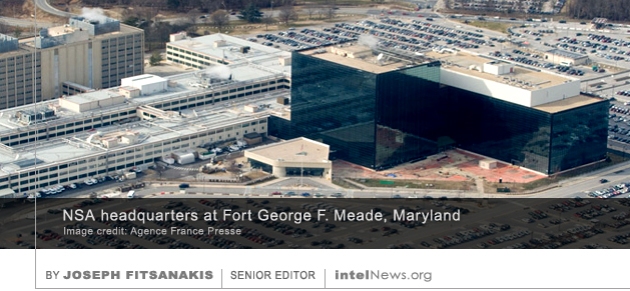
On Wednesday, Pompeo was the keynote speaker at a one-day conference on intelligence, hosted at George Washington University in Washington, DC. Entitled Ethos and Profession of Intelligence, the conference was co-sponsored by George Washington University and the CIA. In his speech, Pompeo outlined his plans to make CIA operations more aggressive and cut back what he repeatedly described as “red tape” at the agency. He based his observations on his opinion that the CIA is slow, not agile enough, and excessively centralized in its decision making. He added that, to better protect American national security, the Agency should engage in more offensive methods of intelligence collection. He went on to state that the most effective way to make the CIA more agile as an organization was to decentralize its decision-making processes. To do so, he said, decisions had to be pushed “to the lowest level possible”, thus allowing CIA station chiefs around the world to “call the shots” on operations. That was especially applicable to “tactical issues”, where the person with the most direct knowledge of the situation “is rarely me or anyone in my senior leadership team”, said Pompeo.

The CIA director went on to say that his plan is to “cut red tape” through various ways. One such way is reducing the numbers of CIA personnel that are required to review and approve intelligence operations, he said. Another way is increasing the number of CIA operations officers stationed abroad, thus placing CIA personnel closer to the agency’s intelligence targets. The goal is to “deploy our people, tools and resources into the heart of the fight”, said Pompeo. The CIA director concluded his remarks by saying he wants to instill a new culture at the Agency, based on the motto: “If you are in a process and you’re not adding value, get out of the way”.

► Author: Joseph Fitsanakis | Date: 05 October 2017 | Permalink

Facing skepticism by experts, NSA backs down in global encryption standards debate

NSARepresentatives from the United States National Security Agency (NSA) withdrew a proposal to introduce new global industry standards for data encryption, after encountering prolonged skepticism by experts representing other Western countries. Some observers have interpreted this development as indicative of the damaged relationship between the NSA and its Western counterparts following revelations by American defector Edward Snowden.


Deliberations for establishing new industry standards for data encryption have been taking place for over three years under the supervision of the International Organization for Standardization (ISO). The ISO is a worldwide standard-setting body founded in 1947, which brings together representatives from national standards organizations. The US delegation, had proposed the adoption of two new data encryption techniques, known as ‘Simon’ and ‘Speck’. The techniques had the approval of the US national standards organization, which is known as the American National Standards Institute (ANSI) . However, it also had the approval of the NSA, America’s signals intelligence agency, whose representatives were members of the US delegation to the ISO. According to the Reuters news agency, the presence of the NSA representatives in ANSI prompted skepticism among other national delegations.

Eventually, encryption experts from countries including Israel, Japan, Germany, and the United Kingdom, rejected ‘Simon’ and ‘Speck’. The reason, according to Reuters, was that they were “worried that the [NSA] was pushing the new techniques not because they were good encryption tools, but because it knew how to break them”. Some commentators believe that this incident illustrates the suspicion with which the NSA is seen by American allies following headline-grabbing revelations made Edward Snowden, a former employee of the NSA who defected to Russia in 2013. Some of Snowden’s most sensational revelations involved alleged NSA operations targeting Germany, France, Israel, Japan, and other American allies. The revelations shocked public opinion in Europe and elsewhere, and resulted in the unprecedented expulsion of the CIA station chief in Berlin —the most senior US intelligence official in the country. ISO delegates are now thought to be working on a revised plan to keep some of ANSI’s proposed standards but enhance them with stronger layers of encryption, said Reuters.

► Author: Joseph Fitsanakis | Date: 22 September 2017 | Permalink

Australia rejected CIA request to open embassy in North Korea

PyongyangAustralia rejected a secret request by the United States Central Intelligence Agency to open an embassy in North Korea, which the Americans hoped to use as a base from where to collect intelligence on the communist state. According to The Australian newspaper, Washington approached the Australian government because it is one of the few pro-Western governments that continue to maintain cordial diplomatic relations with Pyongyang. Up until 1975, Australia was a rare example of a country that hosted embassies of both South Korea and North Korea on its soil. But when Canberra took South Korea’s side in a United Nations vote, the North Koreans objected by shutting down their embassy in Australia. A quarter of a century later, in 2000, Pyongyang reopened its embassy in the Australian capital, only to close it down again in 2008, due to financial constraints.

Throughout that time, Australia has maintained relatively smooth diplomatic relations with North Korea, but has refrained from opening a residential mission in the communist country. Instead, employees of Australia’s embassy in South Korea occasionally travel to the North to perform diplomatic tasks. But in 2014, the US Department of State reached out to Canberra to request that the Australian government consider the possibility of establishing a permanent residential mission in Pyongyang. According to The Australian, the request came from the CIA, which hoped to use the Australian embassy as a base from where to collect intelligence on the isolated country. The US, which lacks an embassy in North Korea, has always found it difficult to collect intelligence there.

The American request was promptly communicated to the then-Prime Minister Tonny Abbott and his Minister of Foreign Affairs, Julie Bishop. Both appeared willing to consider Washington’s proposal. But the civil servants of the Department of Foreign Affairs and Trade, who were tasked with putting together a cost-benefit analysis of the request, came back with a negative response. They allegedly contacted their colleagues working in other countries who maintain permanent residential diplomatic missions in Pyongyang. They told them that their consular employees are kept in complete isolation from North Korean society and government. Additionally, they are subjected to constant surveillance by the North Koreans, who are extremely suspicious of all foreign diplomats. Moreover, Canberra was worried that opening an embassy in Pyongyang would inevitably be seen by the North Koreans as an invitation to reopen their embassy in Australia. It would require significant effort and resources to monitor the activities of North Korean diplomats, who are notorious for abusing their diplomatic status by engaging in illicit activities of all kinds.

Eventually, therefore, the US request was rejected by Australia’s Department of Foreign Affairs and Trade. The latter concluded that Canberra should not proceed with opening a new embassy in Pyongyang, despite the allegedly “strong suggestion” of the CIA. The matter, said The Australian, never reach the cabinet and Washington never brought it up again.

► Author: Joseph Fitsanakis | Date: 20 September 2017 | Permalink

More facts revealed about mystery sonic attacks on US embassy in Cuba

US embassy in CubaAmerican officials have revealed more information about a mysterious sonic device that is believed to have caused numerous diplomats to suffer hearing loss and other serious ailments. Last month, the Associated Press reported that the first hearing-loss symptoms were reported by personnel at the US embassy in Havana in the fall of 2016. The news agency said that at least five embassy personnel reported suffering from sudden and unexplained loss of hearing. The symptoms were so serious that caused some American diplomats “to cancel their tours early and return to the United States”, according to the Associated Press.

Now new information has been disclosed by the United States Department of State. It suggests that, although diplomats began reporting hearing-loss symptoms in as early as fall 2016, the incidents continued until mid-August of this year. In a report published on Saturday, the BBC said that the bizarre incidents had not ended “several months ago” as was initially believed. Instead, they continued even after the last week of May, when the US deported two Cuban diplomats from Washington, DC. The move was in response to what Washington believes was a deliberate attempt to sabotage its diplomatic mission in Havana. The American embassy in the Cuban capital reopened in 2015, 54 years after it was closed down following a series of diplomatic rifts between Cuba and the US during the height of the Cold War.

Additionally, the Department of State said on Friday that the number of American diplomats and other US embassy personnel who have reported sonic-related symptoms has increased to 19. State Department spokeswoman Heather Nauert told reporters in Washington that doctors were still evaluating the health of those serving at the US embassy in Havana. She added that new cases of people suffering from sonic-related medical symptoms could not be ruled out. A report from the American Foreign Service Association, which represents members of the United States Foreign Service, said on Friday that its representatives had spoken to 10 people who had received various treatments for ailments related to the alleged sonic attacks in Cuba. It said that many had suffered “permanent hearing loss”, while others were diagnosed with mild brain injuries.

According to media reports, Washington has concluded that the American diplomats were exposed to “an advanced device that was deployed either inside or outside their residences”. But the Cuban government denied that it had anything to do with the American diplomats’ symptoms, and some believe that the alleged “covert sonic device” may have been deployed by an intelligence service of a third country —possibly Russia— without the knowledge of Cuban authorities.

► Author: Joseph Fitsanakis | Date: 04 September 2017 | Permalink

US troops in Syria battle anti-Assad rebels once funded by the CIA

US troops in SyriaAmerican troops deployed in Syria have exchanged fire with rebels that were until recently supported by the United States Central Intelligence Agency. In 2013, soon after the outbreak of the Syrian Civil War, the then-US President Barack Obama instructed the Central Intelligence Agency to provide covert support to fighters in Syria. Acting on the president’s directive, the CIA promptly joined forces with spy agencies from Britain, France, Saudi Arabia and the United Arab Emirates, to assist fighters affiliated with the Free Syrian Army. At that time, Washington saw the Free Syrian Army and forces affiliated with it as ideologically moderate. It also agreed with the group’s main aim, which was to topple the regime of Syrian President Bashar al-Assad.

Under the project, which was codenamed TIMBER SYCAMORE, CIA personnel trained Free Syrian Army fighters in irregular warfare, while also providing them with light weaponry including machine guns, sniper rifles and off-road vehicles. But on July 19 of this year, US President Donald Trump abruptly ended the CIA program, which he called “dangerous and wasteful”. It soon became apparent that many Free Syrian Army soldiers approached Turkey, seeking financial income and protection. By early August, there were reports from Syria that large groups of former Free Syrian Army troops were conducting raids in northern Syria in coordination with the Turkish military.

Early on Wednesday, a spokesman for the Combined Task Force Operation Inherent Resolve told reporters that US troops in Syria had come under fire by Turkish-commanded former Free Syrian Army units. The spokesman told reporters in Kuwait City that the rebels shot at US troops in the outskirts of Manbij, a northern Syrian city of about 70,000, located a few miles from the Turkish border. The American soldiers reportedly returned fire before seeking shelter from the assault. According to the US Pentagon, the Turkish government was promptly contacted by Inherent Resolve commanders, who described the incident as “not acceptable”. Washington alleges that its troops have come under fire “multiple times” in the past month. Some of the culprits are believed to be Turkish-controlled Syrian insurgents, including former members of the Free Syrian Army.

Turkey and the US are member states of the North Atlantic Treaty Organization. But the two countries do not follow a common policy on Syria. The US Pentagon supports Kurdish insurgents in Syria, which Turkey claims are connected with Kurdish separatists inside Turkey. Washington’s official position on Kurdish separatists is that they engage in terrorism against the Turkish state.

► Author: Joseph Fitsanakis | Date: 30 August 2017 | Permalink

Russia jailed senior intelligence officers for helping CIA nab notorious hackers

FSB - JFTwo senior officers in the Russian intelligence services were charged with treason after they were found to have helped the United States catch two notorious Russian hackers, according to reports in the Russian media. Sergey Mikhailov was a career officer in the Federal Security Service —a descendant of the domestic section of the Soviet-era KGB— which is often referred to as Russia’s equivalent of the United States Federal Bureau of Investigation. Mikhailov had risen through the ranks of the FSB to eventually head the agency’s Center for Information Security. Known in Russia as CIB, the Center is tasked with investigating electronic crime in the Russian Federation.

But in December 2016, Mikhailov and one of his trusted deputies in the CIB, Dmitry Dokuchaev, were suddenly removed from their posts and arrested. The arrests marked some of the highest-profile detentions of intelligence officers in Russia since the demise of the Soviet Union. Russian authorities refused to reveal the reasons for the arrests, but confirmed that the two men had been charged with treason. Reports soon surfaced in the Russian media, claiming that Mikhailov and Dokuchaev were arrested for their involvement in a Russian criminal hacker gang. Some Western media, including The New York Times, speculated that the two men may have been arrested for helping US intelligence investigate Russian interference in the 2016 US presidential election.

But now a new report alleges that Mikhailov and Dokuchaev were charged with treason after helping the US Central Intelligence Agency catch two prolific Russian hackers. The report was aired on Russian television station TV Dozhd, also known as TV Rain, a privately owned channel based in Moscow, which broadcasts in Russia and several other former Soviet Republics. One of the hackers, Roman Seleznev, known in hacker circles as Track2, reached worldwide notoriety for defrauding major credit card companies of tens of millions of dollars. He was arrested in 2014 in the South Asian island country of Maldives and eventually extradited to the US to stand trial. He was sentenced to 27 years in prison, which he is currently serving. The other hacker, Yevgeniy Nikulin, was arrested in the Czech Republic in 2016, pursuant to a US-issued international arrest warrant. He is now awaiting extradition to the US, where he is expected to be tried for hacking several high-profile companies, including DropBox and LinkedIn.

TV Dozhd said that Russian authorities are also suspecting the men of being members of hacker gangs, but that their main charges relate to their close cooperation with American intelligence agencies, reportedly in exchange for cash.

► Author: Joseph Fitsanakis | Date: 25 August 2017 | Permalink