Analysis: The role of spies in Latin America

Latin America

Latin America

By IAN ALLEN | intelNews.org |
These days it’s a full-time job keeping up with intelligence news coming out of Latin America. In recent weeks alone, there were major spy scandals involving the busting of an alleged Colombian espionage ring in Venezuela, the acknowledgment by Bogotá that it spied on Ecuador, and the ongoing high-level intelligence scandal that some say may cause recalls of diplomats between Chile and Peru. So what is going on in Latin America? How widespread is espionage in the continent and is it on the rise? The BBC’s Juan Paullier has consulted several regional and international experts for his well-written analysis on the subject. Read more of this post

News you may have missed #0193

Bookmark and Share

News you may have missed #0186

  • UN shares intel with Rwandan rebels, says paper. Rwandan daily The New Times has aired allegations that the United Nations Mission in the Democratic Republic of Congo (MONUC) has an intelligence-sharing relationship with Hutu FDLR rebels, which runs “even deeper than earlier thought”.
  • Pakistan militants target spy agency. Militants have stepped up their fight against the Pakistani government in western Pakistan, by ramming a truck bomb into the Peshawar regional office of the Inter-Services Intelligence, the country’s main spy agency. This is the first large-scale specific targeting of intelligence agents in the region, outside of Afghanistan.
  • US bases in Colombia to be used for spying, says Chávez. Venezuela’s President says he does not think that the new US bases will be used for counternarcotics efforts, but rather for “electronic spying”.

Bookmark and Share

News you may have missed #0167

  • DAS official confirms Colombia spying on Ecuador. An official of Colombia’s DAS intelligence service has admitted Colombia “had an informant in the Ecuadorean security forces”. The revelation comes days after Venezuelan officials claimed they had uncovered Operation SALOMON, a joint Colombian-US espionage operation against Ecuador.
  • Clinton meets Libyan ex-intelligence chief. While attending a regional-development conference in Morocco, US secretary of state Hilary Clinton met briefly with Libyan Foreign Minister Musa Kusa. Kusa, who served as Libyan leader Muammar al-Gaddafi’s intelligence chief during the 1990s, was expelled from Britain in 1980 for his alleged involvement in assassinating a Gaddafi opponent in London. Clinton has a talent for meeting with controversial foreign spies.
  • Ex-Yugoslav secret agent arrested in Germany. German authorities have arrested a man with Croatian and Swedish citizenships, identified only as “Luka S.”, who allegedly participated in the 1983 murder of Stjepan Durekovic, an exiled Yugoslav dissident living in Germany. Another accomplice in Durekovic’s assassination, identified only as “Kronoslav P.”, was jailed in 2008.

Bookmark and Share

Documents allegedly describe joint US-Colombian spy operations

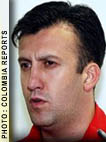
Tarek El Aissami

Tarek El Aissami

By IAN ALLEN | intelNews.org |
A day after announcing the arrest of a number of Colombian intelligence agents on Venezuelan soil, Venezuelan officials presented what they described as “irrefutable evidence” of joint US-Colombian spy operations. Speaking to reporters on Thursday, Venezuela’s interior minister Tarek El Aissami, said documents acquired in connection with the capture of the Colombian intelligence agents, show that their actions were part of “an ambitious CIA-funded operation”. Venezuelan security forces detained the two Colombians, Angel Jacinto Guanare and Eduardo Gonzalez Muñoz, along with an alleged Venezuelan accomplice, Melvin Argenis Gutierrez, on October 2, 2009, in the city of Maracay, 50 miles west of Venezuelan capital Caracas. El Aissami suggested that documents relating to the activities of the three men reveal that they were part of Operation FALCON, a joint project by the CIA and Colombian intelligence agency DAS, which aimed “to collect information about the Bolivarian National Armed Forces” and recruit informants from anti-government circles. Read more of this post

Venezuela announces arrest of Colombian “spies”

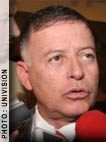
Francisco Arias Cardenas

Cardenas

By IAN ALLEN | intelNews.org |
The government of Venezuela announced yesterday the arrest of an undisclosed number of Colombian intelligence agents, who were allegedly “captured carrying out actions of espionage”. The announcement was made by the Venezuelan deputy foreign minister, Francisco Arias Cardenas, who claimed that the detainees were all members of Colombia’s scandal-prone and soon-to-be-dismantled DAS intelligence agency. Cardenas gave no further details yesterday, but said that the Venezuelan government would “soon produce evidence” to back up its claims. Read more of this post

FBI targets US nuclear scientist who contacted Venezuelan official

P.L. Mascheroni

P.L. Mascheroni

By JOSEPH FITSANAKIS | intelNews.org |
A team of FBI agents has raided the house of a former Los Alamos nuclear scientist who has spent two decades criticizing Washington’s nuclear weapons and energy agenda. The agents seized several computers, cameras, cell phones and paper files from the home of Dr. P. Leonardo Mascheroni, a 74-year-old Argentinean-born nuclear scientist who became a US citizen while working at the US Department of Energy’s Los Alamos National Laboratory in New Mexico. After leaving Los Alamos, in 1988, Dr. Mascheroni has campaigned in favor of inertial confinement fusion (commonly known as laser fusion) as a means of producing low-cost energy and of testing nuclear weapons without resorting to underground explosions. Following the FBI raid at his house, Dr. Mascheroni held a press conference where he claimed he was told by the FBI that he was suspected of possible involvement in “nuclear espionage”. Read more of this post

Anti-Castro terrorist was CIA informant, declassified documents show

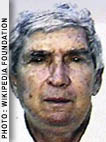
Luis Posada Carriles

Posada Carriles

By JOSEPH FITSANAKIS | intelNews.org |
An anti-Castro operative, who has admitted planting bombs against civilian targets in Cuba, and currently faces immigration fraud charges in the US, was a CIA informant, newly declassified documents show. Five CIA memoranda from 1965 and 1966 reveal that Luis Posada Carriles, code name “A15”, acted as an information link between Langley and violent anti-Castro groups in Miami, Florida, in which he was active. The five documents were declassified by the CIA between 1998 and 2003 and were made public on Tuesday by Peter Kornbluh, who heads the National Security Archive’s Cuba Documentation Project at George Washington University. Remarkably, the documents show that Posada’ handler at the CIA, Grover T. Lythcott, believed that the Cuban exile was a “moderate force” who could be counted on not to embarrass the US government or the CIA with his actions. Read more of this post

News you may have missed #0129

  • Romanian communist spy boss dead at 80. General Nicolae Plesita, who directed Romania’s Securitate during the country’s communist period, has died. While heading the Securitate’s foreign intelligence service, from 1980 to 1984, Plesita hired the Venezuelan-born operative Ilich Ramirez Sanchez, known as Carlos the Jackal, to assassinate Romanian dissidents in France and bomb the US-owned Radio Free Europe offices in Munich, in 1981. In 1998, Plesita revealed that he had orders from the Romanian government to find temporary shelter for Carlos in Romania after the RFE bombing.
  • Settlement reached in DEA-CIA spying dispute. A tentative settlement has been reached in a lawsuit brought 15 years ago by a former US Drug Enforcement Administration agent who accused a CIA operative of illegally bugging his home. In a court filing, lawyers for the government and the DEA agent said they “had reached an agreement in principle to settle the underlying litigation”. See here for previous intelNews coverage of this case.
  • Federal judge denies request for CIA secret documents. Hundreds of documents detailing the CIA’s defunct overseas secret detention program of suspected terrorists, including extreme interrogation methods have remained secret after U.S. District Judge Alvin K. Hellerstein on Wednesday refused to release them “in order to protect intelligence methods and sources”. The ACLU argues that the CIA secret program was illegal under international and US law, that it involved the torture and deaths of some inmates, and therefore should not be shielded from public view.

Bookmark and Share

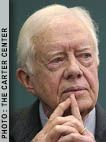
Ex-President Carter says US knew about 2002 Venezuela coup

Jimmy Carter

Jimmy Carter

By JOSEPH FITSANAKIS | intelNews.org |
Former US President Jimmy Carter has said that the US was aware of plans for a 2002 military-civilian coup against the government of Venezuelan leader Hugo Chávez, and that it may have even provided assistance to the coup plotters. In an interview to Colombian newspaper El Tiempo, published yesterday, Carter said there was “no doubt that in 2002 the United States had at the very least full knowledge about the coup, and could even have been directly involved”. The coup attempt took place on April 11, 2002, when President Chávez was illegally detained by the coup plotters, who also dissolved the Venezuelan National Assembly and the Supreme Court, and voided the country’s Constitution. But the move ended in failure 47 hours later, after key sectors of the military and parts of the anti-government opposition refused to side with the coup leaders. Read more of this post

Colombian ex-spy details coup plot against Venezuela

Rafael García

Rafael García

By JOSEPH FITSANAKIS | intelNews.org |
The former director of information technology at Colombia’s Administrative Department of Security (Departamento Administrativo de Seguridad, or DAS) has revealed details of what he claims was a Colombian-assisted coup against the Venezuelan government. Speaking on Colombia’s Noticias Uno television station, former DAS official Rafael García said the Colombian government of Álvaro Uribe was the main supporter of a 2004 attempt to topple the Venezuelan government of Hugo Chávez. García, who was fired from DAS three years ago, after being caught taking bribes from right wing paramilitaries and drug barons, said Colombia recruited 120 Colombian paramilitary members of Northern Bloc, a militia unit of the right-wing United Self-Defense Forces of Colombia, which operates mostly along the Venezuelan-Colombian border. Read more of this post

News you may have missed #0011

  • Honduran coup a blow for Latin American leftist alliance. The Honduran coup is seen as a “regional test” for Washington’s post-Bush influence in Latin America, as Venezuelan President Hugo Chavez appears to be losing a political ally with the military ouster of Honduran President Manuel Zelaya. Interestingly, Zelaya took control of foreign-owned oil storage terminals in Honduras in 2007, thus effectively sidelining the traditional control of Honduran oil imports by Exxon Mobil and Chevron. 
  • Bulgaria chief spy’s car raided by thieves. The thieves apparently knew the car belonged to Petko Sertov, director of Bulgaria’s State National Security Agency (DANS), “since they managed to unlock it with a special key”. Note that the car was equipped with specially authorized fake license plates designed to prevent identification of the car’s owner. 
  • FBI refuses to reveal contents of wiretap gag order. The FBI had been ordered by a US federal court to justify the gag order it had placed on the telecommunication service provider (TSP) of “John Doe” in the Doe v. Holder. The FBI has now cooperated by justifying the gag order, but it’s done so in secret, because it maintains that revealing the TSP’s identity would result in various harms.

News you may have missed #0010

  • Kim Jong Il’s son to head North Korea secret police. Since 1987, Kim Jong Il has been the official leader of the State Security Department of North Korea. However, South Korea’s Dong-a Ilbo reports that Kim Jong Un, Kim Jong Il’s third son, has now been named as the agency’s head. There are rumors in South Korea that the move could signify that a handover of power in Pyongyang may be imminent.
  • First US economic espionage trial winds down. A US court is preparing to sentence Dongfan “Greg” Chung, a Chinese-born engineer accused of passing critical trade secrets on the US space program to China for three decades. 
  • US and Venezuela to restore expelled ambassadors. The move appears to be a thawing gesture toward the new leadership in Washington by Venezuelan President Hugo Chavez. The Latin American leader has toned down his criticism of US foreign policy since Barack Obama took office in January, partly because the US president is popular in Latin America in contrast to his predecessor George W. Bush. 
  • US to send ambassador to Damascus. Washington has confirmed it is to send an ambassador to Damascus, ending a four-year diplomatic absence in Syria. The US envoy in Syria was withdrawn in 2005, following the assassination of Lebanon’s former PM Rafiq Hariri. 
  • Cuban Five spy case an obstacle to US-Cuban thaw, says Havana. The Cuban Five were arrested in 1998 and convicted of spying on anti-Castro exile groups on behalf of Havana. Cuba regards them as political prisoners and has lobbied intensively for their release. Cuban President Raúl Castro has said he would be willing to swap jailed political dissidents for the Five, but the US government has rejected the idea.

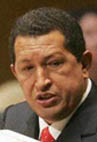
Venezuela says it uncovered new coup attempt

Hugo Chávez

Hugo Chávez

By JOSEPH FITSANAKIS| intelNews.org |
Venezuela has announced the arrest of five active duty soldiers whom it accuses of conspiring to storm the presidential palace and overthrow the government. The news was revealed on Wednesday by Venezuelan President Hugo Chávez. The President said the country’s General Counterintelligence Office apprehended the soldiers, after intercepting messages they exchanged with “a soldier on the run in the US [and] protected by the US government”. The soldiers were allegedly conspiring to storm the Palacio de Miraflores, which houses the office of the President, under an operation codenamed “Operativo Independencia”. Read more of this post

Russian naval bases in the Mediterranean “a matter of time”

By IAN ALLEN | intelNews.org |
Last October, when Libyan head of state Muammar al-Gaddafi visited Moscow, observers speculated that the possibility of a Russian naval base in Libya would be high among the subjects for discussion. Now the ITAR-TASS news agency has quoted an “unidentified” Russian military official as saying that the establishment of Russian naval bases in Libya, Syria, and possibly Yemen, is a matter of time. The official suggested that “[t]he political decision [to lease the bases] has been taken” and “this will be done without question”. Responding to a request for comment by The Moscow Times, Deputy Chief of the Russian General Staff, Colonel General Anatoly Nogovitsyn, simply confirmed that Moscow is conducting negotiations “with foreign governments”. Read more of this post