Analysis: Without fanfare, FBI places Putin’s right-hand man on most wanted list
March 1, 2021 3 Comments
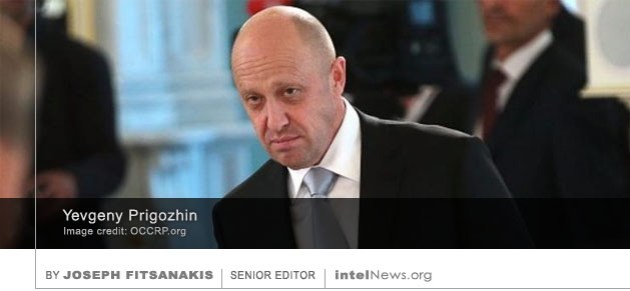 WITHOUT MUCH FANFARE LAST week, the Federal Bureau of Investigation placed on its most wanted list Yevgeny Prigozhin, who is one of Russian President Vladimir Putin’s closest collaborators. Known as “Putin’s chef”, for providing catering services to the Kremlin, Prigozhin was indicted in February 2018 by United States prosecutors for his alleged role in Russia’s meddling in the 2016 presidential elections. According to the Special Counsel investigation, led by Robert Mueller, Prigozhin bankrolled the Internet Research Agency (IRA), which in turn played a central coordinating role in the effort to influence the outcome of the elections.
But it is one thing to be indicted by the US government, and quite another to be placed on the FBI’s most wanted list. What does this mean? And why did the FBI wait three years to place Prigozhin on its list of infamy?
With characteristic flamboyance, Prigozhin boasted victory against the FBI back in March of 2020, when US federal prosecutors requested that the Mueller-era criminal case against Concord Management and Consulting (CMC) be dismissed. Founded in 1995, CMC is Prigozhin’s flagship company. According to the US government, CMC was used to fund the IRA’s activities in the run-up to the 2016 US elections. Although some were surprised by that decision, it made sense from an intelligence point of view. US federal prosecutors said at the time that it would not be possible to prove the allegations against CMC due to a “classification determination”. The term basically meant that the US government could not prove the claims made against CMC without revealing “methods and sources”. The term refers to witnesses that have probably been recruited as US government assets, as well as to methods of surveillance that the government wishes to keep secret.
Even though the individual indictment against Prigozhin was never dropped, the flamboyant Russian boasted at the time that the dismissal of the case against CMC proved that he was not implicated in the US election meddling affair. He became even more boastful after September of last year, when Interpol removed his name from its international alert list. He reportedly began traveling outside Russia again, something that he had stopped doing after his 2018 indictment, out of an abundance of caution. At that time, everyone assumed that US prosecutors would eventually drop the case against Prigozhin too, for the same reason they had dropped the CMC case —namely a “classification determination”. Read more of this post
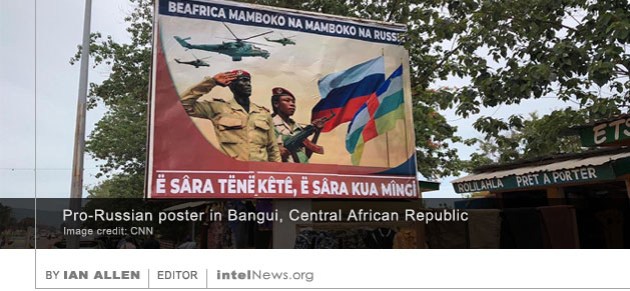 A new report by the American news network CNN has shed new light into the little-researched subject of Russian-owned private military and security operations in Africa. CNN said the report took a month to complete. It claims that a Russian tycoon by the name of
  Teams of “Russian technical specialists” bribed several leading candidates in last year’s presidential elections in Madagascar, in an effort to influence the outcome, according to an investigation by the BBC. The 2018 presidential campaign was among the most closely fought in Madagascar’s 60-year post-independence history. The electorate’s attention concentrated mostly on two former presidents, Marc Ravalomanana, and Andry Rajoelina. Following a closely contested second round in late December, Rajoelina was elected president, having received 500,000 votes more than his opponent. Since his election, Rajoelina has promoted closer ties with Russia. Most notably, he has strengthened his country’s military cooperation with Moscow —a process that was






 intelNews.org
Analysis: Prigozhin’s goal was to survive, not to remove Putin from power
June 26, 2023 by Joseph Fitsanakis 8 Comments
In the ensuing hours, National Guard units along the M-4, a 1,100-mile-long expressway that connects the northeastern shores of the Black Sea to Moscow, began blocking or destroying critical junctures across that vast road network, in an attempt to obstruct the Wagner convoy. In a televised nationwide address, a visibly shaken Vladimir Putin accused Prigozhin of leading an armed insurrection, and warned those who followed him that they would be treated as traitors. Meanwhile, tickets on flights from Moscow to several visa-free international destinations were sold out within hours, as Muscovites braced for the outbreak of civil war.
Yet, within fewer than 24 hours, Prigozhin, who had repeatedly vowed to reach Moscow or die trying, was on his way to Belarus. He had seemingly accepted a deal to abandon his loyal troops in exchange for amnesty and a life in exile. Prigozhin’s sudden about-face surprised many observers, who had expected to see firefights between Spetsnaz units and Wagner forces in Moscow’s southern districts by Sunday afternoon. Even some of Prigozhin’s own troops took to social media to openly accuse their former leader of betrayal, and vow revenge.
PRIGOZHIN: A RATIONAL AND CALCULATED ACTOR
How are we to explain this unexpected turn of events? The difficulty of such a task is amplified by the lack of reliable reporting from Russia, along with the inherent chaos of war and the rapidly changing nature of events. It must be stressed, however, that Prigozhin is neither impulsive nor irrational. His maneuvers over the past week were calculated and almost certainly pre-planned and choreographed —most likely long in advance. His ultimate decision to seek political asylum in Belarus —one of the few countries in the world that is unlikely to turn him over to the United States— makes sense under one premise: that the motive behind his “justice march” to Moscow was not to challenge Putin, but to save his life.
To begin with, the bitter feud between Prigozhin and the Russian Ministry of Defense is not new. It has been raging for years. It both precedes and exceeds Russia’s ongoing military campaign in Ukraine. The Wagner leader has repeatedly expressed his dismay at being viewed as an outsider by the Ministry of Defense, which it views as an elitist and incompetent bureaucracy. His experience in Ukraine, where Wagner’s forces faced stiff resistance from the local population and the Ukrainian military alike, added fuel to his rage against a host of Russian defense officials. Prigozhin has been voicing his denunciations of the way these officials have managed the war since March of 2022, just two weeks into the invasion of Ukraine.
PRIGOZHIN’S DISILLUSIONMENT
The disastrous Russian military campaign in Ukraine only served to sharpen Prigozhin’s criticism of his country’s defense establishment. One can observe this in the evolution of his critiques over time. In recent months, the Wagner leader has not only criticized the Ministry of Defense, accusing his leadership of corruption, but he has increasingly directed his ire against broad segments of Russian society. In his video tirades, he often decries what he describes as “the Russian elite” and the “oligarchy”, whom it accuses of living in luxury, while Russia’s working class fights and dies in Ukraine, Syria, Libya, and elsewhere. Read more of this post
Filed under Expert news and commentary on intelligence, espionage, spies and spying Tagged with 2022 Russian invasion of Ukraine, Analysis, coup plots, Joseph Fitsanakis, Newstex, PMC Wagner, Russia, Ukraine, Yevgeny Prigozhin