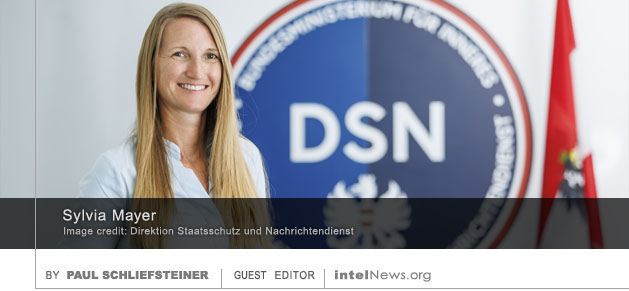
Analysis: Change in sight as Austria appoints its first-ever female spy chief

Sylvia MayerIN LATE NOVEMBER 2025 news broke that the selection for the new director of Austria’s domestic intelligence service, the Direktion Staatsschutz und Nachrichtendienst (Directorate State Protection and Intelligence Service – DSN) had been finalized: the new head of DSN would be Sylvia Mayer, a long time member of the Austrian intelligence community and the DSN’s deputy director for intelligence since October 2023. Mayer, therefore, will become the first female spy chief in Austrian history. She will officially commence her new position on the 1st of January 2026, by which time she will have fulfilled her current role as DSN interim director for several weeks.

During the selection process, Mayer did not simply prevail against her competitors, but virtually dominated the field: not only was she the sole candidate rated “highly suitable”—the highest mark in the application process— but all the remaining eleven applicants—among them two other women—were classified as “not suitable”, the lowest possible category.

Mayer being considered highly qualified by the section committee is not surprising, given her impressive career: after graduating from a higher technical education institute (an Austrian school form that educates teenagers from 15 to around 19 years of age) that focused on information technology—which earned her the title of an engineer—Mayer joined the Austrian uniformed police in Linz, the country’s third largest city.

In 2012, Mayer joined the predecessor of the DSN, the Bundesamt für Verfassungsschutz und Terrorismusbekämpfung (Federal Office for the Protection of the Constitution and Counterterrorism – BVT). Initially tasked with combating extremism, she was soon asked to establish a new unit (Referat in German) for the protection of critical infrastructure, which she consequently began heading in 2013. From 2020 to 2021 Mayer was the interim head of the protection and security department of the BVT. From December 2021 onwards, following the restructuring of the BVT into the DSN, Mayer took over the department of strategy, policy, resources and staff matters (Stabsangelegenheiten in German) within the new agency, before becoming its vice-director for intelligence, as mentioned earlier.

While working full-time, Mayer completed a law degree and doctorate in the same field, which was awarded to her in 2021 by the University of Vienna. According to her official biographical note, Mayer also holds a master’s degree in strategic security management from the University of Applied Sciences Wiener Neustadt.

Mayer is also an accomplished athlete: playing soccer since her teen years, she took part in the Austrian national league and joined the Austrian under-19 female national team. As a young girl she is said to have trained at length with the boys—an experience some have pointed out might have proven helpful for a career in Austria’s male dominated Ministry of Interior and the intelligence world. Over the years, Mayer has emphasized on several occasions that she hopes to inspire other women to also assume leadership roles and demonstrate that they are as capable as their male counterparts. Read more of this post

Ashraf Marwan: Israel’s ‘Angel’ or Egypt’s Double Agent?

Ashraf MarwanASHRAF MARWAN, POPULARLY KNOWN “the Angel,” is regarded as one of the greatest spies in Israeli intelligence history—the man on whom the entire Israeli government relied, and the informant who warned of the Yom Kippur War. Long-standing suspicions that he was actually a double agent have been strongly dismissed.

However, a comprehensive investigation by two Israeli journalists, Ronen Bergman and Yuval Robovitz, published in the popular Israeli newspaper Yedioth Ahronoth under the title “The Angel of Lies”, presents a different picture. Based on thousands of secret documents not yet revealed and rare conversations with people involved in the operation, their report claims that ‘the Angel’ was actually the spearhead of Egypt’s deception plan before and during the war—and that he succeeded beyond all expectations.

A Spy or Double Agent?

Bergman and Robovitz examined whether Ashraf Marwan—advisor to Egyptian President Anwar Sadat and a Mossad agent who died in 2007—was truly the best agent Israel had before the Yom Kippur War. Their findings indicate that a series of serious operational failures, combined with arrogance within the Israeli intelligence community, made Marwan one of the most dangerous spies ever to act against Israel.

They also investigated whether he was genuinely an Israeli agent who contributed meaningfully to Israel’s national security, as claimed by Mossad and by scholar Professor Uri Bar-Joseph, who wrote extensively about the Yom Kippur War intelligence failure and authored the well-known book The Angel: The Egyptian Spy Who Saved Israel. Netflix later produced a film, The Angel, based on Bar-Joseph’s book.

Or, was Marwan, as the journalists argue, a double agent working for Egypt from the beginning—since volunteering for Israeli intelligence in 1970—and who managed to deceive Israel for years, particularly by delaying his warning about Egypt’s impending attack until roughly 12 hours before it began? According to Bergman and Robovitz, Marwan knew about Egypt’s plans weeks earlier but withheld that information, allowing Egypt to launch a surprise attack.

A Public Debate

Following the article’s publication, a public debate erupted between Bergman and Robovitz on one side and Professor Uri Bar-Joseph on the other, over Marwan’s true motives. Whether he was a double agent or a loyal Israeli operative, all agree he played a key role in the intelligence drama preceding the Yom Kippur War. Read more of this post

Ex-head of Israeli Military Intelligence discusses October 7 attack in leaked recordings

Aharon HalivaIN A SERIES OF leaked recordings, the former head of Israel’s Military Intelligence Directorate, Major General Aharon Haliva, has expressed strong views about Israel’s war in Gaza. General Haliva headed Israel’s Military Intelligence Directorate (known as Aman) on October 7, 2023, when Palestinian militants took Israel by surprise in a combined arms attack, killing over 1,200 and kidnapping 250. Since resigning a year ago, Haliva has not made any public statements.

It is unclear who Haliva was speaking to when he was recorded, or by whom he was recorded. Nor is it clear when or where the recordings occurred. They were leaked last week by Israeli television station Channel 12. There follows a summary of Haliva’s comments in the leaked recordings.

Personal Responsibility. Haliva admits that the disaster occurred during his watch; therefore, he bears ultimate responsibility. At the same time, he emphasizes that responsibility is systemic and broad—not only his, but also that of the entire Israel Defense Forces (IDF), the Israel Security Agency (ISA), and the country’s senior political leadership. He states: “Anyone who voluntarily assumes a leadership position knows that his decisions will bring both great successes and great failures”.

Systemic and Cultural Failures. Haliva argues that the failure originates from a long-standing organizational culture within the Aman, rooted in arrogance, overconfidence, and the belief that “the enemy is deterred”, as well as the idea that Israel’s intelligence is all-powerful. This mindset led to operational stand-downs during Sabbaths, holidays, and in the month of August, reflecting overconfidence. He warns: “This was not a one-time accident, but something that requires dismantling and rebuilding the system”.

Responsibility of Other Bodies. Haliva points to the ISA as the agency that should have provided human intelligence alerts on the evening of October 6 and the early hours of October 7, 2023, but did not. He criticizes the government and the cabinet for not holding serious, in-depth discussions on Gaza, while for years allowing Hamas to grow stronger with the help of Qatari money and by dividing Gaza from the West Bank.

The Political Leadership and Benjamin Netanyahu. Haliva describes Netanyahu as “a very attentive man, who reads, but is very cowardly—and in the test of results, he failed”. He emphasizes that Israel’s political leadership made decisions that strengthened Hamas and hindered proper preparedness. His conclusion: “In such a biblical-scale disaster, responsibility lies with everyone—they should all step down”. Read more of this post

Israeli intelligence using Microsoft servers to store intercepted phone call data

Microsoft ISRAELI INTELLIGENCE IS USING Microsoft’s cloud service to store recordings and metadata from millions of intercepted telephone conversations placed by residents of Gaza and the West Bank, according to a new investigation. The investigation was jointly conducted by British newspaper The Guardian and Israeli weekly magazine Sikha Mekomit (Local Call), which published it last week.

Citing conversation with 11 sources from Microsoft and within Israel, the investigation reveals that Israel Defense Forces (IDF) Unit 8200 is the primary force behind the interception and data storage project. Operating under Aman, Israel’s military intelligence directorate, Unit 8200 is responsible for collecting signals intelligence (SIGINT), cyber warfare, and code decryption, among other tasks.

Israeli security sources cited in the report explain that the commander of Unit 8200, Brigadier General Yossi Sriel, approached Microsoft because the Israeli intelligence unit lacked enough storage space and processing power to store “billions of files”. General Sriel has led a large-budget project that has significantly expanded the scope of information-gathering on Palestinians and has integrated various databases.

In November 2021, an meeting, described in the report as “extraordinary”, took place at Microsoft’s headquarters in Seattle, Washington. On one side were Microsoft Chief Operating Officer, Satya Nadella, and other company executives, while on the other side were General Sriel and other senior officials of Unit 8200. The agenda centered on a plan, promoted by Sriel, to transfer intelligence information held by the Unit to the computing giant’s servers. According to an internal Microsoft document, which was leaked by The Guardian, Sriel requested the transfer to Microsoft’s cloud of 70% of the unit’s data, including “secret and top secret” data.

The meeting allegedly led to the development of one of the world’s most invasive surveillance systems, which has been employed by Israel to monitor Palestinians in Gaza and the West Bank. According to documents cited by The Guardian, as of July this year, 11,500 terabytes of Israeli military data—equivalent to 862 billion documents or 195 million hours of audio—were stored on Microsoft Azure public cloud servers in the Netherlands. A smaller portion of the data was stored in Ireland and Israel. Read more of this post

Senior Mossad veteran discusses recruitment of Iranian assets in rare interview

Mossad - ABTHE MOSSAD, ISRAEL’S PRIMARY foreign-intelligence agency, played a crucial role in Israel’s most recent attack on Iran. It is clear that, without unique intelligence on key Iranian figures and nuclear sites, much of it gathered by the Mossad, the Israeli Air Force could not have been so precise and deadly against Iranian targets.

It is a rare occasion to hear directly from a senior veteran of the Mossad. Oded Eilam (or Ailam), now 71, served in the Mossad for 24 years. In an interview with the German newspaper Bild, Eilam described the strategy that allowed the Israeli intelligence agency to successfully recruit and maintain an “extensive network” of spies inside Iran.

According to Eilam, the key to the Mossad’s success lies in Iran’s complex social structure. “Only 40% of [Iran’s] population of 90 million are Persians,” Eilam said, explaining that the ethnic divide makes it difficult for the Iranian government to control the population. “The [Iranian government’s] surveillance system has huge gaps; you can’t compare it to what the Stasi did in East Germany,” he added.

The former Mossad official explained that various ethnic groups inside Iran, such as Kurds, Turkmen, Baluchis, and Azeris, make up a potential pool for recruiting agents. According to Eilam, the motivation for cooperating with the Mossad is not necessarily support for Israel or financial reward, but often stems from dissatisfaction with the Iranian regime.

“Many people in Iran are unhappy. Large parts of society live in poverty,” explained Eilam. “While Iran has significant gas reserves, instead of investing this money in their country, the clerics have funneled billions into terrorist organizations like Hezbollah,” he added. Another factor that helps Mossad’s activities, according to Eilam, is Iran’s long territorial borders and the difficulty of monitoring them thoroughly. “This makes it possible to smuggle everything into the country,” he noted.

Eilam also emphasized the Mossad’s commitment to safeguarding its assets. “When someone works for us, we take care not only of them but also of their family,” he said, clarifying that the Mossad is dedicated to bringing its spies and their families to safety if needed. Although there are many opportunities to recruit agents in Iran, the Mossad is not in a rush. Eilam highlighted that the organization spends a significant amount of time on the process of selecting and screening candidates. “When we are looking for agents, we don’t just choose someone; we take a lot of time to ensure that the person is suitable.”

“When someone works for us,” the former officer noted, “the importance the Mossad attaches to verifying information. For a target, we do not use information from just one agent, but always multiple sources to be sure that the right person is hit,” said Eilam, also hinting at the extensive vetting processes the organization conducts before operational actions.

Eilam’s interview is a unique source of insight into the espionage operations of the Mossad. It is unclear why it was published—possibly to warn the Iranians to think twice before taking any offensive actions against Israel.

Author: Dr. Avner Barnea* | Date: 22 July 2025 | Permalink

Dr. Avner Barnea is a research fellow at the National Security Studies Center of the University of Haifa in Israel. He served as a senior officer in the Israel Security Agency (ISA). He is the author of We Never Expected That: A Comparative Study of Failures in National and Business Intelligence (Lexington Books, 2021).

Austria’s revamped security leadership team tackles challenges

DSN AustriaTHE CONTROVERSIES THAT CONTINUE to be associated with the Austrian intelligence agencies today took place before December 2021, when the current Directorate of State Security and Intelligence (Direktion Staatsschutz und Nachrichtendienst, or DSN) was founded. Despite this, the DSN under the leadership of its director Omar Haijawi-Pirchner is still regarded as stable and predictable.

The DSN’s Western partner agencies were more than happy that the new governing coalition in Vienna was able to prevent the rightwing populist and generally Putin-friendly Freedom Party of Austria (FPÖ) from providing the minister of the interior. The fact that the current Interior Minister Gerhard Karner has been joined by an experienced state secretary is a major plus: Jörg Leichtfried, a Social Democrat born in 1967, has been regarded as a liberal European for many years, including eleven years as a member of the European Parliament. He will be responsible for state security and intelligence agencies.

One of Leichtfried’s stated goals has been particularly well received: he has vowed to improve the country’s national infrastructure and intensify its international cooperation. Various other details, such as the future framework conditions for military intelligence agencies, are also on his list. It is certain that the operational work of the DSN will continue to be led by Haijawi-Pirchner. This is reportedly to be improved, with better monitoring of terrorist threats, made possible by the planned extended access to messenger services.

The Austrian intelligence agencies have always been characterized by the personalities of their individua leaders. It is therefore all the more important who the leadership surrounds itself with—especially as the expectations are high, not least due to the threats from Russia and China. The uncertainty regarding Europe’s partners in the United States also means that the European intelligence agencies are urgently dependent on reliable Austrian partners.

As the political-strategic organization will be the responsibility of Leichtfried, two people who work in his immediate environment, and were previously only known to insiders, have come to the fore: the head of the Cabinet, Christian Strnad, and the head of Strategy and Security Policy, Rastislav Bachora. Both previously worked on the security-policy concept of the Social Democratic Party of Austria (SPÖ), the Social Democratic Strategy for Freedom, Protection and Security. Read more of this post

Opinion: Amidst war with Iran, Netanyahu tries to subjugate Israel Security Agency

David ZiniTHE GOVERNMENT OF ISRAEL recently appointed a new acting chief at the Israel Security Agency (ISA, also known as Shabak or Shin Bet). Identified only by their first initial, “S.”, this individual is one of the deputies of the outgoing ISA chief, Ronen Bar, and has reportedly served in the ISA for nearly 30 years. For the first time in ISA’s history, the organization is now being led by someone without a permanent appointment, marking a significant departure from usual practice.

This temporary appointment arises from Israeli Prime Minister Benjamin Netanyahu’s insistence on nominating Major General (ret.) David Zini for the position. However, Zini’s nomination has been met with legal challenges. The Supreme Court of Israel has ruled that Netanyahu cannot appoint the chief of the ISA, due to a conflict of interest. This is because the ISA is currently conducting a comprehensive investigation into the connections of Netanyahu’s close advisors with Qatar—a case popularly referred to as Qatargate.

Yet, even amidst Israel’s war with Iran, Netanyahu finds time to advocate for Zini’s appointment as ISA chief, arguing that the ongoing war creates an urgent need for a permanent ISA chief. The matter is once again pending a Supreme Court decision. Nevertheless, it seems that, given the unique circumstances that Israel is currently facing, Zini is likely to be appointed head of the ISA.

It is important to note that Zini lacks experience in intelligence operations. Following the failure of the ISA to provide a warning before the Hamas attack on October 7, 2023, the ISA chief has been expected to have extensive experience in intelligence operations, and to be well-versed in Arab affairs, which are central to ISA’s operations.

The issues surrounding the appointment of Major General Zini are complex. There is concern about the fact that Zini is being nominated personally by the prime minister, who is also requesting that the ISA head relinquish their autonomy and comply with the Prime Minister’s directives. Thus, the ISA could be used as a tool by the Netanyahu administration to advance the prime minister’s own political agenda.

What are the potential immediate risks if Zini is appointed to the role of ISA chief?

  1. Zini will likely respond to Netanyahu’s request and impose secret surveillance on political activists who have long opposed the prime minister. Netanyahu demanded that the former ISA head, Ronen Bar, take similar action. However, Bar refused, asserting that political protest in Israel was legitimate and that political motives, rather than state interests, drove the prime minister’s request.

Read more of this post

Austrian intelligence service report draws international attention over Iran nuke claims

Direktion Staatsschutz und NachrichtendienstON MAY 26, THE Austrian domestic intelligence service, Direktion Staatsschutz und Nachrichtendienst (DSN) in Vienna officially presented its annual report: the Verfassungschutzbericht (VSB) [Constitution Protection Report].  The document can be downloaded [PDF] via the official homepage of the DSN.
First published in 1997 by the predecessor of the DSN and then titled Staatsschutzbericht [State Protection Report], these reports offer rare official insights into the work of Austria’s domestic intelligence service. While their form and scope have varied over the nearly 30 years of the service’s existence, their aim and structure have roughly stayed the same: the VSB informs the public about the duties of the service, and about recent developments in the fields it is tasked with, monitoring and policing, during the calendar year prior to its publication.

Featured chapters nearly always include political extremism, terrorism, espionage, proliferation of weapons of mass destruction, protection of critical infrastructure and, since their emergence, sometimes also cyber threats. Often—thought not always—the reports feature anonymized cases from the year before and specialized essays about certain relevant topics. Traditionally the media and public give most attention to those parts of the report that deal with extremism and terrorism of all kinds inside Austria.
VSB 2024 Receives International Attention

This year, however, several paragraphs in the chapter titled “International Illicit Arms Trade and Proliferation” [“Internationaler Illegaler Waffenhandel und Proliferation”] have drawn international attention. The proliferation section—starting on page 154 of the report—deals with a number of states that can be described as partly or fully antagonistic to “the West”. In addition to Russia, China, Pakistan and North Korea, the Islamic Republic of Iran and its activities are described in the chapter. Regarding the Shia theocracy and its nuclear program, the report states (translated by the author with assistance by DeepL):

In order to assert and enforce its political claims to regional power, the Islamic Republic of Iran is striving for comprehensive armament. Nuclear weapons are intended to make the regime untouchable and to expand and consolidate its dominance in the Middle East and beyond. The Iranian program to develop nuclear weapons is well advanced. An arsenal of ballistic missiles is ready to carry nuclear warheads over long distances. [Emphasis added]

All efforts to prevent Iran’s armament with sanctions and agreements have so far proved ineffective. On the contrary: the Islamic Republic of Iran is producing weapons and weapons delivery systems on a large scale—and not just for its own use. [p.158]

Iranian intelligence services are entrusted with the development and implementation of circumvention structures for the procurement of armaments, proliferation-relevant technologies, and materials for weapons of mass destruction. They use front companies and networks inside and outside the Islamic Republic of Iran for this purpose. In particular, the [Islamic] Revolutionary Guards Corps’ widely ramified and difficult to oversee company empire serves proliferation purposes. [p.159]

The report clearly describes a program by Iran to develop nuclear weapons as a fact. It does not only suggest that it might be well advanced, but states this as a given. The report furthermore establishes that transport systems to deploy nuclear weapons—once finalized—are in place and could reach long-distance targets.

Fox News Picks Up VSB 2024

The VSB was picked up by the American media giant Fox News. The network reported on it under the title “Explosive new intelligence report reveals Iran’s nuclear weapons program still active” on May 28. The Fox News report begins by pointing out that “[t]he startling intelligence gathering of Austrian officials contradicts the assessment of the US Office of the Director of National Intelligence (ODNI)”. It goes on to note that “[t]he Austrian intelligence findings could be an unwanted wrench in President [Donald] Trump’s negotiation process to resolve the atomic crisis with Iran’s rulers because the data outlined in the report suggests the regime will not abandon its drive to secure a nuclear weapon.”

Fox News quotes David Albright, a physicist and founder/president of the Institute for Science and International Security in Washington, DC, as saying: “[t]he ODNI report is stuck in the past, a remnant of the fallacious unclassified 2007 NIE [National Intelligence Estimate]. The Austrian report in general is similar to German and British assessments. Both governments, by the way, made clear to [the] US IC [Intelligence Community] in 2007 that they thought the US assessment was wrong that the Iranian nuclear weapons program ended in 2003.”

The Fox News report also states that “[t]he danger of the Islamic Republic of Iran as a state sponsor of terrorism [and its illegal atomic weapons program] was cited 99 times in the 211-page report that covers pressing threats to Austria’s democracy.” All in all, Fox News’ reporting paints a picture that the small European state’s intelligence service has information that contradicts the assessment of the much larger American IC and insinuates that the American assessment—and by implication the political approach to dealing with Iran—is wrong. Read more of this post

Israeli Supreme Court dismisses spy chief’s firing as illegal

Yitzhak AmitEARLIER THIS WEEK THE High Court of Israel delivered its ruling regarding the dismissal of the head of the Israel Security Agency (ISA, more widely known as the Shin Bet), Ronen Bar, who had already announced his intention to leave his position. The court ruled that the Bar’s dismissal by Prime Minister Benjamin Netanyahu violated the law and that Netanyahu had a conflict of interest due to the ISA’s ongoing investigation into the “Qatar-Gate” affair.

Supreme Court President Yitzhak Amit and Justice Dafna Barak-Erez were in the majority, with Supreme Court Vice President Noam Solberg in the minority. “The government’s decision [to fire Bar] is unprecedented in the history of the State of Israel,” they ruled. The legal advisor to the government, Israel’s Attorney General Gali Baharav-Miara, requested that the court issue a verdict of principle regarding the relationship between a prime minister and the ISA. Her request followed an earlier request by government for the court to dismiss the petitions against the dismissal, claiming that they were no longer relevant.

Justice Amit ruled that “Israel’s security agencies, including the ISA, are responsible for maintaining the security of Israel, the security of its citizens, and the institutions of the state and the democratic regime. Their activities, roles, and powers make the security agencies a central component of the country’s governmental and legal foundations. Having been entrusted with the holiest of holies of the state, all heads of the security agencies —including the head of the ISA— owe a duty of loyalty to the public.”

According to Amit, “[t]he loyalty of the heads of the security apparatus is not a party-political loyalty to a particular government or personal loyalty to one or another prime minister. It is loyalty to the entire Israeli public, which has entrusted them with what is most precious: its life and its security. This duty of loyalty does not contradict the duty of the Shin Bet head to fulfill and promote government policy, but rather expresses the core principle of the fundamental commitment of all state authorities to the rule of law.”

Justice Amit added that, although the petitions were dismissed, as the dissenting judge, Justice Solberg, emphasized, there is still a need to create a deterrent against the government so that such cases do not recur. “The matter may repeat itself, and it is necessary to deter similar and inappropriate behavior in the future, in the sense of preempting a disaster,” he stated. “A question of legality or interpretation of a general norm arises.” Read more of this post

Before resigning, Israeli security official accuses Netanyahu of serious misconduct

Israel Supreme CourtVETERAN ISRAELI INTELLIGENCE OFFICER Ronen Bar, who has led the Israeli Security Agency (ISA, more widely known as the Shin Bet) since 2021, has submitted an affidavit to Israel’s Supreme Court, accusing Prime Minister Benjamin Netanyahu of serious misconduct. Netanyahu fired Bar in March, but the Supreme Court later suspended Bar’s firing.
Now Bar has submitted an open affidavit alongside a confidential one, alleging serious misconduct by Netanyahu, accusing him of attempting to use the ISA’s investigative powers against protestors and activists. He links this accusation to a number of conspiracies that are circulating in Israel, blaming the ISA for the October 7 intelligence failure. The veteran security official concludes his open affidavit by stating that he “will soon announce the date on which I will end my duties”. Last week, Bar said he would resign in June.

The ISA director also repeats earlier claims regarding the reasons behind Netanyahu’s statement that he “distrusts” him. Among other things, Bar claims that Netanyahu “expressed himself to me more than once in a way that sought to substantiate his expectation that the ISA should act against citizens involved in legal protest activities and demonstrations against the government”. Thus, Bar was asked to provide details about the identities of Israeli citizens, mostly protesting activists, because, according to Netanyahu, they were “following security targets”.
Furthermore, Bar claims he was asked to use the investigatory powers of the ISA to “monitor protest financiers”. He adds he was told during a conversation on the topic that, in the event of a constitutional crisis, he, as the head of the ISA, was required to take his orders from prime minister, and not from the High Court of Justice —another name for the Israeli Supreme Court. Bar notes that the full details of the matter will be provided to the Supreme Court in his confidential affidavit.

In his open affidavit, Bar clarifies that he established several criteria to address the question of whether the ISA should exercise its investigative powers without violating the constitutional right to protest. The criteria were largely based on the legal definition of subversion, defined as illegal activity involving clandestine aspects and has the potential for violence. According to Bar, actions that fail to meet this criterion are not a matter the ISA; rather, if any monitoring is warranted, the police should intervene in the interests of public order. “In borderline cases we consulted with the government’s legal counsel to ensure that the ISA’s broad powers would only be exercised within its designated framework and functions”, states Bar. He adds that “[t]he prime minister’s requests to act contrary to these criteria were refused. In quite a few cases, [Netanyahu] asked to discuss issues related to these issues at the end of working meetings, and after asking the military secretary and the typist, who operates the recording device, to leave the room with the clear goal that the exchange of words would not be recorded”. Read more of this post

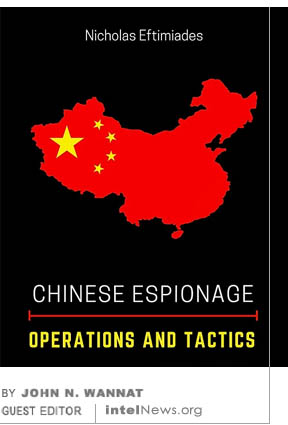
Review of “Chinese Espionage Operations and Tactics” (Second Edition)

Chinese Espionage Operations and TacticsMUCH HAS HAPPENED IN the West and in China since Nick Eftimiades first published Chinese Espionage Operations in 1994. It was the first in-depth study of Chinese espionage operations, which for decades had been overshadowed by Soviet intelligence and their espionage operations.
Throughout much of the latter part of the 20th  century, United States and other Western security services viewed Chinese intelligence and security services as being focused on their own internal security matters. They were not nearly as well-known or recognized as other adversarial intelligence and security services.  Nick was one of first experts to shine a light on Chinese intelligence operations. Since that time, he has dedicated his career and untold time and efforts to better understand Chinese intelligence tactics and techniques.

In the second edition of the book, Nick provides a comprehensive analysis and assessment on how the espionage and intelligence threat from China has grown significantly over the past three decades. He explains this in very clear and unambiguous terms to anyone who seeks a better understanding of these threats. This book is a culmination of more 30 years of dedicated research and the analysis of hundreds of cases that involve China. It focuses, not only on traditional espionage cases and operations, but examines motives, techniques and tactics relating to economic espionage, the theft of trade secrets and the theft of academic research and development.

There are a number of detailed case studies and real-life examples in the book, which show it is not only Chinese government organizations that pose a significant threat to United States and Western interests, but also a multitude of actors —e.g., academia, business people and researchers, with access to universities, commercial entities and think tanks. Chinese intelligence operatives conduct activities in all these areas in order to help China fulfill its strategic information and technology requirements and objectives. Nick examines China’s Whole of Society approach to a number of recent traditional and non-traditional collection efforts.

Chinese Espionage Operations and Tactics is an absolute must-read for individuals who handle national security matters; for state and local officials who are engaged in discussions with Chinese officials; for American and other Western businesses who are, or who will be, doing business with Chinese counterparts; for those in academia and research institutes involved with technology research and development, and finally for those who seek a better understanding of the threats posed by China’s growing and expanding worldwide presence and intelligence apparatus.

Author: John N. Wanat* | Date: 19 February 2025 | Permalink

  • John N. Wanat retired as Assistant Director for Investigations, Office of Export Enforcement, Bureau of Industry and Security, Department of Commerce.

Israeli soldiers working for Iranian intelligence spied on the Iron Dome

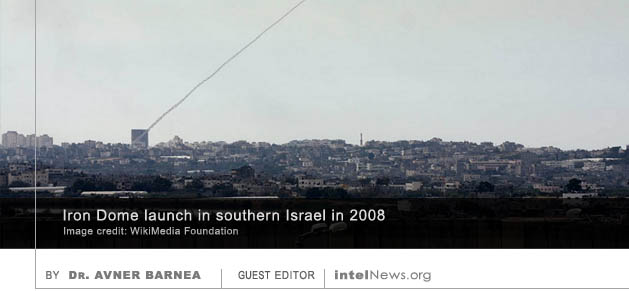
Iron Dome IsraelLAST MONTH, ISRAEL ARRESTED two reservists following an investigation that lasted several months and centered on uncovering espionage for an Iranian state entity during wartime. The two reservists had completed their regular military service before joining the reserves.

The two soldiers, identified as Yuri Eliasfov and Georgi Andreyev, held sensitive positions, and a least one was serving as a member of staff in Israel’s Iron Dome air defense system. The soldier serving in the Iron Dome is accused by the police, the Israel Security Agency (ISA), and the Israel Defense Forces (IDF), of aiding the enemy during wartime, for which the penalty is life imprisonment or death without the discretion of the court. A prosecutor’s statement has been filed against the two soldiers.

According to the investigation, the espionage affair began when one of the suspects, who served in a classified security system, sought to make contact with Iranian intelligence on social media. During his search, he contacted an Iranian operator, who asked him to complete various tasks in exchange for payments. The investigation revealed that the two soldiers were recruited by Iranian intelligence through the Internet to carry out missions in exchange for payments.

They two men were initially required to spray anti-government graffiti in Tel Aviv and in Israel’s the northern region. Giorgi Andreyev, fearing the consequences of such actions, withdrew from the operation. “We are working for Iran and doing something dangerous,” he told Eliasfov. Despite this, however, Eliasfov, who is reportedly the main suspect in the case, continued his activities.

The undercover investigation revealed that Eliasfov, who serves in the Iron Dome system, filmed a video while participating in a classified information, which he then sent to his Iranian handler. He received $3,500 from the same Iranian official, while his at-times accomplice received $70. During his interrogation, Eliasfov claimed that he committed the acts due to being in a difficult financial situation and because he sought to obtain money easily.

One of the interesting findings that emerged from the investigation of the suspects was that other soldiers and family members were aware of Eliasfov’s initial actions and warned him that he was connecting himself with Iranian elements. Despite that, Eliasfov continued his espionage activities, which included filming a video from inside an Iron Dome facility. The footage reportedly contained classified material that could significantly endanger the security of the State of Israel. Read more of this post

FBI’s top New York official urges personnel to ‘dig in’ for ‘battle’ with White House

FBITHE HEAD OF THE Federal Bureau of Investigation’s largest field office sent an email to his staff last night, urging them to “dig in” for “battle” after the White House began scrutinizing the Bureau’s investigation into the January 6 riots. James E. Dennehy, assistant director in charge of the FBI’s New York field office, sent a defiant email to FBI employees just hours after the Department of Justice (DOJ) began compiling the names of Bureau personnel who participated in the probe of the January 6, 2021, attack on the U.S. Capitol.

On January 31, President Donald Trump’s administration summarily dismissed nine senior FBI officials. The following day, the Bureau’s interim leadership received a DOJ directive instructing them to provide information on all employees involved in the January 6 investigation. This request applies not only to special agents but also to thousands of FBI personnel who provided support services for what remains the largest investigation in the agency’s history.

Approximately 15% of the FBI’s workforce —an estimated 6,000 employees— was involved in the investigation. On Sunday, around 4,000 of them received an email from the Department of Justice asking them to voluntarily disclose their role in the probe. Reports indicate that recipients must submit the requested information by 6:00 p.m. Eastern Time today. Many within the FBI fear this inquiry is part of a broader effort by the Trump administration to remove rank-and-file employees who worked on January 6 cases.

In response, Dennehy, a former U.S. Marine who joined the FBI after seven years in the Corps, sent an email on Sunday afternoon to personnel in the New York field office, delivering what appears to be a message of defiance. “Today,” he wrote, “we find ourselves in the middle of a battle of our own, as good people are being walked out of the FBI and others are being targeted because they did their jobs in accordance with the law and FBI policy.”

Dennehy praised the Bureau’s interim leaders, Brian Driscoll and Robert C. Kissane, for resisting DOJ requests to provide lists of FBI personnel, calling them “warriors.” He also recounted his Marine Corps experience, describing a time when he had to dig a five-foot-deep foxhole to survive, stating he would “dig in” similarly now. He emphasized that he had no plans to resign from the FBI or step down from his current position. Read more of this post

Analysis: Assad’s collapse in Syria was a strategic surprise to Israel

Syria IsraelTHE COLLAPSE OF THE regime of Syrian President Bashar al-Assad on December 8 caught the Israel Defense Forces (IDF) and Israel’s intelligence community —mainly Israel Military Intelligence (IMI) and the Mossad— by surprise. Assad’s collapse occurred much faster than Israel had estimated. Israel did not expect that the Syrian Arab Army would disintegrate so resoundingly, within 48 hours of the attack by the Syrian rebels.

Israeli intelligence assessed that, despite the shocks it had suffered in recent months, the so-called Axis of Resistance against Israel —mainly Hezbollah, Syria, and Iran— was stable. A scenario of rapid collapse of the government in Syria had not been assessed as a possibility, or even given a low probability tag. That was primarily because the Assad family had governed Syria for almost 60 years.

Following the Assad regime’s collapse, the focus of Israel’s intelligence is on analyzing the intentions of the major rebel organization, Hayat Tahrir al-Sham, and understanding how —if at all— it will lead the new administration in Syria. Israel is also examining developments in southern Syria, as well as what is happening at the Syrian and Russian military bases in Latakia and Tartus. Moreover, the IDF is monitoring the activities of Iranian elements in Syria, including on the border with Lebanon, to prevent the possibility of military equipment being transferred from Syria to Hezbollah.

It is clear to Israel that Turkey stands behind the Hayat Tahrir al-Sham organization and that Ankara armed and supported the group for a significant period. What is less clear is whether and how Turkey’s involvement in Syria could threaten Israel’s interests, given that Israel’s relations with Turkey have deteriorated dramatically in recent years.

Assad was a key member of the pro-Iranian Axis of Resistance. Following his fall from power, Iran and Hezbollah could lose their main logistical hub for producing, transferring, and storing weapons, as well as training their forces and militias. Additionally, Syria under Assad constantly posed the threat of turning into yet another battlefront against Israel. Without Assad, Russia could lose its grip on Syria —the only country in the Middle East where Russian influence dominates that of the United States. The Russians could also lose access to their military bases in Syria, which offered the Russian Navy access to the waters of the Mediterranean.

Despite the fall of the bitter enemy that was Assad’s Syria, and the deep shock suffered by the Iranian-led Axis of Resistance camp that has been dominant in the Middle East in recent decades, Israeli intelligence is not optimistic about the emerging situation in post-Assad Syria. Syria is a collection of minorities —Druze, Kurds, Alawites, and Christians— that have been artificially joined together despite carrying bitter, bloody scores. The latter may erupt sharply, especially against the Alawites. Concepts such as liberal politics, civil society, or a cohesive nation-state, have never existed inside Syria.

It follows that Israel is very concerned about the emerging uncertainty in Syria. Immediately after the fall of Assad, the IDF strengthened its defenses on the Golan Heights border to ensure that the chaos in Syria did not spill over into Israel. Meanwhile, Israel is in contact —both directly and through intermediaries— with several Syrian rebel groups, including Hayat Tahrir al-Sham. The Israeli message at this stage is a demand that the rebels not approach the border, along with a warning that, if they violate the separation of forces agreement, Israel will respond with force.

And a final note: assessments in relation to the Syrian regime’s collapse continue to emerge in the IDF and the Israeli intelligence community. These assessments concern the extent to which the lessons of October 7 have been sufficiently analyzed and assimilated within Israel. Specifically, there are questions about whether this new intelligence surprise in Syria may stem from the fact that an in-depth investigation into the lessons of October 7 has yet to be carried out during the 14 months of the war with Hamas.

Author: Avner Barnea* | Date: 20 December 2024 | Permalink

Dr. Avner Barnea is research fellow at the National Security Studies Center of the University of Haifa in Israel. He served as a senior officer in the Israel Security Agency (ISA). He is the author of We Never Expected That: A Comparative Study of Failures in National and Business Intelligence (Lexington Books, 2021).

Mounting concern in the EU about Indian black operations targeting dissidents

BLACK OPERATIONS, WHICH AIM to liquidate targeted individuals, are once again the subject of various reports. The primary focus tends to be on Russian intelligence agencies targeting alleged traitors worldwide. Michael Weiss, US publisher of The Insider, spoke in a recent interview of “more than 60 mysterious deaths of Putin’s enemies in Russia and Europe since the Ukraine war began”.

Somewhat-less-black operations, in which individuals —usually living abroad— are not killed, but intimidated, persecuted, threatened, or roughed up, appear to be increasingly utilized as a tool by certain states that have little tolerance for domestic political opposition. Ken McCallum, Director General of Britain’s Security Service (MI5), stated on 8 October 2024 that, “since January 2022, with police partners, we have responded to twenty Iran-backed plots presenting potentially lethal threats to British citizens and UK residents”.

Back in September 2023, The Guardian reported having spoken to 15 Iranian activists living in the United Kingdom, France, Germany, Spain, Switzerland and Sweden, who were being persecuted and intimidated, or had been threatened in various ways by the Iranian regime’s henchmen and its intelligence services. There are numerous similar examples of journalists and dissidents who have been a thorn in the side of the Turkish government for several years now. In addition to threats and violence, there are reports of abductions by Turkey’s National Intelligence Organization (MIT). In recent years, China too has increasingly relied on intimidation directly in the West, and has also engaged Western investigators and helpers for this purpose.

One concerning development is the fact that these states are apparently increasingly resorting to the help of members of Outlaw Motorcycle Gangs (OMCG), members of drug cartels, and other criminals. Regardless of whether it is for purposes of sabotage, threats, or assassinations, shady figures —typically apolitical— are undertaking missions on behalf of the intelligence agencies of authoritarian states on European soil.

The Case of India

Another country that has been in the spotlight for some time is India, which has historically maintained a low profile in the West, in terms of black operations. Western intelligence agencies could have predicted that there would be an escalation —i.e. Indian black operations on Western soil— which could lead to the liquidation of alleged or actual terrorists. If one observes the reports of Indian intelligence agencies and analysts on the activities of its mortal enemy, Pakistan, and its intelligence agency, the Inter-Services Intelligence (ISI), it quickly becomes apparent that India is less and less willing to tolerate what it regards as terrorism sponsored by Pakistan. This applies particularly to individuals and organizations operating from abroad. Read more of this post