Political wiretap scandal erupts in India

Outlook magazine

Outlook magazine

By IAN ALEN | intelNews.org |
A major scandal has erupted in India, with the revelation last weekend that government intelligence services have monitored the telecommunications of senior political figures since at least 2006. Indian newsmagazine Outlook, which is published nationwide, reported on Sunday that the left leaning government of the United Progressive Alliance and the Indian National Congress ordered intelligence officers to tap the telephone communications of several politicians. The list allegedly included Bihar state chief minister Nitish Kumar, Communist Party of India (Marxist) general secretary Prakash Karat, and minister for agriculture Sharad Pawar. According to Outlook, the government also used powerful communications interception hardware to “listen in on the conversations of opposition leaders during the July 2008 no-confidence motion on the Indo-US nuclear deal”. Read more of this post

News you may have missed #338

  • US intel on Iran suffering from information overload? The US National Intelligence Estimate was due last fall but has been delayed at least twice amid efforts to “incorporate information from [Iranian] sources who are still being vetted”. Some say that significant new material has come from Iranian informants, who are motivated by antipathy toward the Iranian government and its suppression of the opposition.
  • Canada’s ex-intel boss slams new anti-terrorism measures. Reid Morden, the former director of the Canadian Security Intelligence Service, has urged the country’s Conservative government to re-think its plans to re-introduce controversial anti-terrorism measures initially adopted in the wake of 9/11.
  • Wiretapping scandals continue in Colombia. Caracol TV reports that Colombian security agency DAS has asked opposition Senator Piedad Cordoba to hand over evidence of her claims that President Alvaro Uribe ordered DAS to spy on her.

Bookmark and Share

CIA scores Washington Post charm offensive

CIA HQ

CIA HQ

By IAN ALLEN | intelNews.org |
For an agency whose very future is routinely questioned by former employees, the CIA has been getting plenty of positive press in the pages of The Washington Post lately. On Monday, The Post’s Jeff Stein cited “a former top CIA official” who claimed that the Agency’s unmanned drone assassination program in the Afghan-Pakistan border has the Taliban in disarray, “thinking that we can track them anywhere”. The former official also said that the speed of the CIA and “its Pentagon partners” (presumably NSA) in intercepting targeted communications makes the process of assassinating Taliban leaders “like mowing a lawn”. Does this sound too good to be true? How about an article published on the same day, also in The Washington Post, which claims that the CIA’s Predator drone assassination program has “kept the number of civilian deaths extremely low”? Read more of this post

News you may have missed #337

  • Another Iranian nuclear researcher reportedly defects. An academic linked with Iran’s nuclear program has defected to Israel, according to Ayoub Kara, Israel’s deputy minister for development in the Negev and Galilee. Kara said it “is too soon to provide further details”, adding that the defector is “now in a friendly country”.
  • Dutch spies to become more active abroad. The Dutch secret service, the AIVD, has announced a shift in strategy, deployed increasingly more officers abroad: “in Yemen, Somalia, and the mountains between Afghanistan and Pakistan”.
  • Why did the CIA destroy waterboarding evidence? It has been established that Porter J. Goss, the former director of the CIA, in 2005 approved the destruction of dozens of videotapes documenting the brutal interrogation of two terrorism detainees. But why did he do it? Former CIA officer Robert Baer examines the question.

Bookmark and Share

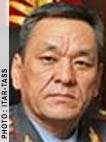
Russian intelligence arrests, extradites fmr Kyrgyz interior minister

Moldomusa Kongantiyev

Kongantiyev

By JOSEPH FITSANAKIS | intelNews.org |
If there were any doubts that Russia is aggressively courting the new interim government in Kyrgyzstan, they were dispelled earlier today with the announcement that Russian authorities arrested the Central Asian republic’s former interior minister. Kyrgyzstan’s National Security State Service (NSSS) announced that Moldomusa Kongantiyev was arrested on Sunday in Moscow, by agents of Russia’s Federal Security Service (FSB), and will be extradited to Bishkek, where he will face charges of using state repression against demonstrators. Kongantiyev had escaped to Russia in mid-April, after he was abducted and viciously beaten by Kyrgyz opposition demonstrators, who released him after his family paid a significant amount of money as ransom. IntelNews hears that Kongantiyev suspected that Moscow planned to extradite him to Kyrgyzstan, and that some of the supporters of the deposed regime in Russia offered to hide him. But their attempt to smuggle him out of a hospital in Moscow, where he was receiving medical care, was thwarted by the FSB, after a tip from  NSSS. Read more of this post

Abduction of former Pakistani ISI officials raises questions

Colonel Imam

Colonel Imam

By IAN ALLEN | intelNews.org |
Questions are being raised about the reported abduction of two well-known veterans of Pakistan’s Inter-Services Intelligence (ISI) directorate, who appear to have been kidnapped by an unknown group in Pakistan’s remote tribal regions. The two are Khalid Khawaja and Sultan Amir Tarar, a.k.a. Colonel Imam. Khawaja, a retired ISI officer, was a critical mediator between the CIA and Osama bin Laden in the 1980s, during the al-Qaeda’s war against the Soviets in Afghanistan. Colonel Imam, also a former intelligence officer and a diplomat, was the ISI handler of Taliban leader Mullah Mohammad Omar in the 1980s and early 1990s. Both Khawaja and Imam are considered senior members of the ISI’s ‘old guard’, who have strong ideological sympathies for both al-Qaeda and the Taliban, and frequently voice support for the latter. Read more of this post

News you may have missed #336

  • CIA tech arm invests in camera lens start-up. The CIA’s venture-capital investment arm, In-Q-Tel, has struck again. This time it has funded LensVector, a hi-tech start-up that specializes in micro-camera technology for cell phones.
  • NSA cyberdefense exercise underway. Detailed status report on the National Security Agency’s 10th annual Cyber Defense Exercise, a competition that pits students from a series of US military academies against each other –and against the competition’s leaders at NSA– in a bid to see who has the best cyberdefense skills.
  • US spy researchers working on computational intel. IARPA, the US intelligence community’s research arm, is apparently working on a new program, called Aggregative Contingent Estimation, which aims to create a computational model that can enhance human hypotheses and predictions, by catching inevitable biases and accounting for selective memory and stress in intelligence analysis.

Bookmark and Share

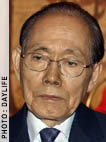
South charges North Korean agents with assassination plot

Hwang Jang-yop

Hwang Jang-yop

By JOSEPH FITSANAKIS | intelNews.org |
Two North Koreans who defected to South Korea last November have allegedly admitted to being intelligence officers on a mission to assassinate a North Korean former senior official. The official, Hwang Jang-yop, caused a sensation on both sides of the border when he defected to the South in 1997. A former secretary of the Korean Workers’ Party, Hwang was the North’s primary theorist and the ideological architect of juche, the philosophy of self-reliance, which is North Korea’s officially sanctioned state dogma. Since his defection, the 87-year-old Hwang, who is believed to have ideologically mentored North Korean leader Kim Jong-il, has been living in the South with around-the-clock security protection. The two self-confessed spies, Tong Myong Kwan and Kim Myung Ho, both 36, have allegedly admitted posing as defectors, while in reality being on an assassination mission on behalf of the intelligence unit of the North Korean Ministry of Defense. Read more of this post

News you may have missed #335

  • Leading al-Qaeda expert to leave FBI. J. Philip Mudd, one of the US intelligence community’s leading al-Qaeda analysts, has quietly retired from the FBI, where he was the National Security Branch’s associate executive director. He will be replaced by 23-year FBI veteran Sean Joyce.
  • Three more domestic spying programs revealed. The US Department of Homeland Security has acknowledged the existence of three more government programs charged with spying on American citizens in the aftermath of 9/11. The programs, Pantheon, Pathfinder and Organizational Shared Space, used a variety of software tools to gather and analyze information about Americans.
  • NSA Utah facility contractors shortlisted. We have mentioned before that for contractors in northern Utah, where the NSA is preparing to build a million-square-foot facility, at Camp Williams, it’s party time. Five of them, including three from Utah, have now been shortlisted by the government.

Bookmark and Share

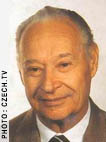
CIA not surprised by Soviet invasion of Czechoslovakia, documents show

Alexander Dubček

Alexander Dubček

By IAN ALLEN | intelNews.org |
Newly declassified CIA documents from 1968 show that the Agency had warned the Lyndon B. Johnson administration that the USSR was preparing to invade Czechoslovakia later that year. Some of the documents have been released before, but were presented for the first time in an organized, searchable format last Friday, at a symposium held at the Lyndon B. Johnson Presidential Library, on University of Texas campus. The symposium, entitled “Strategic Warning and The Role of Intelligence: Lessons Learned from the 1968 Soviet Invasion of Czechoslovakia”, included participants from academia, as well as from the CIA and other intelligence agencies. Among documents presented at the gathering was a May 10, 1968, CIA memo, which termed Soviet-Czechoslovak relations a “crisis” and warned that the possibility of an armed Soviet invasion of Czechoslovakia could “no longer be excluded”. Read more of this post

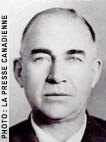
New book on Canada’s mysterious Agent 235

Johann Heinrich Amadeus de Graaf

De Graaf

By IAN ALLEN | intelNews.org |
A new book published by the Pennsylvania State University Press sheds new light into the life and work of mysterious Agent 235, Canada’s mysterious mid-20th-century spy known as ‘Johnny’. In Johnny: A Spy’s Life, R.S. Rose and Gordon Scott present the outcome of 14 years of research on ‘Johnny’, whose real name was Johann Heinrich Amadeus de Graaf. De Graaf was born in Germany in 1894, but later moved to Britain, and at the start of World War II worked as an informant for MI6. Although he conducted some of his operations in Germany, most of them took place in the UK, where he unmasked a number of native pro-Nazi sympathizers and agents of the Gestapo. Read more of this post

News you may have missed #334

  • Analysis: Split up the CIA, says veteran officer. A 15-year CIA veteran, who goes by the pseudonym Ishmael Jones, reveals in a new book that the Agency now has only “a handful” of non-official-cover officers, i.e. spies not affiliated with a US diplomatic mission abroad. In The Human Factor: Inside the CIA’s Dysfunctional Intelligence Culture, Jones argues the CIA should be broken up and its pieces absorbed by other US intelligence agencies.
  • Turkey appoints new intelligence director. It is expected that Turkey’s National Intelligence Organization (MİT) will soon be headed by Dr. Hakan Fidan, who will replace Emre Taner. MİT’s reputation has recently been severely hit by the involvement of some of its personnel in the notorious Ergenekon affair.

Bookmark and Share

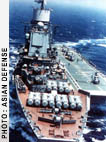
Russian honey-trap may have affected aircraft carrier deal with India

Admiral Gorshkov

Admiral Gorshkov

By JOSEPH FITSANAKIS | intelNews.org |
The recent court disclosure of an Indian engineer’s affair with a Russian woman has added fresh controversy in a multi-billion dollar deal gone sour between Russia and India, over the purchase of an aircraft carrier. In 2004, India purchased Admiral Gorshkov, a Soviet-built, 45,000-ton warship, for $974 million. But the negotiations between the two countries over the refit and repair project quickly deteriorated, with Sevmash Enterprise, the Russian shipyard in charge of the project, hiking the price twice in less than three years. At the end of fierce negotiations that scarred the bilateral defense relationship between the two countries, the Indian Navy was forced to pay in excess of $2.3 billion for the 30-year-old warship. In recent weeks, however, a series of explicit photographs were circulated, showing an unidentified Russian woman with Commodore Sukhjinder Singh, an Indian engineer whom the Indian Navy stationed in Russia and tasked him with overseeing Admiral Gorshkov’s refit from 2005 to 2007.   Read more of this post

News you may have missed #333

  • Ex-MI6 officer allegedly betrayed spies. Daniel Houghton was arrested last month while trying to sell classified documents to MI5 spooks posing as foreign agents. But now the former MI6 employee is accused by British authorities of trying to trade lists of British intelligence personnel. It is unclear which nation’s spy service Houghton believed he was selling to at the time of his arrest, though it is believed that Dutch intelligence tipped off MI5.
  • NSA director under friendly fire in US Senate. US National Security Agency director, Army Lt. Gen. Keith Alexander, spoke last Thursday before the Senate Armed Services Committee. He addressed the synergies among the NSA, the newly created Cyber Command, and the Department of Homeland Security, as well as the concept of cyberwar: “In general terms, I do think a cyberwar could exist”, he said, but only “as part of a larger military campaign”.

Bookmark and Share

NSA whistleblower prosecutions continue under Obama

Thomas Drake

Thomas Drake

By JOSEPH FITSANAKIS | intelNews.org |
Legal observers were surprised late last week when a grand jury in Baltimore indicted a former senior official of the US National Security Agency (NSA) for leaking classified information to a local newspaper reporter. The indictment, which was publicized last Thursday, accuses Thomas A. Drake of exchanging hundreds of email messages with a reporter, in which he exposed aspects of the NSA’s alleged mismanagement and operational deficiencies. Court documents do not identify the reporter, or the news outlet for which she worked. But most observers have identified her as Siobhan Gorman, who now works for The Wall Street Journal. Between 2006 and 2007, while working for The Baltimore Sun, Gorman authored a series of articles on the NSA, exposing, among other things, severe mismanagement of outsourced signals collection programs, as well as the Agency’s trouble in securing enough electrical supply for its computational requirements. Read more of this post