News you may have missed #0021

  • US Vice President refuses comment on CIA-DNI dispute. Speaking to ABC’s This Week, Biden refused to take sides on the ongoing turf battle between CIA director Leon Panetta and Director of National Intelligence Dennis Blair, over who should have a say in appointing CIA station chiefs around the world. Biden simply said he preferred to “comment on that next week”.
  • Lebanese officer suspected of spying flees to Israel. A Lebanese army colonel, who was about to join the nearly 40 individuals who have been arrested in southern Lebanon in connection to an alleged Israeli spy ring, managed to escape to Israel last week, sources say. 
  • Did former CIA director George Tenet get drunk at the palatial house of Prince Bandar, former Saudi ambassador to the US? Tenet is apparently disputing it, but he is not disputing that he spent the night there. 
  • Analysis: The history of CIA-ISI relations. In this well-researched article, Mark Mazzetti argues that US-Pakistani intelligence interactions show there is no such thing as a friendly intelligence service.

Bookmark and Share

US House Intelligence Committee says routinely misled by CIA

Reyes

Reyes

By JOSEPH FITSANAKIS | intelNews.org |
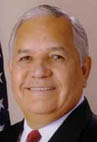
On June 23, intelNews reported on the endorsement by key lawmakers in Washington of a proposed bill that would force US intelligence agencies to make full disclosure of covert spy programs to all members of Congress’ intelligence oversight panels. Yesterday, US House Permanent Select Committee on Intelligence chairman Silvestre Reyes (D-TX), came out once again in support of the proposed legislation, saying that he has evidence that the Committee he chairs has been routinely “misled […] and […] affirmatively lied to” by the CIA. Reyes’ allegations were included in a letter to the committee’s Republican members, in which he urged them to support the proposed bill. According to the National Security Act of 1947, Congressional intelligence committees must be “fully and currently” informed about the activities of US intelligence agencies. In recent years, however, military and intelligence officials routinely make use of a classification label called Operational Preparation of the Environment (OPE), which allows them to shield certain activities from Congressional oversight. Read more of this post

Analysis: Al-Qaeda dumps phones, making interception impossible

Secret Sentry

Secret Sentry

By JOSEPH FITSANAKIS | intelNews.org |
In his brief but perceptive review of Matthew M. Aid’s new book, The Secret Sentry: The Untold Story of the National Security Agency, Craig Seligman, critic for Bloomberg News, refers to an argument made in the book, which in my opinion deserves attention. Namely, in discussing the NSA’s activities in the so-called “war on terrorism”, Aid points out that, not only are Iran and North Korea increasingly converting their analog communications networks into fiber-optic cables, thus making their internal communications virtually impossible to intercept, but al-Qaeda and other militant groups are now “practically cut[ing] out the use of telephones and radios”. All of this is gradually turning the NSA, an agency that receives over $9 billion a year in US taxpayers’ money, into a gargantuan organization whose daily tasks are becoming “maddeningly difficult” –indeed, almost irrelevant. Read more of this post

News you may have missed #0020

  • Social media is ruining spy industry, says IT security group. IT security consultancy NCC Group says that intelligence “agencies are concerned that Facebook and other social networking tools are ruining the spy industry”. The comments come just hours after British newspaper The Mail on Sunday revealed that personal details about the future head of MI6, Sir John Sawers, had been accessible to 200 million online users through his wife’s Facebook account.
  • Pakistan’s nukes face insider threat, says ex-CIA official. Rolf Mowatt-Larssen, a 23-year veteran of the Central Intelligence Agency, argues in Arms Control Today that “[t]he greatest threat of a loose nuke scenario stems from insiders in the nuclear establishment working with outsiders, people seeking a bomb or material to make a bomb […]. Nowhere in the world is this threat greater than in Pakistan. Pakistani authorities have a dismal track record in thwarting insider threats”, claims the retired US intelligence agent.
  • Hamas says Israeli spy cell in Ramallah busted. Hamas says it has dismantled an Israeli spy network, which served through the West Bank-based administration of Palestinian Authority Chief Mahmoud Abbas. The group claims that the network “channeled […] false information to Ramallah [in the Fatah-dominated West Bank] and then to the Israeli occupation”, in order to create “target bank” in Gaza.

Bookmark and Share

Facebook reveals personal details of future MI6 chief

Sir John Sawers

Sir John Sawers

By IAN ALLEN | intelNews.org |
Facebook, the Internet social networking site with over 200 million registered users worldwide, has made intelligence headlines once again. Last April, intelNews reported on revelations by Sweden’s armed forces that Swedish soldiers serving with NATO’s International Security Assistance Force in Afghanistan were approached on Facebook and asked to provide details on NATO’s military presence in the country. Last weekend, Facebook did it again: British newspaper The Mail on Sunday argued that “potentially compromising” personal details about Sir John Sawers, who has been appointed to the post of Director of MI6, Britain’s primary external intelligence agency, were revealed by his wife on her Facebook account. The paper accused Lady Shelley Sawers of “a major personal security breach” upon discovering that “she had put virtually no privacy protection on her account”, which made it accessible to all of Facebook’s 200 million users. Read more of this post

Larry Franklin, implicated in Israeli spy affair, breaks silence

Franklin

Franklin

By JOSEPH FITSANAKIS | intelNews.org |
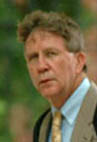
Lawrence Anthony Franklin, the former US Defense Department analyst whose 12-year prison sentence was suspended last month, has finally broken his silence. Franklin, who was accused by the US government of handing classified US military information to two American Israel Public Affairs Committee (AIPAC) lobbyists, has told Jeff Stein of SpyTalk that he handed out the secret information “in hopes that it would be passed on to the White House”. He said he was “worried” the Bush administration pursued a schizophrenic policy on Iran and had not calculated the Iranian reaction to a possible US invasion of Iraq. He therefore decided to pass on the classified information, which included “the names and locations of Iran’s secret agents and safe houses in Iraq”, to AIPAC lobbyists Steve Rosen and Keith Weissman, who claimed they had senior contacts in the Bush administration. Read more of this post

News you may have missed #0019

  • More interesting podcasts on Afghanistan at Electric Politics. George Kenney, of Electric News, has posted a full transcript of last month’s interesting interview with Graham E. Fuller, CIA’s former station chief in Kabul, Afghanistan. Also, a new highly interesting interview on Afghanistan has been posted on the Electric News website, this time with George Wilson. A veteran reporter who covered the Vietnam and Iraq wars, Wilson makes some noteworthy comparisons between Vietnam and Afghanistan.
  • Panetta, not Blair, should name CIA station chiefs, says ex-CIA agent. Haviland Smith, former CIA agent in Europe and the Middle East, has penned an editorial for The Baltimore Sun, in which he denounces as “simple insanity” efforts by Director of National Intelligence, Dennis Blair, to have a say at who gets appointed as CIA station chief in Kabul, Afghanistan, and elsewhere.  This is the second ex-CIA agent to issue the same warning in recent days.
  • Two more people arrested in Lebanon for spying for Israel. This raises the number of those arrested for belonging to an alleged Israeli spy ring in southern Lebanon to nearly 40. The latest arrestees include Ziad al Homsi, who in 1969 was photographed with Palestine Liberation Organization (PLO) leader Yasser Arafat.

Secret meetings reported between CIA and Saddam loyalists

Al-Douri

Al-Douri

By IAN ALLEN | intelNews.org |
The CIA is reportedly participating in a series of secret meetings with the two main leaders of the Ba’athist insurgency in Iraq. According to Intelligence Online and United Press International, CIA agents have entered truce negotiations with Izzat Ibrahim al-Douri (photo) and Mohammed Yunis al-Ahmad, who head most of the armed Sunni groups in Iraq. Until the 2003 US invasion, Al-Ahmad was an army general during the latter part of Saddam’s reign, while al-Douri was vice-president and deputy chairman of the Iraqi Revolutionary Command Council. The US has put out a reward of $1 million for Al-Ahmad, who is reportedly operating out of Syria. Al-Douri, who is said to be in Syria as well, is also wanted by the US in exchange for a $10 million reward. Read more of this post

News you may have missed #0018

  • Retired Romanian football star now admits being a spy. Earlier this week, Gheorghe Popescu, whose international career included playing for British teams, denied reports that he was an informer for Romania’s Securitate, the secret service of communist Romania. But on Thursday morning, the former Tottenham Hotspurs defender admitted that he did inform on teammates and other colleagues while playing for Universitatea Craiova. 
  • Grand jury hears from top CIA officers on destruction of tapes. A federal courtroom in Virginia has become the latest frontline in the Justice Department’s effort to uncover who at the CIA ordered in November of 2005 the incineration of 92 videotapes containing footage of torture applied on several “war on terrorism” detainees. Apparently, the tapes were kept for a long time in a safe at the CIA station in Thailand, where the interrogations took place. 
  • NSA to help defend civilian agency networks. The Obama administration is said to have decided to proceed with a Bush-era plan to use National Security Agency assistance in screening government computer traffic on private-sector networks. The decision, which had been rumored since last spring, was one of the reasons behind the March 2009 resignation of Rod Beckstrom, who headed the Department of Homeland Security’s National Cyber Security Center.

News you may have missed #0017

  • Spain’s chief spy resigns in financial scandal. Alberto Saiz, who headed Spain’s National Intelligence Center, was accused by the daily newspaper El Mundo of using public money for diving and hunting trips in Mexico, Senegal, Mali and Morocco. He denied the accusations, but on July 2, he resigned “to prevent further damage to the reputation of the intelligence agency and the government”. 
  • FBI declassifies reports on agents’ interviews with Saddam. Just-declassified FBI reports reveal that FBI special agents carried out 20 formal interviews and at least 5 “casual conversations” with former Iraqi dictator Saddam Hussein after his capture by US troops in December 2003. Interestingly, the declassified reports include nothing about “Iraq’s complicated relationship with the US”, especially the alleged role of the CIA in facilitating the Ba’ath party’s rise to power in the 1960s. 
  • Release of CIA report on detention, interrogation, delayed (again). Like many others, we at intelNews were eagerly expecting this previously classified CIA report on detention and interrogation under the Bush administration to be released last Wednesday. It was initially going to be released in mid-June, but was then delayed until July 1. Now the CIA says it won’t be able to release the report until the end of August. The ACLU says it will wait for as long as it has to.

News you may have missed #0016

  • Wife of cleric kidnapped by CIA seeks European Court trial. Nabila Ghali, the second wife of Hassan Mustafa Omar Nasr, who was kidnapped by the CIA from a street in Milan, Italy, in 2003, announced plans to appeal to the European Court of Human Rights against the Italian government’s state secrecy clauses that are hampering the Italian trial on Nasr’s abduction. 
  • NSA to build huge facility in Utah. The National Security Agency, which is tasked with worldwide communications surveillance, as well as communications security, is in the process of renovating its soon-to-be-unveiled 470,000-square-foot Texas Cryptology Center, which will cost upwards of $130 million and be used primarily to store intercepted communications data. This is now to be coupled with another, 1-million-square-foot data center, to be built at Utah’s Camp Williams. 
  • US government to keep CIA black sites open, for now. A government prosecutor has disclosed during the ongoing trial of former Guantanamo detainee Ahmed Galani that the CIA does not plan to close down its black sites “for now”.

News you may have missed #0015

  • Recession woes prompt rise in CIA applications. CIA recruiters point to the deep economic recession currently experienced in the US to explain the record numbers of applications for the Agency’s relatively few job openings this year. CIA recruiters say they have so far received “90,000 resumes and  […] will probably get close to 180,000 resumes” by the end of the year. The Agency employs around 20,000 people. The final number of job applications received in 2009 could be the largest number of job applications the Agency has ever received.
  • Ex-CIA analyst says only a new strike on US soil can help increase US security. Michael Scheuer, former chief of the Osama bin Laden unit at the CIA said during an interview with Fox News that “the only chance we have as a country right now is for Osama bin Laden to deploy and detonate a major weapon in the United States”.

Fears raised of Iranian-style surveillance in the US

NSN Logo

NSN Logo

By JOSEPH FITSANAKIS | intelNews.org |
Nokia Siemens Networks has denied allegations, published in The Wall Street Journal and reported by intelNews, that it helped the Iranian government acquire what experts describe as “one of the world’s most sophisticated mechanisms” for spying on Iranian telecommunications users. But critics remain unconvinced and are raising concerns about the use of similar intrusive capabilities by Internet service providers (ISPs) in the US. The Open Internet Coalition, a consortium of online business and consumer groups, has sent letters [.pdf] to US Congress members urging them to consider regulating the use of deep packet inspection technology. In addition to blocking or monitoring target communications, deep packet inspection enables ISPs and monitoring agencies to trace and alter the content of messages exchanged between users. Read more of this post

Former CIA station chief regrets “trail of evidence” in Italy abduction

Hassan Nasr

Hassan Nasr

By JOSEPH FITSANAKIS | intelNews.org |
For over two years, Italian justice has been after 26 Americans and five Italians who kidnapped a Muslim cleric suspected of terrorist ties and secretly flew him to Egypt, where he was secretly renditioned. The cleric, Hassan Mustafa Osama Nasr, who was kidnapped while walking down a street in Milan, says that his Egyptian jailers held him for years without formal charges and tortured him severely. The Italians’ search for the 26 Americans, all of them almost certainly CIA personnel, has been met with a “no-comment” policy from Washington and the CIA. But now one of the 26, Robert Seldon Lady, has given a rare interview to Italy’s Il Giornale newspaper, in which he essentially admits that the CIA was behind the operation.   Read more of this post

News you may have missed #0014

  • Belarus releases US lawyer jailed for industrial espionage. Emmanuel Zeltser who spent a year in jail in Belarus, is a lawyer with “a vast knowledge of organized crime, particularly the practice of money laundering”.
  • US Pentagon supplying intelligence to Pakistani armed forces. IntelNews has been keeping an eye on the intelligence side of the ongoing Pakistani offensive in the country’s North-West Frontier Province. Chinese intelligence involvement has already been established, and there have been allegations of Indian and Israeli involvement. It has now emerged that the US military has resumed surveillance flights over Pakistan, a clear sign of increased US-Pakistani intelligence collaboration.
  • US Congressional intel committee issues warnings. The US House Permanent Select Committee on Intelligence has approved, as expected, the 2010 fiscal intelligence authorization bill, but it said that “funding for cybersecurity programs may need to be reduced or slowed until the future direction for cybersecurity is better defined”. It also urged US intelligence agencies to expand ethnic diversity among employees and improve training on foreign languages.