Saudi state spies on dissidents in Canada using software built by Israeli firm

Embassy of Saudi Arabia in CanadaThe government of Saudi Arabia is spying on expatriate dissidents in Canada using commercially available software designed by an Israeli company, according to researchers at the University of Toronto. This is alleged in a new report published on Monday by the Citizen Lab, a research unit of the University of Toronto’s Munk School of Global Affairs and Public Policy, which focuses on information technology, international security and human rights. The report’s authors say they have “high confidence” that intrusive surveillance software is being deployed to target the electronic communications of Saudi dissidents, including Omar Abdulaziz, a Saudi activist who has been living in Canada’s Quebec province for nearly 10 years.

Abdulaziz, 27, arrived in Canada on a student visa in 2009. In 2014, having publicly voiced criticisms of the Saudi royal family and Saudi Arabia’s repressive political system, and having been threatened by Saudi authorities, Abdulaziz successfully applied for political asylum in Canada. In 2017 he was granted permanent residency status. For the past eight years, Abdulaziz has become increasingly vocal in his criticism of the Saudi government, mostly through his satirical channel on YouTube. The channel, called Yakathah, has over 120,000 subscribers and its content has angered Saudi authorities. The latter have warned Abdulaziz’s parents and last summer arrested two of his brothers, in what he describes as attempts to silence him.

Researchers from Citizen Lab claim that the Saudi government has been targeting expatriate dissidents such as Abdulaziz using various techniques, such as sending them spyware-infested messages that express support for anti-government demonstrations in Saudi Arabia. The report also notes that these messages make use of Pegasus, a surveillance software system that has been previously implicated in surveillance activities against political dissidents from Gulf countries. The software was designed by NSO Group Technologies, an Israeli digital surveillance company based in Herzliya, a small coastal town located north of Tel Aviv.

The Citizen Lab report comes at a time of heightened tensions in relations between Canada and Saudi Arabia. In August, Canada’s Global Affairs Ministry issued sharp criticisms of the Saudi government’s human rights record, while Foreign Affairs Minister Chrystia Freeland said she was “gravely concerned” about the suppression of political speech in the Kingdom. She also urged the Saudi government to release a number of jailed political activists and stop censoring Saudi women activists seeking gender equality. But her comments enraged the Saudi royal family, which controls the Kingdom. Within days, the Saudi government expelled Canada’s ambassador from Riyadh and restricted its economic ties with Canada. The Kingdom also recalled several thousand Saudi students who were studying in Canadian universities on Saudi government scholarships.

Author: Ian Allen | Date: 02 October 2018 | Permalink

Iran spied on ISIS supporters through fake phone wallpaper app, say researchers

Cell Phone - IASupporters of the Islamic State, most of them Persian speakers, were spied on by the government of Iran after they downloaded a fake smartphone application with wallpaper images, according to an online security firm. Iran is a major adversary of the radical Sunni group Islamic State. The latter considers Shiism (Iran’s state religion) as an abomination. Not surprisingly, therefore, the Islamic State, which is also known as the Islamic State of Iraq and Syria (ISIS), relies largely on supporters from the Arabic-speaking regions of the Levant. But according to estimates, Sunnis constitute about 10 percent of Iran’s population, and ISIS has found some fertile ground among Iran’s 8 million-strong Sunni minority. As a result, the government in Tehran is highly mistrustful of Iranian Sunnis, many of whom are ethnic Kurds, Baluchis, Azeris or Turkomans, and systematically spies on them.

According to the Israeli online security firm Check Point Software Technologies, one way in which Tehran has spied on Persian-speaking ISIS supporters is through fake smartphone applications. In an article published last week, the company said it had uncovered a state-sponsored surveillance operation that it had codenamed “Domestic Kitten”. The Check Point article said that the operation had gone on for more than two years, but had remained undetected “due to the artful deception of its attackers towards their targets”. The surveillance of targeted phones was carried out with the help of an application that featured pro-ISIS-themed wallpapers, which users could download on their devices. Yet another program linked to the same vendor was a fake version of the Firat News Agency mobile phone application. The Firat News Agency is a legitimate Iranian information service featuring news about Iran’s Kurdish minority. But both applications were in fact malware that gave a remote party full access to all text messages sent or received on the compromised phones. They also gave a remote party access to records of phone calls, Internet browser activity and bookmarks, and all files stored on the compromised phones. Additionally, the fake applications gave away the geo-location of compromised devices, and used their built-in cameras and microphones as surveillance devices.

Check Point said that the majority of compromised phones belonged to Persian-speaking members of Iran’s Kurdish and Turkoman minorities. The company stressed that it was not able to confirm the identity of the sponsoring party with absolute accuracy. However, the nature of the fake applications, the infrastructure of the surveillance operation, as well as the identities of those targeted, posed a strong possibility that “Domestic Kitten” was sponsored by the government of Iran, it concluded. Last July, the American cyber security firm Symantec said that it had uncovered a new cyber espionage group called “Leafminer”, which was allegedly sponsored by the Iranian state. The group had reportedly launched attacks on more than 800 agencies and organizations in in countries such as Israel, Egypt, Bahrain, Qatar, Kuwait, the United Arab Emirates, Afghanistan and Azerbaijan.

Author: Ian Allen | Date: 14 September 2018 | Permalink
Crowdfunding campaign seeks release of CIA’s mind control program files

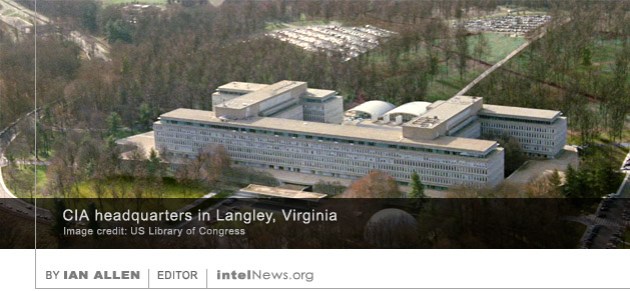
CIA headquartersAn online fundraising campaign is seeking to secure the release of over 4,000 pages of documents relating to a controversial mind control program developed by the United States Central Intelligence Agency. The project, referred to as MKNAOMI/MKULTRA in US government files, was a joint effort by the CIA and the US Department of Defense to study the effects of substances such as heroin and LSD on the human brain. It began in 1953 and over the years involved the work of hundreds of scientists, many of whom were not aware they were working on a CIA project. But it was hurriedly shut down in 1976, once post-Watergate investigations by the US Congress revealed that it led to the death of at least one person and involved the application of drugs on hundreds of nonconsenting subjects. Several lawsuits relating to MKULTRA have been filed in US courts in recent years.
In 2004, the Black Vault, a volunteer website specializing in publishing declassified government documents, released tens of thousands of pages that were released by the CIA following a lengthy Freedom of Information Act (FOIA) application. The agency released the file along with an 85-page index that listed the file’s contents. But in 2016, a Black Vault reader noticed that some of the listings contained in the file were missing from the documents. Working through the news aggregation and discussion website Reddit, a group of readers identified all the irregularities in the released documents and notified Black Vault’s owner, John Greenwald. Greenwald then contacted the CIA and, following a two-year exchange with the agency’s FOIA desk, he was told that the missing pages would require a separate FOIA request. The reason, according to the CIA, is that the original FOIA request had requested documents pertaining to “mind control”, whereas the missing pages related to “behavioral modification”, which is a separate topic.

The CIA told Greenwald that releasing the pages pertaining to “behavioral modification” would require a payment of $425.80, at 10 cents per page. After failing to convince the CIA that it should release the pages for free, because they should have been included in the original 2004 FOIA petition, Greenwald decided to launch a crowdfunding campaign. He used the popular crowdfunding website GoFundMe to request $500 toward a new FOIA and related expenses. By Wednesday night, the campaign had exceeded the amount requested by Greenwald. The owner of the Black Vault website now says that he is preparing to file a FOIA for 4,358 pages about MKULTRA that are missing from the original 2004 document release.

Author: Ian Allen | Date: 16 August 2018 | Permalink

Germany arrests Jordanian intelligence operative who spied on mosque

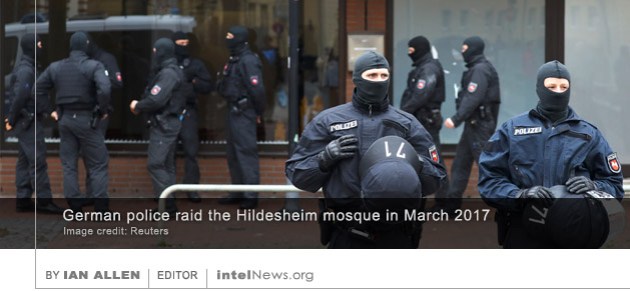
Hildesheim mosqueAuthorities in Germany announced yesterday the arrest of a German national who is accused of spying on a central German mosque on behalf of Jordan, according to media reports. The man was reportedly arrested on Tuesday at an unknown location by officers of Germany’s domestic intelligence agency, the Federal Office for the Protection of the Constitution (BfV). In a press statement, the agency said the man is a 33-year-old German national named “Alexander B.”. German privacy rules forbid the public identification of crime suspects prior to their conviction in a court of law.
According to the public statement issued by the BfV, the 33-year-old man is believed to have worked for “a Jordanian intelligence agency” —most likely the Jordanian General Intelligence Department, or GID, which is a branch of the Jordanian Armed Forces— since at least 2016. He is accused of having infiltrated a Sunni mosque in the central German city of Hildesheim, located 20 miles southeast of Hanover in Germany’s Lower Saxony region. His mission, according to the BfV, was to keep tabs on mosque goers who expressed support for the ideology of the Islamic State, and might even consider traveling to the Middle East to join the radical group. The alleged Jordanian intelligence operative was also tasked with reporting on news reaching the mosque from those of its members who had already gone to the Middle East and joined the Islamic State.

Last year, German authorities closed down the Hildesheim mosque, known in German as Deutschsprachiger Islamkreis Hildesheim e. V. (DIK), and arrested its imam, Ahmad Abdulaziz Abdullah A., known as Abu Walaa. The Iraqi-born imam was charged with supporting a foreign terrorist organization by actively recruiting young Muslims on behalf of the Islamic State. The mosque has since remained closed, because authorities believe that it had become a beehive of fundamentalist activity. Jordan is one of the Middle East’s most liberal states and has been targeted repeatedly by the Islamic State, which views its leadership as pro-Western. However, it appears that Alexander B. was spying on the Hildesheim mosque —therefore on German soil— without having informed the host country of his activities. The government of Jordan has not commented on his arrest.

Author: Ian Allen | Date: 09 August 2018 | Permalink

Syrians accuse Israel of assassinating top missile scientist in Hama province

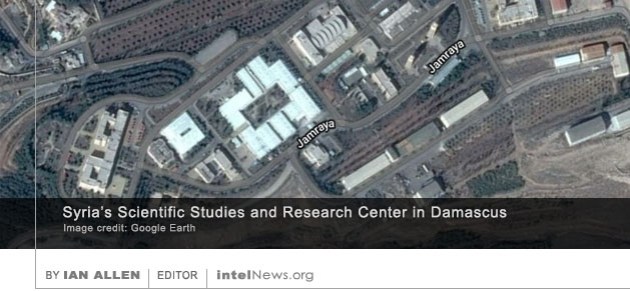
Syrian Scientific Studies and Research CenterOne of Syria’s leading pro-government newspapers has said that Israel was behind a bomb blast in Hama province that killed a senior scientist working for the country’s missile program. Aziz Azbar was reportedly a senior research director at the Syrian Scientific Studies and Research Center, known as CERS. The Damascus-based agency is thought to be at the center of the Syrian government’s formidable chemical weapons program. Last year, the United States Department of the Treasury imposed economic sanctions on nearly 300 CERS employees, after Washington accused them of being directly responsible for the Syrian government’s repeated use of chemical weapons against rebels and civilians. The European Union, as well as the French and British governments, also imposed sanctions on CERS and its staff.
According to Syrian media, Azbar specialized in developing and maintaining rocket systems in the city of Masyaf, located about 160 miles north of Damascus, where CERS maintains a research facility. He reportedly died last Saturday night when his car suddenly blew up. According to some reports, the blast originated from a bomb that had been placed in the headrest of his car seat and was detonated remotely. His driver was also killed in the blast, according to Syrian media reports. An insurgent group calling itself the Abu Amara Battalions, which is linked with the Sunni Levant Front in Syria’s Aleppo province, issued a statement claiming responsibility for Azbar’s killing. The Abu Amara Battalions have previously issued similar statements after reportedly assassinating Syrian government officials or militia commanders.

However, on Sunday Syria’s al-Watan newspaper said that the Israeli intelligence agency Mossad was responsible for Azbar’s death. The Syrian scientist was “a person of the utmost interest to Israel” said the paper, because of his direct connection to Damascus’ Russian- and North Korean-built Scud missile arsenal. However, officials in Israel refused to acknowledge that Tel Aviv had any connection with Azbar’s killing. “Every day in the Middle East there are hundreds of explosions and settling of scores”, said Israel’s Defense Minister Avigdor Liberman. “Every time they try to pin the blame on [Israel], so we won’t take this [latest accusation] too seriously”, he added. The Syrian government has not made any formal statements regarding Azbar’s death.

Author: Ian Allen | Date: 06 August 2018 | Permalink

German far-right group is arming itself, poses serious threat, report warns

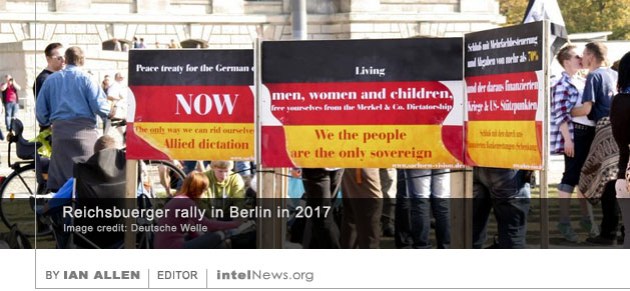
ReichsbuergerAdherents of a bizarre far-right movement in Germany, who claim to be citizens of Prussia, are arming themselves and pose a growing security threat, says a new report by the country’s domestic spy service. The members of the movement call themselves Reichsbuerger (“citizens of the Reich”) and reject the legitimacy of the Federal Republic of Germany. Instead of the modern-day German state, which emerged in 1990 from the union of East and West Germany, Reichsbuergers swear allegiance to the Deutsches Reich (German Reich), the Nazi German state that existed between 1933 and 1945. They also claim that the Deutsches Reich, which they occasionally refer to as Prussia, continues to exist in its pre-1945 state and is still governed by a provisional government in exile.
In some cases, Reichsbuerger adherents have contacted foreign embassies in Berlin and asked to be recognized as citizens of the Third Reich, but without success. In addition, some Reichsbuerger associations issue Deutsches Reich identification cards and Deutsches Reich car license plates. But these are dismissed as “fantastical” by German authorities, who have historically refused to take Reichsbuerger adherents seriously. But now the Federal Office for the Protection of the Constitution (BfV), Germany’s main domestic security agency, has said that the Reichsbuerger movement is growing and needs to be viewed as a potential security threat. According to the BfV’s annual report, which was published on Tuesday, the Reichsbuerger movement has grown by more than 65 percent since 2016 and currently consists of approximately 20,000 committed members.

In its report, the BfV notes that the numerical growth of Reichsbuerger adherents may be partly attributed to the heightened attention that German authorities have been paying to far-right organizations in recent years. The agency also states that only about five percent of Reichsbuergers may be described as violent or potentially violent extremists. However, violent Reichsbuergers have risen from 500 in 2016 to 900 in 2017, an 80% increase in a year, according to the report. Moreover, says the BfV, many core members of the Reichsbuerger movement maintain close contacts with German far-right criminal networks, whose members include current and former supporters of the National Socialist Underground (NSU). Earlier this month, several NSU members were found guilty of having participated in 10 politically motivated killings of immigrants between 2000 and 2007. The BfV report states that Reichsbuergers increasingly view the NSU’s violent acts as examples to follow, and that they are systematically attempting –and usually succeeding– to obtain gun licenses. In a report published earlier this year, the BfV had warned that the Reichsbuerger movement was trying to build an army.

Author: Ian Allen | Date: 25 July 2018 | Permalink

Spy chiefs from Russia, China, Iran and Pakistan hold high-level meeting

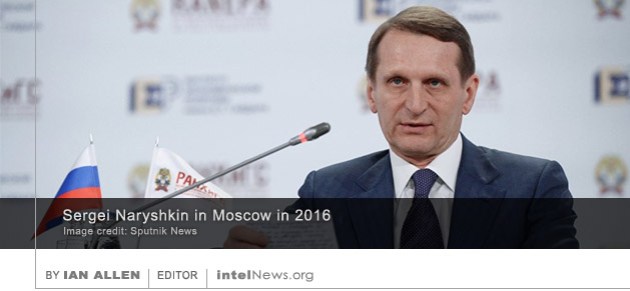
Sergei NaryshkinIntelligence directors from Russia, China, Iran and Pakistan met on Tuesday to discuss regional cooperation with particular reference to combating the Islamic State in Afghanistan. Information about the high-level meeting was revealed yesterday by Sergei Ivanov, media spokesman for the Russian Foreign Intelligence Service (SVR). Ivanov told Russia’s state-owned TASS news agency that the meeting was held in Pakistan and included the participation of SVR director Sergei Naryshkin. TASS reported that the meeting was held under the auspices of Pakistan’s powerful Inter-Services Intelligence (ISI) Directorate and was attended by “senior intelligence officials” from Pakistan, Russia, Iran and China.
Ivanov said that discussions during the meeting “focused on the dangers arising from a buildup of the Islamic State on the Afghan territory”. The Islamic State announced the formation of its Afghan province (wilayah in Arabic) in January 2015, using the term “Khorasan Province”. By July 2016, two of its most prominent leaders had been killed in coordinated drone strikes by the United States, but the group continues to launch operations to this day. Its core is thought to be made up of nearly 100 fighters from the Islamic State’s former strongholds in Syria and Iraq. According to Russian reports, security officials in China, Russia, Pakistan and Iran are concerned that the Islamic State’s Afghan command is becoming stronger as fighters from the group are leaving the Middle East and moving to Afghanistan.

Tuesday’s high-level meeting in Islamabad follows an announcement last month by the Beijing-led Shanghai Cooperation Organization (SCO) that it would adopt a more active stance on security issues in Afghanistan. Early in June, Afghan President Mohammad Ashraf Ghani described the SCO as “an important platform for anti-terrorist cooperation and enhancing regional connectivity” in Central and South Asia. President Ghani made these comments shortly before traveling to China to attend the annual summit of the SCO, of which Afghanistan is an observer country.

Author: Ian Allen | Date: 11 July 2018 | Permalink

Ukraine, Russia, spied on Dutch investigators of MH17 plane disaster, TV report claims

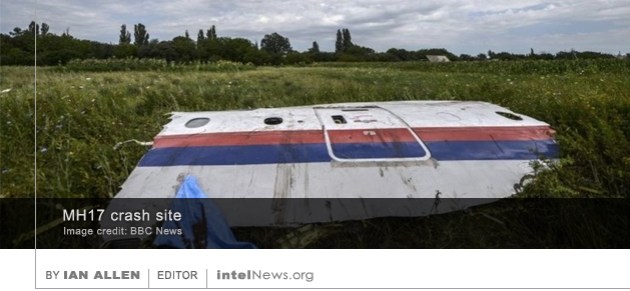
MH17 crashDozens of Dutch security officers, legal experts, diplomats and other civil servants were systematically spied on by Ukrainian and Russian intelligence services while probing the aftermath of the MH17 disaster, according to a report on Dutch television. Malaysia Airlines Flight 17, a scheduled passenger flight from Amsterdam to Kuala Lumpur, was shot down over eastern Ukraine on July 17, 2014. All 283 passengers and 15 crew on board, 196 of them Dutch citizens, were killed. In the aftermath of the disaster, the Dutch Safety Board spearheaded the establishment of the multinational Joint Investigation Team (JIT), which is still engaged in a criminal probe aimed at identifying, arresting and convicting the culprits behind the unprovoked attack on Flight MH17. As part of the JIT, dozens of Dutch officials traveled to Ukraine to initiate the investigation into the plane crash and repatriate victims’ bodies and belongings. Their activities were conducted with the support of the Ukrainian government, which is party to the JIT.
But on Tuesday, Holland’s RTL Niews broadcaster said that members of the Dutch JIT delegation were subjected to systematic and persistent spying by both Ukrainian and Russian government operatives. According to RTL, Dutch investigators found sophisticated eavesdropping devices in their hotel rooms in Ukraine, and believed that their electronic devices had been compromised. Citing “inside sources” from the Dutch government, the broadcaster said that, during their stay in Ukraine, members of the Dutch JIT delegation noticed that the microphones and cameras on their wireless electronic devices would turn on without being prompted. They also noticed that the devices would constantly try to connect to public WiFi networks without being prompted. Upon their return to Holland, Dutch officials had their wireless devices examined by Dutch government security experts. They were told that numerous malware were discovered on the devices.

RTL Niews said that the question of whether valuable information relating to the MH17 investigation was stolen by foreign spies remains unanswered. But it noted that the members of the Dutch JIT delegation were warned about possible espionage by foreign powers prior to traveling to Ukraine. During their stay there, they were not allowed to send messages in unencrypted format and were only permitted to hold sensitive conversations in especially designated rooms inside the Dutch embassy in Kiev. The Dutch government did not respond to questions submitted to it by RTL Niews. But it issued a statement saying that its security experts had briefed and trained the Dutch JIT delegation prior to its trip to Ukraine. Members of the delegation were told that foreign parties would seek to collect intelligence, because the MH17 investigation was taking place in a “conflict area with significant geopolitical interest” for many parties. They were therefore advised to “assume that they were being spied on [and] adjust [their] behavior accordingly” while in Ukraine, the Dutch government’s statement said.

Author: Ian Allen | Date: 28 June 2018 | Permalink

Singapore officials reject rumors of spy devices used at Trump-Kim summit

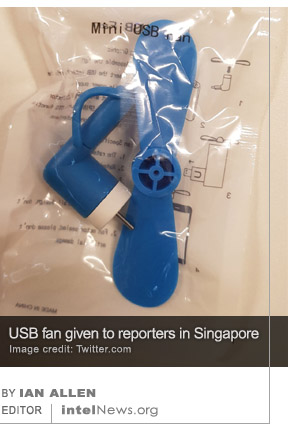
USB fan espionageSingaporean officials have dismissed reports that a promotional item given away for free during the June 12 summit between the leaders of the United States and North Korea contained an espionage device. Over 2500 reporters from nearly every country covered the meeting between US President Donald Trump and North Korean Supreme Leader Kim Jong-un. Upon arriving in Singapore’s Sentosa Island, where the summit took place, journalists were given a free promotional packet that included novelty items such as pens, notepads, a water bottle, and a USB fan. The USB fan consisted of blades connected to a miniature electric motor, which was in turn connected to a USB cable. The cable allowed the device to be powered by a computer or other electronic device with a built-in USB port.
But rumors soon emerged in the media that the free USB fans, which were made in China, contained malware. As soon as the fans were plugged into an electronic device, the malware penetrated its operating system, allowing hackers to access its contents remotely, said the reports. The allegations were first aired on Radio France Internationale, the French government’s international broadcaster. They were then picked up by the BBC, which said that many reporters covering the historic summit had been warned “not to plug [the USB fans] in to their laptops”. According to the reports, the malware installed on the USB fans was able to steal computer files and turn a laptop’s built-in camera and microphone into remotely-controlled eavesdropping devices.

But the government of Singapore has strongly rejected these reports. In a statement issued in English, Singapore’s Ministry of Communications and Information said that the USB fans had been a gift of the Sentosa Development Corporation, a Singapore government body tasked with promoting tourism in Sentosa Island, where the Trump-Kim summit took place. The ministry added that the USB fans had been produced long before Trump and Kim decided to meet in Singapore and that they had been originally manufactured as gifts for tourists visiting the island. The statement issued by the ministry also said that reporters appreciated the fans, given the tropical climate on Sentosa Island, where the temperature reached 33C (91F) on the day of the summit.

Author: Ian Allen | Date:  25 June 2018 | Permalink

US imposes sanctions on companies for helping Russian spy agencies

YantarThe United States has for the first time imposed economic sanctions on a number of Russian companies, which it says helped the Kremlin spy on targets in North America and Western Europe. On Monday, the US Department of the Treasury said it would apply severe economic restrictions on a number of Russian firms that work closely with the Kremlin. One of the companies was identified as Digital Security, which Washington says has been helping Russian intelligence agencies develop their offensive cyber capabilities. Two of Digital Security’s subsidiaries, Embedi and ERPScan, were also placed on the US Treasury Department’s sanctions list. Monday’s statement by the Treasury Department named another Russian firm, the Kvant Scientific Research Institute, which it described as a front company operated by the Russian Federal Security Service (FSB).
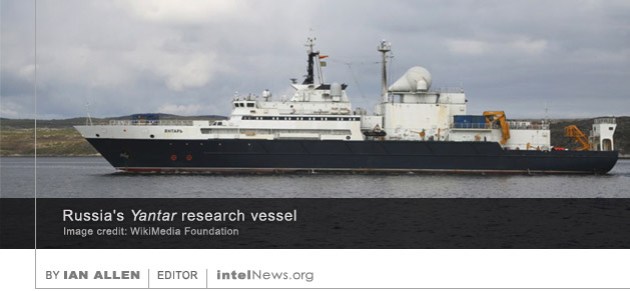
But the Russian firm that features most prominently in Monday’s announcement is Divetechnoservices, an underwater equipment manufacturer. The US alleges that the FSB paid the company $15 million in 2011 to design equipment for use in tapping underwater communications cables. According to Washington, equipment designed by Divetechnoservices is today used by a fleet of Russian ships that sail on the world’s oceans searching for underwater communications cables to tap. One such ship, according to reports, is the Yantar (pictured), ostensibly an oceanic research vessel, which Washington says is used to detect and tap into underwater communications cables.

In addition to Divetechnoservices, the US Treasury has named three individuals who will face economic sanctions due to what Washington says is their personal involvement with the underwater hardware manufacturer. They are: Vladimir Yakovlevich Kaganskiy, the company’s owner and former director; Aleksandr Lvovich Tribun, who serves as Divetechnoservices’ general director; and Oleg Sergeyevich Chirikov, identified as the manager of Divetechnoservices’ underwater surveillance program. These men —all Russian citizens— will not be able to enter into business relationships with American companies or citizens. On Tuesday, Russia’s Ministry of Foreign Affairs dismissed the latest round of US sanctions as an act of desperation. The White House would fail in its effort to “force the Russian Federation to change its independent course of action in the international arena”, said the Russian Ministry of Foreign Affairs.

Author: Ian Allen | Date: 13 June 2018 | Permalink

Most government hackers now target cell phones, not computers, experts say

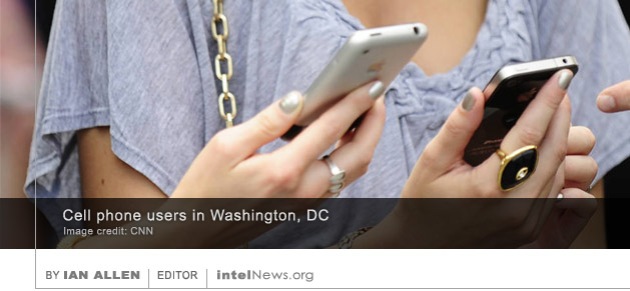
Cell Phone - IAThe majority of government-sponsored hacking now targets cell phones, not personal computers, according to researchers who say that political dissidents are especially targeted by totalitarian regimes around the world. Until 2015, most government-sponsored hacking operations were directed against the personal computers of targeted individuals. However, experts tell The Wall Street Journal that as of this year cell phones have become a far more lucrative target than personal computers in government-sponsored hacking operations. Researchers with Lookout Mobile Security, a security software company based in the United States, say that detected phone-hacking operations that are believed to be sponsored by governments have increased by a factor of 10 in the first five months of this year, compared to 2015.

According to Lookout, the increase in hacking operations targeting mobile phones reflects the proliferation of smartphone usage around the world, as well as the increase in consumption of cell phone software. Government-sponsored hackers usually compromise their targets’ cell phones through malicious software disguised as cell phone applications. The Wall Street Journal also reports that the software needed to build malicious software for cell phones has become cheaper and more readily available. Compromising a target’s cell phone provides hackers with information that is far more personal and sensitive than what can be found on a personal computer. The paper quotes Mike Murray, Lookout’s vice president of security research, who says: “It is one thing to compromise someone’s computer. It’s another thing to have a listening device that they carry around with them 24 hours a day”. Compromised phones become immensely powerful espionage tools, explains Murray.

Many of the individuals whose cell phones are targeted by governments are activists or dissidents who campaign for political or economic reforms in their countries. Their cell phones are targeted in systematic hacking campaigns by countries like Ethiopia, the United Arab Emirates, Cambodia, and Mexico, said Lookout. The Wall Street Journal cites Raj Samani, chief scientist for the antivirus firm McAfee, who claims that nearly 11 percent of cell phones worldwide were infected with some kind of malware in 2017. That statistic is likely to rise significantly by the end of 2018, says Samani.

Author: Ian Allen | Date: 08 June 2018 | Permalink

High-level MI6 spy inside al-Qaeda writes book detailing his work

Aimen Dean, a.k.a. Ramzi

Aimen Dean, a.k.a. Ramzi

A Saudi-born man, who some refer to as the most valuable British-run spy inside al-Qaeda, has authored a soon-to-be-published book about his experiences. Aimen Dean, known in al-Qaeda circles simply as ‘Ramzi’, became radicalized in the first half of the 1990s in response to the Bosnian War. At that time, he traveled from his home country of Saudi Arabia to Bosnia, where he joined large numbers of foreign Muslim fighters who fought in support of Bosnian-Muslim forces. In subsequent interviews, Dean has said that he continues to view his participation in the Bosnian War as an “ethical and moral” act in defense of a “defenseless population”. Following the end of the Bosnian War, Dean joined many foreign-born fighters who followed al-Qaeda co-founder Osama bin Laden to Afghanistan. While there, he pledged allegiance to bin Laden and gained his trust.

Dean’s task in Afghanistan was to train new al-Qaeda recruits in Islamic theology and history. But he was also tasked with combat duties, which included bomb-making. He witnessed the drastic shift in al-Qaeda’s raison d’être from a group ostensibly fighting to defend Muslims under attack, to a center of a violent campaign against the West. Dean has stated that during his first period in Afghanistan, he sincerely believed that the West was involved in a systematic campaign to destroy Islam and Muslims. Gradually, however, Dean’s views began to conflict with those of al-Qaeda’s leaders. He especially objected to the use of suicide bombers and the deliberate targeting of civilians by al-Qaeda fighters. His disillusionment with al-Qaeda peaked in August of 1998, when the organization targeted the United States embassies in Kenya and Tanzania in coordinated strikes.

During a leave of absence from al-Qaeda’s Afghanistan stronghold, Dean was approached by the United Kingdom’s Secret Intelligence Service, more commonly known as MI6. He says that he quickly agreed to work as a spy for the British agency and did so from 1998 until 2007, when he claims that his cover was blown. Dean has now written a book, co-authored with two CNN reporters, Paul Cruickshank and Tim Lister. Entitled Nine Lives: My Time As MI6’s Top Spy Inside al-Qaeda, the book is due to appear in stores on June 7.

Author: Ian Allen | Date: 25 May 2018 | Permalink

Russian journalist who wrote about mercenaries’ deaths in Syria is found dead

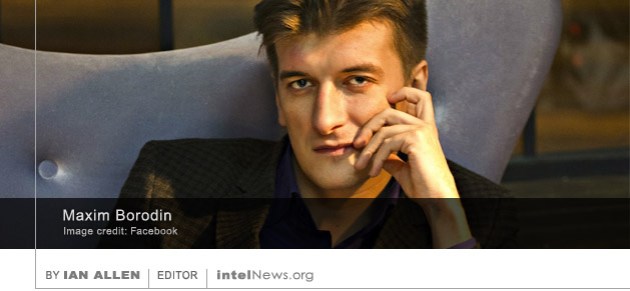
Maxim BorodinA Russian investigative journalist, who wrote a series of articles about Russian soldiers-for-hire in Syria, has died after falling from the balcony of his apartment in western Siberia. Some of his colleagues say they suspect foul play. Maxim Borodin wrote for Novy Den (New Day) an investigative online magazine. In the past few weeks, Novy Den published a series of probing articles by Borodin about the activities of Russian mercenaries working for the Syrian President Bashar al-Assad. Borodin was one of just a handful of Russian journalists who reported on claims that more than 200 Russian mercenaries were killed in Syria on February 7.
According to the United States government, the Russians were part of a 500-strong Syrian government force that crossed the Euphrates River and entered Kurdish-controlled territory in Syria’s northeastern Deir al-Zour region. American-supported Kurdish forces in the area, which include embedded US troops, responded with artillery fire, while US military aircraft also launched strikes against the Syrian government forces. The latter withdrew across the Euphrates after suffering heavy losses, including at least 200 Russian troops. The incident was subsequently confirmed by the Kremlin, which said that the Russians were contractors and were not members of the Russian armed forces. Borodin wrote that the Russian mercenaries were employed by the Wagner Group, an arms-for-hire company owned by Yevgeny Prigozhin, a billionaire with close ties to the Russian President Vladimir Putin. Prigozhin’s name is included in the most recent list of Russian oligarchs that are subject to economic sanctions imposed by the US government.

Last Thursday, just weeks after writing his exposé about the Wagner Group, Borodin was found by neighbors at the foot of the building that houses his apartment in Yekaterinburg, Russia’s fourth largest city. The journalist was taken to a local hospital, where he later died from his injuries. The American news network CNN said it spoke to Valery Gorelykh, a local Russian Interior Ministry official, who said that no foul play was suspected in Borodin’s death. The door of his apartment had been locked from the inside and there were no signs of struggle, said Gorelykh. He went on to say that the most likely explanation for Borodin’s death was that he slipped and fell off the balcony while smoking a cigarette.

But some of Borodin’s colleagues and friends question the verdict of accidental death. Vyacheslav Bashkov, a close friend of the deceased, said Borodin had called him in a frantic state in the early morning hours of April 11. He said his apartment had been surrounded by armed security personnel wearing ski masks, one of whom had climbed on his balcony and appeared to be waiting for a court order so that he could search Borodin’s apartment. But an hour later, Borodin called Bashkov again, this time to let him know that the armed men had been conducting a training exercise and that they never entered his apartment after all. Another colleague of Borodin, Novy Den editor-in-chief Polina Rumyantseva, said she did not believe Borodin had committed suicide.

Author: Ian Allen | Date: 17 April 2018 | Permalink

Syria sought out and assassinated American journalist, former spy says

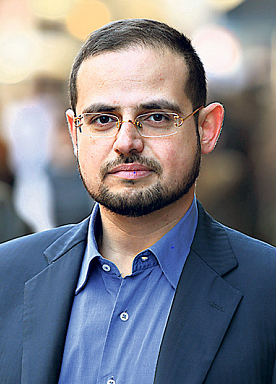
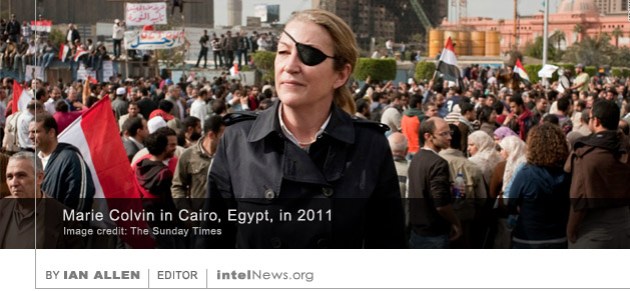
Marie ColvinThe Syrian government tracked down and killed American journalist Marie Colvin in order to stop her from reporting about the Syrian Civil War, according to a Syrian intelligence officer who has defected to Europe. Colvin was an experienced war correspondent who worked for The Sunday Times. The British newspaper sent her to Syria soon after the outbreak of the war. From there, she gave live interviews to media outlets such as CNN and the BBC. But on the morning of February 22, 2012, Colvin was killed along with French war photographer Remi Ochlik. Their death came when Syrian government forces repeatedly shelled a media center in the city of Homs, which housed the two reporters.

In 2016, the San Francisco-based Center for Justice and Accountability filed a lawsuit against the government of Syrian President Bashar al-Assad, claiming that Colvin’s death was deliberate and wrongful. The lawsuit is supported by Colvin’s family in the United States. Court records unsealed on Monday include a sworn testament by a Syrian former intelligence officer who has defected and now lives under a new identity in an undisclosed European country. The defector, codenamed ULYSSES, said that Colvin was assassinated by the Assad government as part of a concerted effort to hunt down Western journalists and local media correspondents. The ultimate purpose of the plan was to hinder international reporting about the war. The plan was allegedly carried out by the Syrian military under the guidance of the country’s Military Intelligence Directorate. Many of the reporters targeted for assassination were reporting from the city of Homs, where Colvin was killed.

According to ULYSSES, Syrian government forces began targeting the Homs media center after they found out that foreign journalists had managed to enter the city’s western sector from nearby Lebanon. They then employed a mobile satellite interception system to capture the journalists’ communications, which in turn revealed their precise location. At that point, Syrian troops were ordered to fire several missiles at the building housing the journalists, in full knowledge that Colvin and Ochlik were inside. In his testimony, ULYSSES claimed that Syrian intelligence officials “celebrated” when they were told that Colvin had been killed. He identified eight senior Syrian officials who he said were involved in planning the American journalist’s alleged assassination. One of them, said ULYSSES, was Maher al-Assad, President Assad’s brother, who leads the 4th Armored Division of the Syrian Army, considered as one of the staunchest pro-government parts of the Syrian military. Testimonies in the case continue this week.

Author: Ian Allen | Date: 10 April 2018 | Permalink

Analysis: Trump has made record use of US Special Forces since becoming president

special forcesWith reports about the activities of the United States Special Forces continuously surfacing in the media lately, it is important to remember that the White House has drastically increased Special Forces deployments since Donald Trump assumed the presidency. In December last year, it was reported that President Trump had ordered the deployment of Special Forces troops more often than any other president in American history. At that time, US Special Forces troops were deployed in 150 nations, a number that represented 75 percent of all nations on the planet, according to government data. The figures were published by TomDispatch, which said it received them directly from the US Special Operations Command. The website said that American Special Forces troops were participating in wars, counter-insurgency operations and covert-action activities across Africa, Asia and the Middle East, and saw action every day.

According to the statistics provided by the US Special Operations Command, it appears more than 10 percent (8,000 troops) of the US Special Operations Command’s 70,000 troops are deployed each day. These deployments take place daily in more than 80 countries. This rate of deployment represents a significant increase from the eight years of the administration of US President Barack Obama, which ended in 2016. That year, US Special Forces troops were deployed in 138 countries, according to media reports. The Trump administration’s use of Special Forces troops also represents a jump of approximately 150 percent from the last Republican administration, that of George W. Bush, which ended in early 2008.

Africa represents an area of consistent rise in the rates of deployment of US Special Forces. Currently, US Special Forces troops are active in no fewer than 33 countries across Africa. Most of these countries are witnessing activity by Islamist groups that are described as terrorist by the region’s governments. But the US Special Operations Command has also deployed contingents in Europe, said TomDispatch. Currently, the US maintains Special Forces troops at every country bordering Russia’s western region, with the exception of Belarus.

These numbers echo the record growth of the US Special Forces community since September 11, 2001, when Washington declared its global war on terrorism. Observers estimate the post-9/11 numerical growth of US Special Forces at 75 percent. However, little is known about the nature of campaigns in which US Special Forces are deployed, and whether they are effective in establishing security, or whether they inflame tensions across different battlefronts. There is also limited information about the resulting casualties. The US government has admitted that US Special Forces troops died in 2017 in Syria, Iraq, Afghanistan, Yemen, Niger, Mali and Somalia.

Author: Ian Allen | Date: 22 March 2018 | Permalink