Saudi Arabia accuses Iran of running 18-member spy ring

Saudi ArabiaBy IAN ALLEN | intelNews.org |
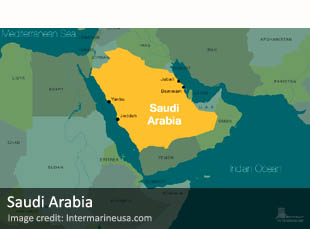
The government of Saudi Arabia has publicly accused Iran of setting up an espionage ring consisting of 18 members, in order to spy on “vital sites and installations in the Kingdom”. On March 19, Saudi authorities announced the arrest of 18 men on suspicion of operating an extensive “spy network working for a foreign entity”. The men were reportedly arrested in coordinated raids in four different regions of the country, which included locations in Mecca, Medina, and Saudi capital Riyadh. Sixteen of the arrestees are Saudi citizens, while one is Lebanese and one is Iranian. At the time of the initial announcement, Saudi officials refused to name the “foreign entity” behind the alleged espionage ring. But intelNews noted that most of the arrests took place in Saudi Arabia’s Eastern Province, which is home to much of the country’s Shiite Muslim minority. This, in association with the two foreign detainees, led us to speculate that there could possibly be an Iranian connection to the alleged spy affair. On Tuesday, Major General Mansour Al-Turki, spokesman for the Kingdom’s Ministry of the Interior, said that there was “a direct link between members of this cell and Iran’s intelligence apparatus”. Speaking to reporters in Riyadh, Al-Turki claimed that the government of Iran had provided members of the ring “regularly [with] sums of money in return for information and documents on important installations during the spy operation in the interest of [Iranian] agencies”. He added that the alleged link with Iran had been established during “preliminary investigations, physical evidence which has been collected, and statements from the accused in the case”. Read more of this post

MI5 chief credited with ‘transforming the agency’ to step down

Jonathan EvansBy IAN ALLEN | intelNews.org |
The head of MI5, Britain’s primary domestic intelligence agency, is to step down at the end of this month, it has been announced. Sir Jonathan Evans is widely credited with transforming MI5, also known as the Security Service, in one of the agency’s most turbulent periods following 9/11/2001. A career MI5 officer, Sir Jonathan entered MI5 in 1980 and eventually joined the agency’s G-Branch, which focuses on international counter-terrorism. He rose to lead G-Branch just 10 days before the 9/11 attacks and the subsequent launch of America’s ‘war on terrorism’. In 2005, Evans was faced with another major crisis as chief of G-Branch, when Britain suffered the bloody July 7 suicide attacks —also known as the 7/7 attacks— which killed 56 and injured nearly 1,000 people. Two years later, in 2007, he rose to the post of Director General at MI5, replacing Eliza Manningham-Buller (now Baroness Manningham-Buller), who had been only the second female intelligence officer to head the organization. Perhaps inevitably, considering world events, Evans helped steer MI5’s operational focus away from Irish republican groups and toward Islamist-inspired militancy in the United Kingdom and beyond. In early 2009, in a move that stunned some intelligence insiders, Evans gave the first public interview by a serving MI5 Director General in the organization’s 100-year history. He answered questions in a face-to-face interview with a carefully selected group of security correspondents representing a handful of British media outlets. The event was seen as reflecting a sea of change in the culture of MI5 —an agency that had never revealed the identities of its Director Generals until 1990. Later in the same year, however, Sir Jonathan caused controversy by suggesting during a public lecture that the intelligence extracted by torturing suspects after 9/11 had stopped “many attacks” on Western and other targets. Read more of this post
Saudi Arabia arrests 18 on espionage charges

Saudi ArabiaBy IAN ALLEN | intelNews.org |
Authorities in Saudi Arabia announced the arrest yesterday of 18 people accused of conducting “espionage activities for the benefit of a foreign country”. Speaking on Saudi state television, Interior Ministry spokesman Mansour al-Turki said the men were arrested on suspicion of being members of an extensive “spy network working for a foreign entity”, which he refused to name. He added that the arrestees had been “gathering information about installations and vital areas” in Saudi Arabia, and were “providing intelligence agencies of that state with it”. He told reporters that the arrests were made five days ago, after Saudi security agencies received information of a foreign-instigated spy ring operating in the oil-rich kingdom. The alleged members of the ring were reportedly arrested during several coordinated raids in four different regions of the country, which included locations in Mecca, Medina, and capital Riyadh. Sixteen of those arrested are said to be Saudi citizens, while one is reportedly Lebanese and one is Iranian. It is worth noting that many of the suspected spy ring members were arrested in Saudi Arabia’s Eastern Province, which is home to much of the country’s Shiite Muslim minority. In association with the two foreign detainees, this detail may point to a possible Iranian connection to the alleged spy affair. Relations between Saudi Arabia and Iran have been essentially non-existent ever since the Islamic Revolution of 1979, when the Shiite-dominated Iranian government accused the Saudis of being puppets of the United States and called for the overthrow of the Saudi royal family. Read more of this post

News you may have missed #827

Brigadier General Mohammed KhaloufBy IAN ALLEN | intelNews.org |
►►Analysis: The spies who fooled the world about Iraq. On the tenth anniversary of the Iraq War, the BBC flagship investigative program Panorama has aired a documentary arguing that, even before the fighting in Iraq started, intelligence from highly placed sources was available in the UK, suggesting that the administration of Iraqi President Saddam Hussein had no weapons of mass destruction.
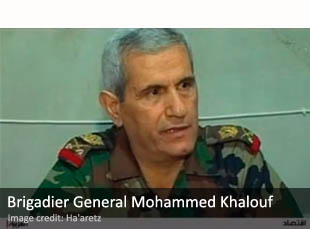
►►Syrian officer to auction spy files as general defects. Kuwaiti daily Al-Seyassah reported this past weekend that an intelligence officer that defected is offering to auction the intelligence archives of Syrian President Bashar al-Assad’s brother-in-law, Assef Shawkat. Meanwhile, Syrian Brigadier General Mohammed Khalouf and about 20 soldiers defected from the Syrian army in two separate incidents on Saturday, according to rebel-controlled media.
►►Half a million wiretapped in Turkey in last decade. Some 470,000 people in Turkey have been subject to eavesdropping over the past 11 years, said officials from the Gendarmerie Command’s intelligence unit. In 2012 alone, over 33,000 people were eavesdropped on by the Gendarmerie, according to information given to the Turkish Parliament’s Eavesdropping Examination Commission. Notably Gendarmerie authorities said that they found no information or documents regarding the case of the wire-tapping of the Turkish Prime Minister in their examination of their own records.

Canada issues arrest warrant for former spy watchdog official

Arthur PorterBy IAN ALLEN | intelNews.org |
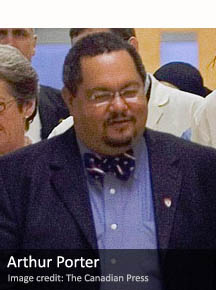
Authorities in the Canadian province of Quebec have issued a warrant for the arrest of a government official who until recently was responsible for overseeing the country’s primary national intelligence service. From 2008 to 2011, Dr. Arthur Porter was a member of the Security Intelligence Review Committee, which investigated grievances against the Canadian Security Intelligence Service (CSIS). In order to fulfill his Committee duties, Porter was awarded a top-secret security clearance, which allowed him access to the CSIS’ most closely held secrets. In 2004, Porter, who is a Cambridge University-educated oncologist, was appointed Director General of the McGill University Health Centre in Montréal. In that capacity, he began a business relationship with Ari Ben-Menashe, an Iranian-born Israeli lobbyist and weapons merchant, who in 1989 was arrested and charged in the United States for illegally attempting to sell military transport airplanes to Iran, in connection with the so-called Iran-Contra affair. Ben-Menashe was acquitted after claiming during his trial that he had been operating as an Israeli intelligence officer. In 2011, Porter stepped down from his post at the Security Intelligence Review Committee, after Canadian newspaper The National Post revealed that he had wired $200,000 in personal funds to Ben-Menashe. Soon afterwards, he moved to the Bahamas and attempted to stay away from the public limelight. This changed on Wednesday, however, Read more of this post

News you may have missed #824 (India edition)

Tony MendezBy IAN ALLEN | intelNews.org |
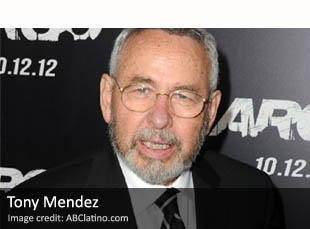
►►CIA honed ARGO exfiltration skills in India. The Oscar-winning movie Argo has popularized the 1980 exfiltration by the CIA of a group of American diplomats from Tehran. But few know that Tony Mendez, the CIA officer in charge of the Iran operation, cut his teeth exfiltrating CIA targets in India. In his book, titled Argo, Mendez mentions the 1970 exfiltration of a Soviet defector in India codenamed Nestor. He claims that Nestor was a “huge catch” for the CIA, as he provided the Agency with “invaluable intelligence on the KGB’s operations in Central and Southeast Asia”.
►►Ex-CIA officer says al-Qaeda wanted India-Pakistan nuclear war. In his latest book, Avoiding Armageddon: America, India, and Pakistan to the Brink and Back, former CIA officer Bruce Riedel says al-Qaeda helped plan the 2008 Mumbai attacks. Its goal was to “spark a nuclear war between India and Pakistan in order to polarize the world between Islam and the ‘Crusader-Zionist-Hindu’ conspiracy”. But the group’s plan was hampered by India’s restraint and refusal to strike back using force, he argues.
►►Man passing defense info to Pakistan held in India. Reports suggest that Sumer Khan, 34, from Rajasthan’s Jaisalmer district, has been arrested for sending strategic information to Pakistan’s ISI intelligence agency via emails and mobile calls for the past three years. A source said that Khan was caught after his calls to Pakistan were intercepted by Indian military intelligence and Intelligence Bureau. The arrest comes just two days after the conclusion of India’s biggest-ever air exercise, ‘Iron Fist’, in Jaisalmer.

First interview in 57 years for chief of Germany’s most secretive spy agency

Ulrich BirkenheierBy IAN ALLEN | intelNews.org |
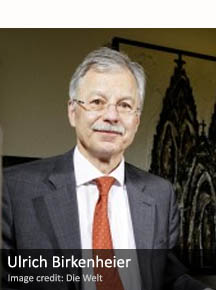
The head of the German military’s counterintelligence service, which is widely seen as the country’s most secretive intelligence organization, has given the first public media interview in the agency’s 57-year history. Most readers of this blog will be aware of the Federal Republic of Germany’s two best-known intelligence agencies: the Federal Office for the Protection of the Constitution (BfV), tasked with domestic intelligence, and the Bundesnachrichtendienst (BND), the country’s primary external intelligence agency. Relatively little is known, however, about the Military Counterintelligence Service (MAD), which has historically been much smaller and quieter than its sister agencies. As part of the Bundeswehr, the German armed forces, the MAD is tasked with conducting counterintelligence and detecting what it terms “anti-constitutional activities” within the German armed forces. It is currently thought to consist of around 1,200 staff located throughout Germany and in at least seven countries around the world, including Kosovo, Afghanistan, and Djibouti. Until recently, the MAD was so secret that its headquarters, located in the west German city of Cologne, bore no sign on the door. For generations, its senior leadership remained unnamed in the public domain. This changed on Monday, when Ulrich Birkenheier became the first Director of MAD to speak publicly in the nearly six decades of the agency’s existence. Birkenheier, who assumed the leadership of MAD in July of 2012, told German newspaper Die Welt that it was time for a “paradigm shift” and that the agency felt the need “to explain [its] task and work to the outside world”. In his interview, Birkenheier explained that members of the German armed forces are routinely targeted by foreign intelligence agencies, while far-right extremist groups are represented in the ranks of the German military. Read more of this post

News you may have missed #823

Richard FaddenBy IAN ALLEN | intelNews.org |
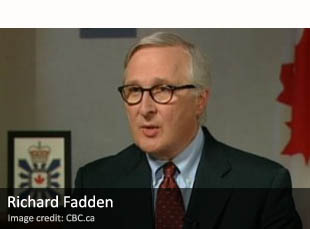
►►Canada spy chief won’t rule out more double spies. Canadian Security Intelligence Service Director Richard Fadden has told a Senate committee that the Jeffrey Delisle spy case was neither “catastrophic” nor an incident that could be dismissed as a one-off. Fadden said that the Delisle case “is one case that we caught. I suspect there will be others over time, both here and within our allies”. Last week, Delisle was sentenced to 20 years in jail for passing secret material to Russian agents over nearly a five-year period.
►►Former CIA operative’s trial postponed again. Raymond Davis, a CIA contractor who made national headlines for killing two Pakistani men in 2011 in what he said was self-defense, had been scheduled to be tried this week for allegedly assaulting a 50-year-old man over a parking space in Colorado. The trial was supposed to begin in September but was pushed until February due to the two sides not being ready. If no settlement is reached prior to March 1, all offers will be off the table and the trial will be set for July 15 with a pretrial hearing scheduled for June 28.
►►Obama officials say Iran building militias inside Syria. Iran and Hezbollah, its Lebanese proxy, are building a network of militias inside Syria to preserve and protect their interests in the event that President Bashar al-Assad’s government falls or is forced to retreat from Damascus, US and Middle Eastern officials have told The Washington Post. A senior Obama administration official cited Iranian claims that Tehran was backing as many as 50,000 militiamen in Syria, saying: “It’s a big operation. The immediate intention seems to be to support the Syrian regime. But it’s important for Iran to have a force in Syria that is reliable and can be counted on”.

Comment: Are Somalia’s militant Islamist ‘defectors’ genuine?

Al-Shabaab militants in SomaliaBy IAN ALLEN| intelNews.org |
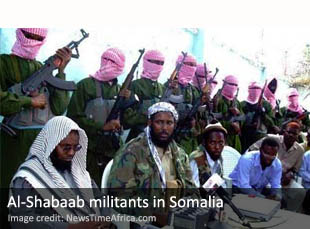
During the past two years, the once powerful influence of Islamic militancy in Somalia appears to be steadily declining. Not long ago, much of the country was firmly controlled by al-Shabaab (The Party of Youth), formerly the youth wing of the Islamic Courts Union, which ruled Somalia until 2006. The group, which is thought to have approximately 5,000 armed members at its disposal, emerged as a powerful force in Somalia in 2009. Three years later, in 2012, it formally announced its operational alignment with al-Qaeda. Its power began to wane, however, once the Western-backed Somali government decided to confront it militarily, with the support of the United States Central Intelligence Agency and several European-funded private security companies. A major indicator of this optimistic trend seems to center on the unprecedented numbers of al-Shabaab members who are defecting –apparently en masse– and joining the ranks of the Somali armed forces. Many of these defectors are trained by private security companies employed by the European Union before being sent to the front to fight against their former comrades. Read more of this post

News you may have missed #822 (Israeli airstrikes on Syria)

Mapping of the Israeli airstrikes in SyriaBy IAN ALLEN | intelNews.org |
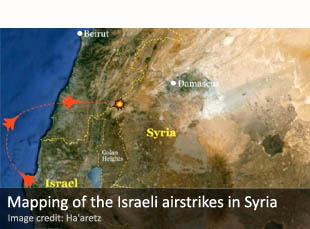
►►Should we be preparing for another Mideast war? Assad may not want a war with Israel, but Tehran could have other calculations. Over the weekend, Iran warned that it would consider any attack on Syria to be an attack on Iran. Claims by Syrian television that Israel hit a research facility near Damascus might be a pretext for an Iranian escalation with Israel. The Israeli army also deployed some of its Iron Dome batteries to northern Israel for the first time. It would not have done so if the chances of a war on Israel’s northern border weren’t increasing.
►►Why did Israel attack Syria now and why did the Syrians admit it? Two days before the Israeli attack on Syria, Iran said it would view any attack on Syrian territory as an attack against Iran itself. But the combination of strategic circumstances in the region at the moment makes the chance of a direct Iranian response unlikely. A Syrian military response seems even less likely, though neither possibility can be ruled out. The most worrying unknown since Tuesday night concerns Hezbollah’s reaction. It seems we are at the beginning of the story —and not the end.
►►Ex-Mossad head says Syria and Hezbollah will not respond. The former Director of Israel’s Mossad spy agency, Danny Yatom, has ruled out any response by the Syrian army or Hezbollah in Southern Lebanon to the Israeli attack on Syria. He told newspaper Yedioth Ahronoth on Wednesday he did not think there would be “any response, since there is no benefit for Hezbollah and Syria to do so”. He added: “Al-Assad is experiencing deep problems in his country and Hezbollah is doing its best to help him, so I don’t think that they will consider any response”.

Syrian President’s mother said to have ‘defected’

Anisah Makhlouf with Hafez al-Assad in 1994By IAN ALLEN | intelNews.org |
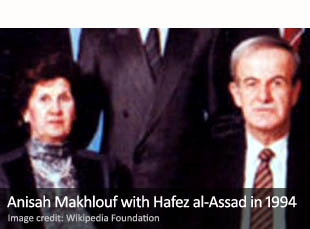
Arab media reports appeared to confirm yesterday an allegation made last week by a senior American diplomat that the mother of embattled Syrian President Bashar al-Assad had abandoned the country. Speaking to CNN last week, Ambassador Robert Ford, who served as the United States’ envoy to Syria until he was recalled by Washington in 2011, said Anisah Makhlouf al-Assad had escaped to the United Arab Emirates. The 78-year-old widow of late Syrian President Hafez al-Assad, who ruled the country with an iron fist from 1970 until his death in 2000, is a revered figure among government supporters. As the current President’s mother, she is said to exercise significant influence on the Syrian regime’s core decision makers, despite her advanced age. According several reports in Arab media, Anisah has now joined her daughter Bushra al-Assad in the Emirates. Bushra, who is the Syrian President’s oldest sister, escaped with her five children to the Gulf oil state in July 2012, after her husband, Assef Shawkat, Syria’s deputy Minister of Defense, was assassinated by the opposition in Damascus along with two other senior Syrian government officials. In his CNN interview, Ambassador Ford argued that Anisah’s defection showed that, “little by little, the inner core [of the Syrian regime] is weakening” as its members are “flaking off. They themselves know they are losing”, he added. Read more of this post

Will former US government informant face terror charges in India?

David HeadleyBy IAN ALLEN | intelNews.org |
A former United States government informant, who helped an Islamist militant group plan the 2008 Mumbai attacks in India, has been sentenced to 35 years in prison. David Coleman Headley, a former US Drug Enforcement Administration informant, was arrested by the Federal Bureau of Investigation in 2009 for helping to plot an attack by Islamist radicals on a Danish newspaper. It eventually became apparent that Headley had been a member of Pakistani militant group Lashkar e-Taiba and had also helped plan the 2008 attacks in the Indian city of Mumbai. The terrorist plot involved at least a dozen attacks on tourist and other civilian targets in India’s largest city, conducted by small cells of highly trained LeT members who had arrived from Pakistan by boat. The coordinated attacks, which began on November 26 and ended three days later, killed 164 and wounded over 300 people. According to the FBI, Headley, who was born to a Pakistani father and an American mother, took advantage of his Western manners and physique to travel to Mumbai posing as an American tourist, in order to help map out the LeT operation. On Thursday, a court in Chicago sentenced Headley to 35 years in prison. Prior to his sentencing, Headley had pleaded guilty to all 12 counts brought against him by US prosecutors and is said to be cooperating with authorities —which is reportedly why he was spared the death penalty. However, the question in the minds of many terrorism observers is, will Headley be extradited to India to face charges there for what is often referred to as ‘India’s 9/11’? The answer is not so simple. Read more of this post

Philby’s son, widow, speak on 50th anniversary of his defection

Philby interview c.1967 By IAN ALLEN | intelNews.org |
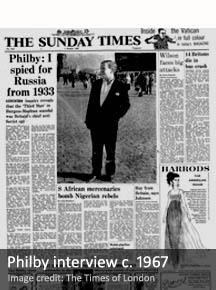
For most of us, January 23, 2013, was a day like any other. But for intelligence history aficionados it marked the 50th anniversary of the escape to Moscow of notorious double spy Harold Adrian Russell Philby. Known as ‘Kim’ to his friends, Philby secretly defected to the USSR from his home in Beirut, Lebanon, in 1963. He is widely considered history’s most successful double spy. While working as a senior member of British intelligence, he spied on behalf of the Soviet NKVD and KGB from the early 1930s until his defection. In 1965, he was awarded the Order of the Red Banner. When he died, in 1988, he was buried with honors by the Soviet authorities. Philby’s defection sent ripples of shock across Western intelligence and is often described as one of the most dramatic moments of the Cold War. On the 50th anniversary of Philby’s defection to Moscow, British newspaper The Daily Telegraph carried an article with excerpts of interviews with one of Philby’s sons, Dudley Thomas Philby, and his Russian widow, Rufina Pukhova Philby. Born in 1946, Dudley ‘Tommy’ Philby is the third of Kim’s five children with his second of four wives, Aileen Furse Philby. Aileen died in 1957, when Tommy was just 11 years old; his contact with his father was cut off as soon as the double spy defected to the USSR in January 1963. But it was resumed a few months later, when he received a letter from his father in Moscow. Eventually, Tommy visited Kim five times in Moscow in the 1970s. Speaking on the anniversary of his late father’s defection, he described him as “a very kind man” and “a very good father”, who “had his belief [in] communism [and] carried it out”. He told The Telegraph that he personally did not agree with his father’s political views, but added: “he was what he was, what could I do?”. He told the paper that Kim eventually came to think that “it was all wrong”, implying that Philby grew disillusioned with the Soviet system. Read more of this post

US providing intelligence support to French forces in Mali

Mali and the Independent State of AzawadBy IAN ALLEN | intelNews.org |
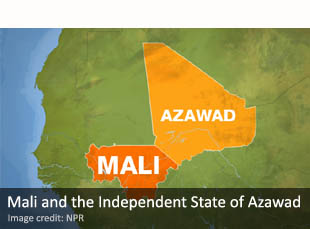
The United States is providing intelligence support to hundreds of French troops that entered the West African nation of Mali last week, according to American and French officials. On January 11, at least 400 French soldiers entered Mali from French military bases in neighboring Burkina Faso and Chad, in what the French Ministry of National Defense has codenamed Opération SERVAL. The French intervention was sparked by the conflict in northern Mali, which erupted in 2012. In January of that year, Tuareg tribesmen formerly employed by the late Libyan leader Muammar al-Gaddafi teamed up with a host of local Islamist groups, including the Movement for Oneness and Jihad in West Africa (MUJWA) and Ansar Dine (Defenders of the Faith). Guided by members of the al-Qaeda Organization in the Islamic Maghreb (AQIM), these groups rapidly seized Mali’s massive northern region (which they call ‘the Independent State of Azawad’), where they are said to have imposed a strict version of Islamic sharia law. Last week’s intervention by the French military came to many as a surprise, though not to intelNews leaders, who have known for a while that Paris had been lobbying Western officials to help it launch a military intervention in the West African country. It now appears that Western countries are indeed helping France’s military operations in Mali. Outgoing US Defense Secretary Leon Panetta told reporters on Monday that the Pentagon is gathering intelligence for the benefit of French forces. The US, said Panetta, has “a responsibility to go after al-Qaida wherever they are” and ensure that its members do not “establish a base of operations” in West Africa. He added that Washington is considering widening its support to Paris by providing “logistics, surveillance and airlift capability”. Read more of this post

How did the US know that Syria was about to use chemical weapons?

Regional map of SyriaBy IAN ALLEN | intelNews.org |
Early last December, United States President Barack Obama issued a surprise warning to the government of Syria, saying that if it made “the tragic mistake” of using chemical weapons against rebel forces, there would be “immediate consequences”. Most observers took this as a clear indication that the US was prepared to intervene militarily in the ongoing Syrian civil war. Today, a month after Obama’s December ultimatum, one question is still in need of an official answer: namely, how did the United States come to suspect that the Syrians were contemplating using chemical weapons? An article by The New York Times‘ Eric Schmitt and Dave Sanger suggests that Washington was alarmed in late November by a tip-off from Israeli intelligence. According to The Times, the Israelis shared with officials at the US Department of Defense a series of satellite images showing Syrian government troops transporting tank-loads of chemicals to at least two storage sites along the country’s border with Jordan. The paper, which says it confirmed this information by speaking to “half a dozen military, intelligence and diplomatic officials”, claims that Syrian troops were ordered to load sarin nerve gas onto dozens of 500-pound bombs. The plan was for the bombs to be secretly transported by land to military air bases and from there onto planes, pending final approval by Syrian President Bashar al-Assad. According to the Israelis, the bombs could be airborne less than two hours after Assad’s order. By the time the information from the Israelis reached President Obama, American military commanders realized they had been caught by surprise, as there was no time to act in the two hours that it would take the Syrians to deploy the bombs. Read more of this post