News you may have missed #603

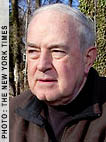
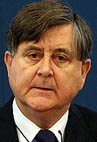
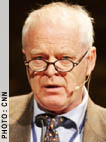
Syed Ghulam Nabi Fai

Syed Fai

►►Turkey has names of Israeli soldiers who attacked Gaza Flotilla. According to Turkish media, government officials succeeded in amassing the list of 174 names of officers and soldiers involved in the 2010 MV Mavi Marmara attack, by planting intelligence agents inside Israel. Turkish government officials have denied the reports.
►►Ex-MI5 chief to hear deportation case of alleged spy. A British judge has ruled that Sir Stephen Lander, former director of MI5, Britain’s domestic intelligence service, can help to decide whether Katia Zatuliveter should be deported from the UK for allegedly spying for Russia. Zatuliveter, a Russian citizen who worked as an assistant to former British Member of Parliament Mike Hancock, may be deported on the basis of espionage evidence gathered by MI5.
►►Analysis: Pakistan’s spy plot to influence Washington. Syed Ghulam Nabi Fai came to the US on Saudi money with hopes of helping people in the disputed Indian territory of Kashmir. But he found himself spending millions on behalf of Pakistan’s notorious Inter-Services Intelligence and, now, under arrest. An excellent article by The Atlantic‘s Kim Barker, Habiba Nosheen, and Raheel Khursheed.

News you may have missed #602 (Israel edition)

Ahmed Jamal Daif

Ahmed Jamal Daif

►►Lebanon arrests three suspected of spying for Israel. Lebanon has arrested three people suspected of spying for Israel and trespassing, the London-based Al-Hayat newspaper reported Tuesday. According to the report, an Egyptian citizen and his wife were arrested on suspicion of spying, and an Arab-Israeli man was arrested on suspicion of trespassing. The Israeli, Ahmed Jamal Daif (pictured), was found on Monday in a diving suit on a beach in the southern Lebanese border town of Naqoura, a Lebanese army source said.
►►Egypt may release alleged Israel spy. Agence France Presse is reporting that Cairo is considering the release of alleged Israeli spy Ilan Grapel, in exchange for “political and economic incentives” offered by the United States. Grapel was arrested by Egyptian state security officers in June, on charges of spying for Israel. According to one source, former CIA Director and current US Defense Secretary Leon Panetta is set to visit Egypt today and is supposed to “take Grapel with him at the end of his visit”.
►►Jordanian accused of spying for Israel pleads not guilty. A Jordanian telecommunications engineer, who is on trial in Egypt on charges of spying for Israel, pleaded not guilty on Sunday. Bashar Ibrahim Abu Zeid was detained in Egypt last April after intelligence information allegedly showed he was spying for the Mossad, with Ofir Herari, an alleged Mossad agent, being tried in absentia.
News you may have missed #601 (CIA edition)

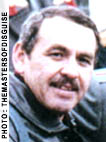
Tony Mendez

Tony Mendez in 1990

►►CIA invests in information technology. In-Q-Tel, the CIA’s technology investment group, is backing NetBase, which develops semantic search technology, as well as Connectify, which develops VPN software. In-Q-Tel’s role is to back commercial technologies that have the potential to aid intelligence and national security operations if developed further.
►►Interview with CIA disguise experts. The Washington Times has an interesting, lengthy interview with Tony and Joanna Mendez, both retired CIA disguise specialists. The two worked in the CIA’s Office of Technical Services, helping develop and deploy espionage gadgets –including a low-light camera that was used during the first moon landing and miniature lithium batteries that were the predecessors of the batteries used in modern portable electronics.
►►US government fights to keep Osama bin Laden death photos secret. Photographs and videos of al-Qaeda founder Osama bin Laden after he was killed in May in a US military/Central Intelligence Agency raid in Pakistan should not be released publicly. The reason, according ot the Obama administration, is because they would reveal military and intelligence secrets and could lead to violence against US personnel. This was argued by the administration’s lawyers in federal court in Washington on Monday.

News you may have missed #600 (China edition)

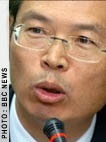
Lo Hsien-che

Lo Hsien-che

►►Chinese spy stirs unease in Taiwan military. Excellent, well-researched piece by The Washington Post about Lo Hsien-che, a Major General in the Taiwanese military, who earlier this year was convicted in what has been described as Taiwan’s biggest spy scandal in over 50 years. Lo appears to have fallen victim to a carefully planned Chinese honey-trap operation, involving a “tall, beautiful and chic” Chinese female operative, who held an Australian passport.
►►US consulate guard accused of trying to spy for China. Bryan Underwood, a former contract security guard at a US consulate under construction in southern China’s largest city, Guangzhou, was charged Wednesday with trying to pass defense secrets about the site to Chinese intelligence officials. Scheduled for completion next year, the consulate is the only one under construction in the world’s most populous nation.
►►Taiwan professor detained for spying for China. Wu Chang-yu, of Taiwan’s Central Police University, was detained Friday for allegedly providing data on visiting Chinese activists to Beijing. Taiwan’s United Daily News quoted unidentified sources as saying Wu was recruited during a recent visit to China.

News you may have missed #598 (US edition)

Brian Kelley

Brian Kelley

►►CIA officer wrongly accused of being KGB mole dies. CIA officer Brian J. Kelley, who was falsely accused by his own agency, as well as by the FBI, of supplying covert information to Moscow, has died at the age of 68. The real mole, the FBI agent-turned-spy Robert P. Hanssen, was apprehended in 2001, but not before Mr Kelley had been followed, interrogated, suspended and told that he might well be charged with a capital offense.
►►NSA working on secure smartphone technology. Troy Lange,  mobility mission manager at the US National Security Agency, says he is developing a secure smartphone that can be used to access classified information and apps while on the move. He is working on a pilot project using a smartphone that looks like any bought in stores but with security configurations to allow top-secret communication.
►►Kabul attack kills CIA contractor. An Afghan working for the US government killed a CIA contractor and wounded another American in an attack on the intelligence agency’s office in Kabul, making it the latest in a series of high-profile attacks this month on US targets. An anonymous US official in Washington said the Afghan attacker was providing security to the CIA office and that the American who died was working as a contractor for the CIA.

News you may have missed #597

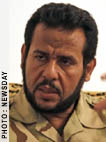
Abdel Hakim Belhaj

Abdel Belhaj

►►Inside the CIA’s secret Thai prison. The United States Central Intelligence Agency appears to have used Bangkok’s former Don Muang International Airport as a secret prison to torture Abdel Hakim Belhaj, who is now the commander of rebel Libyan military forces in Tripoli. If true, Belhaj’s allegations are the first public descriptions of a CIA black site in Thailand. Bangkok-based journalist Richard S Ehrlich investigates.
►►How is the US government using security contractors? “Mark Lowenthal, who was a high-ranking CIA official before joining the contractor work force, told the [US House Homeland Security and Governmental Affairs Committee] that during his time as assistant director of Central Intelligence for Analysis and Production, half of his staff was made up of contractors”.
►►Leaked cables show Australia nuclear power push. In 2008, John Carlson, head of the Australian Safeguards and Non-proliferation Office, which acts as the country’s nuclear safeguard authority, advised the then prime minister Kevin Rudd that no scheme to limit carbon emissions would succeed without the building of civilian nuclear power stations, according to leaked US diplomatic cables. When contacted by the media, Carlson refused to confirm or deny the accuracy of the revelations.

News you may have missed #596

August Hanning

August Hanning

►►Analysis: China’s growing spy threat. Extensive and well-research analysis by Alex Newman in The Dipomat magazine. The article contains input by –among others– Charles Viar, of the Center for Intelligence Studies, Larry Wortzel, formerly of the US-China Economic and Security Review Commission, and intelNews’ own Joseph Fitsanakis.
►►Dutch court orders compensation for Indonesian massacre widows. The Dutch state is responsible for executions committed by colonial troops at an Indonesian village in 1947 and relatives of victims should be compensated, a Dutch court has ruled. Eight widows and one survivor from the town of Rawagedeh, east of Jakarta, took the Dutch state to court in 2008 to claim compensation for the execution of men and boys on December 9, 1947 by Dutch colonial troops.
►►Bush official says Germany partly responsible for Iraq War fiasco. A few weeks ago, August Hanning, the former Director of Germany’s foreign intelligence service, the BND, accused the Bush administration of consciously falsifying intelligence supplied by Germany in order to justify going to war in Iraq. Hanning’s charges related to ‘Curveball’, an Iraqi defector to Germany who supplied the CIA with false information about Iraq’s alleged weapons of mass destruction, in order to justify his political asylum. But now the American side is fighting back. Larry Wilkerson, Colin Powell’s former chief of staff has told German newspaper Die Welt that the Germans were “at least partly responsible” for the war (article in German).

News you may have missed #595

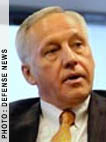
Bruce Carlson

Bruce Carlson

►►US commander sees proliferation threat in Libyan chemicals. Libya’s stockpile of chemical warfare materials remains a potential source of proliferation, General Carter Ham, the US military commander for Africa, told reporters on Wednesday. In addition to chemical materials, Ham said he is concerned about shoulder-fired missiles falling into the hands of al-Shabaab, al-Qaeda in the Islamic Maghreb, or Boko Haram, the continent’s three major extremist organizations.
►►NRO spy satellites on time and on budget. Bruce Carlson, director of the US National Reconnaissance Office, has told reporters in Washington that every one of his agency’s programs is on time and on budget. This is seen as a success for the US intelligence community, which is known for botched and grossly over-budget programs outsourced to industry.
►►Watchdog says Canadian spies must follow same rules abroad. A new report by the watchdog body for the Canadian Security Intelligence Service argues that rules governing the conduct of Canadian spies do not relax once they leave Canada. While it cleared CSIS of complicity in any detainee abuse in America’s ‘war on terrorism’, the report did criticize the country’s spymasters for lax record keeping and for sending CSIS officers overseas without sufficient guidance.

News you may have missed #594

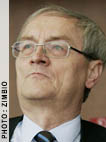
David Irvine

David Irvine

►►Egypt extends detention of alleged Israel spy. An Egyptian court has extended the detention of alleged Israeli spy Ilan Grapel by 45 days, the Egyptian Al-Ahram newspaper reported on Wednesday. Grapel was arrested in Cairo in June.
►►Australian spy chief raises cyberespionage concerns. The advent of cyberespionage is serving only to reinvigorate the craft of espionage, making such spying easier than ever, the Australian Security Intelligence Organization chief, David Irvine, has told a conference in Canberra. Espionage, which has taken a back seat to terrorism since the attacks of September 11, 2001, is alive and well, said Irvine.
►►US intel official says al-Qaeda operations could end in two years. Michael G. Vickers, the US undersecretary of defense for intelligence, said at a defense conference that if the current pace of US operations continues, “within 18 to 24 months, core al-Qaeda’s cohesion and operational capabilities could be degraded to the point that the group could fragment”. Vickers’s remark represents the first time that a senior US official has offered a time frame for achieving the collapse of the organization responsible for the 9/11 attacks.

News you may have missed #593

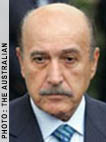
Omar Suleiman

Omar Suleiman

►►Libyan woman spy guided NATO bombs to Gaddafi targets. The NATO bombing campaign which fatally weakened Muammar Gaddafi’s rule had a secret asset: a 24-year-old Libyan woman who spent months spying on military facilities and passing on the details to the alliance. The woman, operating under the codename Nomidia, used elaborate methods to evade capture –constantly changing her location, using multiple mobile telephone SIM cards and hiding her activities from all but the closest members of her family.
►►Canadian ex-spy wins court claim against CSIS. Marc-André Bergeron, who was fired four years ago by the Canadian Security Intelligence Service (CSIS) for alleged incompetence, has been vindicated by winning his claim of wrongful dismissal. In doing so, he has revealed a rather remarkable state of affairs at CSIS. Its bosses lament that they are held to impossible legal standards in court cases involving terrorism, but couldn’t muster sufficient proof to fire one of their own.
►►Mubarak’s spy chief testifies in Egypt trial. One of the most secretive figures of Hosni Mubarak’s inner circle testified Tuesday at the ousted leader’s trial under a complete media blackout. Omar Suleiman, who was Mubarak’s longtime intelligence chief and was named vice president during the last weeks of his rule, is the first in a string of members of the ousted leader’s senior leadership to appear in the court.

News you may have missed #592

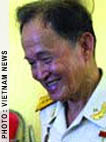
Nguyen Van Tau

Nguyen Van Tau

►►Tripoli Internet spy room packed with Western technology. Excellent technical analysis of how several Western –and some Chinese– Internet software and hardware suppliers provided the Gaddafi regime with the tools to exercise mass online surveillance against the country’s citizens. Where have we seen this before?
►►Interview with Vietnamese ex-master spy. Interesting interview with Nguyen Van Tau, who led the Vietnamese H63 clandestine intelligence group during the war with the United States. H63 maintained extensive spy cells in South Vietnam, playing a major role in the 1968 Tet Offensive.
►►MI5 seeks ‘telephone spies’ for London 2012 security. MI5 is recruiting ‘telephone spies’ to listen in on plots against the 2012 Olympics. The Security Service hopes to find candidates able to eavesdrop on potential terrorists by getting foreign language speakers to play an interactive “game” online. By logging on to the official MI5 website, wannabe spooks can tune into an audio tape of a conversation in a foreign language and are later quizzed about it.

News you may have missed #591

David Irvine

David Irvine

►►UK Prime Minister criticizes Russia over murdered spy. British Prime Minister David Cameron criticized Russia on Monday over its refusal to hand over Andrei Lugovoy, a former KGB agent suspected in the 2006 poisoning death of former Russian spy Alexander Litvinenko in London. He also rejected a call from Russia for the restoration of links between the two countries’ intelligence agencies. But the two sides did “set aside their political differences […] to sign multi-million dollar business deals”. Oh, well.
►►Aussie spy agency investigating more terror threats than ever. The Australian Security Intelligence Organization has trebled in size over the past decade and now has unprecedented powers. In a rare interview, ASIO Director General David Irvine says he is worried about the potential of an attack similar to the recent shootings and bombings in Norway.
►►‘Cuban Five’ spy member seeks return home after prison. Rene Gonzalez, a former Cuban intelligence officer convicted of spying in the US, wants a federal judge to permit his return to Cuba after his release from prison next month. But US government prosecutors say Gonzalez never showed remorse for his crimes and that there’s no justification for him to go to Cuba.

News you may have missed #590

Baroness Manningham-Buller

Manningham-Buller

►►Saudi ex-spy chief on US war on terrorism. The longtime head of Saudi Arabia’s foreign intelligence service, Prince Turki al-Faisal, who resigned shortly before the Sept. 11, 2001, hijackings, says that the US should be using Osama bin Laden’s demise as a pretext for declaring victory in the war in Afghanistan and withdrawing US troops. Not by the end of 2014, which is the current timetable, but immediately.
►►Ex-MI5 chief says ‘9/11 made us stronger’. Britain’s foremost domestic intelligence agency, MI5, felt almost swamped after 9/11, inundated with leads to plots and fragmentary intelligence, according to Lady Eliza Manningham-Buller, former head of Britain’s Security Service. But in the decade since the attacks, its budget doubled and its headcount has almost tripled, while intelligence operations have increased fivefold, she said.
►►Captured Libyan spy chief defiant. Defiant and angry, captured Libyan spy chief Bouzaid Dorda, who directed the country’s External Security Organization (ESO), denied any wrongdoing when he was presented to reporters on Sunday by former insurgents who tracked him down in the capital Tripoli. He is believed to have taken on his job in 2009 when his predecessor Moussa Koussa, who defected earlier this year, became foreign minister.

News you may have missed #589

James Risen

James Risen

►►US lawmakers want audit of Colombia intelligence aid. Two US lawmakers on Wednesday requested the White House to scrutinize US assistance to Colombia’s intelligence agency DAS, after media reports that American money and training was used by the DAS for the illegal spying on government opponents.
►►Judge quashes subpoena to reporter in CIA leaker case. New York Times investigative reporter James Risen will not have to reveal the identity of his confidential source when he testifies in the criminal trial of Jeffrey Sterling, an alleged CIA leaker, a US federal judge recently held in a case involving the highest-profile journalist subpoena in recent years.
►►Ex-White House scientist pleads guilty in spy case tied to Israel. Stewart D. Nozette, a former senior government scientist who held the highest US security clearances, pleaded guilty to espionage on Wednesday and agreed to a 13-year prison term for selling top-secret information on military satellites and other technology to an FBI agent posing as an Israeli spy.

News you may have missed #588

Thomas Hammarberg

Hammarberg

►►Thai court convicts three of spying. A Thai court on Tuesday jailed three men, a Cambodian, a Vietnamese and a local, for two years each for espionage. The trio were arrested in June in Kantharalak District, near the disputed border with Cambodia, amid a territorial row between Thailand and its neighbor. Police said that the three were carrying maps with military facilities marked on them.
►►Council of Europe wants truth on CIA black sites. Thomas Hammarberg, the human rights commissioner for the Council of Europe, urged countries that have hosted secret CIA prisons to come clean Monday, as the 10th anniversary of 9/11 approaches. Well, that would be…let’s see…pretty much all of them.
►►Doctor who helped CIA find bin Laden barred from leaving Pakistan. Before bin Laden’s death in May, Shakil Afridi helped the CIA set up a fake vaccination programm in Abbottabad, in the hope of obtaining DNA samples from the house where the al-Qaida chief was suspected of living. But now he has been detained by Pakistani security and cannot go abroad without permission.