Unprecedented trial of ‘secret prisoner’ in Australia raises legal questions
December 9, 2019 1 Comment
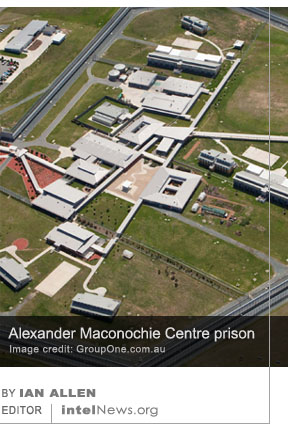 An unprecedented closed-door trial of a man identified only as “Witness J”, who was convicted earlier this year of a crime that cannot be revealed, has raised questions about the relationship between security and the law in Australia. The man, who is also known as “Prisoner 123458”, was sentenced to a jail sentence in February of this year. His sentencing came following a closed-door hearing, which was described by a judge as “generally undesirable” and “unusual”.
Witness J is believed to be in his mid-30s and to have served as an intelligence officer in the Australian military, with a Top Secret security clearance. According to ABC News, he served in Iraq, Afghanistan, and East Timor and had a distinguished service record. But he drew the attention of counterintelligence investigators in 2018, while undergoing a five-year re-evaluation of his security clearance status. During that time he was reportedly serving as a civilian in an undisclosed country in Southeast Asia.
ABC News said that “some anomalies in [Witness J’s] answers” —presumably while he was undergoing a polygraph test— raised further questions about whether “he could be compromised”. This, according to ABC News, coincided with the deterioration of his mental health, which led him to seek “internal help” from his employer on several occasions. Reportedly, his Top-Secret clearance status did not allow him to seek outside professional advice about his condition. Witness J was eventually jailed in mid-May 2018 and spent a month in solitary confinement. He was then placed in a high-security wing for serious sex offenders at the Alexander Maconochie Centre prison in Canberra. This was not because he was a sex offender, but because it was determined that he would be safer there than in the other wings of the prison.
In February of this year, Witness J was sentenced in a closed-door trial, held under the secrecy provisions of Australia’s 2004 National Security Act. Australia’s Attorney General, Christian Porter, told ABC that the information shared in Witness J’s hearing was “of a kind that could endanger the lives or safety of others”. The only reason why records of Witness J’s incarceration have appeared on the public record was because officers of the Australian Federal Police obtained a warrant to search his prison cell in order to confiscate a personal memoir that they allege the prisoner composed about his case during his incarceration.
It is believed that Witness J was released from prison in August of this year, 16 months before completing his sentence. He is not able to speak to the press, or identify himself in public in connection with this case. According to ABC News, he is only allowed to refer to his conviction as having been for “mishandling classified information”. Several experts have commented on the secret trial of Witness J One expert, Bret Walker, a barrister and former independent national security legislation monitor, told “ABC News that the case of Witness J was “a perfectly well-intentioned piece of national security legislation might not be operating in the way one would like”.
► Author: Ian Allen | Date: 09 December 2019 | Permalink
 A court in Estonia has ordered the release of a former senior defense official who spied on the North Atlantic Treaty Organization for Russia, causing what experts
 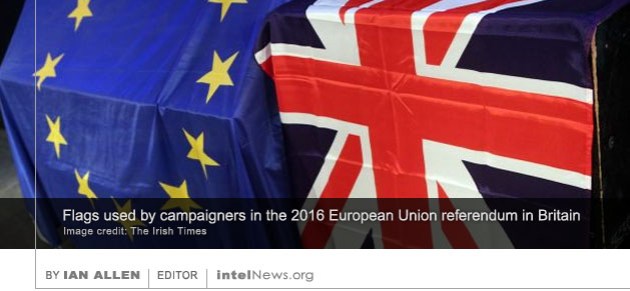 The British government has been accused by opposition parties, and by pro-remain conservative figures, of trying to conceal a report documenting Russian meddling in British politics. The report documents the results of an investigation into Russia’s alleged attempts to influence the outcome of the 2017 general election in the United Kingdom, as well as the result of the 2016 European Union referendum, which ended in victory for the pro-Brexit campaign.
 The former chief executive of Danske Bank’s subsidiary in Estonia, which is implicated in a massive money laundering scheme, has been found dead in an apparent suicide in Tallinn. Aivar Rehe, 56, headed the Estonian subsidiary of the Copenhagen-based Danske Bank, one of Northern Europe’s largest retail banks, which was founded in 1871. He belonged to a group of dynamic young entrepreneurs who spearheaded the privatization of the Estonian economy in the post-Soviet era.
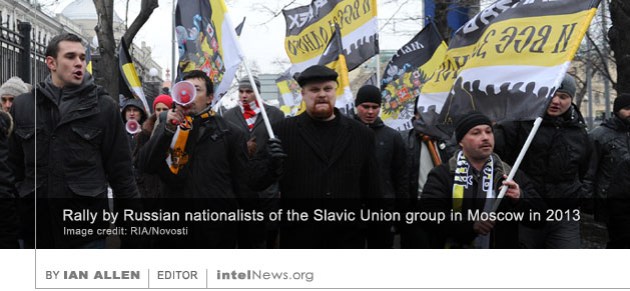 Threats posed by white supremacist and other far-right groups are now global in nature and are increasingly backed by state actors, according to a Congressional testimony by an American former counterterrorism official. The testimony was delivered by Joshua Geltzer, former senior director for counterterrorism at the United States National Security Council. Geltzer, who now directs the Institute for Constitutional Advocacy and Protection at Georgetown University in Washington, DC, testified on Friday before two subcommittees of the US House of Representatives. The Subcommittee on National Security and the Subcommittee on Civil Rights and Civil Liberties held a joint hearing entitled “Confronting Violent White Supremacy”.
 Russian authorities announced on Tuesday that a gas explosion had damaged a section of a medical facility in Siberia that houses live samples of viruses such as Ebola and smallpox, but added that there was no need to declare a biomedical emergency. The explosion reportedly took place on Monday at the State Research Center of Virology and Biotechnology, known as Vector. The six-floor concrete and steel facility is located in the isolated Siberian town of Kotsovo, near the city of Novosibirsk, 600 miles from the Mongolian border.
 Iraq’s largest Shia militia, which controls parts of Iraq’s territory that were aptured from the Islamic State, has accused the United States and Israel for a series of mystery explosions at its arms depots around the country. Much of the territory captured from the Islamic State (known also as the Islamic State of Iraq and Syria, or ISIS) in northern Iraq is currently controlled by the Popular Mobilization Forces (PMF), a collection of around 40 Shia militias consisting of over 150,000 armed fighters. The Iranian-supported PMF proved instrumental in the territorial defeat of ISIS. However, the group’s leadership is ideologically aligned with Iran, and many of its members will
 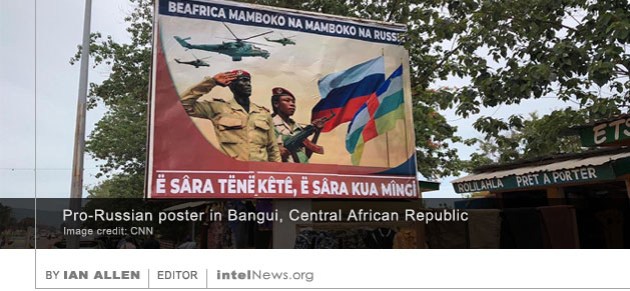 A new report by the American news network CNN has shed new light into the little-researched subject of Russian-owned private military and security operations in Africa. CNN said the report took a month to complete. It claims that a Russian tycoon by the name of
  Spain’s second largest bank has been placed under investigation in connection with a probe into an illegal network that spied on scores of politicians, business executives, journalists and judges for over 20 years. The investigation centers on José Manuel Villarejo (pictured), a 67-year-old former police chief, who remains in pre-trial custody following his
 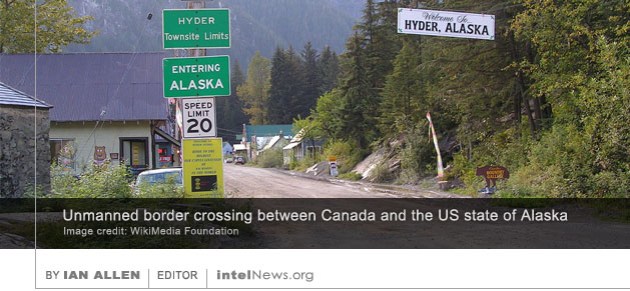 Since the election of President Donald Trump, the issue of border security between the United States and Mexico has been a major topic of national debate. But is the incessant focus on America’s southern border by the news media and politicians ignoring security concerns emanating from the country’s northern neighbor, Canada? In a thought-provoking
  A Swiss court has ordered the extradition to the United States of the brother of one of the world’s leading biochemists, who spied on a British pharmaceutical firm to help a Chinese startup. The extradition is part of a large corporate espionage case centered on Yu Xue, a Chinese scientist described by US federal prosecutors as “one of the world’s top protein biochemists”. Yu specializes in drug research for cancer and other serious terminal illnesses. From 2006 until 2016 he worked in the US for GlaxoSmithKline (GSK), a leading British pharmaceutical group.
 Tunisian authorities are investigating two Belarusian men who were found to be in possession of several forged passports and electronic surveillance equipment. The two men were
  Indian counterterrorism officials have alleged in court that four members of the Islamic State in Indian-administered Kashmir were guided by a handler from Pakistan. The court case involves four young men from Jammu and Kashmir who were arrested last November on terrorism charges. Court documents filed recently identify the four as members of the Islamic State. This development is significant because Indian officials have until recently dismissed as overstated claims that the Islamic State is present in Kashmir. The unfurling of Islamic State banners by anti-government rioters is a regular phenomenon in Indian Kashmir. But government officials dismiss those who wave such banners as impressionable youth who have no access to weaponry or logistical support from the Islamic State. Last November’s arrests, however, highlighted the fact that the Islamic State does in fact have an armed presence on the ground in India.
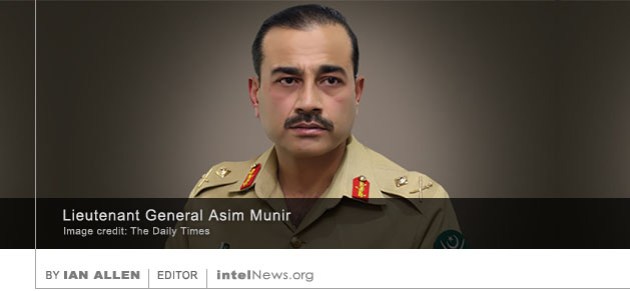 In a surprising move the Pakistani military has dismissed the head of the powerful Inter-Services Intelligence (ISI) spy agency just eight months after appointing him to that position. The decision was announced on Sunday in a brief statement by the Inter-Services Public Relations, the public-relations wing of the Pakistan Armed Forces. The statement said that Lieutenant General Asim Munir had stepped down from his post as director of ISI and would take over as commander of the Gujranwala Corps in Punjab, Pakistan’s second-largest province. The statement did not explain the reasons for the reshuffle; the latter came as a surprise, as ISI directors typically serve for at least three years in that post. General Munir’s tenure






 intelNews.org
Belgian university shuts down Chinese-funded institute due to espionage claims
December 12, 2019 Leave a comment
The Confucius Institute at VUB is one of more than 500 such research bodies that the government of China has funded around the world since 2004. Their mission is to promote the language and culture of China to the world. However, numerous academic institutions in Japan, Canada, and a number of European countries, have recently shut down Confucius Institute branches, following allegations that their staff members carried out espionage tasks, or tried to stifle academic research critical of China. In Europe alone, the University of Lyon in France, Stockholm University in Sweden, and Holland’s University of Leiden have all recently terminated their cooperation with the Confucius Institute.
In October of this year, Belgium’s State Security Service (VSSE) concluded that the VUB Confucius Institute director, Dr. Song Xinning, carried out espionage tasks on behalf of the Chinese government. As a result, the Belgian government refused to renew the work visa of Dr. Song, who had lived in Belgium for over a decade. Additionally, the Chinese academic was barred from entering the European Union’s Schengen Area —which comprises 26 European countries— for eight years.
Dr. Song alleges that his work visa was revoked after he refused to cooperate with an American diplomat stationed in Brussels. He also denies that he was ever in the service of Chinese intelligence or the Chinese state. But the VUB appears to have sided with the Belgian government in this dispute. The university annulled its contract with Dr. Song and, as of January, will be terminating its relationship with the Confucius Institute. In a press statement published online, VUB Rector Caroline Pauwels said that the work of the Confucius Institute did not meet the “current policy objectives” of the university.
► Author: Ian Allen | Date: 12 December 2019 | Permalink
Filed under Expert news and commentary on intelligence, espionage, spies and spying Tagged with Belgium, China, Confucius Institute, espionage, News, Song Xinning, Vrije Universiteit Brussel, VSSE (Belgium)