Belgium suspends senior diplomat on suspicion of spying for Russia

Belgian embassy in CopenhagenBy JOSEPH FITSANAKIS | intelNews.org |
The Belgian government has admitted suspending one of its senior diplomats following allegations in the press that he had spied for the Soviet Union and Russia for over two decades. According to Flemish-language Belgian magazine MO, the diplomat, identified only as “O.G.”, has been “suspended in the interest of the [Belgian diplomatic] service” and is currently under investigation by the Office of the Federal Prosecutor. Citing “sources in the Belgian State Security Service”, the SV/SE, the article said the subject was stationed at the Belgian embassy in Danish capital Copenhagen when he was recalled to Brussels late last year. The man is said to have spent nearly three decades as an employee of the Belgian Ministry of Foreign Affairs, having served in several Belgian embassies and consulates in Japan, India, Algeria, Nigeria, Portugal, and the United States, prior to arriving in Denmark. However, according to the MO article, he was accosted by the Soviet KGB in the late 1980s, shortly after he arrived at the Belgian embassy in Tokyo, Japan, for his first-ever diplomatic posting. Since that time, said the magazine, “O.G.” has spied for the KGB and its successor, the SVR, having stayed in contact with “several different Russian handlers”. Prior to 2011, when he ceased contact with Russian intelligence, the Belgian diplomat was allegedly tasked with providing the FSB with information that could be used to concoct false identities belonging to deceased Belgian citizens. The Russians would then use these identities to supply their intelligence operatives with high-quality Belgian identity papers and travel documentation. Late last week, another Belgian publication, The EU Observer, contacted the Belgian Foreign Ministry to inquire about “O.G.”. A Ministry spokesperson told the paper: “we can confirm that an official from our ministry was suspended from his functions a bit over one year ago, following indications of a security breach”. Read more of this post

Moscow denies knowledge of alleged Russian spy ring busted in Texas

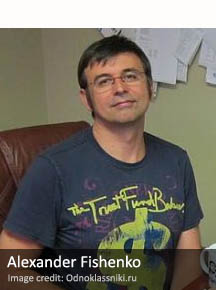
Alexander FishenkoBy JOSEPH FITSANAKIS | intelNews.org |
Government officials in Moscow have denied knowledge of an alleged Russian spy ring, which is accused by United States authorities of procuring sensitive microelectronics technology on behalf of the Russian military. Early on Wednesday morning, the Federal Bureau of Investigation conducted pre-dawn raids at several locations in Houston, Texas, and arrested eight members of the alleged spy ring. Four of the arrestees are allegedly Russian citizens, while the remaining five are from Kazakhstan, Azerbaijan and Ukraine. Four are naturalized American citizens. They include Alexander Fishenko, chief executive officer of Apex System LLC, which is accused by the FBI of having exported over $50 million in dual-use microelectronic devices to Russia since 2008. US federal prosecutors allege that three more spy-ring members are currently in Moscow; they include Yuri Savin, Director of Marketing at a company called Artrilor, which is said to have been at the receiving end of Apex System’s export operations. According to the indictment, Arc Electronics told its US suppliers that the microelectronics technologies were intended for use in various types of streetlights. But in reality, said the FBI, the company gave the hi-tech supplies to the Russian Ministry of Defense for use in airborne surveillance systems, as well as in remote weapons guidance systems, among other military applications. The FBI says it has in its possession extensive audio intercepts of the suspects communicating with Russian intelligence, as well as conferring among them about how to hide incriminating documents from US federal authorities. But Sergei Ryabkov, Russia’s Deputy Minister of Foreign Affairs, told Russian reporters on Thursday that the charges against the 11 individuals were “of a criminal nature” and had “nothing to do with intelligence activity”. Read more of this post
FBI raids alleged Russian front-company, indicts 11 on spy charges

Russian Ministry of DefenseBy JOSEPH FITSANAKIS | intelNews.org |

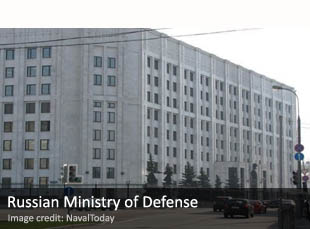
The United States has indicted employees of an alleged Russian front-company in Texas, accused of procuring sensitive microelectronics technology for use by Russian military and intelligence agencies. Public prosecutors in New York said yesterday that the Federal Bureau of Investigation conducted raids in locations around Houston, Texas, which included the headquarters of Arc Electronics, Inc. The export firm is accused of having shipped over $50 million-worth of military-grade microelectronics since 2008. The supplies were received in Moscow, Russia, by a mysterious procurement company called Apex System LLC. Counterintelligence investigators in the US claim both firms are part of an elaborate scheme set up by Russian military intelligence, aimed at stealing dual-use electronics hardware created by American firms. According to the indictment, Arc Electronics told its US suppliers that the microelectronics technologies were intended for use in various types of streetlights. But in reality, said the FBI, the company gave the hi-tech supplies to the Russian Ministry of Defense for use in airborne surveillance systems, as well as in remote weapons guidance systems, among other military applications. Federal prosecutors said that, for over four years, Arc Electronics engaged in a prolonged “surreptitious and systematic” scheme to circumvent US government export controls, thus seriously damaging US national security. Following the early-morning raids, the FBI unsealed indictments against 11 Arc Electronics employees, most of whom were charged with “acting as unregistered agents of the Russian Federation in the United States” —legal jargon for espionage. Read more of this post

Did French intelligence agent kill Libyan leader Muammar Gaddafi?

Nicolas Sarkozy and Muammar GaddafiBy JOSEPH FITSANAKIS | intelNews.org |
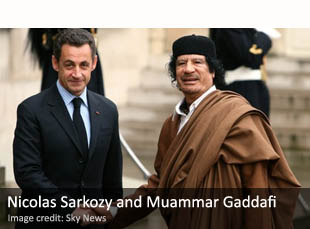
Nearly a year after the sensational death of Colonel Muammar Gaddafi, sources in Libya have claimed that a French intelligence agent killed the Libyan leader acting under orders by the French government. The Libyan dictator was captured by armed fighters of the Libyan National Liberation Army on October 20, 2011, after his convoy was reportedly bombed by North Atlantic Treaty Organization aircraft. Videos showed Gaddafi being taken aboard a van alive; mysteriously, however, he was pronounced dead a few hours later. The Libyan National Transitional Council blamed the Libyan leader’s death on overzealous militia members, but this explanation did not satisfy the United Nations, which called for an investigation into the incident. But Mahmoud Jibril, a National Transitional Council member who was Libya’s interim Prime Minister during most of 2011, has said in an interview that Gaddafi was killed by a French intelligence officer. Speaking yesterday on Egyptian television, Jibril said that the agent “mixed with the revolutionary brigades” and killed Gaddafi by shooting him twice in the head from close range. Jibril’s comments came two days after one of Italy’s most reputable newspapers, Corriere della Sera, published a report claiming that the alleged French intelligence agent was acting under direct instructions by the French government. The paper said that the order had come down from the office of French President Nicolas Sarkozy. According to the article, Sarkozy was eager to prevent the possibility of Gaddafi standing trial, particularly after the Libyan leader had threatened to expose his alleged financial dealings with the French President. These refer to persistent rumors in France that the Libyan dictator had contributed millions of dollars to Sarkozy’s 2007 election campaign. Read more of this post

Russian court upholds 15-year prison sentence for alleged CIA spy

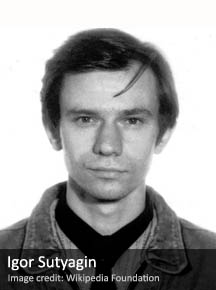
Igor SutyaginBy JOSEPH FITSANAKIS | intelNews.org |

Russia’s highest court has upheld a lengthy prison sentence given to a Russian arms control and nuclear weapons expert, who Moscow alleges was a spy for the United States. The Russian government accuses Igor Sutyagin of collaborating with Alternative Futures, a British-registered consulting company alleged by Moscow to be a front for the United States Central Intelligence Agency. Before his 1999 arrest, Sutyagin was Division Chairman on the Russian Academy of Sciences’ USA and Canada Institute. His indictment, prepared by the Russian Federal Security Service, said that he shared with the CIA “classified technical information” about nuclear submarine technology. Sutyagin maintained his innocence throughout his trial, and Human Rights Watch as well as Amnesty International classified him as a political prisoner. The two groups brought the accused spy’s case before the European Court of Human Rights, which ruled that Russian government prosecutors had violated Sutyagin’s right to a fair trial. Moreover, the Court ruled that Sutyagin’s pre-trial detention, which lasted five years, was illegal. Eventually, Moscow complied with the Court’s ruling and a retrial was ordered, to the delight of Sutyagin’s family. In the retrial, which ended last week, Russia’s Supreme Court agreed with the European Court of Human Rights that Sutyagin’s pre-trial detention had been unlawful; but the court upheld Sutyagin’s 15-yeard sentenced as “entirely legitimate”. Sutyagin was tried in absentia, however, because in the summer of 2010 he was released and fled to the West, as part of the largest postwar spy-exchange between Russia and United States. Sutyagin was one of four men behind bars in Russia, who were swapped for 10 Russian non-official-cover intelligence operatives that had been arrested in a sting operation by the Federal Bureau of Investigation. Read more of this post

Irish police uncover Real IRA surveillance ring

Real IRA paradeBy JOSEPH FITSANAKIS | intelNews.org |
Police in the Republic of Ireland have arrested two men suspected of spying on the operational headquarters of the Garda Siochana (Irish Police) in Dublin. The two men, aged 41 and 32, who have not been named, were arrested after one of them was recognized by police officers as a known member of the Real Irish Republic Army. The Real IRA, or RIRA, is an Irish republican paramilitary organization formed in 1997, following a split in the Provisional IRA — the armed wing of Sin Fein. It seeks to bring about a united Ireland, but is considered a terrorist group by the United Kingdom and the United States, among other countries. Gardai officers discovered that the Real IRA suspect had used a false name to book a room in a hotel directly overlooking the regional headquarters of the Gardai on Harcourt Street. The building houses, among other police units, the Gardai’s Special Branch and the Criminal Assets Bureau, both of which are used to investigate paramilitary activity in the Republic. Upon searching the room, Gardai officers reportedly found “hi-tech surveillance equipment”, including parabolic microphones and digital cameras. Anonymous Gardai sources claim the equipment was used to eavesdrop on conversations held inside the Gardai building across the street, and to record the license tags of private vehicles belonging to Gardai personnel. Read more of this post

Decision to evacuate eastern Libya divides US Intelligence Community

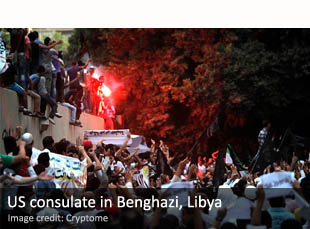
US consulate in Benghazi, LibyaBy JOSEPH FITSANAKIS | intelNews.org |

On September 12, just hours after heavily armed militia groups stormed the United States consulate in Benghazi, Libya, Washington made the decision to pull out its diplomats and intelligence officers from Eastern Libya. As US government envoys, spies and contractors started arriving at the Benina International Airport in Benghazi, many Libyans noted the “surprisingly large number” of Americans that came out of the woodwork. According to reports, at least a dozen of the American evacuees were in fact Central Intelligence Agency personnel. Their evacuation, which has essentially ended the presence of the CIA in eastern Libya’s most important city, is dividing the US Intelligence Community. On the one hand, some US intelligence insiders argue that the attack on the US consulate, which killed four US personnel, including Ambassador J. Christopher Stevens, necessitated the decision to evacuate. A number of former US government officials told The Los Angeles Times this week that the evacuation was “justified, given the dangers in Benghazi” for US personnel. Another current official told The New York Times that the evacuation of the CIA station in Benghazi does not necessarily mean that the US has lost its intelligence collection capabilities in eastern Libya. Washington can still intercept telephone calls and emails and conduct satellite reconnaissance in the North African region, said the official. Others, however, leveled sharp criticism against the decision of the White House to evacuate its diplomats and spies from Benghazi, arguing that the move marked “a major setback in [US] intelligence-gathering efforts” in the country. Robert Baer, a retired CIA officer with decades of experience in the Middle East, called the move “disastrous for US intelligence-gathering capabilities”. Writing in Time magazine, Baer said that shutting down the CIA station in Benghazi would make it “almost impossible to collect good human intelligence” in the region, and described the move as a sign of “America’s declining position” there. Read more of this post

Magazine publishes CIA-trained burglar’s fascinating story

David WiseBy JOSEPH FITSANAKIS | intelNews.org |

A captivating article about a break-in specialist for the United States Central Intelligence Agency, who turned against the Agency in the 1990s, appears in the October issue of The Smithsonian magazine. Written by David Wise (The Invisible Government, The Spy Who Got Away), the article contains some new information about “The Shop”, a secretive unit under the CIA’s Special Operations Division, which conducts what the agency describes as “surreptitious entries”. Based on “more than 80 interviews with 25 people”, including over a dozen former CIA officers, Wise says the unit features highly specialized teams of lock pickers, safecrackers, photographers, experts in disabling alarm systems, and others. Their mission, he says, is to break into foreign embassies around the world in order to steal classified documents and —most of all— codebooks used by foreign diplomats to communicate securely with their colleagues back home. Unlike most CIA personnel stationed abroad, the Agency’s non-destructive entry specialists do not enjoy the protection of diplomatic cover, says Wise, which means they cannot claim diplomatic immunity if caught red-handed. The author’s main source for the article appears to be Douglas Groat, a former US Special Forces captain, underwater explosives expert and Mandarin-Chinese speaker, who joined the CIA in 1980. Wise claims that Groat, who started working for The Shop in 1982, eventually became the Agency’s “top burglar and premier lock picker”. He designed or participated in approximately 60 different CIA- or National Security Agency-sponsored operations in dozens of countries in the Middle East, Africa, South America and Europe, which earned him several commendations, medals and awards from the NSA and the CIA. The article describes one joint CIA/NSA operation that took place in 1989 at the embassy of the German Democratic Republic in Katmandu, Nepal, which Groat’s team burgled in order to steal a code machine. The operation failed, as did another a few years later in “a Middle Eastern capital”, due to sloppy preparation on behalf of the CIA, says Groat. Read more of this post

Nuclear smugglers to get reduced prison sentences ‘for helping CIA’

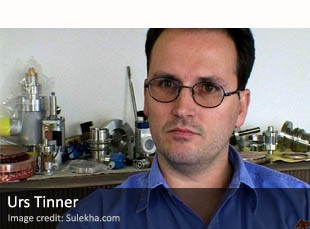
Urs TInnerBy JOSEPH FITSANAKIS | intelNews.org |

Three Swiss engineers imprisoned for participating in an international nuclear smuggling ring are about to have their prison sentences significantly reduced, allegedly for having acted as agents for the United States Central Intelligence Agency. Friedrich Tinner and his two sons, Urs and Marco, were arrested in 2004 in connection with a multinational investigation into the nuclear smuggling network of Dr. Abdul Qadeer Khan. The father of Pakistan’s nuclear weapons program, who is widely known as A.Q. Khan, had for years subcontracted his nuclear services to North Korea, Iran and Libya, until 2004, when he was placed under house arrest by the Pakistani government, following pressure from Washington. Since then, the Tinners have been under “investigative custody”, a peculiar state of pre-trial detention prescribed by Swiss law. In 2009, Urs Tinner gave an interview to Swiss television, in which he claimed than he, along with his brother and father, had for years informed the CIA on Khan’s activities and assisted the US intelligence agency terminate the Libyan nuclear weapons program. It later emerged that the Swiss government had “inadvertently” shredded some crucial documents required in the prosecution case against the three engineers. Late last year there was apparently concern at Langley that some CIA secrets could surface in court, after Swiss government prosecutors announced that a trial for the Tinners would go ahead. However, new prosecution documents released on Tuesday show that a plea bargain agreement has been struck between the Swiss government and the three defendants in this highly sensitive case. Read more of this post

Belgian intelligence chief says Brussels is world’s spy capital

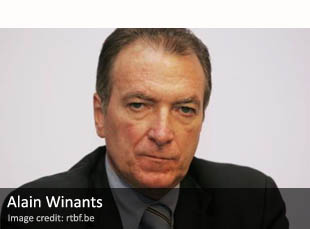
Alain WinantsBy JOSEPH FITSANAKIS | intelNews.org |
The head of Belgium’s counterintelligence service has said in an interview that Brussels, which hosts the head offices of several international organizations, is home to more spies than any other city in the world. Alain Winants, Director of Belgium’s State Security Service (SV/SE), made the comment during a rare public interview to the Brussels-based English-language newspaper EU Observer. Winants told the paper that Belgium hosts “an enormous concentration” of diplomats, members of international non-governmental organizations, as well as employees of transnational institutions, including the European Union and the North Atlantic Treaty Organization. Because of this, he said, Belgium “is like a kindergarten” for spies, “the place to be” for intelligence operatives. The latter often operate under diplomatic cover or pretend to be students, lobbyists or business executives, he added. When asked how many case officers and spies operate in the Belgian capital, Winants, whose organization is responsible for counterterrorism and counterespionage, said “we are not speaking in the dozens; we are speaking in the hundreds, several hundreds”. He added that the numbers of intelligence operatives currently active in Belgium are “at the same level as the Cold War”. These intelligence operatives, he added represent countries such as Russia, China, and many others. When asked whether nations allied with the European Union also conduct espionage in the Belgian capital, Winants responded diplomatically that intelligence “is one field where the difference between neutral, friendly and unfriendly services tends to disappear”, as “every service is in competition with the others”. And he added that “it would be naïve to think that only countries like Russia, China, Iran are spying” in the Belgian capital. Read more of this post

CBS re-broadcasts Iran comments by former Mossad chief

Meir DaganBy JOSEPH FITSANAKIS | intelNews.org |
One of the few certainties in the spiraling crisis between Iran, Israel and the United States, is that Tel Aviv and Washington do not agree on how to respond to Tehran’s nuclear program. Nowhere is this lack of unity more noticeable than in the difference of opinion between the Office of the Israeli Prime Minister, Benjamin Netanyahu, and the White House. Netanyahu, a leading hawk in Israeli political circles, has made it clear that, unlike United States President Barack Obama, he believes that the time for diplomacy has run out, and that Israel has no option but to consider direct military strikes on Iran. Last weekend he even took the unprecedented step of advising American voters to elect a leader willing “to draw a red line” on the issue of Iran. It is worth noting, however, that senior figures in Israel’s intelligence community seem to be siding with the US on this dispute. Leading the wave of dissention within the ranks is Meir Dagan, former Director of the Mossad, Israel’s most revered intelligence agency. In November of 2010, Meir Dagan stepped down from his post as the head of the Mossad after having led the agency for over eight years —the longest tenure of any Mossad director in history. Soon afterwards, he admonished calls by Netanyahu’s people to bomb Iran as “the stupidest idea” he had ever heard. On Sunday, September 16, the CBS flagship investigative program 60 Minutes aired again an important interview with Dagan, which was first broadcast on March 11 of this year. The timing of the re-broadcast is critical, as observers in the Middle East appear increasingly certain that an Israeli military attack on Iran is imminent. Read more of this post

Proposed Afghan spy chief divides Western, Afghan officials

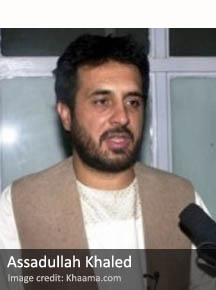
Assadullah KhaledBy JOSEPH FITSANAKIS | intelNews.org |
Last month we reported Afghan President Hamid Karzai’s plan to appoint one of his most trusted advisors, Assadullah Khaled, to lead the country’s intelligence agency. There appears to be a slight problem with this proposal: Khaled is known as a fierce character in Afghan politics, who has been accused by Western diplomats of corruption, extreme brutality and narcotics trafficking. During the past few years, Khaled, currently Afghanistan’s Minister for Border and Tribal Affairs, has reportedly become “almost a surrogate family member” of the Karzai family, and is viewed “as a son” by the Afghan President. He also has a close relationship with officials in the United States Central Intelligence Agency, who seem to appreciate Khaled’s hardline stance against Pakistan. Moreover, Khaled is an ethnic Pashtun, that is, he belongs to the largest Afghan ethnicity, whose members occupy central Afghanistan. However, he has strong connections with leading figures in the former Northern Alliance, whose support is crucial for the survival of the Karzai regime. Some Western officials, therefore, see him as a potential unifying figure in the country. But in a confidential cable sent to the US Department of State by the American Embassy in Kabul in 2009, and leaked by WikiLeaks, Khaled was described by one senior American diplomat as “exceptionally corrupt and incompetent”. Later that same year, a high-level Canadian diplomat publicly accused Khaled of participating in international narcotics trafficking and systematically employing torture against his political enemies in Kandahar. The diplomat, who served in Afghanistan after the 2001 US-led invasion, was referring to Khaled’s tenure as Governor of Kandahar Province, where he personally run what Kandaharis described as “the torture prison”. Colvin is apparently not alone voicing such concerns. Read more of this post

MI6 chief paid ‘extremely rare’ secret visit to Israel: newspaper

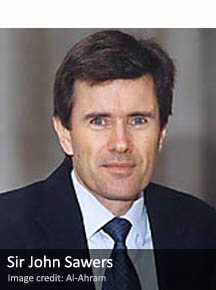
Sir John SawersBy JOSEPH FITSANAKIS | intelNews.org |
The Director of Britain’s Secret Intelligence Service, widely known as MI6, visited Israel in secret in late August in an effort to convince the Israelis not to launch military strikes on Iran, according to a British newspaper. In an article published on Tuesday, The Daily Mail said Sir John Sawers, who leads Britain’s foremost external spy agency, held private meetings with leading Israeli officials, among them Prime Minister Benjamin Netanyahu and Defense Minister Ehud Barak. His message, according to the paper, was that London wanted more time so that the economic and diplomatic sanctions imposed on Iran by the international community to bear fruit. Sanctions are considered by some in the West a viable alternative to calls by Israeli officials for direct military attacks on Iran, aimed at stopping the country’s nuclear program. If confirmed, Sir John’s visit to Israel would represent a near-unprecedented move; this is because, unlike his counterpart at the United States Central Intelligence Agency, the Director of MI6, known informally as ‘C’, does not routinely travel to foreign countries as a diplomatic messenger of the British government. Many, therefore, will see Sawers’ alleged trip to Israel as yet another sign that the Jewish state is beginning to lean heavily in favor of attacking Iran using overt military means. In a possibly related development, Israel’s Minister for Intelligence and Atomic Energy said on Wednesday that he supported international sanctions on Iran. Read more of this post

Why did Canada suddenly suspend all diplomatic ties with Iran?

John BairdBy JOSEPH FITSANAKIS | intelNews.org |
On Friday September 7, 2012, John Baird, Canada’s Minister of Foreign Affairs, announced that Canada was suspending all diplomatic relations with Iran and was expelling Iranian diplomats from the country, effective immediately. Additionally, said Baird, Ottawa would officially list Iran as a state sponsor of terrorism under the Canadian Justice for Victims of Terrorism Act. By the time Baird made his announcement, all Canadian diplomats serving in Iran were on their way home. Iranian diplomats in Canada were given five days to leave the country. Relations between the two countries have been rocky since at least 2003, when Canadian photographer Zahra Kazemi was killed under detention in Tehran, and Iran has not had a full ambassador in Canada for nearly five years. Still, the news surprised even former government insiders in Canada. Ray Boisvert, until recently Assistant Director of the Canadian Security Intelligence Service, described Ottawa’s move as “unprecedented”. What was it that caused the final rupture in Canadian-Iranian relations? Why expel the Iranian diplomats now? Leading Middle Eastern experts in Canada cannot seem put their finger on a specific reason. Iran observer James Devine, of Canada’s Mount Allison University, told CBS that Ottawa’s move was “not tied to a specific event”. The Canadian former Ambassador to Tehran, John Mundy, said he believed the break in relations was not tied to a direct threat against Canadian interests. But CBS said many Iranian-Canadians believe the drastic move by the Canadian government should be seen as “an immediate sign” of a looming military attack on Iran by Western powers or Israel. In a recent article on the subject, Canadian political analyst Brian Stewart argued that Ottawa’s “overnight liquidation” of its diplomatic relations with Tehran must be rooted in “new intelligence” showing that Iran “absolutely poses a security threat in Canada”.   Read more of this post

Prominent Syrian defector thanks “French intelligence” for help

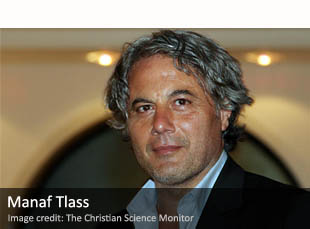
Manaf TlassBy JOSEPH FITSANAKIS | intelNews.org |
A senior Syrian military commander, whose public defection to the rebel side last summer made news headlines around the world, has thanked the French intelligence services for helping him defect.  Brigadier General Manaf Tlass, a member of the Central Committee of the Baath Party and commander of the 10th Brigade of Syria’s elite Republican Guard, secretly left the country in early July. On July 6, he resurfaced in Paris and said he had defected to the rebel-led Free Syrian Army (FSA). His defection was hailed by both the FSA and Western powers as “an enormous blow” to the regime of Syrian President Bashar al-Assad. His central position in Syria’s governing apparatus aside, Tlass was a major symbolic figurehead for the regime. His father, Mustafa Tlass, was Syria’s Minister of Defense for over three decades during the reign of Hafez al-Assad, the current President’s father. Consequently, the Tlass family has long been fully integrated in the Syrian political and military elite that has run the country for nearly half a century.  Although there were reports that the extended Tlass family was considered too close to the rebels by the Assad regime, Tlass’ defection in July came as a shock to most Syrians. The General reportedly disappeared from his post sometime in early July, shortly after sending his wife and son to Beirut, Lebanon. Rumor has it that he secretly traveled to Turkey and from there to Paris, France, either directly or after joining his family in Lebanon. The details of his defection, however, remain obscure. Speaking on Monday to French television channel BFM, Tlass, who is now based in Paris, said he was helped in “getting out of Syria” by what he called “the French services” —presumably the French intelligence services. When the French journalist asked him to clarify how exactly he was able to leave Syria, Tlass responded that he would rather not be drawn into a discussion on the details of his escape, because it could place his contacts inside Syria in danger. Instead, the prominent Syrian defector said he was grateful to the “French services for helping me get out of Syria, and I thank them for that”. Read more of this post