Mystery arrest of Russian mercenaries in Belarus ‘was US-Ukrainian sting operation’
September 13, 2021 3 Comments
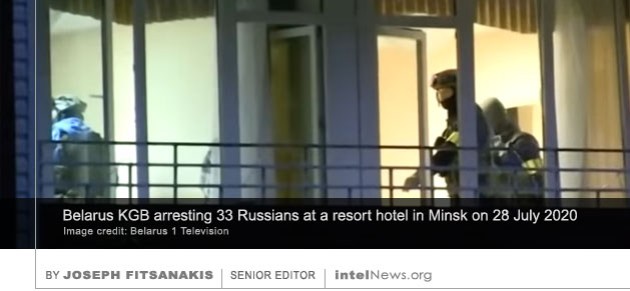
THE BIZARRE CASE OF the arrest of three dozen Russian mercenaries in Belarus in 2020, allegedly for trying to destabilize the country, was in reality a joint Ukrainian-American sting operation that went awry, according to a new report. IntelNews readers will remember the puzzling July 2020 announcement by Belarusian authorities of the arrest of 33 Russians, who were said to be employees of Wagner Group, a Kremlin-backed private military firm.
The 33 Russians were charged with terrorism against the government of Belarussian strongman Alexander Lukashenko, who was then seeking a sixth term in office. Soon afterwards, the Belarussian State Security Committee (KGB) said the Russians had entered the country as part of a 200-strong group of mercenaries working for Wagner, in order to “destabilize the situation during the election campaign” of Lukashenko. That, however, made little sense, given that Lukashenko is one of Moscow’s strongest international allies. To add to the mystery, the Russians were quietly released from custody just a few days later.
What was behind that mysterious case? According to the American news network CNN, the bizarre incident was part of an international sting operation set up by the Ukrainian intelligence services with the support of the United States Central Intelligence Agency (CIA). Citing three former high-ranking Ukrainian military intelligence officials, CNN claims that the sting operation aimed to lure, and eventually arrest, Russian mercenaries who have participated in the Kremlin’s invasion of eastern Ukraine since 2014.
The news network claims that the Ukrainian intelligence services set up a fake Russian private military company and used it to advertise $5,000-a-month contracts to provide security for Venezuelan oil facilities. Hundreds of Russian would-be contractors sent in applications. When quizzed by the fake company about their bona-fides, the applicants freely provided evidence of their participation in the ongoing Russo-Ukrainian War.
The ultimate goal of the sting operation was to sign up the Russian contractors and offer to transport them to Turkey, from where they would supposedly fly to Caracas and begin working. In reality, however, the Russians would be transported to Ukraine, where they would face arrest and potential imprisonment for war crimes. However, the COVID-19 pandemic prevented their transportation via air. Instead, the sting organizers chose to transport them by bus to neighboring Belarus, from where they planned to transport them to Ukraine. However, the presence of 33 burly Russians in a hotel sanatorium outside of Minsk raised suspicions, and led to their eventual arrest by the Belarussian security forces.
The report by CNN claims that the CIA provided the Ukrainian intelligence services with “cash, technical assistance and advice”. But the news network also says that United States officials “deny having a direct role” in the sting operation.
► Author: Joseph Fitsanakis | Date: 13 September 2021 | Permalink

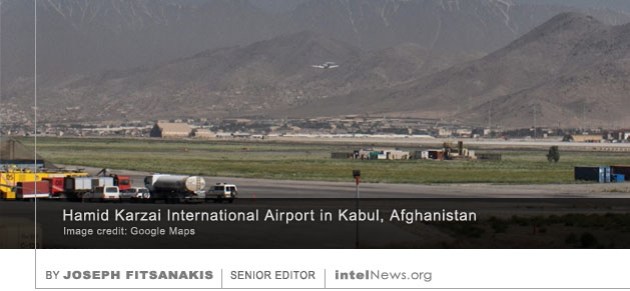
 HIGH LEVEL DELEGATIONS OF intelligence officials from the United States and Russia visited India on the same day this week, for talks with Indian officials about the situation in Afghanistan, according to news reports. This development highlights the frantic pace with which Moscow and Washington are maneuvering around the region, following the dramatic takeover of Afghanistan by the Taliban last month.
 THE DIRECTOR OF PAKISTAN’S powerful intelligence agency paid a surprise visit to the Afghan capital Kabul on Saturday, reportedly in an effort to mediate between rival factions of the Taliban. Lieutenant General Faiz Hameed, director of the Inter-Services Intelligence (ISI) directorate, was accidentally
  THE CONSENSUS VIEW OF British intelligence in the weeks leading to the fall of Kabul to the Taliban was that the Afghan government would be challenged, but that the rebels were unlikely to take over the country in 2021. This was revealed on Wednesday in the House of Commons by Britain’s Foreign Secretary, Dominic Raab.











CIA sees early signs of al-Qaeda regrouping in Afghanistan, says US official
September 15, 2021 3 Comments
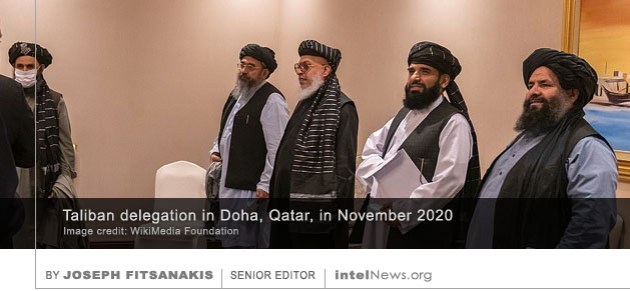
Now, however, with the Taliban back in power in Afghanistan, there are concerns that al-Qaeda may make a comeback in the war-torn country. Under the leadership of Osama bin Laden, al-Qaeda worked closely with the upper echelons of the Taliban in the 1990s and early 2000s. Contacts between the two groups continue to exist, and could potentially deepen following the exit of the United States and its Western allies from Afghanistan.
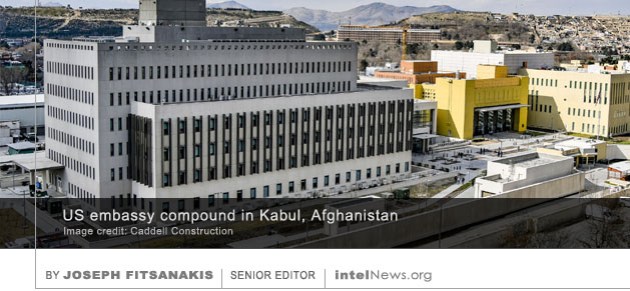
On Tuesday, David Cohen, who serves as deputy director of the CIA, said that American intelligence agencies are closely monitoring the situation. Speaking at the Intelligence and National Security Summit in Washington, DC, Cohen acknowledged that the shuttering of the United States embassy in Kabul, as well as the closure of a network of CIA stations across Afghanistan, had “diminished” the ability of American intelligence agencies to assess conditions on the ground. He added, however, that current intelligence reports indicate “some potential motion of al-Qaeda [returning] to Afghanistan”.
Cohen added that much of the intelligence that has been collected in recent weeks comes from “over-the-horizon platforms”, meaning that the collection is taking place from countries that border Afghanistan. However, the CIA in particular is already working to develop “methods to work within the horizon”, he said. At the moment, the United States intelligence community estimates that it could take al-Qaeda between one and two years to amass its former strike capability, so as to directly threaten American interests.
► Author: Joseph Fitsanakis | Date: 15 September 2021 | Permalink
Filed under Expert news and commentary on intelligence, espionage, spies and spying Tagged with Afghan Taliban, Afghanistan, al-Qaeda, CIA, David Cohen, News, United States