US Homeland Security Department unveils new domestic counter-terrorism branch
May 12, 2021 Leave a comment
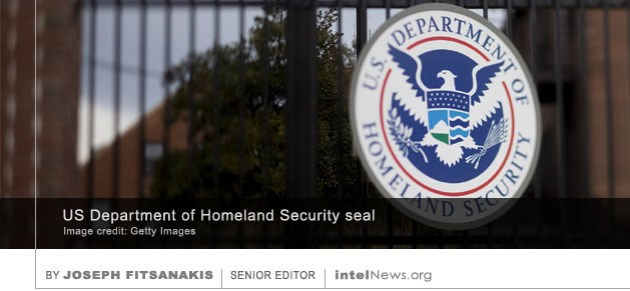
THE UNITED STATES DEPARTMENT of Homeland Security has unveiled plans to establish a dedicated counter-terrorism branch within its intelligence wing, as part of a broader push to focus on domestic violent threats. In a statement published on Tuesday, the DHS said the new domestic counter-terrorism branch will be bringing together “several full-time personnel” under its Office of Intelligence and Analysis (OIA).
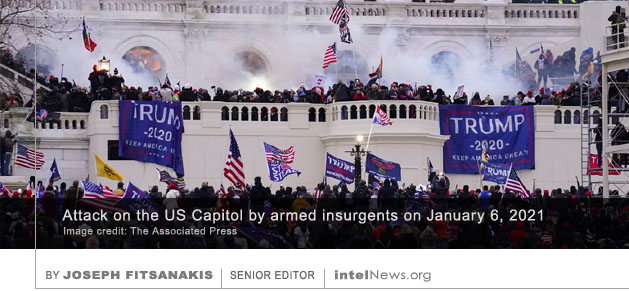
According to the statement, the new branch will aim to “ensure DHS develops the expertise necessary to produce the sound, timely intelligence needed to combat threats posed by domestic terrorism and targeted violence”. In a related move, the DHS also announced plans this week to implement a new strategy of “gathering and analyzing intelligence about security threats from public social media posts”. The purpose of the new strategy will be to establish an early-warning mechanism that will take into account the kinds of social media posts that preceded the attack on the US Capitol Complex on January 6 of this year.
In addition to its new OIA branch, the DHS said it will dissolve its controversial Office of Targeted Violence and Terrorism Prevention, which was set up during the administration of President Donald Trump. Critics have accused the Trump-era outfit of failing to focus on domestic far-right militancy for political reasons. It will now be rebranded as the Center for Prevention Programs and Partnerships, and will rely on outside expertise to identify and mitigate sources of domestic radicalism. According to DHS, the new center will “gauge the threat people may face based on behavioral assessments, rather than ideology”.
► Author: Joseph Fitsanakis | Date: 12 May 2021 | Permalink
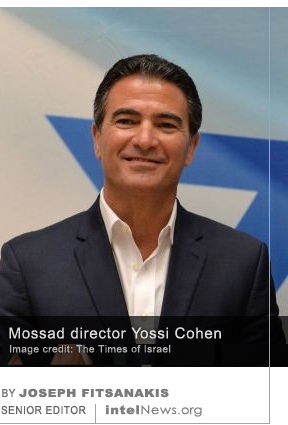 UNITED STATES JOE BIDEN reportedly told the director of Israel’s external intelligence agency, the Mossad, that Washington has “a long way to go” before rejoining a 2015 agreement aimed at halting Iran’s nuclear ambitions. The meeting between Biden and Mossad director Yossi Cohen reportedly took place last Friday, during Cohen’s visit to Washington last week, to discuss bilateral security issues with a series of American officials. On Thursday Cohen met with a number of Biden administration officials, including Secretary of State Anthony Blinken and Brett McGurk, who is the National Security Council’s Coordinator for the Middle East and North Africa.
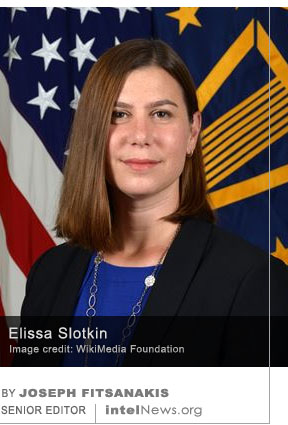 A MEMBER OF THE United States Congress, who previously worked for the Central Intelligence Agency, has called for foreign white supremacist groups to be closely monitored, warning that they have ties to American militants. Democratic Representative Elissa Slotkin, of Michigan, wrote in a letter that the US should apply the label of “terrorist organizations” to a number of foreign white supremacist groups. She argued that the move would allow US authorities to take more aggressive measures against supporters of such groups inside the US.
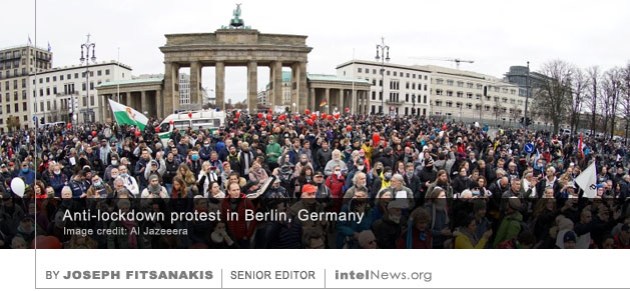 GERMANY’S DOMESTIC INTELLIGENCE AGENCY said on Wednesday it has begun monitoring groups associated with conspiracy theories surrounding COVID-19, who are “challenging the legitimacy of the state”. Germany is home to one of the most vocal anti-lockdown movements in the Western world, with public rallies against lockdown measures taking place nearly every week across the country. These rallies attract a peculiar mix of participants who come from a variety of backgrounds, including anti-vaccination proponents, various conspiracy theorists, and supporters of both far-left and far-right parties.
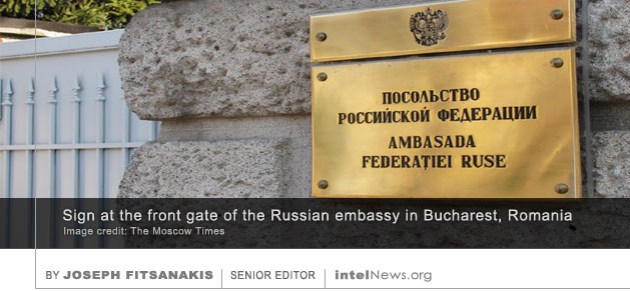 SEVERAL EASTERN EUROPEAN STATES announced plans to expel Russian diplomats this week, as Moscow declared an Italian diplomat persona non grata in a tit-for-tat dispute with Rome over espionage allegations. Earlier this month, the Czech Republic
 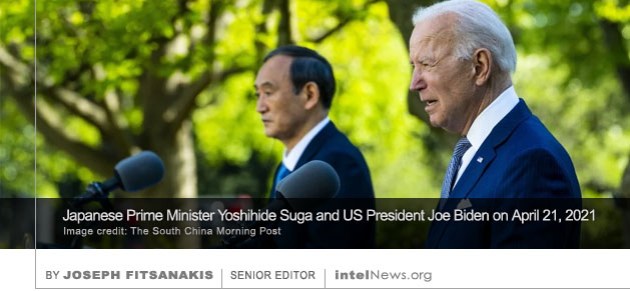 JAPAN’S AMBASSADOR TO AUSTRALIA has said he feels optimistic his country could join the Five Eyes intelligence alliance in “the near future”, adding to growing speculation on the topic. Japanese diplomat Shingo Yamagami, who has held the post of ambassador to Australia since late 2020,
  A JOINT INVESTIGATION BY Maltese and British reporters has found alleged loopholes that allow wealthy individuals from the Middle East, Asia and elsewhere to acquire European Union passports with minimum effort, in exchange for cash. The investigation concerns the so-called “cash for passports” scheme, which was launched by the government of Malta in 2014.
 ONE OF MEXICO’S MOST powerful drug cartels has reportedly used drones to attack police officers with explosives, according to local media reports. If confirmed, this incident will mark the first recorded use of drones by a Mexican drug cartel to attack law enforcement.
 A LEADING CHINESE TELECOMMUNICATIONS firm has strongly denied a claim by a newspaper that its service personnel could listen in on calls made by Dutch telephone users, including senior government officials. The report dates from 2010 and was authored by consultancy firm Capgemini on behalf of KPN, one of Holland’s largest telecommunications service providers. The Rotterdam-based firm had hired Capgemini to conduct a risk analysis on whether more equipment should be purchased from Chinese telecommunications giant Huawei. By that time the Chinese company, one of the world’s largest in its field, was already supplying KPN with hardware and software equipment.
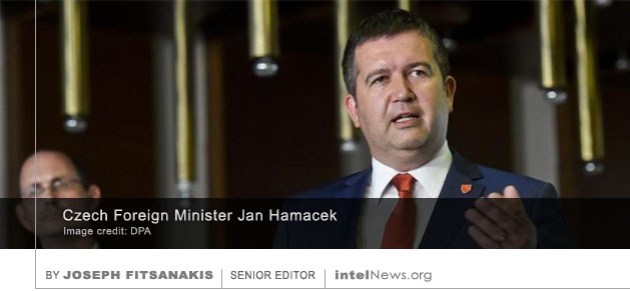 CZECH GOVERNMENT OFFICIALS SAID they would welcome the expulsion of Russian diplomats from European Union and North Atlantic Treaty Organization countries, in support of Prague’s ongoing diplomatic spat with Moscow. The Czech Republic expelled 18 Russian diplomats last weekend, in order to protest against an explosion at a remote munition depot in the east of the country, which the government claims was part of a Russian intelligence operation.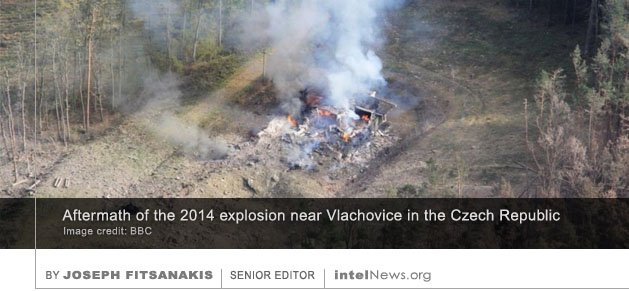









Swiss intelligence chief to step down following dispute over Crypto AG spy scandal
May 13, 2021 2 Comments
THE DIRECTOR OF SWITZERLAND’S spy service will step down once his mandate ends in August, allegedly over a dispute with the country’s governing council about the Crypto AG affair, which shook Swiss politics last year. Jean-Philippe Gaudin headed Switzerland’s Military Intelligence Service from 2008 to 2015. He then served as a defense attaché at the Swiss embassy in Paris, France, before being appointed by the then-Defense Minister, Guy Parmelin as director of the Federal Intelligence Service (FIS). Founded in 2010, the FIS performs both domestic and external intelligence functions in the Alpine state.
But, according to reports in the Swiss media, Gaudin is not expected to continue in his post once his mandate ends, on August 31. The reason seems to be tensions within the Swiss government over the so-called Crypto AG affair. The scandal centers on the world’s leading manufacturer of cryptologic equipment during the Cold War, Crypto AG, whose clients included over 120 governments around the world. In February of last year, The Washington Post and the German public broadcaster ZDF confirmed reports that had been circulating since the early 1980s, that Crypto AG was a front for American intelligence. According to the revelations, the Central Intelligence Agency and West Germany’s Federal Intelligence Service secretly purchased the Swiss company in the 1950s and paid off most of its senior executives in order to buy their silence.
The secret deal, dubbed Operation RUBICON, allegedly allowed the US and West Germany to spy on the classified government communications of many of their adversaries —and even allies, including Austria, Italy, Spain, Greece, Jordan, Saudi Arabia and the United Arab Emirates. The revelation about the secret deal shocked Swiss public opinion and embarrassed the government of a nation that bases its national identity and international reputation on the concept of neutrality.
Earlier this year, a parliamentary report into the Crypto AG affair concluded that Gaudin had essentially mishandled the case and had waited too long to inform the nation’s leadership about it. Gaudin’s behavior resulted in tension in his relationship with the Swiss Federal Council —a seven-member executive body that forms the federal government and serves as the collective decision-making body of the Swiss Confederation. According to reports, the spy chief’s relationship with Switzerland’s Defense Minister, Viola Amherd, is beyond repair, and the minister has been pushing for his resignation for several months.
In a statement released on Wednesday, the Swiss government gave no reason for Gaudin’s pending career change, saying only that the spy chief would move on to “new challenges” in the private sector. He will reportedly be replaced by Juerg Buehler, who will serve as interim director of the FIS until further notice. Neither the FIS nor Gaudin have made public comments about this sudden development.
► Author: Joseph Fitsanakis | Date: 13 May 2021 | Permalink
Filed under Expert news and commentary on intelligence, espionage, spies and spying Tagged with Crypto AG, FIS (Switzerland), Jean-Philippe Gaudin, Juerg Buehler, News, resignations, Switzerland, Viola Amherd