British former MI6 employee denies having passed secrets to Chinese operatives

Brussels BelgiumA former employee of British intelligence has strongly denied accusations, which surfaced last week in the European press, that he gave secrets to two Chinese operatives in exchange for money. Some news outlets have suggested that he is currently under investigation by at least one European government.
The individual in question is Fraser Cameron, a British businessman who worked in an intelligence capacity from 1976 to 1991. During those years, Mr. Cameron was reportedly employed by the Secret Intelligence Service (MI6), Britain’s version of the United States Central Intelligence Agency. He then worked for the British Foreign Office and the European Commission, before relocating to Belgium, where he is believed to have lived for much of the past 20 years. According to the news website Politico, Mr. Cameron has been “a visiting professor at several universities in Asia” and currently directs the Belgium-based EU-Asia Centre.

Politico and a number of other news outlets said last week that Belgian security agencies are investigating Mr. Cameron’s alleged contacts with “two Chinese journalists accredited in Brussels”, who are believed to work as intelligence officers. Politico cited “a person close to the case”, who claimed that an investigation was launched by Belgium’s office of the federal prosecutor after the two Chinese journalists were found to be secretly working for China’s Ministry of State Security. The news website said that, according to sources in Belgium, Mr. Cameron’s alleged activities “could constitute a risk for European officials”. The BBC cited “a senior [British] official”, who claimed that the Belgian probe was the result of a “long-running joint inquiry between British and Belgian intelligence” into the case, which had achieved “a breakthrough in recent months.

But Mr. Cameron strongly denied these allegations, which he termed “absurd” in his messages to various media outlets. He described the claims as “without foundation” and added: “I retired 15 years ago from official employment and have zero access to any sensitive information”.

Author: Joseph Fitsanakis | Date: 21 September 2020 | Permalink

Trump’s ex-spy chief warns American democracy may not survive November election

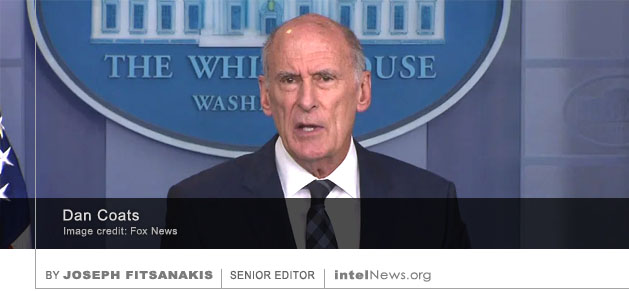
Dan CoatsThe former United States Director of National Intelligence, who served in the administration of President Donald Trump as the highest-ranking intelligence official until 2019, has warned that American democracy may not survive the upcoming presidential election. In a stark editorial published on Thursday in The New York Times, Dan Coats warns that whether “the American democratic experiment, one of the boldest political innovations in human history”, will survive after November, remains an open question.

The Trump administration appointed Coats in 2017 to head the Office of the Director of National Intelligence (ODNI), which was set up in response to the terrorist attacks of September 11, 2001. Its mission is to direct the 17-member United States Intelligence Community and to advise the president, the National Security Council and the Homeland Security Council on matters of national security. In July 2019 Coats resigned, reportedly after disagreeing with President Trump’s policies on North Korea, Russia and the Islamic State.

In his editorial, Coats urges Congress to pass “emergency legislation” that will establish a “supremely high-level bipartisan and non-partisan commission to oversee the [upcoming 2020 Presidential] election”. The proposed commission would supervise the mechanisms that “tabulate, evaluate or certify the results” of the election and assure the American public that “the laws and regulations governing them have been scrupulously and expeditiously followed”, argues Coats. Additionally, it would refer “to the proper law enforcement agency” any incident of election “interference, fraud, disinformation or other distortions”.

Coats also calls on American leaders to perform what he describes as the “most urgent task [they] face”, which is “to ensure that the election results are accepted as legitimate”. Doing the opposite would mean succumbing to the pressure of enemies who “want us to concede in advance that our voting systems are faulty or fraudulent; [and] that sinister conspiracies have distorted the political will of the people”.

The former Director of National Intelligence concludes by warning that if the nation fails “to take every conceivable effort to ensure the integrity of the election”, there will be no winners, but only losers, after November. Consequently, the American voters will not simply be choosing a president, he says, but will be deciding “whether the American democratic experiment […] will survive”.

Author: Joseph Fitsanakis | Date: 18 September 2020 | Permalink

US spy agencies uncovered Iranian plot to kill American ambassador to South Africa

Lana MarksAn Iranian plot to kill the United States’ ambassador to South Africa was reportedly uncovered by American intelligence agencies, which believe Tehran is still seeking to avenge the assassination of General Qassem Soleimani in January of this year. The head of the Islamic Revolutionary Guard Corps, Iran’s elite paramilitary force, was killed by a US drone strike during a visit to the Iraqi capital Baghdad, sparking major tension between Washington and Tehran.
The news website Politico said on Sunday that the Iranian government had authorized a plan to kill Lana Marks (pictured), a South African-born American handbag designer, who is a longtime personal friend of US President Donald Trump. Marks, 66, assumed her post in October of this year. Citing “a US government official […] and another official who has seen the intelligence”, Politico said Marks had been “made aware of the threat”. The website added that the assassination plot against Marks involved operatives stationed at the embassy of the Islamic Republic of Iran in Pretoria.

According to the report, American spy agencies uncovered the plot several months ago. However, the confidence level regarding the intelligence was low. In recent weeks, the threat has become “more specific”, said Politico. This alleged plot aside, Politico said US intelligence agencies believe Tehran is weighing “several options” for avenging Soleimani’s killing, which include assassinating American diplomats abroad, as well as military commanders. On Monday, President Trump warned Iran on Twitter that “Any attack […], in any form, against the United States will be met with an attack on Iran that will be 1,000 times greater in magnitude!”.

Author: Joseph Fitsanakis | Date: 17 September 2020 | Permalink

Intelligence insiders see Israeli alliance with Gulf States as ‘biggest change in decades’

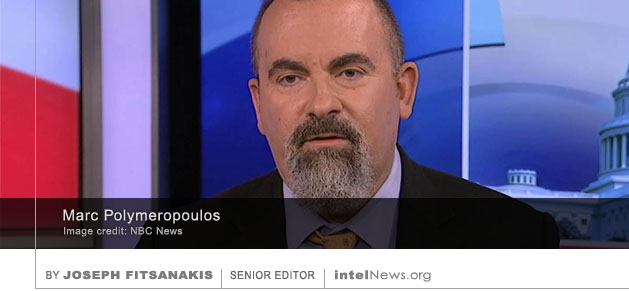
Marc PolymeropoulosIntelligence insiders, including a former senior Central Intelligence Agency operations officer who spent decades in the Middle East, have described the establishment of official relations between Israel and some Gulf States as “the biggest change in the region in decades”.
The former CIA official, Marc Polymeropoulos, who worked closely with both Israel and the Palestinians in his 26-year career, told SpyTalk’s Jeff Stein and Jonathan Broder that secret intelligence links between Israel and some Arab countries are nothing new. However, “this [new] overt alliance is the biggest change in the region in decades”, said Polymeropoulos. He added that these intelligence links will only deepen now that official diplomatic relations have been established between Israel, the United Arab Emirates and Bahrain.

In their analysis, Stein and Broder explain that these historic developments in the Middle East were initially forged “in secret political interactions” facilitated in the intelligence domain. These were led by the Mossad, which has been tasked by the Israeli leadership with creating a regional alliance against Iran. These efforts have intensified in recent years, especially after the administration of United States Donald Trump annulled the Joint Comprehensive Plan of Action with Iran, which effectively signaled the resumption of Tehran’s nuclear program.

The end of the Joint Comprehensive Plan of Action, and the deepening polarization between Sunni and Shia populations in the Middle East, were the context in which the Israeli outreach to Arab states took shape. This context essentially convinced Arab leaders that their populations are sufficiently concerned about Iran to “stomach an alliance with Israel” Polymeropoulos told SpyTalk.

What’s next in this process? Stein and Broder suggest that Mossad officials will continue to reach out to their Arab counterparts, in secret, in the coming months, as part of Israel’s effort to build an alliance against Iran. These efforts will be crucially amplified by the White House, which recently sent US Secretary of State Mike Pompeo to Sudan in order to pressure the country’s new government to recognize Israel. In the meantime, say Stein and Broder, Mossad will become a lot more active in the Emirates and Bahrain.

Author: Joseph Fitsanakis | Date: 15 September 2020 | Permalink

Venezuela claims capture of ‘American spy’ near major oil refining complex

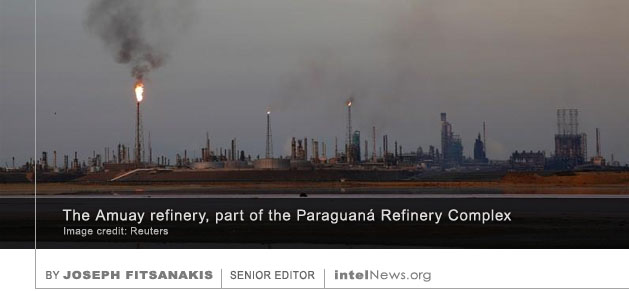
Paraguaná Refinery ComplexThe President of Venezuela, Nicolás Maduro, announced on Friday the arrest of an alleged “American spy”, who was reportedly arrested near the largest oil refinery complex in the country. The alleged spy, who has not been named, was reportedly in the vicinity of the Paraguaná Refinery Complex, which is known as the third largest refinery complex in the world. It combines the Amuay, Bajo Grande and Cardón refineries, which together produce nearly a third of Venezuela’s daily oil output.

During a live address on Venezuelan national television, Maduro said an American citizen had been arrested on Thursday in Falcon State, in Venezuela’s northeast. Falcon is the site of the Amuay and Cardón oil refineries and much of the local population is employed in the state-owned oil industry. The Venezuelan president said the alleged spy is “a marine” who was “serving on [Central Intelligence Agency] bases in Iraq” prior to arriving in Venezuela. He added that the alleged spy was “captured with large amounts of cash, large quantities of dollars and other items”. He did not elaborate further, but said the detainee was in the process of “giving a statement in custody”.

Maduro also said that Venezuelan security forces had foiled a separate plot to bomb El Palito, which is another oil refinery, located in Carabobo State. He then urged workers in oil refineries to “be on alert” in case more attacks are planned. Venezuela’s oil production has fallen to nearly a third of its peak output in 2009, when the country was producing 3.2 million barrels per day. The government blames the oil shortage on acts of sabotage from domestic and foreign enemies of President Maduro, but opposition parties claim that mismanagement and corruption are behind the demise of the Venezuelan oil industry.

Earlier this year, a Venezuelan court sentenced two American former servicemen to 20 years in prison for their role in what the Venezuelan media refer to as “enfrentamiento en El Junquito” (“El Junquito raid”), or “Operación GEDEÓN”. GEDEÓN refers to a failed coup plot carried out on May 3 and 4, 2020, by a group of up to 60 armed men. It is alleged that the coup was masterminded by Major General Clíver Alcalá Cordones, a retired member of Venezuela’s Bolivarian Army, with the support of Silvercorp USA, a private security group led by Jordan Goudreau, a Canadian-born former sergeant in the US Green Berets. The United States government has denied involvement in the coup plot.

Author: Joseph Fitsanakis | Date: 14 September 2020 | Permalink

Ex-intelligence chief at US Department of Homeland Security files whistleblower claim

Kirstjen NielsenThe former head of intelligence at the United States Department of Homeland Security (DHS) has filed a whistleblower complaint, alleging that he was pressured to manipulate his analyses for political reasons. The 24-page complaint was filed on Tuesday with the Office of the DHS Inspector General. The whistleblower is identified as Brian Murphy, who served as acting chief of intelligence for the DHS. The contents of the complaint have been made available online on the website of the US House Permanent Select Committee on Intelligence.

Murphy alleges that his superiors, including senior officials in the DHS, engaged in “attempted abuse of authority” and possibly violated federal law. In his whistleblower complaint, Murphy says his supervisors essentially fabricated intelligence products on pressing security matters, in order to make them agreeable to President Donald Trump. In doing so, claims Murphy, these officials tried to “censor and manipulate the intelligence information” produced by DHS analysts, in order to further President Trump’s agenda.

In his complaint, Murphy identifies acting Secretary of Homeland Security Chad Wolf, his predecessor, Kirstjen Nielsen (pictured), and Wolf’s deputy, Ken Cuccinelli, as individuals who pressured him to change his intelligence products. The pressures allegedly began with reference to Russian interference in the US presidential elections of 2016. According to Murphy, his supervisors instructed him to “cease providing intelligence assessments on the threat of Russian interference in the United States, [and] instead start reporting on interference activities by China and Iran”.

The pressures, according to Murphy, later expanded to include efforts to get him to downplay the domestic terrorist threat posed by far-right organizations, and to accentuate purported links between terrorism and immigration to the US coming from Latin America. In late 2018, the then-DHS Secretary Kirstjen Nielsen told Congress that nearly 3,800 documented terrorists crossed the US border from Mexico. But Murphy alleges that the actual number was just three confirmed cases.

The complaint further alleges that Murphy was removed from his post in August of this year, and was “de facto demoted” after he confronted Wolf and Cuccinelli and refused to “manipulate intelligence for political reasons”. Murphy’s removal was one of a number of “retaliatory actions” against him for refusing to comply with his superiors’ pressures, according to the complaint.

Author: Joseph Fitsanakis | Date: 10 September 2020 | Permalink

COVID-19 prompts spy agencies’ mission shift that is ‘reminiscent of the space race’

COVID-19 coronavirusThe worldwide competition to invent a vaccine that can curtail the spread of COVID-19 has prompted a mission shift in major intelligence agencies around the world, which is “reminiscent of the space race”, according to The New York Times. In an article published on Saturday, the paper cited “interviews with current and former intelligence officials and others tracking the espionage efforts”, who suggest that the mission shift observed in spy agencies worldwide has been among the fastest in history.


According to The New York Times, “every major spy service around the globe is trying to find out what everyone else is up to” in coronavirus research, and “to steal information about vaccine research”. Much of this biomedical espionage is taking place in international bodies, such as the United Nations and the World Health Organization (WHO), where spies try to access useful data from rival countries. The paper said that the Central Intelligence Agency and other Western spy agencies are closely watching their rivals, including Chinese and Russian operatives, inside the WHO.

Meanwhile, the Federal Bureau of Investigation is “has moved to protect [American] universities and corporations doing the most advanced work” on the virus, including the University of North Carolina (UNC). The paper said that UNC’s Epidemiology Department came under a sustained attack by foreign hackers recently, as have major American pharmaceutical research companies, including Gilead Sciences, Novavax and Moderna. In other cases, foreign spies have tried to gain physical proximity to biomedical researchers. According to The Times, part of the reason why the administration of US President Donald Trump decided to shut down the Chinese consulate in Huston in July, was because it believed Chinese spies had used it as a base from where to make contacts with American biomedical researchers.

Officially, America’s stance on the coronavirus espionage race is purely defensive. But, according to The Times, American spy agencies are also trying to find out what Russian, Chinese and Iranian scientists have in their possession, in an attempt to see if is stolen. As they do that, “they could encounter information on those countries’ research and collect it”, said the paper.

Author: Joseph Fitsanakis | Date: 07 September 2020 | Permalink

Belarus strongman Lukashenko replaces intelligence leadership, as protests continue

Alexander LukashenkoBelarusian President Alexander Lukashenko (pictured) replaced the heads of the intelligence service and other security bodies on Thursday, as he continues to face the most serious challenge to his 26-year rule. Mass protests have been held in urban centers since last month, when Lukashenko claimed victory with over 80 percent of the vote in the presidential elections, and returned to office for a record sixth term.

Over 7,000 people have been arrested by the authorities in recent weeks for participating in anti-government demonstrations, which Lukashenko blames on the North Atlantic Treaty Organization and “the European Union states bordering Belarus”. Regional observers point to the Belarusian military and security services as holding the key to what will transpire in former Soviet republic during the coming months. It is believed that, if the Armed Forces and the security services continue to stand by Lukashenko, the Belarusian strongman is unlikely to leave office.

In a surprise move on Thursday, the Belarusian president reshuffled the country’s intelligence and security leadership, including the head of the State Security Council (the highest national security decision-making body in Belarus) and the director of the State Security Service, known as KGB. Former Defense Minister General Andrei Ravkov, who has headed the State Security Council since January of this year, stepped down and was replaced by Valery Vakulchik, who until recently served director of the KGB. His post in the KGB was filled by Ivan Tertel, a KGB career official, who most recently served as chairman of Belarus’ financial investigative force, known as the State Control Committee. In an equally surprising move, the mayor of Minsk, Anatoly Sivak, was named deputy prime minister.

The reshuffle has been interpreted as by regional observers as an attempt by Lukashenko to surround himself with some of his most trusted apparatchiks, as rumors abound about possible divisions in the country’s military and intelligence services. Meanwhile, the Belarussian strongman is scheduled to meet with the Russian Prime Minister Mikhail Mishustin and a delegation of senior Russian intelligence officials in the coming days.

Author: Joseph Fitsanakis | Date: 04 September 2020 | Permalink

French lieutenant-colonel serving with NATO arrested for spying for Russia

Florence ParlyFrench authorities are reportedly investigating a senior military officer, who is serving with the North Atlantic Treaty Organization in Italy, for spying on behalf of Russia, according to a news report from France. On Sunday, France’s Minister of the Armed Forces, Florence Parly (pictured), gave a press conference in Paris, during which she provided limited information about the ongoing investigation. Parly said she could confirm that “a senior officer” in the French military was undergoing “legal proceedings” relating to a “security breach”. She refused to provide specific details on the case.

Later on Sunday, however, French radio station Europe 1 reported that the military officer was a lieutenant-colonel who is currently serving at a NATO facility in Italy. The officer is believed to speak Russian and is considered a specialist on Russian military affairs, said the station. It added that French authorities began investigating him after he was spotted in Italy with a man who was later identified as an intelligence officer with the Main Directorate of the General Staff of the Russian Armed Forces, known commonly as GRU. According to Europe 1, the French military officer was arrested by the General Directorate for Internal Security (DGSI), France’s counterintelligence and counterterrorism agency.

At the time of his arrest, the unnamed man was making preparations to return to his NATO post in Italy, after holidaying in France, according to the radio station’s report. He is currently in detention in the French capital on suspicion of having supplied classified military documents to Russian intelligence. Europe 1 cited an unnamed source who said the officer would be prosecuted for “collecting [and] sharing information with a foreign power” that “harms the fundamental interests of the [French] nation” and “harms national defense”.

Author: Joseph Fitsanakis | Date: 31 August 2020 | Permalink

Putin says US and Ukrainian intelligence ‘lured’ Russian mercenaries into Belarus

Belarus KGBRussian President Vladimir Putin said in an interview that a group of Russian paramilitary contractors, who were arrested in Belarus last month, were lured there as part of a joint American-Ukrainian spy operation. On July 29, Belarussian secret services announced the arrest of 33 Russian citizens, who were employees of Wagner Group, a private Russian military company that some believe operates as a private paramilitary wing of the Russian Armed Forces.

The Investigative Committee, Belarus’ primary investigating authority, determined that the 33 had entered the country as part of a 200-strong group of Russians working for Wagner, in order to destabilize the country in the run-up to the presidential election. The election resulted in the return to office of Belarus’ authoritarian leader, Alexander Lukashenko, for a record sixth term. According to Belarussian state television, the 33 Russians were found in possession of Sudanese currency and a Sudanese smartphone card. Sudan is believed to be one of Wagner Group’s most active areas of operation, and in the past the company has used Belarus as a transit center from which it coordinates its operations in the African continent.

On Thursday, however, Russian President Vladimir Putin claimed that the 33 Russians were arrested as part of a joint American-Ukrainian intelligence operation, which lured the Wagner employees into Belarus. Speaking to state-owned Rossiya 24 television, Putin said the alleged operation was “carried out jointly by Ukrainian and American special services. The Russians, he said, had been hired “for absolutely legal work in Latin America and the Middle East” by an employer who “dragged them into Belarus”. The men were then “presented as a ‘strike force’ to destabilize [Belarus] during the presidential campaign”, said the Russian strongman.

Putin’s statement follows reports earlier this month in the Russian media, which claim that the 33 Russians were given forged passports as part of the alleged joint American-Ukrainian operation, in order to enable them to leave Russia undetected. However, neither the Russian media nor the Russian leader have provided evidence for these claims. Meanwhile Belarus expelled 32 of the 33 Russians a few days following their arrest. One remains in prison in the Belarussian capital Minsk.

Author: Joseph Fitsanakis | Date: 28 August 2020 | Permalink

Danish military spy chief ‘relieved of duty’ following whistleblower revelations

Lars FindsenThe director of Denmark’s military intelligence service has been “relieved of duty for the time being”, following a series of whistleblower revelations, according to the country’s Ministry of Defense. Little is known about the precise nature of the revelations, but they are believed to relate to large-scale intelligence collection of information belonging to Danish citizens, which the spy agency is prohibited from accessing.

The news was revealed on Monday by the Danish Oversight Board, known as TET, which is responsible for supervising the work of Denmark’s intelligence agencies. The TET said that “whistleblower complaints” had revealed information that pointed to improper intelligence collection practices by the Danish Defense Intelligence Service (FE, or DDIS in English). Moreover, when confronted by the TET, the DDIS “withheld key information” about its collection practices and even gave “incorrect information relating to the collection and disclosure of information”, according to the watchdog.

The press release by the TET said that the DDIS had carried out “operational activities” that violated Danish law and violated the privacy of Danish citizens. It also said that the illegal “operational activities” had taken place “for as many as six years”. However, the watchdog added that, given the “classified content” of the intelligence service’s mission and activities, it could “not provide further information to the public”. It is believed, however, that the controversy involves a system of mass surveillance of telecommunications, which somehow collected information exchanged domestically between Danish citizens, or between them and foreign nationals. The DDIS is forbidden by law to spy on the domestic activities of Danes.

The Danish Ministry of Defense announced on Monday that DDIS Director Lars Findsen, had been “relieved of duty for the time being”, while officials investigated a multi-volume report produced by TET investigators about the alleged improprieties by the spy agency. The ministry added that two more senior DDIS officials had been placed on leave, but said they could not be named for reasons of national security.

Author: Joseph Fitsanakis | Date: 26 August 2020 | Permalink

Russia expels Austrian diplomat in tit-for-tat move involving espionage claims

Russian embassy in AustriaRussia has expelled a diplomat stationed at the Austrian embassy in Moscow, just hours after the Austrian Ministry of Foreign Affairs expelled a Russian diplomat from Austria, allegedly for engaging in espionage. Austrian officials reportedly gave the unnamed Russian diplomat until Tuesday, September 1, to leave Austrian soil, in a move that surprised observers, given the close relations between Austria and Russia in recent years.

The Russian diplomat is accused by the Austrian authorities of engaging in “behavior that violated the Vienna Convention on Diplomatic Relations”. The Austrian Ministry of Foreign Affairs did not elaborate on the accusations against the diplomat, and refused to name him. However, the Vienna-based Kronen Zeitung newspaper, said on Monday that the Russian diplomat had carried out “industrial espionage” for several years. According to the paper, the Russian had recruited an Austrian citizen who worked for a technology firm to spy for Moscow. Austrian authorities arrested the man, who promptly identified the Russian diplomat as handler. The paper also said that, according to some sources, the man turned himself in to the authorities.

Later on Monday, the Russian Foreign Ministry summoned Johannes Aigner, Austria’s ambassador to Russia, and “strongly protested the unjustified course of action to cancel the accreditation of a Russian diplomat and order him to leave Austrian soil”. Moscow said in a statement its decision to expel an Austrian diplomat was “guided by the principle of reciprocity”. It is not known at this time how this incident will affect bilateral relations between Russia and Austria, which have been among Moscow’s warmest with a Western country in recent years.

Author: Joseph Fitsanakis | Date: 25 August 2020 | Permalink

Republican ex-intelligence officials launch high-profile campaign against Trump

Trump CIAA group of former United States senior intelligence and national security officials, who support the Republican Party, launched today a campaign to deny Donald Trump a second term as president. Calling itself Former Republican National Security Officials for Biden, the group launched its high-profile campaign with a full-time ad in the business broadsheet The Wall Street Journal.

The ad is signed by 73 members and supporters of the Republican Party, who served in senior intelligence and national security posts under presidents Donald Trump, George W. Bush, George H.W. Bush, and Ronald Reagan. The list of signatories includes former Air Force Secretary Mike Donley, former National Counterterrorism Center Director Michael Leiter, former Director of National Intelligence John Negroponte, and former Central Intelligence Agency (CIA) Director General Michael Hayden. William Webster, who served as director of the Federal Bureau of Investigation and the CIA, and Elizabeth Neumann, former assistant secretary of Homeland Security, also signed the ad.

The text of the ad accuses the US president of corruption and lambasts him for lacking “the character and competence to lead this nation” in a time of crisis. It argues that Trump is “unfit to serve as president” because he “solicited foreign influence”, “disparaged [the US] armed forces, intelligence agencies, and diplomats”, and “imperiled America’s security”. In these and other ways, says the Republican group, Trump has “demonstrated that he is dangerously unfit to serve another term”.

This development highlights the contentious and at times downright adversarial relationship that has existed between the White House and parts of the United States Intelligence Community during Trump’s presidency. At the same time, such a high-profile effort by established intelligence and national security figures to deny the US president a second term in office, could be used by the Trump campaign as evidence of his crusade against what his supporters refer to as the ‘deep state’. The term refers to a purported network of unelected interests that resist the president’s efforts to implement his political agenda.

Author: Ian Allen | Date: 21 August 2020 | Permalink

Norway expels Russian diplomat in espionage case involving Norwegian citizen

Russian embassy OsloThe government of Norway expelled a Russian diplomat on Wednesday, accusing him of committing espionage in a case that involves a Norwegian citizen, who has been arrested on charges of spying for Russia. Meanwhile local media named the Norwegian citizen involved in the case, while the Russian diplomat was also named yesterday in media reports.

As intelNews reported yesterday, a Norwegian citizen was arrested on Saturday, reportedly after he met with a Russian intelligence officer in an Oslo restaurant. The arrest of was announced on Monday by the Norwegian Police Security Service (PST), Norway’s counterintelligence agency. Norwegian authorities said the man had “access to information that would be of interest to foreign nations” through his work in the private sector.

On Wednesday, Norwegian media identified the man as Dr. Harsharn Singh Tathgar, a 50-year-old naturalized Norwegian citizen, who was born in India. Tathgar reportedly received his PhD in 2001 from the Norwegian University of Science and Technology in Trondheim, after completing research on the properties of nickel and magnesium in the department of Materials Technology. According to the PST, Tathgar has admitted sharing restricted information with the Russian diplomat. According to the judge who remanded Tathgar in custody on Monday, the Indian-born Norwegian man received from the Russians monetary compensation for his services that was “not insignificant”. It is also believed that Tathgar met his alleged Russian handler several times in the past year, or even longer.

The Russian diplomat was not arrested along with Tathgar, because he holds diplomatic immunity. However, he now appears to have been declared persona non grata in Norway. Representatives from Norway’s Ministry of Foreign Affairs told reporters on Wednesday the Norwegian government had “informed the Russian ambassador that one of his employees is unwanted in Norway and has been asked to leave the country”. The diplomat has been named as Aleksandr Stekolshchikov. He reportedly served as Deputy Trade Representative at the Russian embassy in Oslo. He now stands accused by the Norwegian government of engaging in “activities that are not in accordance with his role and status as a diplomat”. He has been given until the end of the week to leave the country.

Meanwhile, the Russian embassy in Oslo has filed a complaint with Norwegian authorities, claiming that a bag Stekolshchikov was carrying when he was confronted by the PST was illegally searched, despite his diplomatic status. The Russians also claim Stekolshchikov was “unjustly detained” by the PST following “a meeting with a Norwegian citizen”. Moscow is now accusing the Norwegian Foreign Ministry of violating the diplomatic status of its embassy personnel. Oslo has denied these accusations.

Author: Joseph Fitsanakis | Date: 20 August 2020 | Permalink

Researchers find lost interview of MI6 officer who helped plan 1953 coup in Iran

Mohammad MossadeghBritish researchers have found a lost interview by a senior British intelligence officer who led the joint Anglo-American coup in Iran in 1953. The coup overthrew the democratically elected government of Prime Minister Dr. Mohammad Mossadegh and reinstalled the shah (king) of Iran, Mohammad Reza Pahlavi, a close Western ally. London was alarmed by Dr. Mossadegh’s decision to nationalize the Anglo-Iranian Oil Company (later renamed to British Petroleum, or BP), which would deny Britain its lucrative stake in the Middle Eastern energy market. The British also viewed Dr. Mossadegh as being too close to the Soviet Union.

In 1952, when Iran severed diplomatic relations with Britain, London intensified its efforts to convince the United States that overthrowing the Iranian government was imperative to keep communism out of the region. Until then, British plans for a coup had been led by Norman Darbyshire, who headed the Persia station of the Secret Intelligence Service, known as MI6. With American help, Darbyshire continued his plotting from Cyprus, where he had relocated after having been expelled from Tehran by the Iranian government. He died in 1993. But in 1985 he gave an interview to Granada, a British production company, for a television documentary titled “End of Empire: Iran”. Because Darbyshire refused to speak in front of the camera, the producers of the documentary ended up not using his interview.

Recently, however, a team of researchers found the interview and the associated transcript while researching archival material for a new documentary on the overthrow of Mossadegh. The documentary, titled “Coup 53”, is scheduled for release this coming Wednesday, which marks the 67th anniversary of the coup. On Monday, the Security Archive at George Washington University released the typewritten transcript of Darbyshire’s interview. It describes how British intelligence worked systematically over several years to convince the United States to support the coup plans, and that British spies also found it difficult to secure the support of a reluctant Shah Pahlavi.

According to Darbyshire, MI6 and the CIA tried to bribe Iranian parliamentarians, offering them money in exchange for defecting from Dr. Mossadegh’s party, thus eliminating its parliamentary majority. When that effort failed, the spies approached the Iranian military and proposed plans for a coup. In his interview, the late MI6 spy claims that the coup cost the British government £700,000. “I know because I spent it”, he says. He also claims that much of that money was smuggled into Iran in cash, concealed inside “biscuit tins”.

Author: Joseph Fitsanakis | Date: 18 August 2020 | Permalink