Speculation grows that Israel may be behind spate of mystery blasts in Iran
July 7, 2020 1 Comment
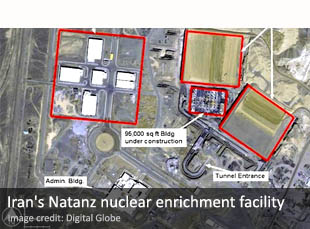 There is growing speculation that Israel’s intelligence services may be behind a spate of blasts that have damaged military and civilian industrial sites in Iran in recent days. Citing a “Middle Eastern intelligence official”, The New York Times reported on Sunday that Israel was behind at least one of the blasts, which struck an Iranian nuclear complex.
The earliest known attack took place on May 9, when one of Iran’s busiest shipping hubs, the Shahid Rajaee Port, experienced a major cyber-attack that brought the port terminal “to an abrupt and inexplicable halt” and caused “massive backups on waterways and roads leading to the facility”. On June 26, a massive blast destroyed a liquid fuel production facility for ballistic missiles in Khojir, a military complex located 20 miles southeast of Tehran. Four days later, on June 30, there was another explosion at a medical clinic in the Iranian capital, which killed 19 people.
On July 2, a major blast and subsequent fire were reported at the site of the Natanz nuclear facility, which is situated 150 miles south of Tehran. The attack is believed to have targeted a laboratory facility housing advanced centrifuge systems for enriching uranium. The BBC reported on Monday that a previously unknown group calling itself “The Homeland Cheetahs” claimed responsibility for the attack. The group sent BBC reporters information about the Natanz blast, including a video of the incident, before it was reported by Iranian media. In its statement, the group claimed to represent dissidents in the Iranian military, but some speculated that it could be a front for a foreign intelligence agency. On Sunday, The New York Times said the Natanz blast was orchestrated by the Israeli Mossad.
On July 3, a large fire broke out in Shiraz, Iran’s fifth largest city, while on the next day a fire engulfed the Zargan power plant in Ahwaz, following a large blast that was reportedly audible several miles away. Also on July 4, a large leak of chlorine gas occurred at the Karoun petrochemical plant in Bandar-e Mahshahr, in Iran’s Khuzestan Province. The leak caused 70 workers at the plant to be hospitalized.
In recent days, Iranian officials have claimed that the above incidents have been part of a sabotage campaign orchestrated by the Mossad, and have warned Israel of an impending retaliation. At a press conference in Jerusalem last Thursday, reporters asked the Israeli Prime Minister Benjamin Netanyahu whether the country’s spy agencies were behind the attacks in Iran. Mr. Netanyahu responded by saying: “I don’t address such topics”.
► Author: Joseph Fitsanakis | Date: 07 July 2020 | Permalink
 The trial of two French former intelligence officers begins today in Paris, with the two men accused by French authorities of having spied for China in the 1990s and 2000s. French officials have remained largely silent on the two cases, but media reports have suggested that the two former intelligence officers were found to have carried out espionage tasks for the Chinese government.
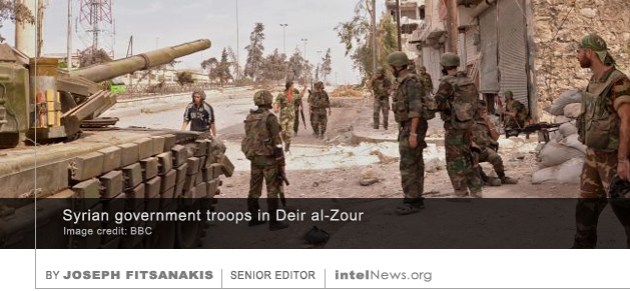 As an intense debate rages in the United States about Moscow’s alleged subversion of American military goals in Afghanistan, sources warn that Russia is increasingly challenging Washington’s troops in Syria. Recent
  Police in Italy have announced the seizure of the largest shipment of amphetamines in counter-narcotics history, containing drugs believed to have been manufactured by the Islamic State in Syria. The drugs shipment was intercepted at the port of Salerno, located south of Naples in southwestern Italy.
 A
A 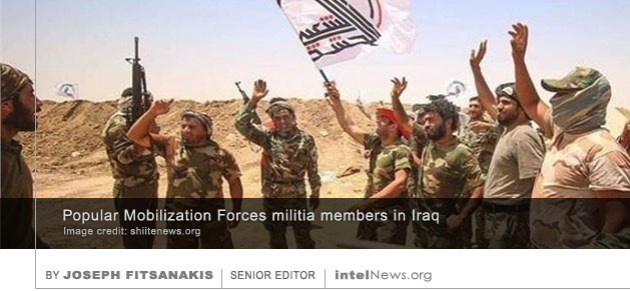 There was growing tension in Iraq over the weekend, as the government in Baghdad announced it had arrested over a dozen members of a powerful Shi’a militia backed by Iran. The arrests marked the first time that the Shi’a dominated Iraqi government moved to curtail the growing power of these heavily armed groups, which some say are threatening the cohesion of the country’s fragile state institutions.
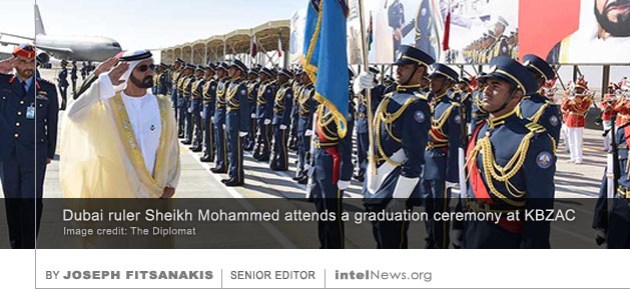 The United Arab Emirates, one of the United States’ closest Arab allies, is training Syrian intelligence and military officers and is giving financial aid to government-owned civilian facilities in Damascus, a report claims. The UAE broke off diplomatic relations with Damascus at the beginning of the Syrian civil war in 2011. But relations between the two countries were restored in 2018, when the oil kingdom reopened its embassy in the Syrian capital.
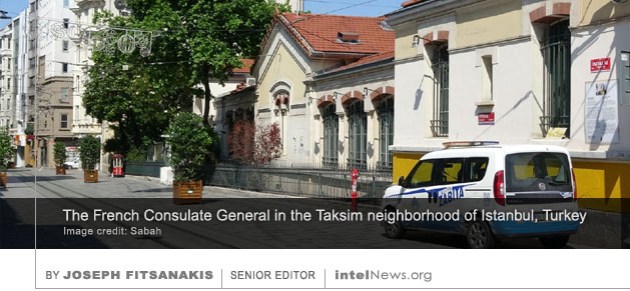 Four men have been arrested by Turkish authorities in Istanbul, allegedly for being members of a spy ring operated by an agent who collected information on extremist groups for France’s external spy agency. The arrests were reported on Tuesday by a newspaper with close links to the Turkish government. It is worth noting, however, that the reports have not been confirmed by Turkish officials. If true, the incident points to further deterioration in the relations between the two nations, which are members of the North Atlantic Treaty Organization.
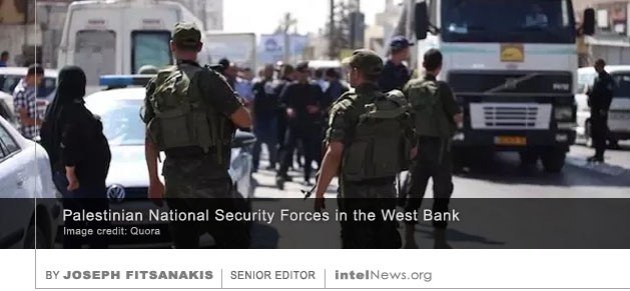 A leaked report produced by analysts at Israel’s Ministry of Intelligence urges the government to annex occupied territories in the West Bank as soon as possible, in case Donald Trump loses the upcoming United States presidential elections in November. The report advises the Israeli government that it “should not expect” a widespread outbreak of violence in the streets. It also forecasts that “a wave of diplomatic protests” will gradually give its place to acceptance, as “the international system acclimates itself to annexation”.
 The general
 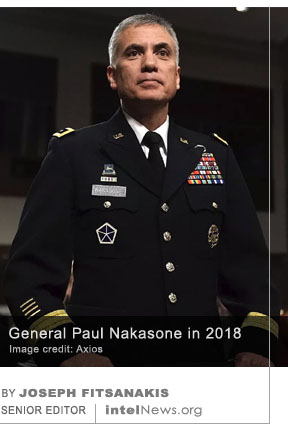 The director of America’s largest spy agency claims in a signed affidavit that a forthcoming book by John Bolton, President Donald Trump’s former national security adviser, would critically compromise intelligence secrets if published. Bolton served in that capacity from April 2018 until September 2019. His memoir of his time as President Trump’s national security advisor, titled
  Cybersecurity researchers have uncovered what is believed to be the first-ever case of hackers using LinkedIn to infect the computers of targeted users with viruses, according to a new report. The hackers appear to have been sponsored by government and to have targeted employees of carefully selected military contractors in central Europe, according to sources.
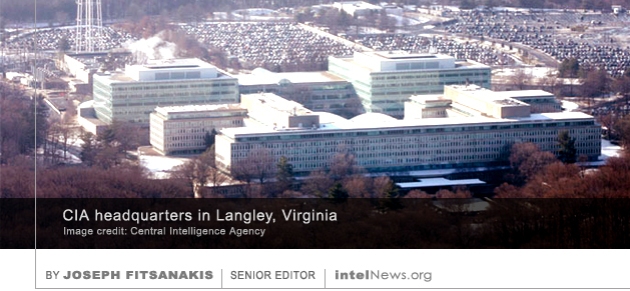
 Complacency and substandard security by the United States Central Intelligence Agency were behind the Vault 7 leak of 2017, which ranks as the greatest data loss in the agency’s history, according to an internal report. The Vault 7 data loss was particularly shocking, given that the CIA should have taken precautions following numerous leaks of classified government information in years prior to 2017, according to the report.
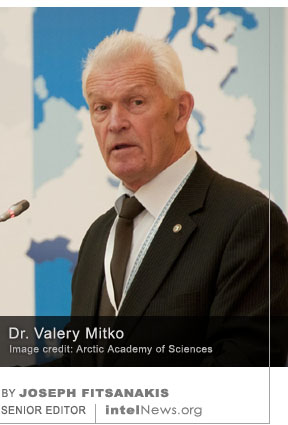 Russian prosecutors have accused one of the country’s most respected hydroacoustics specialists, and globally recognized expert on the Arctic region, of spying for Chinese intelligence. This development highlights the competitive relationship between the two neighboring countries, who in recent years have tended to work together against what they perceive as a common threat coming from the United States.








Russia arrests space agency employee for giving secrets to NATO country
July 8, 2020 Leave a comment
Safronov was the military correspondent for the Russian newspaper Kommersant, which is described by some as the Russian equivalent of Britain’s Financial Times. He then worked as a military affairs reporter for Vedomosti, a Moscow-based financial daily, which has a reputation for independence from the Kremlin. He briefly represented the paper in the Kremlin pool of journalists, who accompany the Russian President Vladimir Putin on official trips.
Safronov resigned from Vedomosti last spring, along with several of his colleagues, following a dispute with the newspaper’s management over editorial freedom. In May he was hired by the Russian space agency, the Roscosmos State Corporation for Space Activities, where he now works as a media advisor for Dmitry Rogozin, the agency’s director-general.
On Tuesday, the FSB issued a statement to the press saying it had arrested Safronov for carrying out espionage for a foreign country. The statement said Safronov had “collected and surrendered to [the foreign nation’s] representative state secrets and information about military-technical cooperation and about the defense and security of the Russian Federation”. According to the FSB, the person that Safronov is alleged to have shared state secrets with is an intelligence officer of a North Atlantic Treaty Organization member state. However, the Russian security agency did not name the country in its statement to the media.
Also on Tuesday, the FSB published video footage showing Safronov being arrested by a group of plainclothes FSB agents outside his Moscow apartment. The agents are seen approaching Safronov and searching him before putting him inside an unmarked van and driving away. He has not been seen in public since, and some have suggested that Russian authorities have not permitted lawyers to contact him.
Following the statement by the FSB, reports in the Russian media claimed that Safronov had been approached repeatedly by security officers in the past and questioned about his work as a journalist. Some of Safronov’s colleagues have said on social media that he was arrested due to his political views, rather than alleged espionage activities. Meanwhile, Roscosmos director Rogozin told Russian media that Safronov did not have access to classified information, so it was unlikely that his arrest was related to his work at the space agency.
Safronov’s trial is expected to take place behind closed doors, due to the nature of the charges he is facing. If found guilty, he could face up to 20 years in prison.
► Author: Joseph Fitsanakis | Date: 08 July 2020 | Permalink
Filed under Expert news and commentary on intelligence, espionage, spies and spying Tagged with espionage, FSB, Ivan Safronov, NATO, News, Roscosmos, Russia