Cyprus issues international arrest warrants for three Israelis wanted for spying
January 7, 2020 Leave a comment
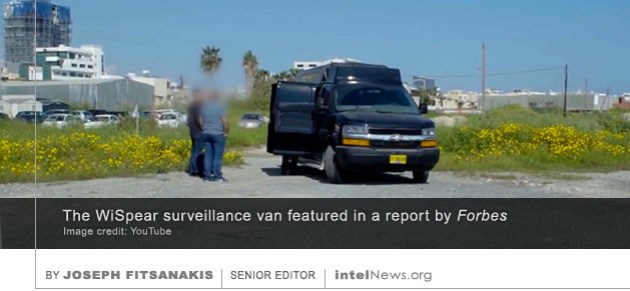 The government of Cyprus has issued international arrest warrants for three Israeli citizens, who are wanted in connection with a private security company that allegedly carried out espionage operations on the Mediterranean island. The warrants were sparked by what has become known in Cyprus as the “spy van case”.
It began on November 16, 2019, when Cypriot police arrested two local men and a woman who were registered as employees of a company called WiSpear. The firm was reportedly registered in Cyprus in 2013 and began offering services relating to communications interception and surveillance in 2017. Its owner is Tal Dilian, an Israeli former intelligence officer. WiSpear provides services to customers in Africa, the Gulf and Southeast Asia, but not to the government of Cyprus, or to Israel.
The company became widely known on the island following a promotional interview given by Dilian to Forbes, during which he allowed a film crew to tour a surveillance van (pictured) belonging to WiSpear. Dilian told the Forbes reporters that the van —a remodeled ambulance— had been fitted with over $9 million worth of surveillance equipment and could intercept Internet-based applications and telephone messages. The report became viral in Cyprus and prompted calls for an investigation into WiSpear.
On Thursday, the Cypriot government issued international arrest warrants for three Israeli citizens, including Dilian and Shahak Avni, a prominent member of Cyprus’ Jewish community. All are believed to be in Israel, and it is doubtful that they will ever be extradited to Cyprus. The Israeli government has not commented on the case. WiSpear said on December 26 that it was “cooperating fully with Cypriot law enforcement”.
► Author: Joseph Fitsanakis | Date: 7 January 2020 | Permalink
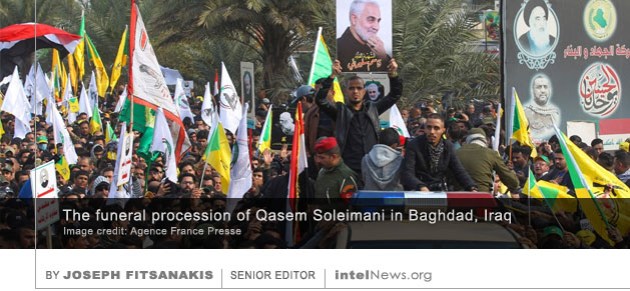 By assassinating Qasem Soleimani, a Shia celebrity and the Middle East’s most influential military leader, US President Donald Trump has made the most fateful decision of his presidency to date. Tehran has no option but to respond. When it does, the way that Mr. Trump and his administration handle the situation will largely determine the future of the Middle East and the fate of his presidency. In the meantime,
 it is becoming increasingly clear that victory, if and when it comes, will not be unblemished for whomever claims it.
 assassination. And yet, while publicly thanking Iran, Trump was likely formulating plans to kill its leading general.
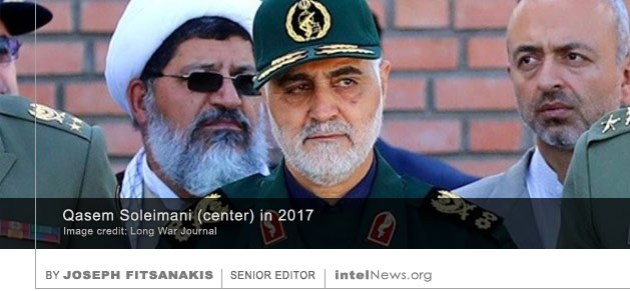 In an act whose implications are impossible to overstate, the United States has assassinated General Qasem Soleimani, arguably Iran’s second most powerful official. In the early hours of this morning, the entire Middle East stood on the verge of a regional war as the US Department of Defense
  why US President Donald Trump made the decision to kill Soleimani, and why he did so now.
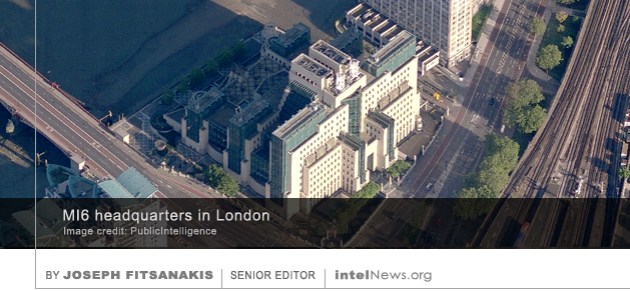 The floor plans of the headquarters of MI6, Britain’s foreign-intelligence agency, were temporarily lost by a contractor, an incident that led to a temporary lockdown of the building and the termination of the contract, according to media reports. The alleged incident took place at 85 Albert Embankment, a distinctive-looking building that has served since 1994 as the headquarters of MI6 —known officially as the Secret Intelligence Service, or SIS. The imposing structure is located on the bank of the River Thames alongside Vauxhall Bridge in downtown London.
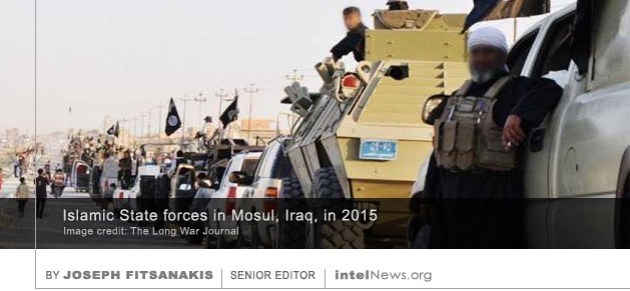 The Islamic State has regrouped, rearmed and refinanced itself, and its forces are now actively patrolling nearly all of northern Iraq, according to a senior intelligence official in Iraq’s Kurdistan region. The Islamic State, which is also known as Islamic State of Iraq and Syria (ISIS), used to control territory in the Levant that equaled the size of Germany. But its forces were pushed back by an international coalition of state armies and militias, a development that prompted several heads of governments, including United States President Donald Trump, to announce that ISIS had been defeated.
 The intelligence service of Russia has openly honored two British members of the so-called Cambridge Five spy ring, who caused great controversy during the Cold War by defecting to Moscow. The intelligence services of the Soviet Union recruited five Enlishmen, H.A.R. ‘Kim’ Philby, John Cairncross, Donald Maclean, Anthony Blunt, as well as an unnamed fifth person, to spy for them in the 1930s. All five were recruited while they were promising young students at Britain’s elite Cambridge University, and entered the diplomatic and security services in order to supply Moscow with classified information about Britain and its allies.
 The son of a Russian couple, who fraudulently acquired Canadian citizenship before being arrested for espionage in the United States, has won the right to keep his Canadian citizenship, which was effectively annulled when his parents were found to be Russian spies.
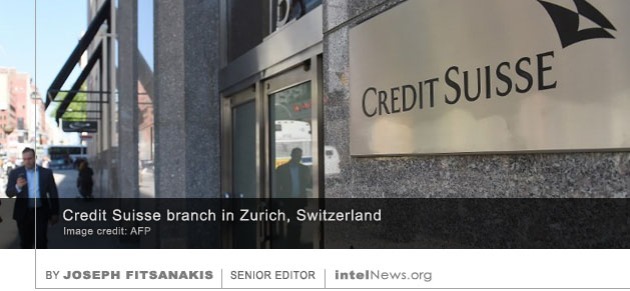 Credit Suisse, one of the world’s most powerful banking firms, says it has opened an investigation into claims that it paid private investigators to spy at individuals, just two months after a similar scandal involving espionage and surveillance rocked the company.
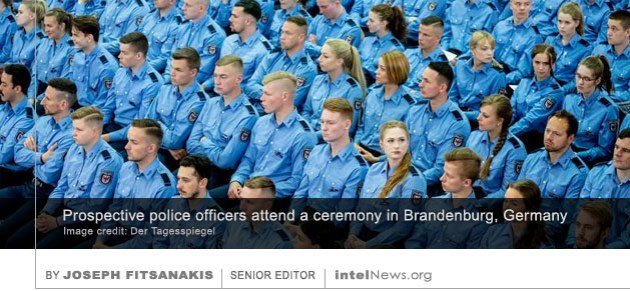 The German government has announced plans to hire hundreds of new police and intelligence officers, in order to step up its monitoring of violent far-right groups in the country. The announcement came at a press conference hosted on Tuesday in Berlin by Horst Seehofer, Germany’s Interior Minister.
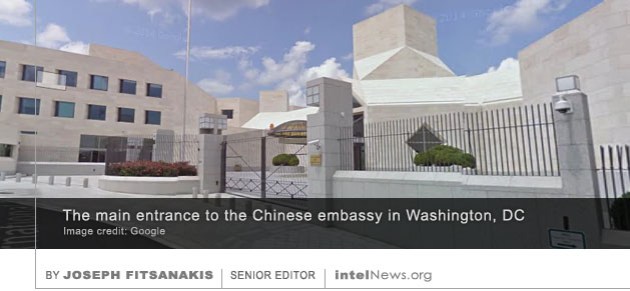 The United States quietly expelled two Chinese diplomats in October of this year, a move that neither Washington nor Beijing chose to make public, according to a report published on Sunday. If true, the incident would signify the first known expulsions of Chinese diplomatic personnel from the US since 1987.
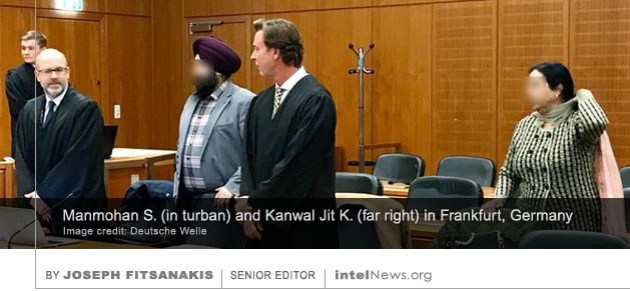 A court in Frankfurt has found a married couple guilty of spying in Germany on behalf of India’s external intelligence service. Due to Germany’s strict privacy laws, the couple have been identified only as 50-year-old Manmohan S. and his wife, Kanwal Jit K., who is 51.
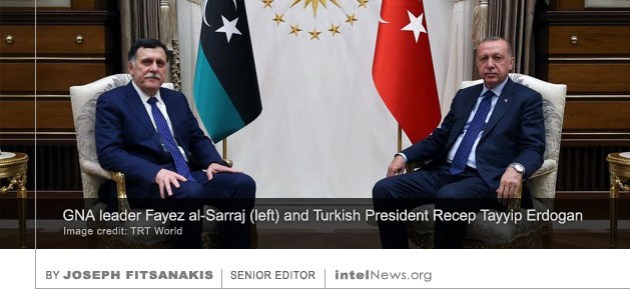 Turkish President Recep Tayyip Erdoğan has said his country is prepared to deploy troops to Libya, just days after Ankara surprised analysts by announcing an agreement with the embattled Libyan government in Tripoli. The Turkish-Libyan agreement has spurred angry reactions from Israel, Greece and Egypt, all of which are
  Victor Ivanovich Sheymov, who is often referred to as one of the most important intelligence defectors of the Cold War, has reportedly died in the American state of Virginia. He was one of the most senior officials in the Soviet Union’s Committee for State Security (KGB) to ever defect to the West, and revealed important KGB secrets to the United States.
 An elite group Russian military intelligence officers, who have participated in assassinations across Europe, have been using resorts in the French Alps as logistical and supply bases, according to a new report. The report concerns Unit 29155 of the Main Directorate of the General Staff of the Russian Armed Forces, commonly known as GRU.








Assessing the implications of Iran’s missile attack on Iraqi military bases
January 8, 2020 1 Comment
There are two notable aspects in the attack. First, the fact that Tehran did not —as many expected— take aim at American targets using its proxies in Iraq, Lebanon, or Yemen. Instead, not only did the attack come directly from Iran, but the Islamic Revolutionary Guard Corps (IRGC), of which Soleimani was a leading commander, openly claimed responsibility for it. This is a major paradigm shift for the Iranians, who in the past have taken great care to avoid giving any indication of their direct involvement in military or paramilitary attacks on their opponents. It is clear that Soleimani’s killing is viewed by Tehran as too insulting to be responded to indirectly. This does not mean that Tehran will not revert to its standard method of employing proxies in the future. But the fact that it consciously chose to deviate from that time-tested method is in itself extremely important.
The second notable aspect of the attack is that it was markedly muted, especially considering the many options that are available to the Iranians. According to reports, 22 ballistic missiles were fired, most of which struck two military bases housing US troops in western and northern Iraq. The number of missiles fired is surprisingly low, given that Iran possesses the largest ballistic-missile force in the entire Middle East. Additionally, it is interesting that Tehran directed its attacks against the most obvious and predictable American target in the region —uniformed US personnel stationed in what is essentially Iranian-controlled territory. These troops have been on high alert since the moment Soleimani was assassinated. It is therefore highly unsurprising that no American casualties have been reported (although Iranian state media are apparently telling their domestic audiences that “80 terrorists” died in the attack).
The fact remains that, if Iran’s leaders truly wanted to cross the point of no return, they could have attacked American diplomatic facilities in over a dozen countries in the region, including Iraq, Israel, Jordan, and many others. Alternatively, they could have directed their ire against American political and commercial targets in Saudi Arabia, of which there are countless. They could have also sent an unmistakably ominous message to the global financial markets by attacking energy facilities in the region, or by blocking maritime traffic in the Strait of Hormuz. Or they could have carried out all of the above simultaneously, thus virtually ensuring a US response, which would in turn ignite an all-out war. But they didn’t —which should be interpreted that the IRGC is not, for now, interested in going to war. Read more of this post
Filed under Expert news and commentary on intelligence, espionage, spies and spying Tagged with Analysis, Iran, Iraq, Islamic Revolutionary Guard Corps, Joseph Fitsanakis, Newstex, Qassem Soleimani, United States