Pakistani Taliban leaders found dead in Kabul hotel, culprits unknown
February 10, 2020 Leave a comment
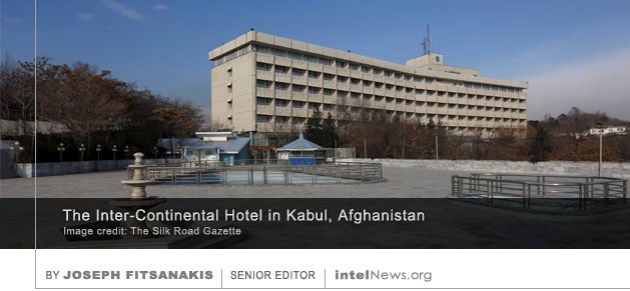 Two senior members of the Pakistani Taliban, who were carrying fake identification documents, were reportedly assassinated earlier this month in the vicinity of a luxury hotel in the Afghan capital Kabul. The culprits remain unknown, although the leadership of the Pakistani Taliban has blamed the United States for their death.
According to the BBC, which reported on the incident on Friday, the bodies of the two men were found in or near the Inter-Continental, a five-star hotel located in western Kabul. According to Afghan government sources, the two men were carrying forged identification papers. In a statement issued on Thursday, the Pakistani Taliban identified the dead men as Sheikh Khalid Haqqani and Qari Saif Younis. Sheikh Haqqani had served as the group’s deputy leader, and was a member of its leadership council. Younis was among the group’s most powerful military commanders.
The Pakistani Taliban said that the two men had secretly traveled to Kabul from Paktika, a Taliban stronghold in the east-central region of Afghanistan, in order to attend a high-level meeting. The group did not say who the two men were meeting and why. But it is rare for leading figures of the Pakistani Taliban to leave the areas that the group controls, and even rarer for them to travel to Kabul or any other big city in the region.
The statement from the Pakistani Taliban claimed that the two men were killed “in a clash with American forces”. But the BBC quoted an unnamed “source within the group” who said that they could also have been targeted by militant groups linked to the Pakistani government, which is a sworn enemy of the Pakistani Taliban. United States officials have yet to comment on this developing story.
► Author: Joseph Fitsanakis | Date: 10 February 2020 | Permalink
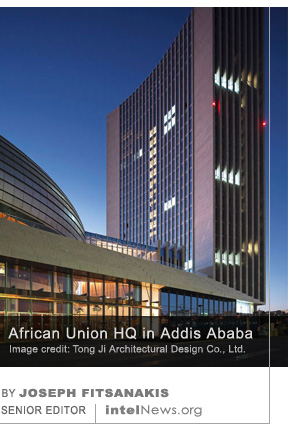 The United States has threatened to pull its funding for an Africa-wide disease control program if the African Union decides to accept an offer from China to build the program’s new headquarters. The dispute accentuates a growing competition between Washington and Beijing to exert political control in Africa and places the African Union at the center of a difficult dilemma.
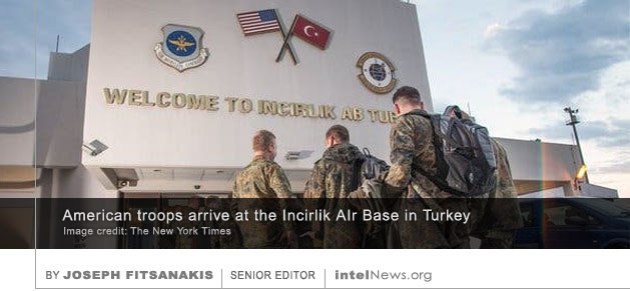 The United States has indefinitely suspended a longstanding military intelligence-sharing program with its North Atlantic Treaty Organization ally Turkey. The program, which targets a Kurdish separatist group, is believed to have been in place since 2007. According to the Reuters news agency, which published the story on Wednesday, it has never before been reported on by news media.
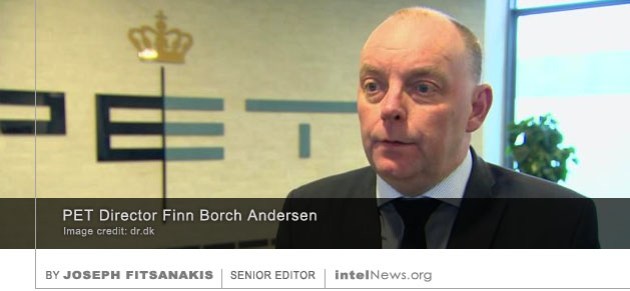 Authorities in Denmark have announced the arrests of three Iranian Arab separatists, who are charged with carrying out espionage on behalf of the intelligence services of Saudi Arabia. The arrests were announced on Monday by the Danish Security and Intelligence Service, known as PET.
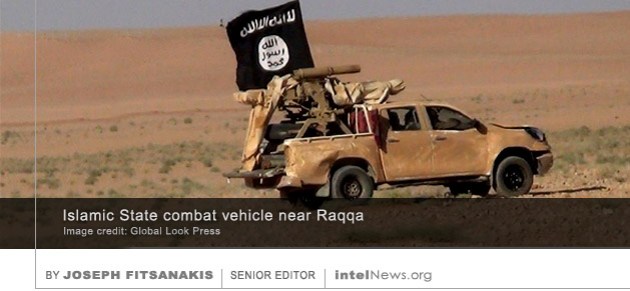 The Islamic State remains committed to its goals and continues to utilize ample funding sources, according to a new report by the United Nations. The report warns that the militant Sunni group, which was previously known as the Islamic State of Iraq and Syria (ISIS), is quickly reasserting itself in the Middle East.
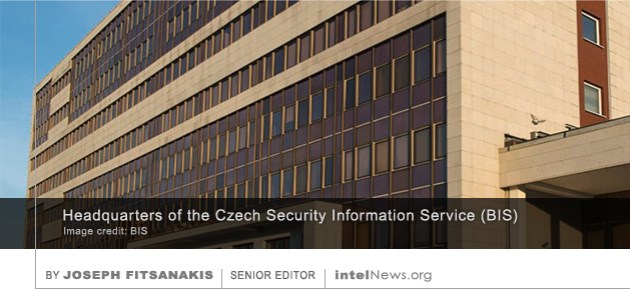 The Czech intelligence services foiled a secret plan by North Korea to smuggle weapons parts and surveillance drones, leading to the expulsion of a North Korean diplomat from the country, according to a report. The report,
 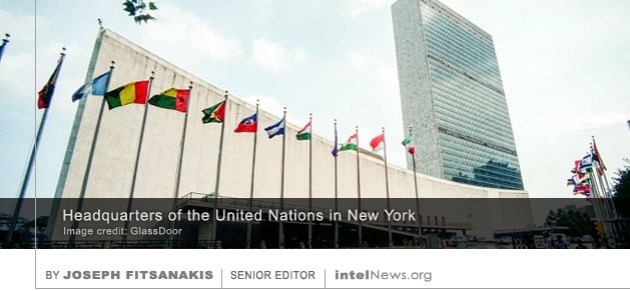 One of the United Nations’ most sensitive computer systems was targeted in a highly sophisticated cyber-espionage operation that appears to have been sponsored by a state, according to a leaked study. The study was leaked to the media earlier this week, and was reported by the Associated Press on Wednesday.
 Russian authorities detained a Japanese journalist last month, and eventually expelled him after accusing him of espionage, according to sources. Even though it occurred last month, the incident was reported only on Monday by Russia’s RIA Novosty news agency.
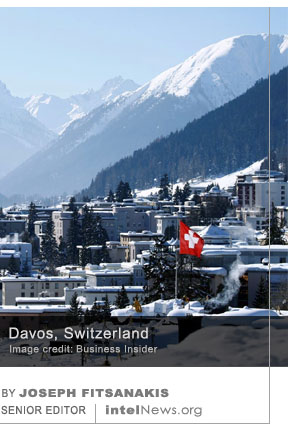 A Swiss newspaper has revealed a previously unreported detention of two Russian diplomats in the luxury Swiss Alpine resort of Davos, which is currently hosting the annual meeting of the World Economic Forum (WEF). The development prompted British authorities to warn some British citizens participating in the WEF meeting that they may be in physical danger.
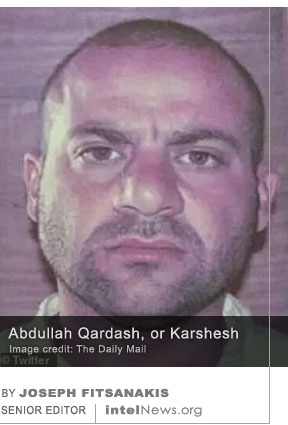 Western intelligence agencies have reportedly confirmed that a non-Arab is now leading the Islamic State for the first time in the organization’s history. Rumors of a new leader of the group began to circulate just hours after American forces
 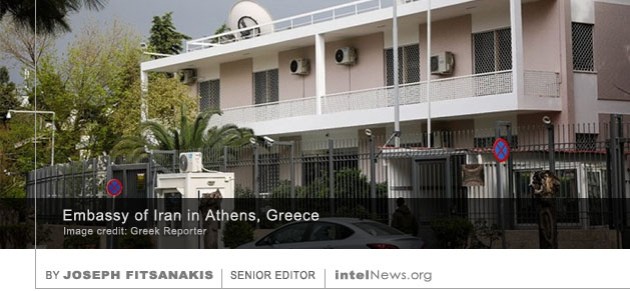 Iran has issued a warning against Greece, saying that it will retaliate if the United States attacks the Islamic Republic using its military bases on Greek soil. It is the first time that Iran has threatened to launch attacks against a member of the European Union in connection with the recent rise in tensions between Tehran and Washington.
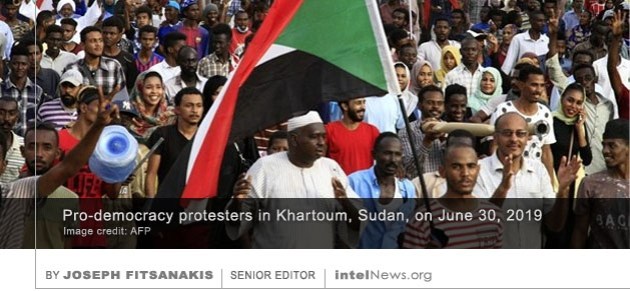 There was chaos in the Sudanese capital Khartoum yesterday, as hundreds of members of Sudan’s intelligence agency staged an armed uprising against the country’s new government. At least five people —including two soldiers— are believed to have died in the uprising, while several dozen intelligence officers were reportedly arrested.
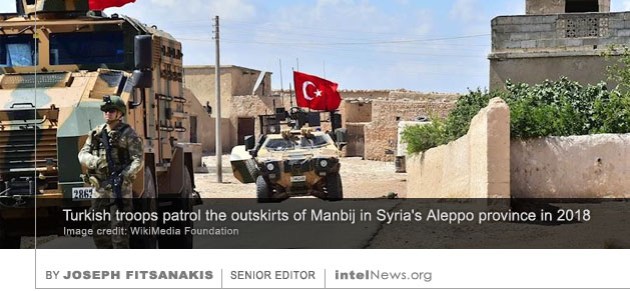 In a move that surprised observers, the intelligence chiefs of Turkey and Syria —two bitter rivals in the ongoing Syrian civil war— met in Russia on Monday. The meeting was held in Moscow and was acknowledged by officials from both sides, making it the first explicit contact between Turkish and Syrian intelligence in over a decade.
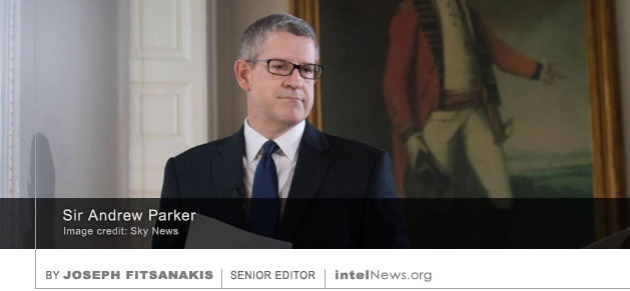 The director of Britain’s domestic intelligence agency has dismissed warnings by the United States that intelligence sharing between the two allies will be impeded if London decides to use Chinese-made telecommunications hardware. The British government has come under relentless pressure by Washington to bar Huawei Technologies, one of the world’s leading telecommunications hardware manufacturers, from competing for contracts to build the United Kingdom’s 5th generation cellular communications infrastructure.








Swiss neutrality ‘shattered’ as leading cryptologic firm revealed to be CIA front
February 17, 2020 2 Comments
The revelation, published last Tuesday by The Washington Post and the German public broadcaster ZDF, confirmed rumors that had been circulating since the early 1980s, that Crypto AG had made a secret deal with the US government. It was believed that the Swiss-based company had allowed the US National Security Agency to read the classified messages of dozens of nations that purchased Crypto AG’s encoding equipment. These rumors were further-substantiated in 2015, when a BBC investigation unearthed evidence of a “gentleman’s agreement”, dating to 1955, between a leading NSA official and Boris Hagelin, the Norwegian-born founder and owner of Crypto AG.
But the reality of this alleged secret pact appears to have been even more controversial. According to last week’s revelations, the CIA and West Germany’s Federal Intelligence Service (BND) secretly purchased the Swiss company and paid off most of its senior executives in order to buy their silence. The secret deal allegedly allowed the US and West Germany to spy on the classified government communications of several of their adversaries —and even allies, including Italy, Spain and Greece, as well as Austria, Jordan, Saudi Arabia and the United Arab Emirates.
What is more, the secret CIA/BND partnership with Crypto AG was known to senior British and Israeli officials, and information derived from it was routinely shared with them. Government officials in Switzerland and even Sweden were aware that Crypto AG had been compromised, but remained silent.
American and German authorities have not commented on the revelations. But the story has monopolized Swiss media headlines for several days. Some news outlets have opined that the traditional Swiss concept of political neutrality has been “shattered”. Meanwhile, a Swiss federal judge has opened an investigation into the revelations, as the Swiss parliament is preparing to launch an official inquiry. Switzerland’s Prime Minister, Simonetta Sommaruga, said on Sunday that the government would discuss the issue “when we have the facts”.
► Author: Joseph Fitsanakis | Date: 17 February 2020 | Permalink
Filed under Expert news and commentary on intelligence, espionage, spies and spying Tagged with BND, Boris Hagelin, CIA, Cold War, Crypto AG, cryptology, Federal Republic of Germany, front companies, history, News, NSA, Operation RUBICON, Switzerland, United States