Hundreds of ISIS fighters returning to Iraq to wage low-level insurgency
July 24, 2019 1 Comment
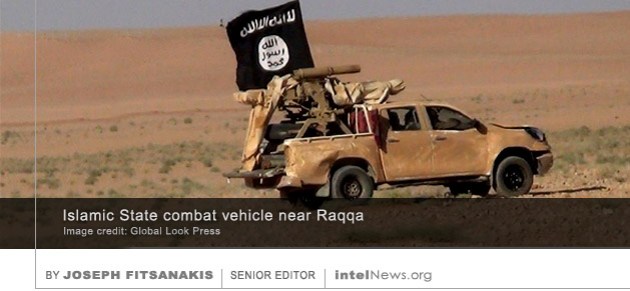 About 1,000 Islamic State fighters have returned to Iraq in recent months and are waging a low-level insurgency that threatens to destabilize rural areas and may be the forerunner of a new sectarian war, an expert has warned. Thousands of fighters belonging to the Islamic State —known also as the Islamic State of Iraq and Syria, or ISIS— crossed into Syria in late 2017. In December of that year, the Iraqi government of Prime Minister Haider al-Abadi declared victory in the war against the militant Sunni group. Since then, however, many of these fighters have been slipping back into Iraq from Syria and are now picking up arms again against the Iraqi state, which they see as being dominated by Iran-allied Shiites.
In an article published on Sunday, The Washington Post cites Hisham al-Hashimi, an Iraqi security advisor to the government in Baghdad, as well as several foreign aid groups, who warns that ISIS is regrouping in Iraq. Al-Hashimi told The Post that approximately 1,000 ISIS fighters are believed to have crossed into Iraq from Syria since December of 2018. Most of them are Iraqi nationals who are essentially returning to the Sunni-majority areas of the country that were considered ISIS strongholds before 2018. Upon their return, the fighters join small ISIS cells that operate mostly in rural areas in central and northern Iraq. They move at night and are intimately familiar with the local terrain, which allows them to utilize effectively a variety of hiding places. These cells can now be found in locations ranging from the city of Kirkuk in the north to the province of Diyala, east of Baghdad. They are responsible for scores of kidnappings, roadside bombings and sniper attacks that target local officials and security personnel. Local observers stress that the re-emerging ISIS cells are too weak to threaten the territorial control of the country by the Iraqi government. However, they are rapidly destabilizing rural areas in the country and appear to be preparing for a protracted insurgency that could potentially lead to another major sectarian war.
The Washington Post report comes a month after a group of researchers with the Institute for the Study of War warned that the Islamic State is capable of making a sudden comeback in the Middle East that could be “faster and even more devastating” than 2014, when the group quickly conquered territory the size of Britain. In a 76-page paper entitled ISIS’s Second Comeback: Assessing the Next ISIS Insurgency, the researchers said that the militant group had managed to subvert Iraqi and Syrian government efforts to reintroduce stability and safety in areas previously under ISIS domination. Not only were government forces finding it “increasingly difficult to establish durable and legitimate security and political structures” in those areas, but they should be worried about the possibility of ISIS actually reconquering territory in both Iraq and Syria, the report warned.
► Author: Joseph Fitsanakis | Date: 24 July 2019 | Permalink
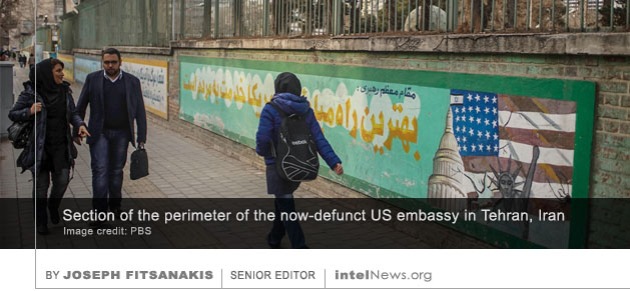 If the announcements from Tehran are to be believed, the United States Central Intelligence Agency lost at least 17 spies in Iran in the months leading up to March 2019. According to Iran’s Ministry of Intelligence, the Islamic Republic busted an alleged “CIA network” operating in sensitive private sector companies and government agencies that relate to defense, aerospace and energy. At least some of the 17 alleged spies have reportedly been sentenced to death, though their exact number remains unknown.
 made to look like rocks, which were located “in parks and other mountainous areas” in Iran and elsewhere in the Middle East, according to Iranian officials. Some of the assets communicated with their handlers while attending science conferences through- out Europe, Africa and Asia.
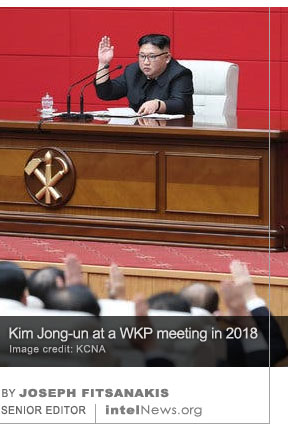 The spy agency of South Korea has dismissed media reports that North Korea had several of its top nuclear negotiators executed or sent to labor camps, but has not rejected rumors of a major reshuffle in Pyongyang. In early June, media reports in Seoul claimed that North Korea had executed at least five of its senior nuclear negotiators and imprisoned several others. Prior to these reports, rumors of executions of North Korean nuclear negotiators had circulated in international diplomatic circles since February, but no specific allegations had surfaced in the news media. That changed when Chosun Ilbo, South Korea’s highest-circulation newspaper, alleged that at least
 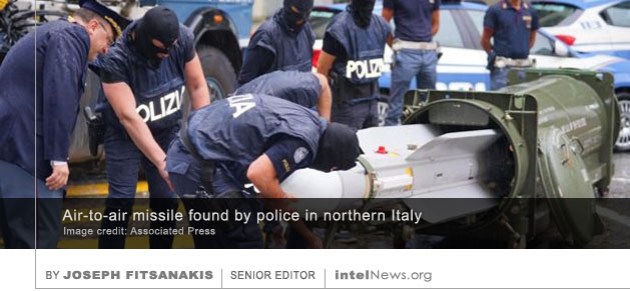 Police in Italy have found an air-to-air missile in “perfect working order” alongside dozens of guns during raids on homes belonging to members of far-right groups. The raids took place in several northern Italian cities and were coordinated by the Digos, a special unit of the Turin Municipal Police that deals with organized crime and terrorism. Aside from Turin, synchronized raids took place in Varese, Novara, Forli and Milan. According to
  A spy novel written by the granddaughter of Kim Philby, the British senior intelligence officer who secretly spied for the Soviet Union, will be published this week.
 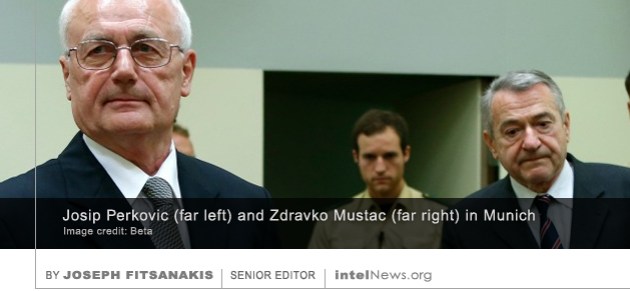 Germany has extradited a former senior official of the Yugoslav intelligence service to Croatia, where he is expected to serve a 30-year prison sentence for organizing the assassination of a dissident in Munich in 1983. Josip Perković is a former senior official in the Yugoslav State Security Service, known as UDBA. In 2014, he was extradited to Germany from Croatia alongside another former UDBA officer Zdravko Mustać. The two men were tried in a German court in the Bavarian capital Munich for organizing the assassination of Stjepan Đureković on July 28, 1983. Đureković’s killing was carried out by UDBA operatives in Wolfratshausen, Bavaria as part of a UDBA operation codenamed DUNAV. Đureković, who was of Croatian nationality, was director of Yugoslavia’s state-owned INA oil company until 1982, when he suddenly defected to West Germany. Upon his arrival in Germany, he was granted political asylum and began associating with Croatian nationalist émigré groups that were active in the country. It was the reason why he was killed by the government of Yugoslavia.
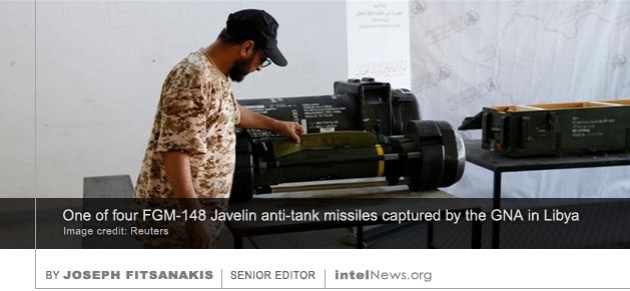 The French government has admitted that four anti-tank missiles found in a Libyan rebel camp belonged to its Special Forces units, but denied accusations that it deliberately breached the United Nations-imposed weapons embargo on Libya. Libya’s UN-recognized government, the Government of National Accord (GNA), which is headed by Fayez al-Sarraj, announced in June that it discovered a cache of FGM-148 Javelin portable anti-tank missiles during a raid on a rebel camp. The camp belonged to forces loyal to Khalifa Haftar, a rogue Libyan warlord who is supported by a group of Western-led nations that includes the United States, France, Israel, Egypt and the United Arab Emirates.
 The Polish government has authorized the release on bail of a former counterintelligence officer who was charged in January of this year with spying for China. The man has been identified in media reports as Piotr Durbajlo and is believed to have served as deputy director of the Internal Security Agency, Poland’s domestic counterintelligence service. A cyber security expert, Durbajlo also served in Poland’s Office of Electronic Communications with a top security clearance and unrestricted access to classified systems of Poland and the North Atlantic Treaty Organization, of which Poland is a member.
 A hacker attack of impressive magnitude targeted specific individuals of interest to the Chinese government as they moved around the world, in what appears to be the first such operation in the history of cyberespionage. The attack was revealed late last month by Cybereason, an American cybersecurity firm based in Boston, Massachusetts. Company experts
  The son of a South Korean former cabinet minister has defected to North Korea, marking a rare instance of a citizen of South Korea switching his allegiance to the North. It is even rarer for such high-profile South Korean citizens to defect to North Korea. The defector is Choe In-guk, son of Choe Deok-sin, who served as South Korea’s minister of foreign affairs in the 1970s under the South Korean dictator Park Chung-hee. Choe was an American-trained army officer who served under United States command in the Korean War. He then served as a member of the cabinet and as South Korea’s ambassador to West Germany.
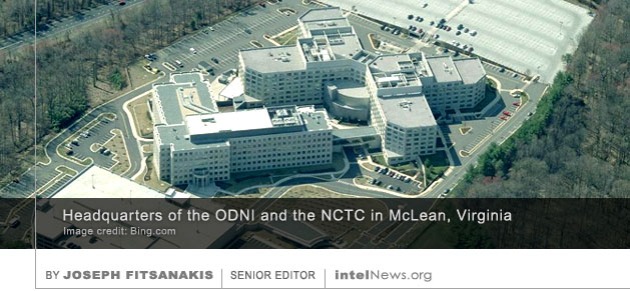 A private management consulting firm that was hired to streamline the United States Intelligence Community’s communication and decision-making process has made these practices worse, according to insiders. The news website Politico, which published the
 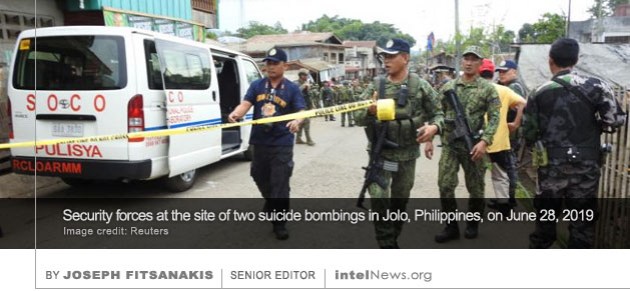 An Islamic State militant who blew himself up in the Philippines last week was probably history’s first-ever Filipino suicide bomber, according to police officials. The man was one of two militants who
  In a rare public appearance, the director of the Mossad spy agency said that the Middle East is witnessing a historic shift of alliances as many Arab states are forming tacit pacts with Israel against Iran and its proxies. Yosef “Yossi” Cohen
 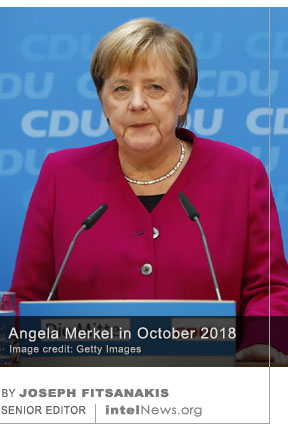 Foreign intelligence agencies are allegedly trying to acquire the medical file of German Chancellor Angela Merkel after she was seen trembling uncontrollably in public twice in as many weeks. Reports about foreign spy interest in Merkel’s health emerged in German and British newspapers last weekend, after the German chancellor was seen trembling during high-level meetings earlier this month. The first incident took place during an official meeting with Ukrainian President Volodymyr Zelensky on June 18. The German Chancellery said Merkel had suffered from dehydration and “felt like herself again after drinking a few cups of water”. But the tremors were back again on June 27 during the German leader’s visit to Japan for the G20 Summit.








‘Sonic attacks’ may have shrunk brains of US diplomats in Cuba, study finds
July 25, 2019 4 Comments
The theory that a sonic weapon caused the diplomats’ ailments is not universally held, with some scientists doubting the validity of such claims. But now a new study may have provided a tangible and measurable link that connects the physiological symptoms suffered by the diplomats. The study, published in the latest issue of the Journal of the American Medical Association,The study, published in the latest issue of the Journal of the American Medical Association, is based on a detailed examination of data from magnetic resonance imaging studies that assessed both structural and functional endpoints of the brains of the victims of the alleged sonic attacks. Scientists at the University of Pennsylvania took these images of the brains of 40 individuals who complained of acute auditory and other sensory disturbances while in Cuba, and compared them with those of healthy participants. The latter were matched with the patients for age, lifestyle and general background. According to the study, the comparison revealed statistically significant differences in various structures of the subjects’ brains. The differences were most pronounced in the white matter of their brains. The white matter is important because it is comprised of the myelin-protected nerve fibers that are responsible for transmitting the electrical signals from one brain cell (neuron) to another. Damage to these regions would result in a reduction of the brain’s ability to process information as rapidly as the brains of non-affected individuals. According to the study, the volume of white matter in the brains of the alleged sonic attack victims was approximately five percent smaller than that in the brains of healthy adults.
One of the scientists behind the study told the British newspaper The Daily Telegraph that his team of researchers have not seen “anything like it before”. But he added that he and his colleagues are “not sure […] what it is”, though “there does appear to be something there”. Another expert told the paper that the findings of the University of Pennsylvania study supported the validity of the symptoms reported by the American diplomats. However, they do not help answer the question of whether they suffered actual brain injuries. A spokesman from the United States Department of State told The Telegraph that the Department is “aware of the study and welcomes the medical community’s discussion of this incredibly complex issue”.
► Author: Joseph Fitsanakis | Date: 25 July 2019 | Permalink
Filed under Expert news and commentary on intelligence, espionage, spies and spying Tagged with biomedical intelligence, Cuba, diplomacy, Havana Syndrome, News, United States, US Department of State, US embassy in Cuba