ISIS could make bigger comeback than 2014 in Iraq and Syria, warns new report
June 27, 2019 1 Comment
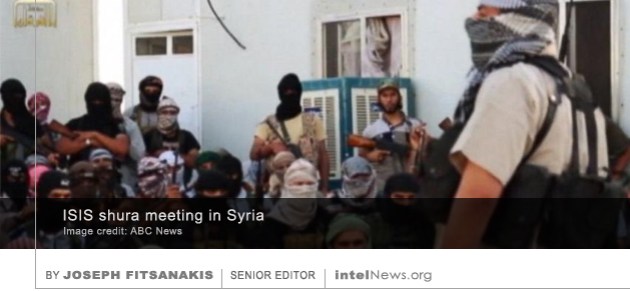 The Islamic State is capable of make a sudden comeback in the Middle East that could be “faster and even more devastating” than 2014, when the group quickly conquered territory the size of Britain, according to a new report from the Institute for the Study of War (ISW). The Washington-based think-tank’s report is based on the most recent data about the presence in the Middle East of the militant Islamist group, which is also known as the Islamic State of Iraq and Syria. The 76-page report (.pdf) is titled ISIS’s Second Comeback: Assessing the Next ISIS Insurgency, and is written by ISW’s researchers Jennifer Cafarella, Brandon Wallace and Jason Zhou.
The authors claim that the Islamic State moved its forces undercover during the multinational military campaign that eventually sacked its self-proclaimed caliphate. They go on to explain that by “deliberately withdrawing and relocating may of its fighters and their families”, the group managed to preserve a large part of its fighting forces, which are “now dispersed across [Iraq and Syria] and are waging a capable insurgency”. The latter is funded through ISIS’ global finance network and armed with weapons and other war materiel that the group managed to hide in tunnel systems and other hidden facilities. Islamic State insurgents have thus been engaged in a broad and largely successful campaign to assassinate village and town elders across Iraq, and have even reestablished a sharia-based taxation system in some of Iraq’s predominantly Sunni areas. The group also retains a significant presence in Syria, where it continues to battle the Syrian regime, US-supported Kurdish forces, and other Sunni militant groups, including al-Qaeda, according to the report.
Through its widening insurgency, the Islamic State has managed to subvert Iraqi and Syrian government efforts to reintroduce a semblance of stability and safety in areas previously conquered by the militant group. In fact, not only are government forces finding it “increasingly difficult to establish durable and legitimate security and political structures” in those areas, but they should be worried about the possibility of ISIS actually reconquering territory in both countries, the report warns. The report’s authors place much of the blame for ISIS’ resurgence at Washington’s door, describing America’s hasty military withdrawal from Iraq and Syria as “a critical mistake”. In its recommendations section, the report calls on the United States to develop and implement a long-term counter-terrorism strategy against ISIS, which will combine military and community-building measures. “Another limited [military] intervention will not be sufficient” to eliminate the threat, the report’s authors claim.
► Author: Joseph Fitsanakis | Date: 27 June 2019 | Permalink
 The younger sister of North Korea’s Supreme Leader Kim Jong-un appears to have been promoted to the number two position in the country’s ruling apparatus, according to a South Korean intelligence assessment. Until recently, Kim Yo-jong (pictured), 30, was Director of the Propaganda and Agitation Department of the ruling Workers’ Party of Korea (WPK). She also served as an alternate member of the Political Bureau, which is the highest decision-making body within the WPK.
 Iranian state media announced on Sunday the arrest of 16 officials in the country’s Ministry of Petroleum, allegedly for sabotaging Iranian energy policy. It is not known whether these arrests are in any way connected with Tehran’s announcement last week that it had dismantled “one of the most complicated” espionage operations by the United States Central Intelligence Agency in several countries. According to the state-owned Fars News Agency, the 16 officials were arrested over the weekend in synchronized pre-dawn raids. All of them had managerial positions in Iran’s oil industry —including in the areas of exploration, production and distribution of Iran’s oil and petrochemical products inside the country as well as abroad.
 It is not at all clear that the Islamic State and its leader, Abu Bakr al-Baghdadi, who claimed responsibility of the Sri Lanka bombings in April, had foreknowledge of the attacks, according to a top official. The militant Sunni group claimed it was behind the nine suicide blasts that targeted Catholic churches and five-star hotels in Sri Lanka’s western and eastern coastal regions on April 21. The near-simultaneous bombings killed 258 people and injured over 500. They are believed to constitute the bloodiest terrorist attack in the country’s history. Interestingly, many questioned the authenticity of the Islamic State’s claim of responsibility, which came a full two days following the deadly blasts. The group typically issues statements immediately following attacks by its followers around the world. The 48-hour delay in the case of the Sri Lanka bombings, therefore, was deemed “uncharacteristic” by some experts.
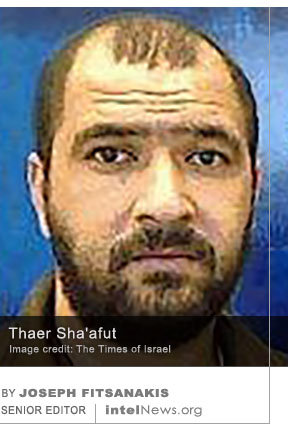 Israeli authorities announced on Thursday the arrest of a deep-cover intelligence operative who allegedly attempted to establish a base for Iranian intelligence in Israel and the West Bank, according to news reports from Israel. Shin Bet, Israel’s domestic security and counterintelligence agency,
  A senior Iranian security official said on Monday that Tehran had dismantled “one of the most complicated” espionage operations by the United States Central Intelligence Agency, leading to “arrests and confessions” of suspects in several countries. The announcement was made by Ali Shamkhani (pictured), secretary of the Supreme National Security Council of Iran, the Islamic Republic’s highest security decision-making body, which is chaired by the country’s president.
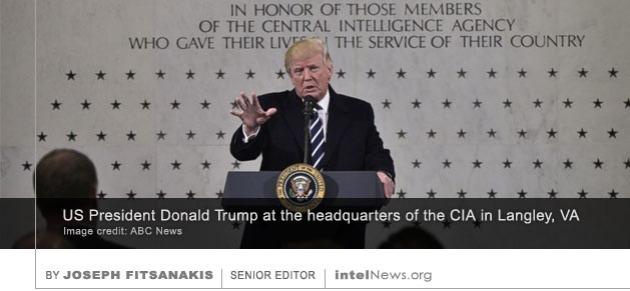 United States President Donald Trump said on Tuesday that he would not allow American intelligence agencies to use spies against North Korea, raising eyebrows in Washington, before appearing to backtrack a day later. The American president was speaking to reporters at the White House on Tuesday, when he was asked about a report that appeared in The Wall Street Journal that day. According to the
  Kim Jong-nam, the half-brother of North Korean leader Kim Jong-un, held regular meetings with American intelligence officers before he was assassinated with VX nerve gas at a busy airport terminal in Malaysia. Two women
 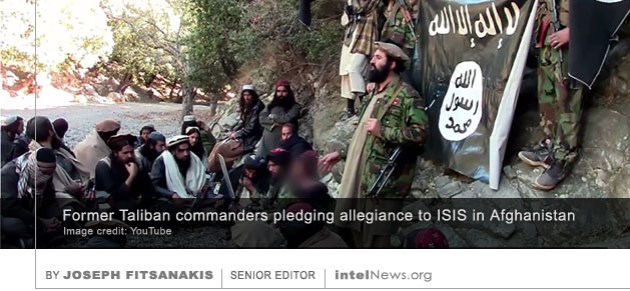 The Islamic State group in Afghanistan is now more threatening than the Taliban to both Afghan and Western interests, according to some experts, who warn that many of its fighters are moving there from the Middle East. It was in late 2014 when the Islamic State, known formerly as the Islamic State of Iraq and Syria (ISIS), made its initial appearance in Afghanistan. Soon an official Islamic State affiliate emerged in Afghanistan, calling itself Islamic State – Khorasan Province. Security observers estimated the group’s strength to below 150 armed fighters, most of them Pakistani Taliban who had sought refuge in Afghanistan, or small cadres of Afghan Taliban who pursued a more globalized Salafist agenda. Aided by the growing worldwide notoriety of its parent organization in Iraq and Syria, the Islamic State – Khorasan Province grew in size in 2015 and 2016. Its armed cadres were joined by Salafist-jihadists from Central Asia and the Indian subcontinent, as well as by radical Muslims from China’s northwestern Xinjiang Province. In 2016, as the Islamic State began retreating in the Middle East, fighters from there gradually began to make their way to Afghanistan, adding to the numerical strength of the organization’s Khorasan Province branch.
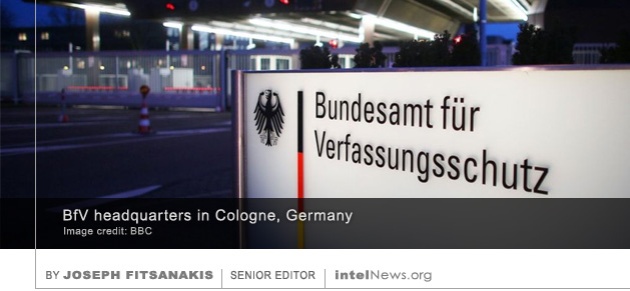 Turkey’s spy agency has developed a smart phone application to enable pro-government Turks living in Germany inform on their compatriots who speak out against the ruling Justice and Development Party (AKP). The existence of the phone application was revealed in the annual report of the Federal Office for the Protection of the Constitution (BfV), Germany’s primary counterintelligence agency. The report covers terrorist and foreign intelligence activity that took place in 2018 in Baden-Württemberg, a state in southwest Germany that borders Switzerland and France. Deutsche Welle, Germany’s state broadcaster, which
  Despite allegations in the French press that China has been spying for years on the internal communications of the African Union, the organization appears to be deepening its ties with a leading Chinese telecommunications firm. The allegations
  Documents that were allegedly leaked by a Cuban intelligence insider show that Cuban spies targeted the Miami International Airport (MIA) and may have acquired MIA internal files, passwords and other sensitive information. The documents were
  North Korea has executed at least five of its senior nuclear negotiators and imprisoned several others, according to a report in a leading South Korean newspaper. Rumors of executions of North Korean nuclear negotiators have circulated in international diplomatic circles since February, but specific allegations have not surfaced in the news media. That changed on Friday, when Chosun Ilbo, South Korea’s highest-circulation newspaper, said that at least five executions of nuclear negotiators took place in Pyongyang in March.
 A military court in Pakistan has sentenced two men to death and one to 14 years in prison for espionage. The alleged spies, who have been named, include a lieutenant general and civilian employee of a security agency. In February, several Pakistani news outlets








Western spies used ‘crown jewel’ of espionage tools to hack into Russia’s Google
June 28, 2019 Leave a comment
On Thursday, Reuters cited “four people with knowledge on the matter […] in Russia and elsewhere”, who said that Yandex was targeted by a sophisticated hacking operation between October and November of 2018. The news agency said that three of its sources had direct knowledge of the details of the cyber-espionage operation against Yandex. According to the unnamed sources, the hackers appeared to be primarily interested in breaching the accounts of specific employees in Yandex’s research and development unit. Their purpose was to acquire technical information about how Yandex authenticates user accounts. That information could potentially enable them to impersonate Yandex users and access private information, including email messages, geolocation information, and other sensitive private data. Reuters said that the hackers attempted to breach Yandex for purposes of espionage, not sabotage or disruption, or stealing intellectual property for commercial purposes.
Moreover, the hackers used Regin, a highly sophisticated malware that a technical expert from the Symantec Corporation described as “the crown jewel of attack frameworks used for espionage”. Regin was identified as a malware employed by intelligence services of the so-called Five Eyes intelligence alliance between spy agencies of the United Kingdom, Canada, New Zealand, Australia and the United States. It was identified as a Western cyber-espionage tool in 2014, based on revelations made by Edward Snowden, the American former employee of the National Security Agency and the Central Intelligence Agency who defected to Russia. The same malware was used in 2013 to access about a dozen mainframe computers of Belgacom, Belgium’s largest telecommunications service provider, which is partly state-owned. The attack was widely attributed to a consortium of Western intelligence services led by the NSA.
According to Reuters, the hackers were able to penetrate Yandex’s networks for several weeks or longer, without being noticed by the company’s cyber-security monitors. When the penetration was detected, Yandex hired a cyber-security team from the Russian anti-virus firm Kaspersky. The Kaspersky team identified Regin and, according to Reuters, concluded that the hackers behind the cyber-espionage operation were tied to Western intelligence agencies. Kaspersky, the Russian government, and intelligence agencies from the Five Eyes alliance declined requests by Reuters to comment on the story. Yandex confirmed the cyber-espionage attack in a statement to Reuters, but said that its cyber-security experts had been able to detect and “fully neutralize [it] before any damage was done”. Consequently, said Yandex, “no user data was compromised in the attack”.
► Author: Joseph Fitsanakis | Date: 28 June 2019 | Permalink
Filed under Expert news and commentary on intelligence, espionage, spies and spying Tagged with cyber security, cyberespionage, Kaspersky Lab, News, Regin, Russia, Yandex