Pakistan’s ex-spy chief stripped of army pension for writing controversial book
February 25, 2019 1 Comment
 The former director of Pakistan’s powerful intelligence agency has been stripped of his military pension and associated benefits for co-authoring a controversial book about intelligence with his Indian counterpart. Lieutenant General Asad Durrani (ret.) served as director-general of Pakistan’s Directorate for Military Intelligence between 1988 and 1989. From 1990 to 1992 he was director of the Inter-Services Intelligence Directorate, which is arguably Pakistan’s most powerful government institution. Durrani, 78, has been severely criticized in some Pakistani nationalist circles for co-authoring a book entitled The Spy Chronicles: RAW, ISI and the Illusion of Peace, with his Indian counterpart, A.S. Daulat. Daulat, 79, headed India’s Research and Analysis Wing from 1999 to 2000.
The book was edited by the widely respected Indian journalist Aditya Sinha. It contains details about Pakistan’s systematic efforts to foment armed unrest in the heavily Muslim Indian state of Kashmir, for instance by funding and training a host of Islamist paramilitary organizations that operate in the disputed region. The book also claims that the Pakistani government was aware of the whereabouts of Osama bin Laden in 2011, and that it worked closely with the United States to kill the co-founder of al-Qaeda. Islamabad has consistently denied allegations that it knew of bin Laden’s hideout in the city of Abbottabad, and that it gave permission to US Special Forces troops to raid his compound.
Last Friday, Pakistan Army spokesman Major General Asif Ghafoor announced that a military court had found Durrani guilty of having violated the military code of conduct of the Pakistan Armed Forces. Consequently, he said, the retired general would be stripped of his Army pension and all associated benefits. The military court had conferred behind closed doors, said Ghafoor, adding that he was unable to provide further details on the case. Meanwhile, the Islamabad High Court announced on Thursday that it rejected a plea by Durrani’s lawyers to have his name removed from Pakistan’s Exit Control List. The list contains names of individuals who are prohibited from leaving Pakistan for reasons relating to corruption, economic crime, as well as terrorism and drug-related activity, among other violations. Durrani was placed on that list in March of last year, shortly after his controversial book was published in India.
During the same press briefing on Friday, Ghafoor also said that two Pakistani military officers had been placed in custody facing espionage charges. The Pakistan Army spokesman gave no information about the officers’ names or the countries for which they allegedly spied for.
► Author: Joseph Fitsanakis | Date: 25 February 2019 | Permalink
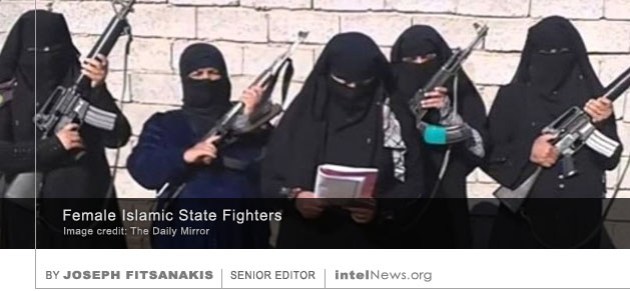 The role of women inside the Islamic State is growing, as the Sunni militant group is transmuting into an underground organization, according to a Harvard University terrorism expert. Since its meteoric rise in Iraq and Syria, the Islamic State has been known for advocating for strict segregation between men and women. In the early stages of the group’s emergence, combat roles were exclusively performed by men, while women’s roles were limited to childbearing and housework. But according to Vera Mironova, Visiting Scholar in the Economics Department at Harvard University, and former Associate of the International Security Program at Harvard’s Belfer Center, the Islamic State’s policy on gender roles is shifting rapidly.
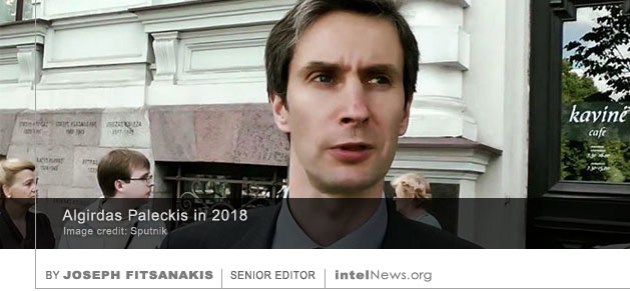 A growing number of individuals are in custody in Lithuania, as the Baltic state continues a probe into an alleged Russian espionage ring whose members reportedly included a former diplomat and member of one of the country’s most revered political families. On Tuesday, government prosecutors
  A senior counterintelligence official in Belgium’s external intelligence service is under house arrest on suspicion of sharing classified documents with Russian spies, according to a Belgian newspaper. Additionally, the chief of the agency’s counterintelligence directorate has been barred from his office while an internal investigation is underway on allegations that he illegally destroyed government documents. These allegations surfaced last Thursday in a leading article in De Morgen, a Flemish-language daily based in Brussels.
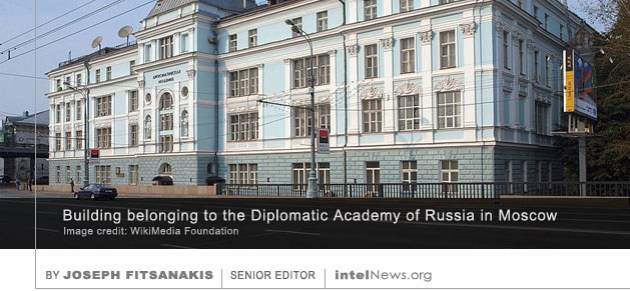 An investigative website has linked a graduate of an elite intelligence academy in Moscow with the attempted assassination of a Russian former double spy in Britain last year. Reports last year identified Dr. Alexander Yevgenyevich Mishkin (cover name ‘Alexander Petrov’) and Colonel Anatoliy Chepiga (cover name ‘Ruslan Boshirov’) as the two men that tried to kill Sergei Skripal in the English town of Salisbury in March 2018. Skripal, a former officer in Russia’s military intelligence service, the GRU, was resettled in Salisbury in 2010, after spending several years in a Russian prison for spying on behalf of Britain. But he and his daughter Yulia almost died last March, after they were
 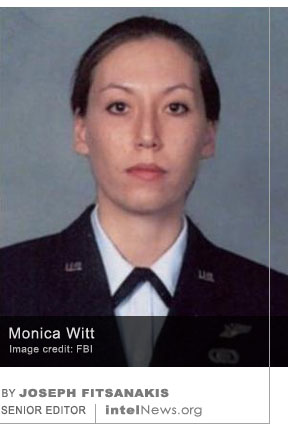 An American intelligence officer, who held the highest level of security clearance for over a decade, defected to Iran in 2012 and has been spying against the United States ever since, it was revealed yesterday. Monica Witt, 39, was a counterintelligence officer for the United States Air Force from 1997 until 2008, specializing in the Middle East. Throughout her career, she was deployed by the US military to the Middle East on several occasions, in order to carry out counterintelligence missions the details of which remain classified to this day.
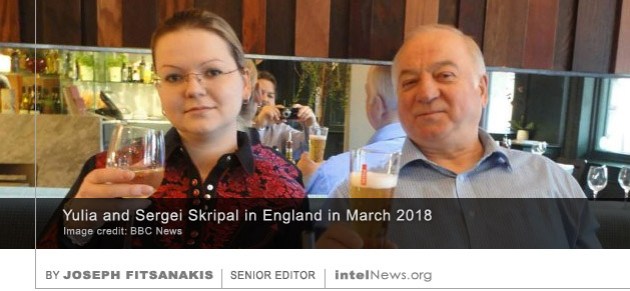 New reports from Russian investigative sites claim that a third man using a fake name was involved in the attempted assassination of former double spy Sergei Skripal in England last year. Skripal, a former military intelligence officer, was resettled in the English town of Salisbury in 2010, after spending several years in a Russian prison for spying on behalf of Britain. But he and his daughter Yulia almost died in March 2018, after they were
 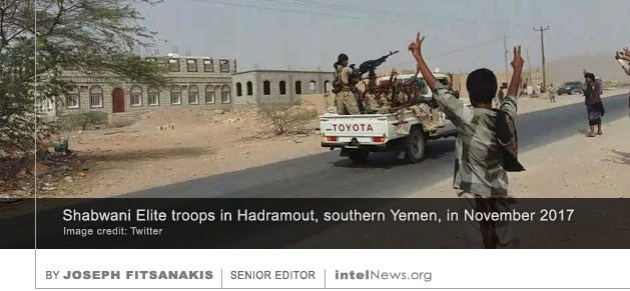 Weapons supplied to the Saudi and Emirati governments by the United States and other Western nations are ending up in the hands of al-Qaeda-linked Sunni militias in Yemen, according to two separate investigations. The weapons are being supplied to the militaries of Saudi Arabia and the United Arab Emirates by the West on the understanding that they will be used in the war in Yemen. The war has been going on since 2015, when a alliance of rebel groups from Yemen’s Shiite communities formed the Houthi movement, which quickly seized control of much of the country. The Houthis effectively toppled the government, prompting a reaction by a coalition of Sunni Arab states, which see the Shiite movement as an Iranian front. In an effort to restore Yemen’s Sunni-dominated government, Western countries have supplied Saudi Arabia and the United Arab Emirates with more than $5 billion-worth of weaponry.
 The government of Israel has increased to 90 years the period during which documents belonging to intelligence and security agencies can remain secret, extending it by 20 years. Until last month, government documents produced by Israeli spy agencies, such as its external spy organization, the Mossad, or its domestic security agency, the Shin Bet, could remain hidden from public view for up to 70 years. Last year, however, the administration of Prime Minister Benjamin Netanyahu commissioned a study into the possibility of extending the classification period for such documents. Israel’s Supreme Council of Archives, a body within the Israel State Archives that advises the Office of the Prime Minister on matters of classification, recommended against extending the classification period by more than five years.
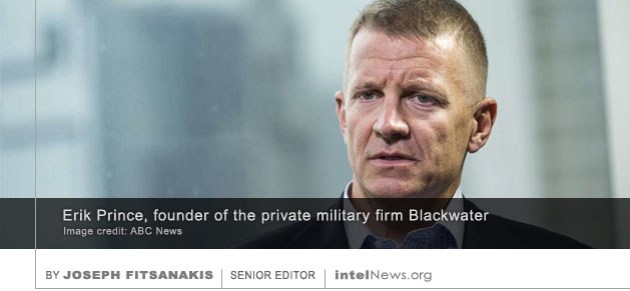 A security firm founded by Erik Prince, the former boss of the private military company Blackwater, has announced a deal with the Chinese state to operate a training facility in China’s largely Muslim Xinjiang province. In the months following the United States invasion of Iraq, Blackwater was hired by the Department of State to provide diplomatic security at several locations throughout the Middle Eastern country. By 2010, when the company was abruptly sold to a group of private investors, its tactics in Iraq had prompted international controversy. Prince went on to help found Frontier Services Group (FSG), another private security firm registered in Hong Kong. The company provides security training to personnel working for Chinese companies. Its specialization is training personnel of Chinese firms based abroad, mainly in regions of Africa.
 Media reports in Pakistan claimed yesterday that “an international spying network” had been dismantled in the country following the arrests of at least five intelligence officials who were working for foreign interests.
  Morton Sobell, an American radar engineer who in 1951 was convicted of conspiracy alongside Julius and Ethel Rosenberg in one of the Cold War’s most prominent espionage cases, has died at 101 years old. His death was
 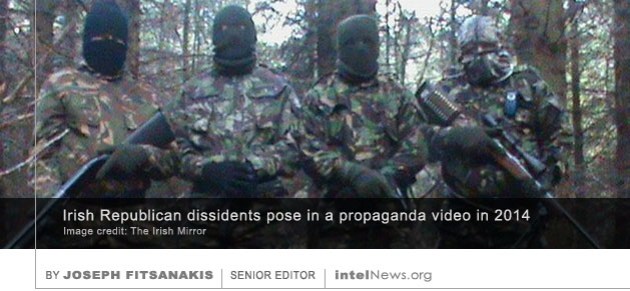 The British Security Service (MI5) has over 700 officers —more than 20 percent of its entire force— stationed in Northern Ireland, due to fears that the Brexit process might reignite the centuries-long sectarian conflict there. In 1922, nationalist rebels managed to dislodge Ireland from the British Empire. But six counties in Ireland’s north remained under British dominion, and today form the British territory of Northern Ireland. Irish nationalists have for decades engaged in an unsuccessful campaign —at times peaceful and at times violent— to unite these counties with the Republic of Ireland. Following the Good Friday Agreement of 1998, nationalist and British loyalist groups in Northern Ireland terminated their armed operations and entered the political arena, effectively sharing power in the British territory. The integration of Ireland and Britain into the European Union helped in that process by effectively bringing to an end border checks between the two countries. Thus, pro-British loyalists continued to live under British rule, while nationalists have been able to cross from Northern Ireland to the Irish Republic and back without restrictions, as if the two states were effectively unified.
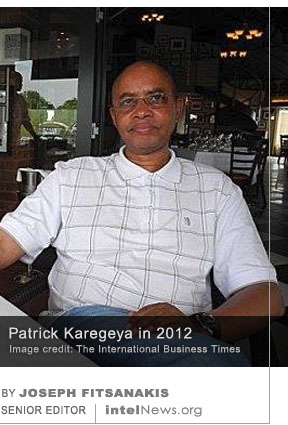 A public inquest into the 2014 killing of a Rwandan dissident and former spy chief, who had been given political asylum in South Africa, has unearthed evidence showing that South African authorities believed the killers had close links to the government of Rwanda. It also appears that the South Africans chose not to prosecute the killers in order to protect their diplomatic ties with the Rwandan government. Patrick Karegeya was a leading member of the Rwandan Patriotic Army (RPA), the armed wing of the Rwandan Patriotic Front (RPF), which was founded in 1987 in Uganda by Rwandan Tutsi refugees. In 1994, the RPA, led by Paul Kagame, took control of Rwanda, thus putting an end to the genocide of up to a million Tutsis and moderate Hutus. Soon afterwards Karegeya was named Director General of External Intelligence in the RPA, which was renamed to Rwandan Defense Forces.








Destabilization fears grow as hundreds of armed ISIS fighters enter Iraq from Syria
February 26, 2019 Leave a comment
Many or the militant Sunni group’s fighters, however, have managed to slip past the American-led coalition’s offensive lines and are now making their way across the border into Iraq’s Sunni-majority northwestern provinces. To prevent this, the Shiite-led Iraqi army has reportedly deployed more than 20,000 soldiers across the 370-mile border with Syria. But the size of the border, as well as the region’s rugged and inhospitable terrain, are making it very difficult to police it. A major surrounded published by the Associated Press late last week claims that hundreds of Islamic State fighters are slipping across the border into Iraq at night, or using tunnels that were constructed by the Islamic State in 2013 and 2014. Others are making their way into Iraq disguised as women or local farmers. Most are armed, says the Associated Press, or know where to go to dig up weapons caches and money, which the Islamic State buried as it retreated into Syria last year under concerted attacks by the Iraqi army.
The Associated Press report quotes three Iraqi intelligence officials and a United States military official, who say that more than 1,000 ISIS fighters entered Iraq from Syria since last September. Iraqi intelligence sources allegedly estimate that between 5,000 and 7,000 armed ISIS fighters are now present in Iraq. Many of them remain in hiding, but others are engaged in systematic efforts to revitalize the group’s presence in Iraq’s Sunni-majority provinces. This was confirmed in a recent press briefing by a senior Iraqi Army spokesman, Brigadier General Yahya Rasoul, who warned that “ISIS is trying to assert itself in Iraq, because of the pressure it is under in Syria”. At least nine major ISIS attacks were recorded in Iraq in January, and several have taken place in February, including the recent killing of five fishermen in Najaf Province, which prompted officials to warn that ISIS may be making a comeback in the region. Iraqi intelligence officials told the Associated Press that the attacks are aimed at warning locals not to share intelligence with the Iraqi military, and to “restore the extortion rackets that financed the group’s rise to power six years ago”.
► Author: Joseph Fitsanakis | Date: 26 February 2019 | Permalink
Filed under Expert news and commentary on intelligence, espionage, spies and spying Tagged with Iraq, Islamic State, News, Syria