Hamas drone expert shot dead in Tunisia by assailants using gun silencers
December 19, 2016 Leave a comment
 A senior aviation engineer who headed the unmanned aerial vehicle program of the Palestinian militant group Hamas, has been shot dead outside his home in Tunisia by a group of assailants using gun silencers. Mohamed Zaouari, 49, was a Tunisian national who had spent over a decade creating an innovative aerial drone program for Hamas, the Palestinian group that today controls the Gaza Strip. He had lived outside of Tunisia for much of his life, most recently in Syria, where he is believed to have worked as an engineer in a private firm, while also consulting with the Palestinian group. He had returned to Tunisia in 2011, following the upheaval in the country that sparked the so-called Arab Spring.
Zaouari was reportedly shot on Thursday in his hometown of Sfax, Tunisia’s second-largest city, located 170 miles southeast of the capital Tunis. Local media said he was shot dead at the wheel of his car, which was parked outside his home. His body was riddled with over 20 bullets, according to a police statement. On Friday, Tunisia’s Deputy Prosecutor General, Mourad Turki, said during a radio interview that several people are believed to have participated in Zaouari’s killing. Eight people had been arrested in connection with the crime, while at least two others were still at large, said Turki. All ten are believed to be Tunisian citizens. Among them is a woman, claiming to be a journalist, who has reportedly interviewed Zaouari in the past. She was allegedly arrested as she was boarding a flight from the Tunis-Carthage International Airport to the Hungarian capital Budapest. Additionally, officials from Tunisia’s Interior Ministry said that four rental vehicles had been seized in connection with Zaouari’s killing, and that two weapons equipped with silencers had been found in one of the vehicles.
A statement issued on Saturday by the Qassam Brigades, the armed wing of Hamas, said Zaouari had been a part of Hamas for a decade, and blamed his killing on the Mossad, Israel’s external intelligence agency. Hamas leaders said that Zaouari’s contribution to the organization would be celebrated during a specially designated “day of mourning”, and that his killing would be avenged. “The enemy must know the blood of the leader Zaouari will not go in vain”, said a statement issued by Hamas on Saturday. Israel has not responded to Hamas’ accusations. Tzachi Hanegbi, the Minister in the Prime Minister’s Office in charge of National Security and Foreign Affairs, said late on Saturday that Israel was “not connected” with Zaouari’s killing and added that “none of those people arrested are our allies”.
► Author: Joseph Fitsanakis | Date: 19 December 2016 | Permalink
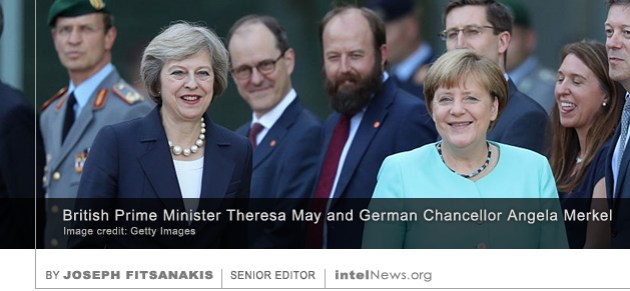 A reported discord between British and German intelligence services, which began in 2014, allegedly persists and now constitutes the “biggest rift between [the] secret services” of the two countries “since World War II”. According to British newspaper The Daily Mail, the Germans accuse Britain of working with the United States to spy on Berlin, while the British government says German intelligence agencies cannot be trusted to safeguard classified information. In an
 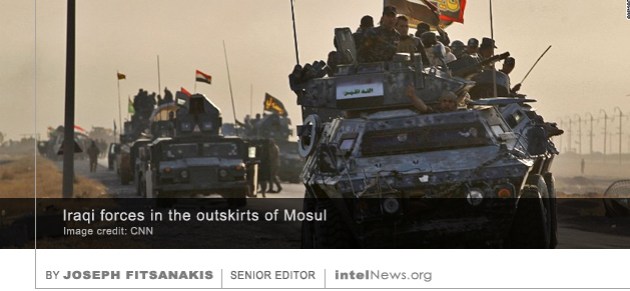 Western military and intelligence agencies are deploying extra analysts to comb through unprecedented amounts of digital data collected from Iraqi regions that have recently been recaptured from the Islamic State. The information is contained in thousands of laptops, hard drives, flash drives and cell phones left behind by retreating Islamic State forces in and around the northern Iraqi city of Mosul.
 No person familiar with the theory and practice of intelligence will be shocked by allegations that Russia interfered in the recent American presidential election. On the contrary, the claim will strike experienced observers as a textbook case of covert operation —an intelligence activity designed to influence foreign political, military or economic developments. Far from being physically violent, most covert operations involve actions like secretly funding political parties, planting misinformation or propaganda in foreign media outlets and —in more extreme cases— bribing or extorting key political actors. During the Cold War, hardly a national election took place without attracting the
  in last month’s US election. Indeed, the opposite would be strange.
 candidates. This was about the reputation of the American electoral process. In fact, the primary goal of Russia’s involvement in the US election —which, again, must be presumed— was not to empower a particular candidate, but to weaken the reputation of American political institutions as a whole. Those who claim that the Kremlin tried to promote Trump because the Republican candidate appears to be more favorably disposed toward Russia are wrong. They misunderstand the complex nature of Russian-American relations and underestimate Russian strategy. Moscow understands that its bilateral relationship with Washington rests on a set of longstanding geopolitical variables and does not depend on ephemeral personal relations between individual leaders. Furthermore, the Kremlin views Trump as an inherently unpredictable actor that is not to be trusted. The Russian plan, therefore, was not to help elect Trump. Rather, it was to sow mistrust between American –and by extension Western– civil society and its political institutions. Given the challenges currently being faced by European and American democracy, that is not a far-fetched goal.
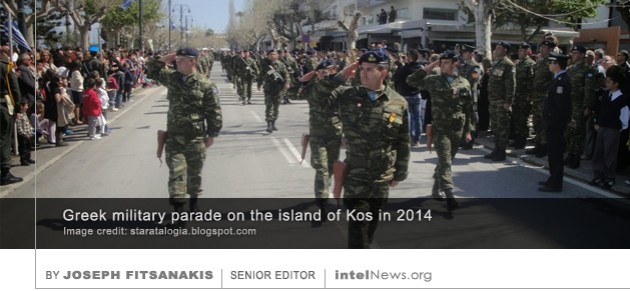 A German retiree living in Greece, who admitted in court that he was part of a network of German and other Western European residents of Greece recruited as spies by Turkish intelligence, has been jailed for 14 years. The 65-year-old man, who has not been named, was arrested two years ago in the southeastern Aegean island of Kos. He was born in Cold-War-era East Germany and worked as a locksmith before serving for 15 years in the East German National People’s Army. From 2009 to 2012, he lived in Turkey before moving permanently to Greece.
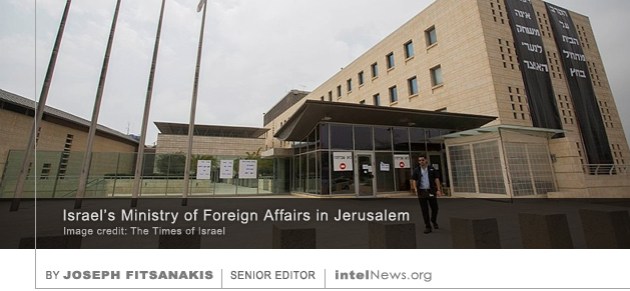 Documents accessed by a French newspaper show that American and British intelligence agencies worked together to spy on diplomats, academic researchers and defense contractors in Israel and the Palestinian territories. Last year, the German newsmagazine Der Spiegel and the American newspaper The Wall Street Journal
 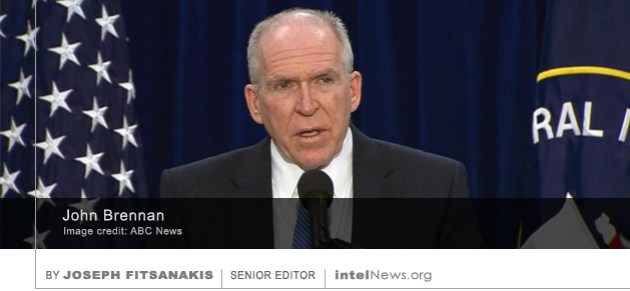 The outgoing director of the United States Central Intelligence Agency has warned in an interview that it would be “disastrous” for Washington to abandon a nuclear treaty with Iran, which was agreed in 2015. John Brennan is a career intelligence officer and fluent Arabic speaker, who has served in the CIA for 25 years. He was appointed director of the agency in March of 2013 by President Barack Obama and is scheduled to leave the position in January of 2017, after nearly four years at the helm of the CIA.
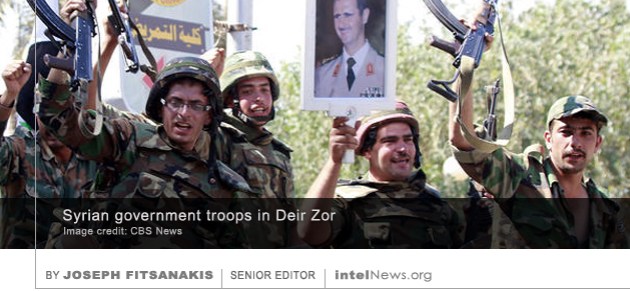 Ever since 2011, when the Syrian Civil War erupted, Turkey has refrained from directly intervening in the conflict, other than to provide material support to opponents of Syrian President Bashar al-Assad. The hope in Ankara was that Islamist and pro-Assad forces would exhaust each other. There is no evidence that Turkey was at any point seriously alarmed about the rise of Sunni militancy in Syria. Instead, the Turkish government of President Recep Tayyip Erdoğan made no secret of its primary concern, which was the rise of Kurdish nationalism in northern Syria.
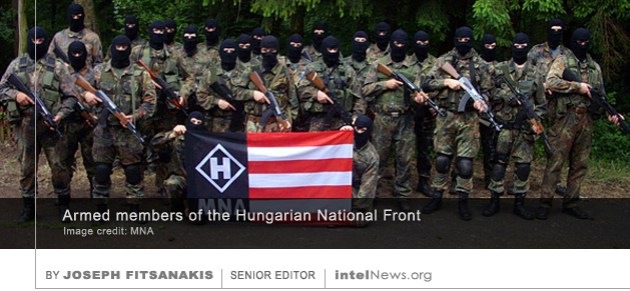 Media in Hungary have accused the Russian government of funding and training one of Hungary’s most notorious far-right organizations. The Hungarian National Front (MNA) was founded in 1989 as the Hungarian National Socialist Action Group. After the end of communism in Hungary, the organization began to espouse an openly neo-Nazi ideology, led by its leader, István Győrkös, a self-styled unreconstructed fascist. Győrkös, who idolizes Hungary’s wartime anti-Semitic Arrow Cross movement, set up links with similar groups in Central and Southern Europe. He served several prison terms in the 1990s for illegally possessing weapons and explosives and openly espousing pro-Nazi ideas. On November 6, Győrkös was taken to custody after opening fire against officers from the National Bureau of Investigation, who tried to enter his house to search for weapons. One officer
  Coordinated efforts by Anglo-American military and intelligence agencies have resulted in the killing or capturing of nearly every senior commander of the Islamic State’s online force. The close-knit group of Islamic State hackers and online propagandists, which are informally known as “the Legion”, is responsible for hacking and online recruitment incidents that led to several lone-wolf attacks in the West. In one incident in March of 2015, the Legion claimed responsibility for the unauthorized release of personal details of over 1,300 American government employees, with orders to Islamic State volunteers to kill them. In other instances, Legion operatives reached out to impressionable young men and women in Western Europe and the United States and convinced them to move to Syria or conduct attacks at home.
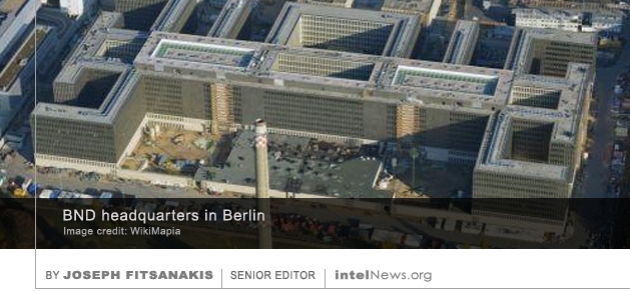 A former employee of Germany’s spy agency, who was recalled from his post abroad after dating a foreign woman, has lost his legal battle to be compensated for lost earnings. The former intelligence officer, who has not been identified by name, worked for Germany’s Federal Intelligence Service, known by its initials, BND. From 2006 to 2008, he served as the BND’s station chief in Riga, Latvia. The post implies that he the highest-ranking German intelligence officer in the small Baltic state. According to court documents, the BND station chief had explicit directions from his employer, in writing, not to fraternize with locals while serving in the Latvian capital. The instructions expressly forbade romantic affiliations with locals.
 A Chinese diplomat, who made international news headlines in 2005 when he defected to Australia, has ended a decade of silence to warn about an alleged increase in Chinese espionage operations against his adopted country. Chen Yonglin was a seasoned member of the Chinese diplomatic corps in 2001, when he was posted as a political affairs consul at the Chinese consulate in Sydney, Australia. His job was to keep tabs on the Chinese expatriate community in Australia, with an emphasis on individuals and organizations deemed subversive by Beijing. He later revealed that his main preoccupation was targeting members of the Falun Gong spiritual movement, which is illegal in China. He also targeted supporters of Taiwanese independence, as well as Tibetan and East Turkestan nationalists who were active on Australian soil.
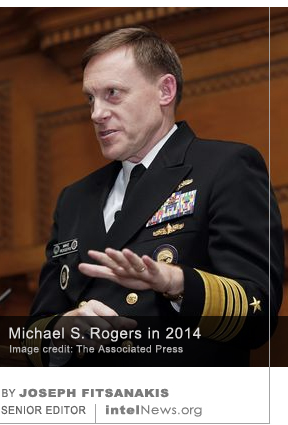 The director of the United States National Security Agency has taken the unprecedented step of entering talks with president-elect Donald Trump, amidst reports that President Barack Obama may fire him. Admiral Michael S. Rogers, 57, a US Navy cryptologist with a military career that spans over three decades, has been at the helm of the NSA since April of 2014. Last weekend, however, The Washington Post
 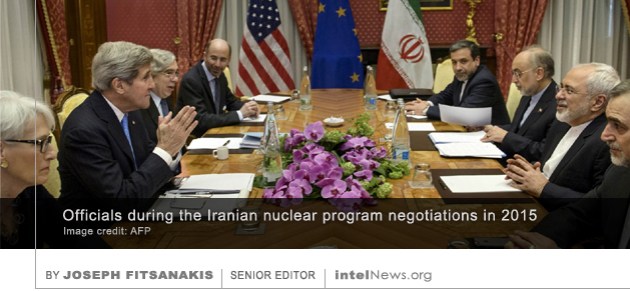 Iranian authorities have reportedly arrested at least 12 members of the country’s team of nuclear negotiators on charges of espionage. The 12 are believed to have represented Iran in international talks about its nuclear program between the Islamic Republic and a group of nations known as P5+1, representing the five permanent members of the United Nations Security Council plus Germany.








Mossad identified Hamas drone expert as principal target ‘years ago’: expert
December 20, 2016 Leave a comment
Writing for the Israeli newspaper Yedioth Ahronoth, the veteran security correspondent Ronen Bergman said on Monday that Israeli spies had identified Zaouari “years ago” as a potential target. Bergman claims that Israeli intelligence agencies monitored Zaouari “as soon as he left Tunisia for [the Syrian capital] Damascus” over a decade ago. Eventually, the Israelis began to see Zaouari as a major contributor to efforts by Hamas and the Lebanese Shiite group Hezbollah to develop unmanned aerial vehicle programs. Through constant surveillance, Israeli intelligence was able to confirm that Zaouari was in regular contact with other Palestinian and Lebanese technical experts. The latter allegedly included Hassan Lakkis, a leading Hezbollah commander, who was one of the Shiite militant group’s primary weapons procurer and developer. Lakkis was killed on the evening of December 3, 2013, outside his home in Beirut, in circumstances that appear to be similar to last week’s killing of Zaouari in Tunisia.
Bergman argues that, if Israeli intelligence was indeed behind Zaouari’s killing, he was targeted because he was seen “as an increasingly dangerous element” and the Israelis believed that his death would cause Hamas “considerable damage”. The decision to target him in a distant location like Tunisia bore considerable risk, says Bergman, given that Zaouari was almost certainly aware that he was under threat from rival intelligence agencies and was taking precautions. Additionally, as the Mossad found out in the aftermath of the killing of Mahmoud al-Mabhouh in Dubai in 2010, the world is now “filled with cameras and biometric systems” that make covert operations dangerous. Consequently, these types of high-risk operations are reserved for principal targets whose removal will subtract strategic abilities from Israel’s adversaries. Bergman notes that, if Zaouari was killed by Israeli operatives, his death will mark one of the first major operations by the Mossad under the new leadership of Yossi Cohen, who was appointed as head of the secretive agency a year ago.
► Author: Joseph Fitsanakis | Date: 20 December 2016 | Permalink
Filed under Expert news and commentary on intelligence, espionage, spies and spying Tagged with assassinations, Hamas, Hassan Lakkis, Israel, Mohamed Zaouari, Mossad, News, Ronen Bergman, Tunisia, unmanned aerial vehicles