UK may stop intelligence sharing with the US if Trump brings back torture
January 26, 2017 3 Comments
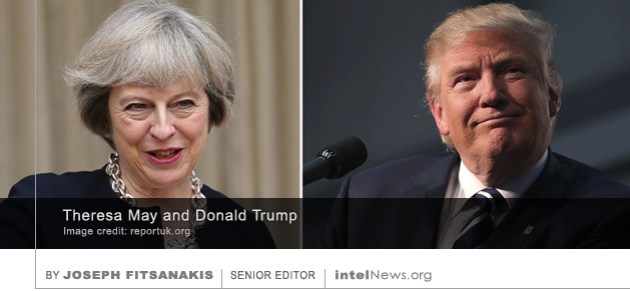 The British government may limit or end intelligence cooperation with the United States, if Washington revives its post-9/11 torture program, according to reports. On Wednesday, US President Donald Trump said he had asked “people at the highest level of intelligence […], does torture work?” and had received the answer “yes, absolutely”. He added that he was considering reviving some of the torture techniques that were used in the “war on terrorism”, including waterboarding and, in his words, “a hell of a lot worse”.
But on Thursday, the British Prime Minister Theresa May warned that her government might be forced to reexamine its intelligence-sharing relationship with Washington, if the US reinstituted torture as a method of interrogation. Speaking to journalists during a flight to the US to meet President Trump, the British prime minister stressed that the United Kingdom “absolutely condemn[ed] the use of torture” and that she would deliver that message to her American counterpart. According to British law, government officials and intelligence personnel are forbidden from sharing intelligence with countries that are known to employ torture against detainees. They are also not allowed to use intelligence gathered by other countries through the use of torture.
Thursday’s comments by Theresa May point to a potentially serious rift between American and British, as well as European intelligence agencies, whose attitudes toward so-called ‘enhanced interrogation’ differ widely from those of President Trump. British newspaper The Daily Mail quoted Matt Tait, a former information security specialist for Government Communications Headquarters, Britain’s signals intelligence agency, who warned of a potential split between British and American spy agencies. If Trump reinstituted torture as a form of interrogation, it would mean that the United States Intelligence Community would “intentionally engage in war crimes”, said Tait. That would “make it impossible” for the UK to cooperate with the US “across a range of intelligence programs”, he added.
► Author: Joseph Fitsanakis | Date: 27 January 2017 | Permalink
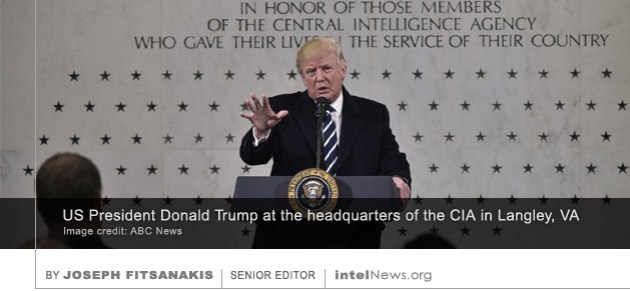 Officials at the United States Central Intelligence Agency have questioned whether it is safe for them to reveal the sources of their information about Russia to America’s new President, Donald Trump, according to a report. The implication is that some at the CIA are concerned that Trump’s allegedly close ties with Russian officials may put CIA operations officers in danger. The information was shared on Monday by Mary Louise Kelly, national security correspondent for National Public Radio (NPR). She
 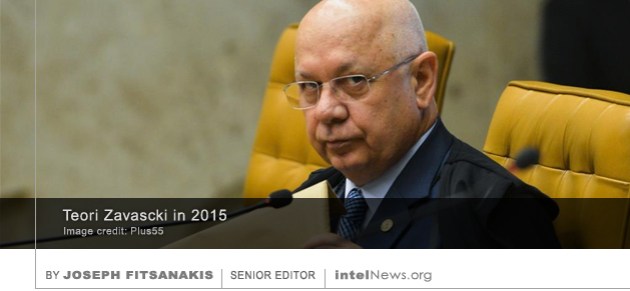 Brazilian authorities have launched an investigation into last week’s plane crash that killed the leading judge in the largest corruption probe in the nation’s history, involving government officials and two giant companies. Supreme Court judge Teori Zavascki died last Thursday with two other people, when the small airplane they were on
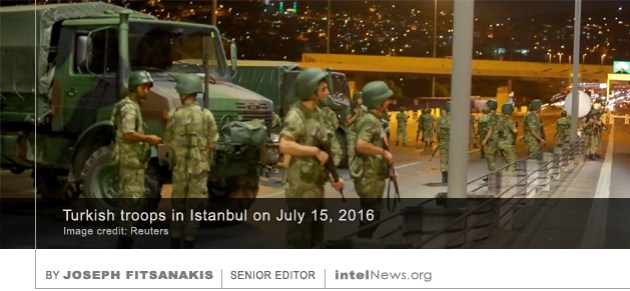 A leaked report by a European Union intelligence body states that Islamist forces were not behind last July’s failed coup in Turkey, and that the ruling party used the coup to neutralize its few remaining political rivals. The government of Turkish President Recep Tayyip Erdoğan accuses members of the so-called Gülen movement of orchestrating the coup, which included an armed attack on the country’s parliament and the murder of over 200 people across Turkey. The Gülen movement consists of supporters of Muslim cleric Fethullah Gülen, who runs a global network of schools, charities and businesses from his home in the United States. The government of Turkey has designated Gülen’s group a terrorist organization and claims that its members have stealthily infiltrated state institutions since the 1980s.
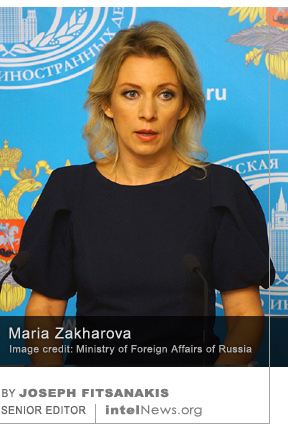 A senior Russian official has accused the United States Federal Bureau of Investigation of trying to blackmail a Russian diplomat who was attempting to purchase anti-cancer drugs in an American pharmacy. The allegation was made Sunday on live Russian television by Maria Zakharova, spokeswoman for Russia’s Ministry of Foreign Affairs. She was being interviewed on Sunday Night with Vladimir Solovey, a popular politics roundtable show on Russia’s state-owned Rossiya 1 television channel. Zakharova told Solovey that, a few years ago, the Russian government authorized one of its diplomats in the United States to purchase several thousand dollars’ worth of anti-cancer drugs. The drugs were to be used by Yevgeny Primakov, Russia’s prime minister in the late 1990s, who was battling liver cancer.
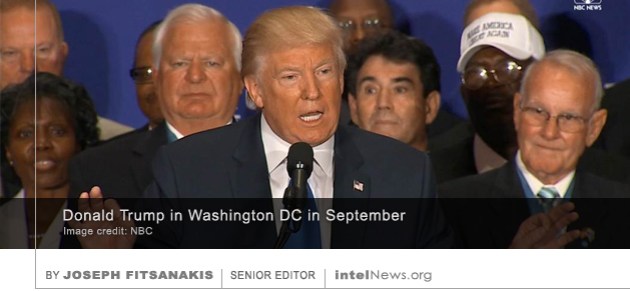 American intelligence officials allegedly warned their Israeli counterparts not to share intelligence with Washington once Donald Trump becomes president of the United States. The reason was that, according to the US officials, there was no guarantee that the intelligence would not be leaked to Russia. There was also the danger, they claimed, that the compromised intelligence would end up in the hands of Russia’s ally Iran, a regional adversary of Israel. The claim was
 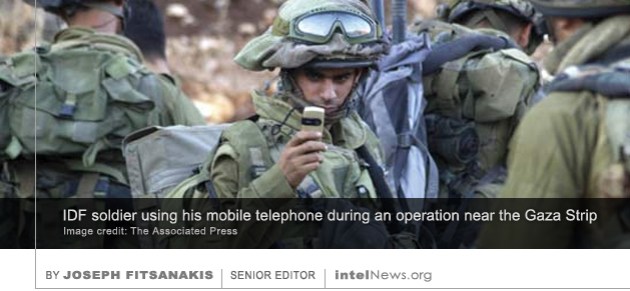 The Israel Defense Forces told a press conference on Wednesday that hackers belonging to the Palestinian militant group Hamas lured Israeli soldiers by posing as young women online. Wednesday’s press conference was led by an IDF spokesman who requested to remain anonymous, as is often the case with the Israeli military. He told reporters that the hackers used carefully crafted online profiles of real Israeli women, whose personal details and photographs were expropriated from their publicly available social media profiles. The hackers then made contact with members of the IDF and struck conversations with them that in many cases became intimate over time. At various times in the process, the hackers would send the Israeli soldiers photographs of the women, which were copied from the women’s online public profiles.
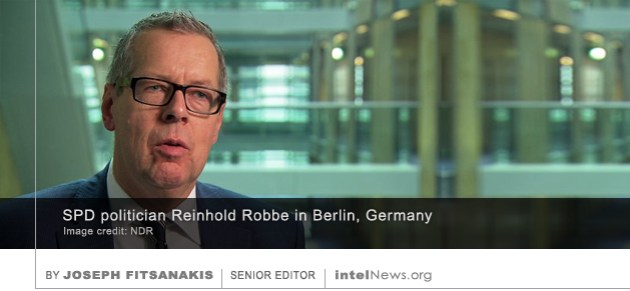 Authorities in Germany have pressed espionage charges against a Pakistani man who allegedly spied for Iran and even compiled lists of potential targets for assassination. The man, who has been identified in media reports only as “Syed Mustafa H.”, is a 31-year-old worker at the German Aerospace Center in the northern German city of Bremen. He is also reportedly a graduate of the Materials Science and Production Engineering department of the Universität Bremen. According to court documents, he is believed to have been spying for Iranian intelligence since the summer of 2015. It appears that the Federal Office for the Protection of the Constitution (BfV), Germany’s domestic intelligence agency, had been aware of the man’s espionage activities for at least a year prior to his arrest.
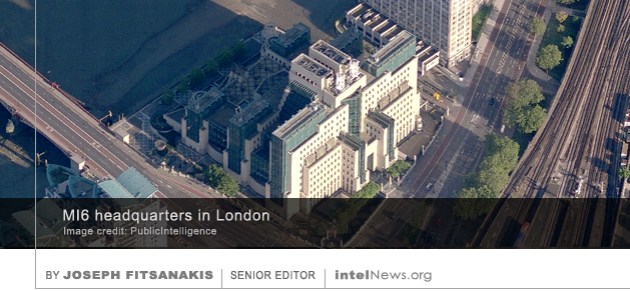 British intelligence agencies gave their United States counterparts an early warning about Russian attempts to influence the outcome of the American presidential election, according to The New York Times. The American newspaper
 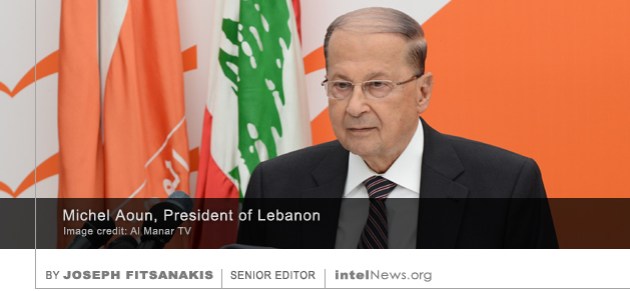 The president of Lebanon said on Wednesday that Israeli intelligence was behind the killing of a Lebanese businessman who was shot dead by a team of assailants last weekend in southwestern Africa. Amine Bakri, 54, who was from southern Lebanon, had lived and worked in Angola since his mid-20s. He was a well-known businessman in the Angola capital Luanda, where he owned a number of factories that make furniture and various medical equipment. On Sunday, Bakri was driving on an unpaved road in the Angolan capital, when his vehicle was ambushed by a group of three armed assailants. According to media reports, one of the men shot the windshield of Bakri’s car and then proceeded to shoot him in the head at close range. The men fled the scene and Bakri was transported to a local hospital, where he soon died from his wounds.
 There had been rumors for some time about a possible expulsion of Russian diplomats from the United States, in response to alleged Russian interference in the 2016 US Presidential election. The White House confirmed the rumors on Thursday morning, by
 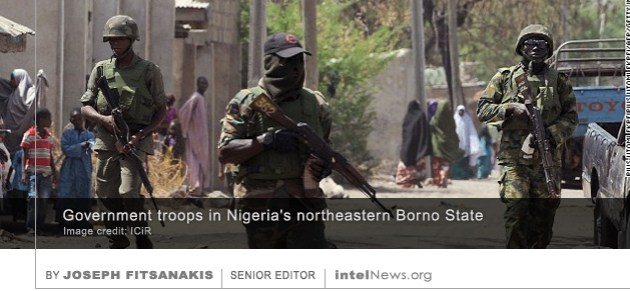 On Saturday, Nigerian President Muhammadu Buhari made a
 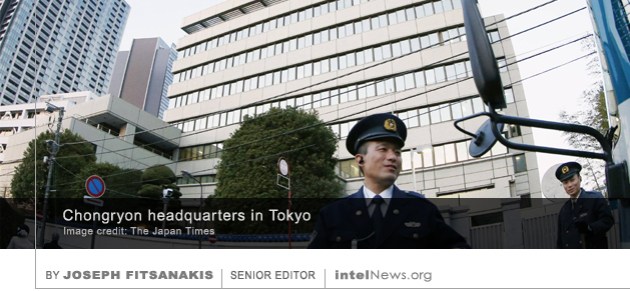 Students who have pledged allegiance to North Korea are being taught advanced courses in nuclear physics and control engineering in Japan, which violates United Nations sanctions, according to human rights campaigners. The students take classes at Korea University, a higher-education institution located in in Kodaira, a western suburb of the Japanese capital Tokyo. The University is funded directly by the government of North Korea through Chongryon, a pro-Pyongyang organization otherwise known as the General Association of Korean Residents in Japan. The group represents tens of thousands of ethnic Koreans living in Japan, who are ideologically affiliated with Pyongyang.








US spies fear Trump travel ban will hurt recruitment of Muslim assets
January 30, 2017 Leave a comment
In an article for Newsweek, Stein explains that, ever since the Cold War, American intelligence agencies have guaranteed to their assets —foreigners who agree to spy for the US— that they and their families will be exfiltrated to America if their lives are in danger. In other cases, assets or their family members are given costly medical treatment or educational opportunities in the US. The promise of eventual resettlement in America is a core recruiting tool used by case officers working in agencies such as the Central Intelligence Agency or the Defense Intelligence Agency. It is especially valuable in Muslim countries, where American spy agencies have traditionally found it difficult to operate, and where asset recruitment is arduous and dangerous. If current and potential assets are in any way concerned that they may not be able to enter the US, or not respected once they enter, their willingness to cooperate with their American spy handlers can quickly evaporate. Stein quotes Cindy Storer, who served 20 years as an analyst in the CIA, mostly on counterterrorism, and was in the agency team that led the successful hunt for al-Qaeda founder Osama bin Laden. Storer exclaimed that the travel ban “hurts, capital H-U-R-T-S” the CIA’s ability to collect intelligence. Another CIA veteran, Phillip Lohaus, who also served in the US Special Operations Command, lamented the “reduced likelihood that those in countries targeted by the ban will work with us in the future”.
Henry Miller-Jones, who worked for many years as a CIA operations officer in the Middle East, warned that the travel ban was likely to damage the flow of useful intelligence collected by US agencies from “students, professors, visiting businessmen and others” from Muslim countries. The latter are often recruited by US intelligence agencies when visiting America. Additionally, said Miller-Jones, Americans who travel or live in the Muslim world would now “get the cold shoulder” from potentially valuable contacts in those regions. He told Stein that CIA case officers often struggle to convince potential assets that America respects their religion and culture. The travel ban, no matter how geographically limited or temporary, will make it even more difficult to convince these potential assets to work for US intelligence now, he said.
► Author: Joseph Fitsanakis | Date: 30 January 2017 | Permalink
Filed under Expert news and commentary on intelligence, espionage, spies and spying Tagged with CIA, Cindy Storer, Donald Trump, Henry Miller-Jones, immigration intelligence, Jeff Stein, News, Phillip Lohaus, United States