Dead body found on plane carrying millions in cash in Zimbabwe
February 16, 2016 1 Comment
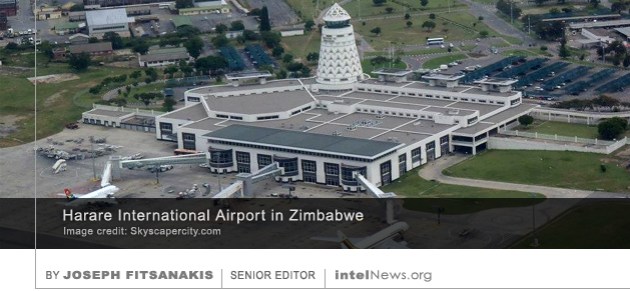 An American-registered airplane carrying large quantities of cash on behalf of a South African bank was impounded by authorities in Zimbabwe after a dead body was found on board. Zimbabwean media said police was notified after human blood was seen dripping from the plane’s cargo area during an emergency refueling stop. Authorities said the plane belonged to Western Global Airlines, a Florida-based transportation company that specializes in chartering flights to Africa. Its crew includes at least two Americans, a Pakistani and a South African citizen.
According to officials in Zimbabwe’s capital, Harare, the cargo plane had been traveling from Germany to South Africa when it made an emergency request to land at the Harare International Airport. An earlier request by the crew to land in neighboring Mozambique had been turned down. But after refueling the plane, attendants at Harare airport noticed that there was blood dripping from the plane’s cargo area. When they opened the door, they discovered “a suspended body in the plane”, said The Herald, one of Zimbabwe’s largest newspapers.
It was later established that the plane was carrying millions of South African rand on behalf of the South African Reserve Bank (SARB), which is the central bank of South Africa. An official at the bank said on Monday that SARB was “aware of an aircraft carrying a SARB consignment that stopped in Harare and was detained”, but gave no further information. The Zimbabwe Civil Aviation Authority said the matter had been forwarded for investigation to police authorities. The ambassador of South Africa to Zimbabwe, Vusi Mavimbela said media reports about the incident were accurate, but refused to provide details, saying the matter was under investigation.
The last time authorities in Zimbabwe impounded a foreign-owned airplane was in 2004, when a Boeing 727 registered in South Africa was found to contain several tons of weapons and 64 troops. The troops, who were mercenaries from several countries, including South Africa, Britain and Armenia, were on their way to Equatorial Guinea to stage a military coup in return for a share in profits from the country’s lucrative oil sector.
► Author: Joseph Fitsanakis | Date: 16 February 2016 | Permalink
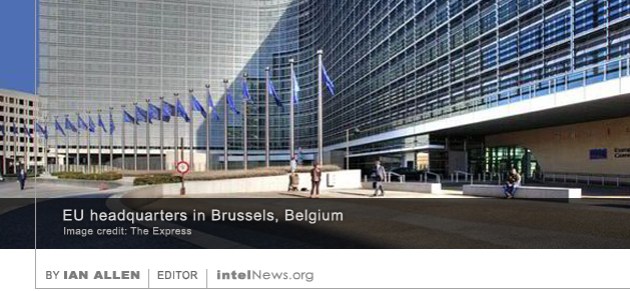 A debate on information security measures in the European Union was prompted last week after some officials voiced concerns that the proceedings of a closed-door meeting were secretly monitored by Israel. The meeting took place on January 15 as part of regular proceedings by the EU’s Political and Security Committee (PSC). The main item on the agenda was the EU’s Middle Eastern policy. According to some meeting participants, Israeli diplomats appeared to be aware of a statement discussed during the PSC meeting “in real time”, which prompted a wider debate on EU information security policies.
 Syrian and American media are reporting that Russian engineers, employed by a Moscow-based contractor with close ties to Russian President Vladimir Putin, are working at a Syrian gas plant under the control of the Islamic State. The facility in question is the so-called Tuweinan gas plant, which is located in central Syria, approximately 60 miles (40 kilometers) southwest of the city of Raqqa. The Islamic State declared Raqqa its capital shortly after occupying it, in June 2013, and the city has since served as the militant group’s administrative headquarters. The nearby Tuweinan gas plant is believed to be the largest of its kind in Syria. In 2013, it was occupied by an alliance of factions operating under the banner of the Al-Nusra Front, the primary al-Qaeda affiliate in Syria. But in early 2014, Islamic State forces took control of the plant following a military offensive against Al-Nusra.
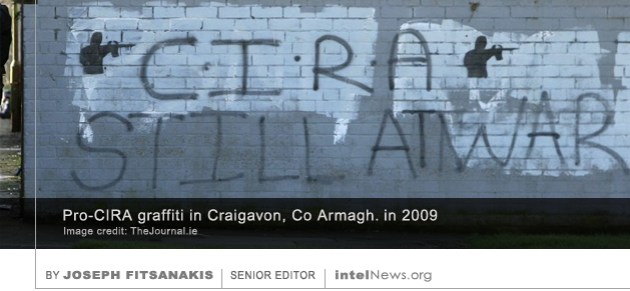 A leading dissident republican group in Ireland has claimed responsibility for a bloody attack in Dublin, which was carried out last week by a group of masked assailants disguised as police and carrying AK-47 assault rifles. Police said that the carefully planned attack involved at least six people wearing SWAT-style police uniforms, at least one of whom was disguised as a woman. The assailants
 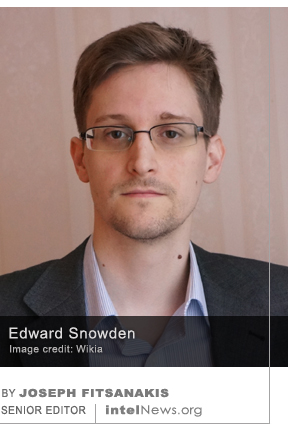 Documents acquired through Denmark’s freedom of information act appear to show that the United States deployed an airplane, which had previously been used to rendition terrorism detainees, in an attempt to capture the American defector Edward Snowden. Snowden, a computer expert for the United States Central Intelligence Agency and the National Security Agency, is currently living in Russia, where he defected in June 2013, after initially fleeing to Hong Kong with millions of stolen US government documents in his possession. A few weeks ago, Danish news website Denfri.dk
 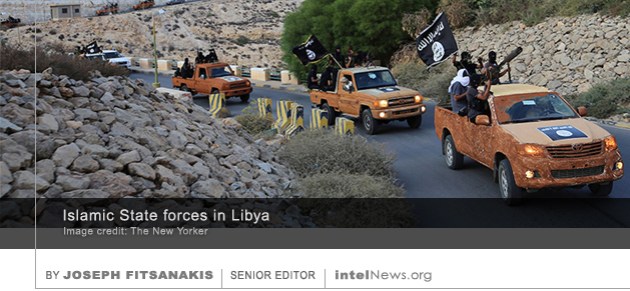 Senior members of the Islamic State are moving from Syria and Iraq to Libya, according to a Libyan intelligence official who spoke to the BBC. Since 2014 and the outbreak of the Second Libyan Civil War, the North African country has been engulfed in a multipolar struggle for dominance between rival armed groups and alliances. Among them is Libya Dawn, a loose coalition of former al-Qaeda-linked militants, ethnic Berbers, members of the pro-Egypt Muslim Brotherhood, as well as the al-Shorooq Force, an Islamist militia from Libya’s northwestern coastal city of Misrata. Libya Dawn troops have been engaged in ground-combat against Islamic State forces, which currently control Libya’s north-central coastal region.
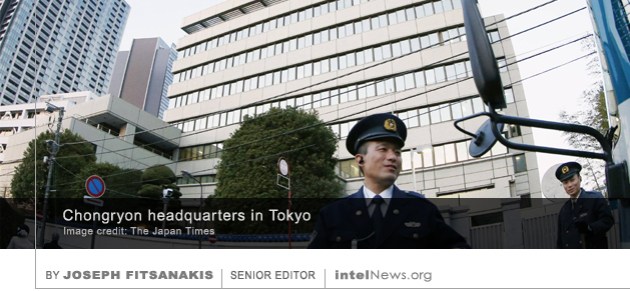 A Korean resident of Japan, who was arrested in South Korea for credit card fraud, was allegedly a handler of North Korean sleeper agents operating in South Korea, Japan and China, according to police in Seoul. Pak Chae Hun, 49, was arrested on Tuesday at his home in Seoul by officers of the Public Security Bureau of the Metropolitan Police Department. A statement issued by South Korean police said Pak was until recently an associate professor at Korea University, a higher-education institution based in the Japanese capital Tokyo. The University is funded directly by the government of North Korea through Chongryon, a pro-Pyongyang organization otherwise known as the General Association of Korean Residents in Japan. The group represents tens of thousands of ethnic Koreans living in Japan, who are ideologically affiliated with Pyongyang.
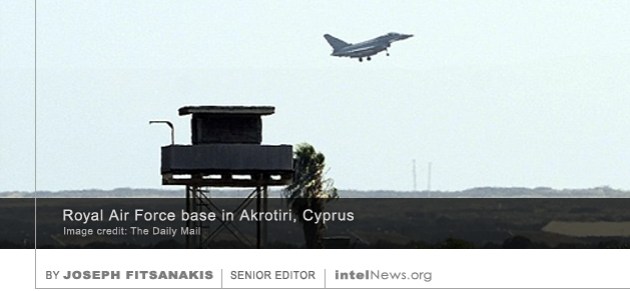 British and American intelligence services worked together to hack Israeli unmanned aerial vehicles in order to acquire information on the Jewish state’s military intentions in the Middle East, according to documents leaked last week. Online publication The Intercept, said the operation was code-named ANARCHIST and was a joint project of Britain’s General Communications Headquarters (GCHQ) and America’s National Security Agency (NSA). The publication said it acquired documents about the operation from former NSA contractor Edward Snowden, who defected to Russia in 2013 and was offered political asylum by Moscow.
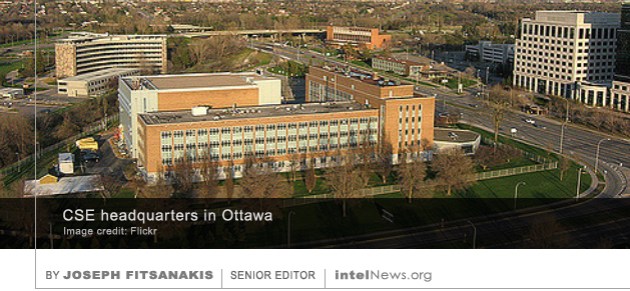 Canada says it will stop sharing certain types of intelligence with some of its closest international allies until it ensures that Canadian citizens’ information is not included in the data given to foreign spy agencies. The announcement follows an official admission, made earlier this week, that a Canadian intelligence agency failed to remove Canadian citizens’ data from information it shared with member-agencies of the so-called Five Eyes Agreement. The pact, which is sometimes referred to as the UK-USA Security Agreement, has been in existence since World War II. It provides a multilateral framework for cooperation in signals intelligence (SIGINT) between the United Kingdom, the United States, Canada, Australia, and New Zealand.
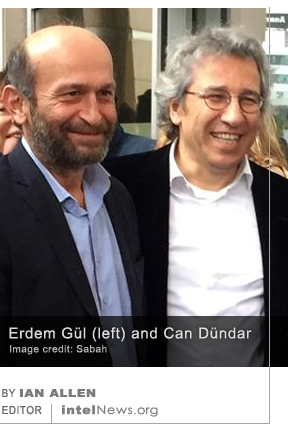 Two leading Turkish journalists, who claimed in a series of articles that Ankara has been arming militant Islamists in Syria, are facing espionage charges for “airing Turkish state secrets”. The two, Can Dündar and Erdem Gül, work for Cumhuriyet, (The Republic), Turkey’s oldest newspaper, which typically voices staunchly secularist views representing the center-left of the political spectrum. Last year Dündar, who is the paper’s editor, and Gül, who serves as the paper’s bureau chief in Ankara, published a series of articles claiming that the Turkish government was secretly supporting Salafi Jihadist groups in Syria.
 A Russian former intelligence officer, who is accused by the British government of having killed another Russian former spy in London, said the British intelligence services tried to recruit him in 2006. British government prosecutors have charged Andrei Lugovoi with the killing of Alexander Litvinenko, a former employee of the Soviet KGB and one of its successor agencies, the FSB. In 2006, Litvinenko died in London, where he had defected with his family in 2000, following exposure to the highly radioactive substance Polonium-210. In July of 2007, the British government charged Lugovoi and another Russian, Dmitri Kovtun, with the murder of Litvinenko, and expelled four Russian diplomats from London. Last week, following the conclusion of an official inquest into the former KGB spy’s death, the British government took the unusual step of summoning the Russian ambassador to London, to file an official complaint about Moscow’s refusal to extradite Lugovoi and Kovtun to the United Kingdom.
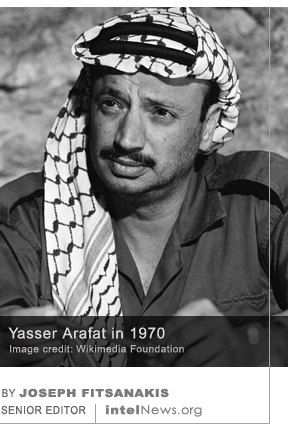 Switzerland secretly agreed in the 1970s to support calls for Palestinian statehood, in return for not being targeted by Palestinian militants, according to a new book. Written by Marcel Gyr, a journalist with the Zurich-based Neue Zürcher Zeitung, the book
 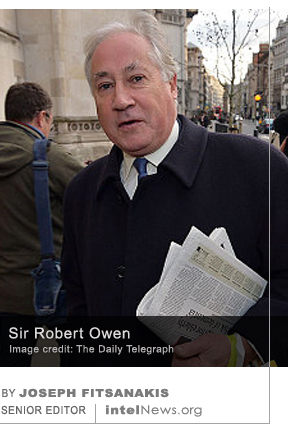 The British government has taken the unusual step of summoning the Russian ambassador to London, following the conclusion of an official inquest into the death of a former KGB officer who is believed to have been killed on the orders of Moscow. Alexander Litvinenko, an employee of the Soviet KGB and one of its successor organizations, the FSB, defected with his family to the United Kingdom in 2000. But in 2006, he died of radioactive poisoning after meeting two former KGB/FSB colleagues, Dmitri Kovtun and Andrey Lugovoy, in London. A public inquiry into the death of Litvinenko, ordered by the British state,
 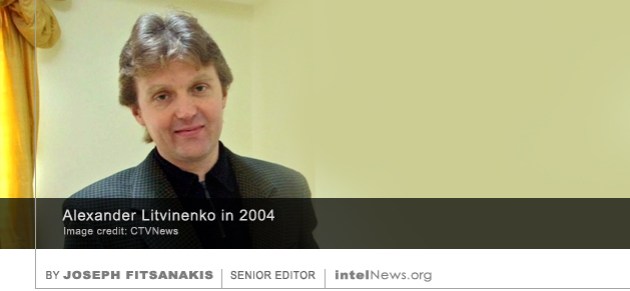 The long-awaited concluding report of a public inquiry into the death of a former Soviet spy in London in 2006, is expected to finger the Russian state as the perpetrator of the murder. Alexander Litvinenko was an employee of the Soviet KGB and one of its successor organizations, the FSB, until 2000, when he defected with his family to the United Kingdom. He soon became known as a vocal critic of the administration of Russian President Vladimir Putin. In 2006, Litvinenko came down with radioactive poisoning after meeting two former KGB/FSB colleagues, Dmitri Kovtun and Andrey Lugovoy, at a London restaurant. In July of 2007, after establishing the cause of Litvinenko’s death, which is attributed to the highly radioactive substance Polonium-210, the British government officially charged the two Russians with murder and issued international warrants for their arrest. Whitehall also announced the expulsion of four Russian diplomats from London. The episode, which was the first public expulsion of Russian envoys from Britain since end of the Cold War, is often cited as marking the beginning of the worsening of relations between the West and post-Soviet Russia.






 intelNews.org
Israel says it foiled attempt to smuggle spy drones into Gaza
February 22, 2016 by Ian Allen 1 Comment
According to the Israeli government report, the spy drones were found hidden inside boxes of toys that had been marked for export to Gaza. The drones were of different sizes, types and capabilities, but all were equipped with sophisticated cameras and related software, said the report. Israeli media reported on Sunday that, according to Israeli government sources in Tel Aviv, the drones were almost certainly going to be used by Hamas to spy on possible targets inside Israel. A source in the Israeli Department of Defense said Hamas was known to employ drones in order to explore and map the terrain that is adjacent to the Gaza Strip.
In March of last year, Egyptian authorities reported seeing several spy drones flying out of the Gaza Strip and conducting reconnaissance over Egyptian airspace in the Sinai Peninsula, which borders Gaza. According to some reports, a number of the spy drones that flew out of Gaza were seen as far as 50 kilometers (35 miles) inside Egyptian territory. The latest information from Israel is that the government in Tel Aviv believes that the pattern and frequency of attempts to smuggle spy drones into the Gaza Strip justify an investigation, which is now underway.
► Author: Ian Allen | Date: 22 February 2016 | Permalink
Filed under Expert news and commentary on intelligence, espionage, spies and spying Tagged with aerial reconnaissance, Gaza Strip, Israel, Kerem Shalom, News, Palestine, surveillance drones