Declassified files shed light on 1956 disappearance of MI6 agent
October 28, 2015 Leave a comment
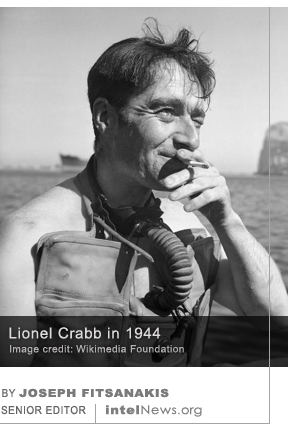 A set of newly released files from the archives of the British Cabinet Office shed light on the mysterious case of a highly decorated combat swimmer, who vanished while carrying out a secret operation against a Soviet ship. The disappearance happened during a historic Soviet high-level visit to Britain in 1956. In April of that year, First Secretary of the Communist Party of the USSR, Nikita Khrushchev, and Nikolai Bulganin, Chairman of the Council of People’s Commissars, arrived in Britain aboard Russian warship Ordzhonikidze, which docked at Portsmouth harbor. Their eight-day tour of Britain marked the first-ever official visit by Soviet leadership to a Western country. But the tour was marred by a botched undersea operation led by Britain’s Secret Intelligence Service, known commonly as MI6. The operation, which aimed to explore the then state-of-the-art Ordzhonikidze, ended in the disappearance of MI6 diver Lionel “Buster” Crabb. The body of Crabb, one of several MI6 operatives involved in the operation, was never recovered.
Now a set of documents released by the Cabinet Office, a British government department tasked with providing support services to the country’s prime minister and senior Cabinet officials, show that the operation had been mismanaged by MI6 from the start. According to The Daily Telegraph, the documents show that miscommunication between the British Foreign Office and MI6 caused the latter to believe that the operation to target the Ordzhonikidze had been authorized by the government, when in fact no such thing had ever occurred.
Moreover, MI6 had housed Crabb and other operatives in a Portsmouth hotel, where the agency’s handler had provided the front-desk clerk with the real names and addresses of the underwater team members. The documents also reveal that several of Crabb’s relatives and friends had been told by him that he would be diving in Portsmouth on the week leading up to his death. Those who knew included one of Crabb’s business partners, with whom he operated a furniture outlet. The partner apparently told the authorities that he was contemplating “consulting a clairvoyant, Madame Theodosia”, in an effort to discover the fate of his missing business partner.
After Crabb disappeared, British government officials were convinced that he had been abducted or killed by the Soviets and that the KGB was in possession of his body. Should the Soviets decide to disclose the existence of the MI6 operation to the world, there would be “no action that [MI6] could take [that] could stave off disaster”, said one British government memo. As intelNews has reported before, n 2007, Eduard Koltsov, a retired Russian military diver, said he killed a man he thinks was Crabb, as he was “trying to place a mine” on the Soviet ship.
► Author: Joseph Fitsanakis | Date: 28 October 2015 | Permalink
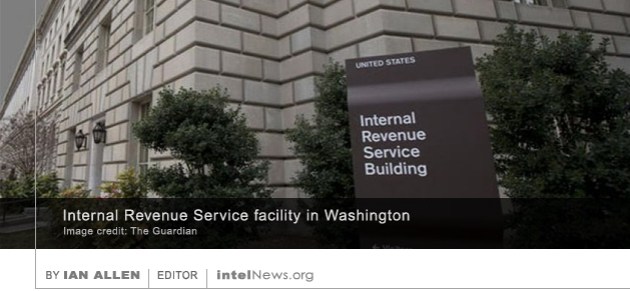 Documents acquired by a newspaper show that the Internal Revenue Service, which is the United States government’s agency responsible for collecting taxes, has purchased devices used to intercept cell phone messages. Founded in 1862, the IRS is the revenue service of the US state, and operates as a bureau of the Department of the Treasury. But it also maintains a number investigative components, including the Criminal Investigation Division. The latter consists of between 3,000 and 4,000 personnel and is tasked with investigating and helping build cases for the prosecution relating to tax evasion, money laundering and other financial crimes.
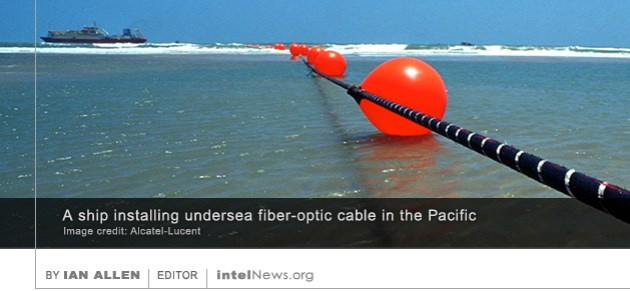 An increased presence of Russian submarines near American territorial waters appears to correspond to the location of undersea Internet cables used for commercial and military communications, according to officials.
 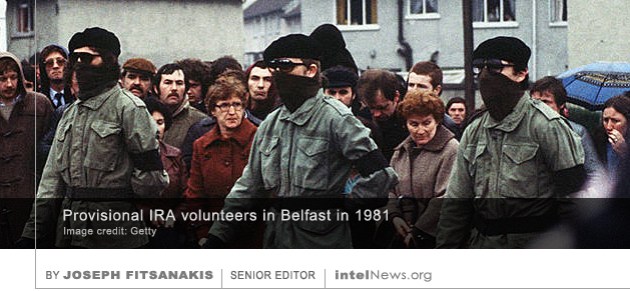 Authorities in Northern Ireland have launched an official investigation into the alleged involvement of a British government informant in dozens of murders perpetrated by Irish republican militants. The informant, codenamed STAKEKNIFE in British government documents, has been identified by some as Freddie Scappaticci, the grandson of an Italian immigrant to Northern Ireland, who in the early 1970s joined the Provisional Irish Republican Army (IRA). Eventually, Scappaticci was put in charge of the Provisional IRA Northern Command’s Internal Security Unit. The unit was tasked with counterintelligence operations, which involved detecting, capturing and eliminating suspected British government spies inside the IRA.
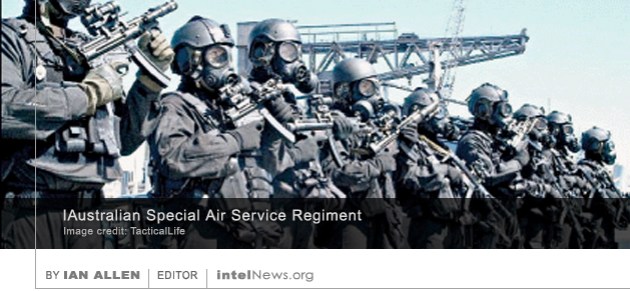 The use of firearms by Australian intelligence and security personnel stationed abroad is being reviewed following an incident in which an intoxicated special forces soldier pulled a gun on a spy in Afghanistan. According to reports in the Australian media, the review was conducted by the Inspector General of Intelligence and Security, a government-appointed office that monitors the conduct of Australian intelligence and security agencies.
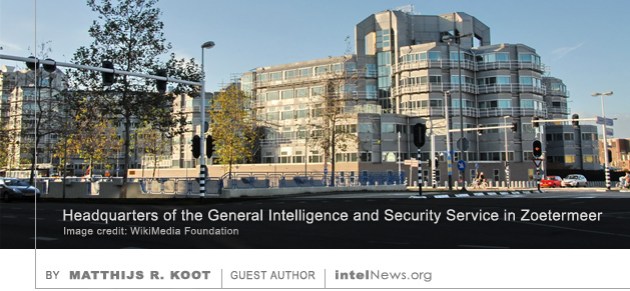 A 28-year-old criminal investigator of the Dutch National Crime Squad was arrested by Dutch police on September 29 over allegations of corruption, neglect of duty, and money laundering. The man, named as Mark M., applied for a job at the Dutch police in 2009. According to an online résumé, M. dropped out of professional college in journalism after several years of being self-employed as a freelance reporter covering crime issues.
 In a historic first, the parliament of the European Union (EU) has waived the immunity of one of its elected members over “reasonable suspicions” that he may have spied for Russia. The member of the European Parliament (MEP) is Béla Kovács, 55, who belongs to the far-right Movement for a Better Hungary. Founded in 2003, the party, known as Jobbik (movement, in Hungarian), has called for Hungary to leave the EU and instead join the Eurasian Union, an economic and political alliance led by Russia. In the 2014 parliamentary elections, Jobbik won just over 20% of the popular vote, placing third nationwide. The result was a marked difference from its performance in 2006, when it had barely received 2.2% of the vote share.
 The Iraqi government is now using intelligence supplied by the Russian military in its war against the Islamic State, according to officials in Baghdad. As intelNews
 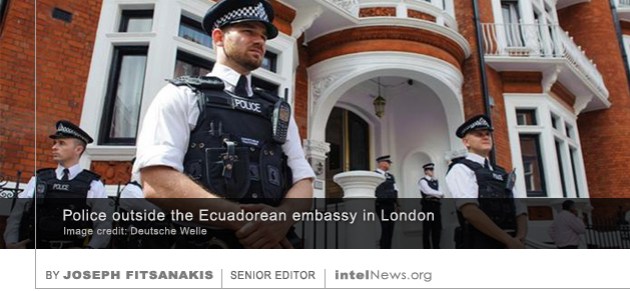 Police in London will no longer physically monitor the embassy of Ecuador in the British capital, where WikiLeaks founder Julian Assange has been living for over two years, fighting against extradition to Sweden. Assange was granted political asylum by the government of Ecuador in June of 2012, after Swedish authorities charged him with rape. But the Australian-born Assange claims that the charges are part of a plot to extradite him to the United States, where he is wanted for having leaked hundreds of thousands of documents belonging to the Department of Defense and the Department of State.
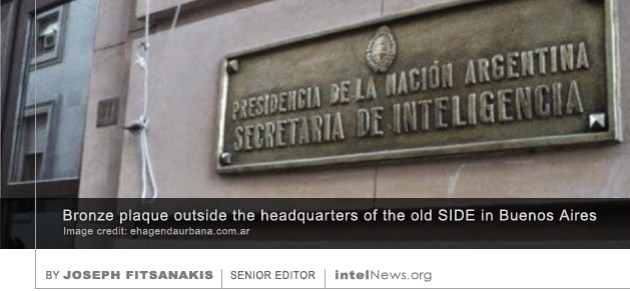 An Argentine former senior intelligence official, who is wanted in connection with the murder of a federal prosecutor in Buenos Aires, is hiding in the United States, according to the President of Argentina, who says Washington should extradite him. Antonio Horacio Stiuso, better known as Jaime Stiuso, rose through the ranks of Argentina’s Secretaría de Inteligencia del Estado (SIDE) to become its director of counterintelligence. In 2012, Argentine President Cristina Fernández de Kirchner appointed Stiuso to chief operating officer of SIDE, working directly under the agency’s director. However, Stiuso was fired in a massive agency shake-up in February of this year, when the government suddenly dissolved SIDE and replaced it with a new agency, called Agencia Federal de Inteligencia.
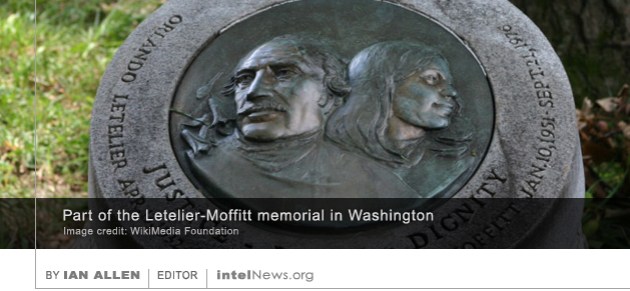 The president of Chile in the 1970s considered killing his own spy chief in order to conceal his government’s involvement in a terrorist attack in Washington DC, which killed two people, according to declassified memos from the United States Central Intelligence Agency. The target of the attack was Orlando Letelier, a Chilean economist who in the early 1970s served as a senior cabinet minister in the leftwing government of Salvador Allende. But he sought refuge in the US after Allende’s government was deposed in a bloody coup on September 11, 1973, in which Allende was murdered. He taught in several American universities and became a researcher at the Institute for Policy Studies (IPS) in Washington. At the same time, he publicly pressured the US to break off diplomatic and military ties with the Chilean dictatorship.
 A former officer in the United States Central Intelligence Agency, who is wanted by Italian authorities for her alleged role in the abduction and rendition of a suspected Islamist militant in Italy, has been arrested by police in Portugal. Sabrina De Sousa, 59, was an accredited diplomat stationed at the US consulate in Milan, Italy, when a CIA team kidnapped Hassan Mustafa Osama Nasr from a Milan street in broad daylight. Nasr, who goes by the nickname Abu Omar, is a former member of Egyptian militant group al-Gama’a al-Islamiyya, and was believed by the CIA to have links to al-Qaeda. Soon after his abduction, Nasr was renditioned to Egypt, where he says he was brutally tortured and raped, and held illegally for years before being released without charge.
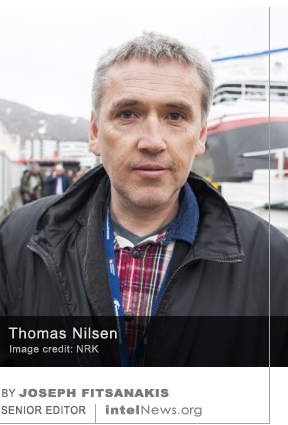 Norway’s state broadcaster has alleged that the Russian intelligence service pressured a Norwegian newspaper to fire one of its journalists who covered fossil fuel exploration in the Arctic Ocean. Last week, journalist Thomas Nilsen was fired by
  A third person has been charged in a complex criminal investigation into the procurement of weapon silencers by the United States Department of Defense, which one American newspaper has described as a possible “rogue operation”. The case concerns the Directorate for Plans, Policy, Oversight and Integration, an obscure civilian-led Pentagon office, whose stated mission is to provide logistical support and procurement for intelligence operations conducted by the US Navy and Marine Corps.






 intelNews.org
Nuclear black market thriving in Eastern Europe despite efforts to stop it
October 30, 2015 by Joseph Fitsanakis Leave a comment
In one case, which involved a criminal gang in the former Soviet Republic of Moldova, the smugglers were trying to sell radioactive material to representatives of the Islamic State in Iraq and Syria. The Associated Press said it spoke to law enforcement and judicial authorities in Moldova, who have set up a small team of detectives to investigate the nuclear black market. The Moldovans told the Associated Press that they were working with the FBI, and even shared some of their investigative case files with the news agency.
In another recent case, which was cracked by authorities in February of this year, a smuggler in Moldova tried to sell a significant quantity of cesium, a radioactive metal typically extracted from the waste produced by nuclear reactors. According to the Moldovans, the quantity of the fission product was “enough to contaminate several city blocks”. Additionally, the Moldovan investigators told the Associated Press that the smuggler was specifically seeking a buyer from the Islamic State.
In yet another case, a joint US-Moldovan investigation targeted Alexandr Agheenco, a mysterious Russian-born smuggler, who in the spring of 2011 said he had access to bomb-grade uranium. According to Moldovan investigators, a middleman working for Agheenco told a prospective buyer from Sudan that he would be willing to sell an unspecified quantity of uranium, as well as “blueprints for a dirty bomb”. Although the sale was prevented by the US-Moldovan investigators, Agheenco managed to escape.
According to the Moldovans, the worsening relations between Washington and Moscow are making it more difficult for investigators from the two countries to share intelligence on nuclear smuggling rings. As a result, smugglers are finding it easier to operate across Eastern Europe and parts of the former Soviet Union. Many leading black-market operatives manage to avoid capture and prosecution, while even those arrested are usually able to evade lengthy convictions, which means that they quickly return to nuclear smuggling, reports the Associated Press.
► Author: Joseph Fitsanakis | Date: 30 October 2015 | Permalink | News tip: J.B.
Filed under Expert news and commentary on intelligence, espionage, spies and spying Tagged with Alexandr Agheenco, Eastern Europe, FBI, Moldova, nuclear security, organized crime, United States, weapons smuggling