Third person charged in probe into alleged US Pentagon ‘rogue operation’
October 6, 2015 Leave a comment
 A third person has been charged in a complex criminal investigation into the procurement of weapon silencers by the United States Department of Defense, which one American newspaper has described as a possible “rogue operation”. The case concerns the Directorate for Plans, Policy, Oversight and Integration, an obscure civilian-led Pentagon office, whose stated mission is to provide logistical support and procurement for intelligence operations conducted by the US Navy and Marine Corps.
According to media reports, more than three years ago the Directorate ordered 349 weapon suppressors, known commonly as silencers. By general admission, silencers are not the type of military hardware used in conventional combat. More importantly, the procurement cost of the silencers should have been no more than around $10,000. However, purchase records show that the Directorate paid the supplier of the silencers over $1.6 million. The supplier then turned out to be the brother of the Directorate’s officer in charge of intelligence, David W. Landersman. Last week it was revealed that Landersman became the third person to face charges of theft and conspiracy as part of the investigation.
Initially, Pentagon officials suggested that the silencers had been purchased for a top-secret operation codenamed UPSTAIRS. The operation was allegedly a “special-access program” aimed at arming foreign paramilitary forces while avoiding the risk of the weapons being traced back to the US. Though limited details were provided, one government witness told the court that military hardware acquired through UPSTAIRS was intended for the US Navy’s Sea, Air, Land Team 6, commonly known as US Navy SEAL Team 6. The special-forces team became famous in 2010, when it carried out the Central Intelligence Agency’s operation NEPTUNE SPEAR, which killed al-Qaeda founder Osama bin Laden in Pakistan. Later during the course of the investigation, however, SEAL Team 6 representatives told court officials that their unit “had not ordered the silencers” and knew nothing about them. Following that development, government prosecutors objected to further discussion of the case in open court due to the alleged “sensitive nature” of the case. Since then, much of the court documentation on the case has been filed under seal on grounds of national security.
But the discrepancies in the case led The Washington Post to speculate last year that the procurement of the weapons silencers may have been part of a “rogue operation”, that is, a military activity not authorized by the Pentagon leadership. The Post spoke to an unnamed “former senior Navy official familiar with the investigation”, who said the Pentagon’s Directorate for Plans, Policy, Oversight and Integration was “building its own mini law enforcement and intelligence agency” without oversight from higher-ups. Another unnamed source, a former Pentagon official familiar with the Directorate, told the paper that “deeper issues might be in play” in the case.
Last week, a Pentagon spokesman said Landersman was “no longer performing duties in any way associated with intelligence” for the US government, though he appeared to still be employed by the US Navy in a clerical capacity, pending the outcome of the investigation.
► Author: Ian Allen | Date: 06 October 2015 | Permalink
 Authorities in China announced last week the arrests of two Japanese citizens accused of spying for the national intelligence agency of Japan. According to a spokesman from the Chinese Ministry of Foreign Affairs, the two men were been
  Hundreds of ground troops from Iran and Lebanon have been entering Syria in the past two weeks and are about to launch a large-scale ground attack against rebel groups, according to Reuters. The news agency quoted Lebanese sources “familiar with political and military developments in the conflict”. One source said that the Russian airstrikes in Syria, which began earlier this week, are the first phase of a large-scale military offensive against the Islamic State and other anti-government forces operating on the ground.
 The Central Intelligence Agency (CIA) pulled a number of officers from the United States embassy in Chinese capital Beijing, after a massive cyber hacking incident compromised an American federal database containing millions of personnel records. Up to 21 million individual files were
 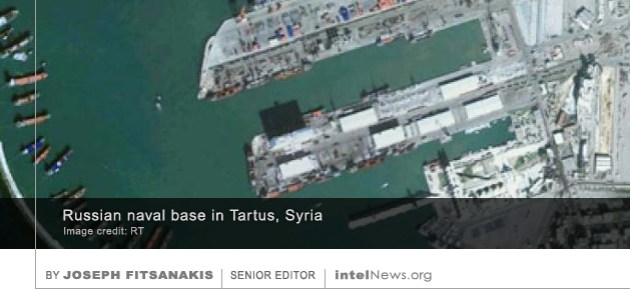 The governments of Russia, Syria and Iran have entered a formal intelligence-sharing agreement with Iraq, in an effort to defeat the Islamic State, it has been announced. Intelligence-sharing has been practiced for a while between Russia, Syria and Iran; but this is the first time that Iraq, an American ally, has entered the alliance. According to the Baghdad-based Iraqi Joint Forces Command, the agreement entails the establishment of a new intelligence-sharing center in the Iraqi capital. It will be staffed with intelligence analysts from all four participating countries, who will be passing on shared information to their respective countries’ militaries.
 A massive cyber hacking incident that compromised a United States federal database containing millions of personnel records also resulted in the theft of 5.6 million fingerprint records, American officials have said. Up to 21 million individual files were
  The Russian and Estonian intelligence services have exchanged two men accused by each country of spying for the other, in a rare public example of what is commonly referred to as a ‘spy-swap’. The exchange took place on Saturday on a bridge over the Piusa River, which forms part of the Russian-Estonian border, separating Estonia’s Polva County from Russia’s Pskov Oblast.
 After issuing successive denials earlier in the week, United States officials have now
 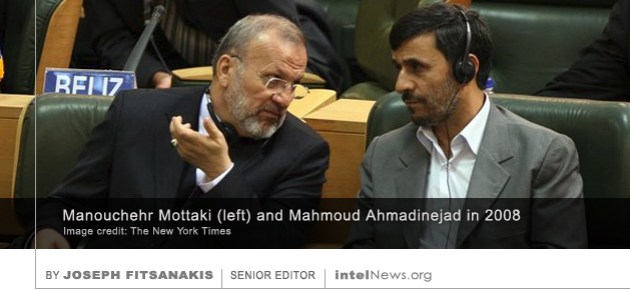 The United States National Security Agency spied on the Iranian president, foreign minister, and over 140 Iranian dignitaries who visited New York in 2007 to participate in the United Nations General Assembly. The allegation was
 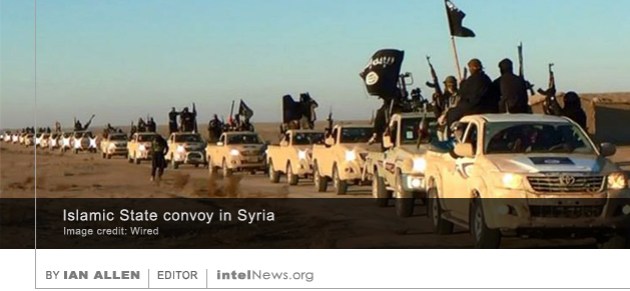 A new study by a British-based organization details for the first time the views of dozens of former Islamic State fighters who have defected from the group in the past year. The study shows that most defectors were disillusioned after witnessing high levels of corruption among Islamic State members, or in response to the extreme violence perpetrated by the group against other Sunni Muslims. The research was carried out by the London-based International Center for the Study of Radicalization and Political Violence (ICSR), which said it gathered the publicly expressed views of nearly 60 Islamic State members who left the organization between August 2014 and August 2015.
 A British intelligence officer, who was found dead in his London apartment in 2010, was not a transvestite, as some media reports have speculated, but probably worked undercover dressed as a woman, according to a leading forensic investigator. Gareth Williams, a mathematician in the employment of Britain’s signals intelligence agency, GCHQ, had been seconded to MI6, Britain’s external intelligence agency, to help automate intelligence collection. He had also worked with several United States agencies, including the Federal Bureau of Investigation and the National Security Agency. But his career came to an abrupt end in August 2010, when he was
  In an unprecedented development described by local media as the “end of an era”, the longtime director of Algeria’s main intelligence agency, and one of the country’s most powerful figures, has been removed from office. Until last Sunday, General Mohamed Mediène was described as the world’s longest-serving intelligence chief, having led Algeria’s Department of Intelligence and Security since 1990. Known by its initials, DRS, the organization grew rapidly in size and power during the Algerian Civil War of the 1990s. After an electoral victory by the Islamic Salvation Front (FIS) was quashed in a military-led coup, General Mediène took advantage of the country’s fragile security situation to strengthen the DRS and his own political influence. He became a staunch ally of Algerian President Abdelaziz Bouteflika and created what some have called “a state within a state”.
 A report by Pakistan’s main intelligence agency warns that the personal records of up to 100 million Pakistanis may have been stolen by foreign intelligence agencies due to the alleged links of a software vendor with Israel. The Inter-Services Intelligence directorate (ISI), Pakistan’s premier spy agency, said that the software used by the National Data base and Registration Authority (NADRA), which issues national identity cards on behalf of the government of Pakistan, is not secure and should be replaced by an “indigenous” software product.








Russian spy service accused of role in Norwegian journalist’s firing
October 7, 2015 by Joseph Fitsanakis Leave a comment
Since the end of the Cold War, the NBS has funded collaborative projects between Norway’s state-owned oil company Statoil, and its Russian equivalent, Rosneft, which aim to promote offshore oil exploration in the Barents region. The move reflects a recognition by the Norwegian government that close relations with Russia are vital for Norwegian interests. But Nilsen is one of many Norwegian investigative journalists who have challenged Oslo’s collaboration with Moscow in Arctic oil exploration. Last year, Mikhail Noskov, Russia’s consul in Kirkenes, spoke publicly against Nilsen’s reporting, which he described as “damaging to the bilateral relations between Norway and Russia”. He also reportedly contacted the offices of The Barents Observer to complain about Nilsen’s articles.
Last week, when Nilsen was fired, staff at the newspaper protested that his removal from the paper had been ordered by the government in Oslo and described it as a clear case of government censorship. But on Saturday, Norway’s state-owned NRK broadcaster said that Nielsen had been fired following pressure from the Russian Federal Security Service, known as FSB. Citing an unnamed Norwegian government source, NRK reporter Tormod Strand alleged that the FSB had threatened that cooperation between Russia and Norway in the Arctic would be negatively affected if Nilsen was not removed from his post. The NRK contacted the embassy of the Russian Federation in Oslo, where a spokesman denied that Moscow had intervened in any way in Nilsen’s firing. An official from the Norwegian government told the station that he had seen no evidence showing that Tormod’s allegations were factual.
Filed under Expert news and commentary on intelligence, espionage, spies and spying Tagged with Arctic circle, Barents Sea, FSB, Norway, Norwegian Barents Secretariat, press freedom, Russia, The Barents Observer, Thomas Nilsen