Al-Qaeda still a more serious threat than ISIS, says ex-CIA official

Al-Qaeda in YemenAl-Qaeda and its affiliates continue to pose the most serious unconventional threat to American security, despite the meteoric rise of the Islamic State of Iraq and al-Sham, according to a former senior official in the United States Central Intelligence Agency (CIA). Michael Morell, who was deputy director of the CIA, and served twice as the Agency’s acting director, did not deny that the Islamic State, also known as ISIS, poses a significant threat to the security of the US. However, the militant group “is not the most significant threat to the homeland today”, he said. Morell made the comment while speaking on Monday at the National Press Club in Washington, DC, while promoting his new book, The Great War of Our Time: An Insider’s Account of the CIA’s Fight Against Al Qa’ida.

The former CIA official told his audience that the most serious unconventional threat to the US continues to come from three al-Qaeda groups, all of which remain far cogent and willing to engage the US on its home soil. According to Morell, the three groups consist of the so-called ‘al-Qaeda Central’ in Afghanistan and Pakistan, as well as its Syrian branch, known as the Khorasan Group, and its Yemen affiliate, which goes by al-Qaeda in the Arabian Peninsula (AQAP). He added that the last three serious efforts to strike the US with the intent of causing mass casualties all came from AQAP. Morell was referring to the 2009 so-called ‘underwear bomber’ and the 2010 ‘ink-cartridge bomb plot’, as well as the ‘plastic suicide vest bomb pot’ in 2012, all of which were unsuccessful. The former CIA official said that, unlike ISIS, al-Qaeda has “the ability to bring down an airliner in the US tomorrow”. Most importantly, he added, unlike ISIS, al-Qaeda has shown willingness to confront America on its home soil.

Morell’s argument echoed similar comments expressed in September 2014 by the then-Director of the US National Counterterrorism Center, Matthew Olsen. Olsen, who held the US’ most senior counterterrorism post until his retirement last year, opined at a forum in Washington that ISIS did not currently pose a direct threat to America or Western Europe. He added that the risk of a “spectacular, al-Qaeda-style attack” on American or European targets by ISIS was negligible, saying that ISIS was “significantly more limited than al-Qaeda”, especially in the run-up to 9/11.

German spies helped US find bin Laden, claims German newspaper

BND headquarters in BerlinBy JOSEPH FITSANAKIS | intelNews.org
German intelligence gave the United States a tip of “fundamental importance” about the whereabouts of al-Qaeda founder Osama bin Laden, which helped the Americans locate him in Pakistan, according to a German media report. Germany’s leading tabloid newspaper, Bild am Sontag, said in its Sunday edition that the tip allowed the Central Intelligence Agency to corroborate separate intelligence tips pointing to the possibility that the wanted Saudi terrorist may have been hiding in the Pakistani city of Abbottabad. Citing an unnamed “American intelligence official”, Bild said the tip was given to the CIA by its German equivalent, the Bundesnachrichtendienst, known in Germany as BND. It said the critical information originated from an agent handled by the BND inside Pakistan’s Inter-Services Intelligence directorate (ISI). The agent was an officer of the ISI but had secretly worked as an agent of the BND “for years”, said the German newspaper.

The tip was eventually communicated by the Germans to the CIA, and was used by the American agency to corroborate information from a number of other sources, which eventually led to the decision to send a Special Forces team to kill the al-Qaeda leader. According to the German paper, the CIA was already leaning toward the view that bin Laden was hiding in Abbottabad. However, the BND tip was “of fundamental importance” in enabling the CIA to make up its mind as to bin Laden’s whereabouts, said Bild. Moreover, the BND’s Pakistani agent allegedly told the German agency that the ISI leadership was protecting bin Laden while holding him under house arrest. If true, the Bild information would seem to confirm allegations made by American reporter Seymour Hersh and security expert R.J. Hillhouse that Pakistani leaders had secretly imprisoned the al-Qaeda founder in Abbottabad. The Bild article goes on to claim that German intelligence used its Bad Aibling Station listening posts to monitor the Pakistani government’s communications so as to help ensure that the planned American attack on bin Laden’s compound was not being anticipated by Islamabad.

However, in reporting on Bild’s allegations, German newsmagazine Der Spiegel questions the validity of the tabloid newspaper’s argument. Why, it asks, would the BND’s Pakistani agent approach his German handlers with the information about bin Laden’s whereabouts, instead of going directly to the Americans? Had the agent followed the latter course of action, he or she could have been able to claim the lucrative reward offered by the US Department of State in exchange for information that would help locate the al-Qaeda founder.
Syrian spy chief placed under house arrest by Assad, say sources

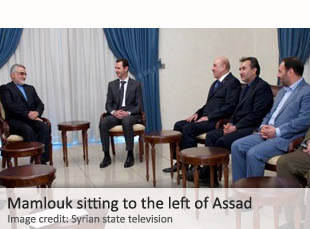
Bashar al-Assad (center) and Ali Mamlouk to his leftBy JOSEPH FITSANAKIS | intelNews.org
Citing sources inside Syria’s presidential palace, a leading British newspaper has alleged that the director of Syria’s national intelligence agency has fallen out with the regime and is now under house arrest. Lieutenant General Ali Mamlouk, who heads Syria’s National Security Bureau, is known as a hardline supporter of Syrian President Bashar al-Assad. He personally leads every major domestic-security operation in the country and is believed to be among the Syrian president’s most trusted advisers. In recent weeks, however, Mamlouk, who is one of the regime’s most publicity-prone figures, has not surfaced in the news or in any public venues. His absence has prompted intense speculation that he might be sick, under arrest, or even dead. Several news outlets in the Middle East hypothesized that the general, who is 69, is undergoing chemotherapy to combat a rapidly progressing cancer. Then, amidst growing rumors about Mamlouk’s health, the general was shown on state television (see photo) sitting by Assad’s side during a meeting with a visiting Iranian delegation. But the footage only served to inflame speculation that the Syrian official was actually under house arrest, and that he was only brought out of his detention for the meeting with the Iranians, so as to help quieten rumors about an alleged growing rift within the regime’s inner circle.

On Monday, British newspaper The Daily Telegraph cited “sources inside the presidential palace” in Damascus, in claiming that Mamlouk was removed from his post in the National Security Bureau and is currently under house arrest in the Syrian capital. The paper said that the General had fallen out with the country’s president and had been organizing a military coup against him, prompted by his fierce opposition to Iran’s growing influence in Damascus. It is widely believed that Tehran’s increasing involvement in the Syrian Civil War on the side of Assad is largely responsible for the regime’s military and economic survival. According to The Telegraph, most of the president’s economic and military advisers at the presidential palace are now Iranian.

But Syria’s alignment with Iran is creating a backlash among Assad’s inner circle, which consists of secular nationalists, liberal Alawites or Christians. As a result, says the paper, Assad is “struggling to keep together [his] inner circle”, as senior administration officials are “increasingly turning on each other”. Mamlouk was one such insider, who was disturbed by Iran’s rising influence in Syria. Prior to his arrest, says The Telegraph, the general was secretly communicating with Turkish intelligence through an intermediary.

Burundi president’s whereabouts unknown as coup unfolds

BurundiBy JOSEPH FITSANAKIS | intelNews.org
Update, May 14, 1924 UTC: The BBC reports that President Nkurunziza has returned to Bujumbura. He claims that troops loyal to him “are in control of key locations” in the capital.

There was chaos last night in Burundi, as armed cells of coup plotters led by the country’s former intelligence chief claimed to have taken over power in the small but important Central African nation. General Godefroid Niyombare, who was ousted from his post as intelligence chief in February of this year, claimed in a public radio address to have led a successful “military uprising against the country’s President, Pierre Nkurunziza. As of last night, 20 people had been reported dead in capital Bujumbura, while over 200 had been injured and many more hundreds had been arrested by the coup plotters —most of them officials in President Nkurunziza’s administration. The headquarters of the country’s state-owned television and radio stations have been taken over by the coup plotters, while all private radio stations in the country appear to have been shut down. Online social media also seem to have been placed behind a firewall by the coup plotters. The Bujumbura international airport is closed, as are all border crossings into the country.

The alleged coup comes after nearly a month of daily protests in the capital and other major cities, against an attempt by President Nkurunziza to seek a third term in power. Such a move would violate the country’s constitution and has been criticized as unlawful by the African Union, the European Union and the United States. General Niyombare, the self-proclaimed leader of the coup, is thought to have been dismissed from his intelligence post in February for publicly opposing President Nkurunziza’s effort to extend his 10-year rule of the country.

Meanwhile, the whereabouts of the president, who was traveling by air to neighboring Tanzania for a regional summit when the coup broke out, remain unknown. Gunfire and explosions have been reported in Bujumbura, which is interpreted by observers as a sign that troops still loyal to Nkurunziza are defending the presidential palace, the ministry of defense and other strategic buildings in the capital. But the extent to which the plotters and the president have support within the armed forces remains unclear, and it is not known who is currently governing the country.

Burundi is the third largest target by Somali-based Islamist group al-Shabaab, and contributes the second-largest troop force to AMISOM, the African Union peacekeeping mission in Somalia. Should the government be deposed, the African Union will likely order all Burundian troops to return to their country.

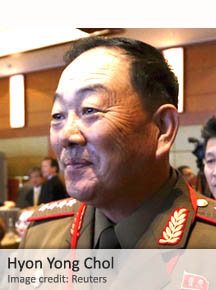
N. Korean dictator had army chief publicly executed, say intel sources

Hyon Yong CholBy JOSEPH FITSANAKIS | intelNews.org
The head of the North Korean Armed Forces was publicly executed by a firing squad using antiaircraft fire, according to a briefing by South Korean intelligence officials. Representatives from South Korea’s National Intelligence Service told reporters in Seoul last week that the execution took place on April 30 in the courtyard of a military academy in North Korean capital Pyongyang.

If the report is accurate, it would mean that Hyon Yong Chol, who led the country’s People’s Armed Forces, is no more. Hyon was considered a trusted advisor to North Korean dictator Kim Jong-Un, who appointed him Minister of the People’s Armed Forces in the summer of 2014. Despite his impressive title, Hyon’s power was limited, as the head of the North Korean Armed Forces is largely a figurehead. True military power rests with the all-powerful Central Military Commission of the Korean Workers Party, and with the National Defense Commission, whose chairman, Kim Jong-Un, controls the military. Still, if the report of Hyon’s execution turns out to be accurate, it will point to the continuation of the power-struggle among different factions within the North Korean political and military hierarchy.

According to South Korean intelligence, Hyon was executed because he “dozed off” during a high-level meeting chaired by Kim, an act that was interpreted as proof of “disrespect and disloyalty”. However, there are suspicions that Hyon had directly challenged Kim on several occasions, and that the North Korean dictator suspected him of organizing an insurrection by members of the military. The NIS said during last week’s briefing that the execution was watched by “hundreds of senior North Korean officials” and that the firing squad made use of high-caliber artillery to kill Hyon, in order to make an example of his brutal killing.

It is worth noting that South Korean intelligence briefings on the North are not always accurate. Seoul claims that North Korean authorities have executed at least 15 senior officials in the past 12 months, among them Jang Song Thaek, uncle to the country’s leader, who was thought to be the second most powerful man in the country until his purported death in December 2013.

Ex-Soviet spy living in America comes out 25 years after Cold War

Jack Barsky, real name Albrecht DittrichBy JOSEPH FITSANAKIS | intelNews.org
An Eastern Bloc spy, who still lives in the United States after arriving there in 1978 on orders of the Soviet KGB, has spoken out for the first time. The spy assumed a forged American identity and remained operational for a decade before abandoning his post and quietly blending into American suburbia, toward the end of Cold War. He spoke last weekend to CBS’ flagship investigative program 60 Minutes. He told the program that he now lives in the US as Jack Barsky, an identity he assumed soon after arriving in New York with a forged Canadian passport.

But his real name is Albrecht Dittrich, and he was born in communist-era East Germany. He was a PhD student in chemistry when, in 1970, he was approached by the Stasi, the East German secret police, and asked whether he would consider training as an intelligence operative. He accepted and trained for three years under the supervision of the Soviet KGB. In 1973, he was taken to East Berlin and detailed to the KGB for training as an operations officer. He was later transferred to Moscow, where he underwent a full year of phonetics training and was taught to speak English with “no trace of a German accent”, he says.

Soon after arriving in the US, in 1978, he acquired a social security card using a birth certificate issued for Jack Philip Barsky, an American child who had died at the age of 10 in the Washington, DC, area. He told everyone that he was born in Orange, New Jersey. He eventually enrolled in a Manhattan college, where he studied computer systems. His first job out of college was as a computer programmer for Metropolitan Life Insurance, commonly known as MetLife. While there, he stole computer code for the KGB, including “a very prominent piece of industrial software still in use today”, which was “helpful to the Soviet Union”, he says. Barsky traveled back to East Germany often, using a series of false passports. During one of those visits, he married his longtime girlfriend and had a son with her. But he also married in the United States, and had two children with his wife, so as to better blend into American society. The two families knew nothing of each other’s existence.

Then, in 1988, the KGB informed Barsky that he was to return home immediately because of fears that the Federal Bureau of Investigation may be closing in on him. But the spy disobeyed orders; he decided to abandon his post and continue living in the US. He lived a comfortable life in rural Pennsylvania, until 1997, when the FBI began monitoring him. His name had been provided to the US government by Vasili Mitrokhin, a retired archivist for the KGB, who in 1992 defected to Britain, taking with him several suitcases of classified KGB material. The FBI purchased a house next to Barsky’s and eventually bugged his home. The former KGB spy was arrested in May 1997, but struck a deal with the FBI and was spared a jail sentence in return for sharing everything he knew about his training, mission and operations with the Bureau. Today he still lives in the US. He is divorced, but says his life is in America, not in Germany.

Hersh: Pakistanis gave CIA permission to kill bin Laden

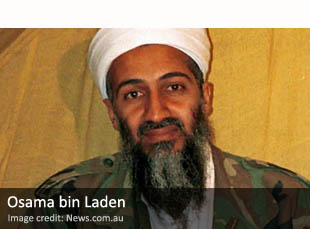
Osama bin LadenBy JOSEPH FITSANAKIS | intelNews.org
Journalist Seymour Hersh has cited senior American intelligence officials in claiming that the killing of Osama bin Laden was a joint operation between the United States and Pakistan. In a lengthy article published over the weekend in The London Review of Books, the veteran investigative reporter suggests that Pakistan had kept the al-Qaeda founder in prison for several years in the city of Abbottabad. Pakistan’s Inter-Services Intelligence Directorate —known commonly as ISI— had planned to turn bin Laden over to the US in its own time, in a quid-pro-quo move. But the Pakistanis’ plan had to be scrapped when bin Laden’s hideout was betrayed to the Central Intelligence Agency by a former ISI officer, says Hersh. His assertion agrees with previous accounts of the US raid against bin Laden, offered by security expert R.J. Hillhouse in 2011, and earlier this year by Lt. Gen. Asad Durrani, who led the ISI from 1990 to 1992.

The unnamed sources behind Hersh’s claims are an American “retired senior intelligence official” who was privy to early intelligence concerning bin Laden’s compound in Pakistan. Hersh also cites “information from inside Pakistan”, as well as two other sources from America, who have been “longtime consultants to the [US] Special Operations Command”.

The initial tip about bin Laden’s whereabouts came to the CIA in the form of a ‘walk-in’ —a term used to denote someone who voluntarily contacts an intelligence outpost, usually by simply walking into an embassy or consulate and asking to speak to the intelligence officer on duty. Hersh says the walk-in was a former high official in the ISI, who told the Agency’s Islamabad station that he could lead them to the al-Qaeda founder’s location. The retired official was successfully polygraphed and was eventually able to claim the $25 million reward offered by the US Department of State for bin Laden’s head. He and his family are now living in the Washington, DC, area, says Hersh.

The walk-in told the CIA that the compound in Abbottabad where bin Laden was living was “not an armed enclave”, as Langley had initially assumed. Instead it was a prison and was under the complete control of the ISI. The latter had managed to capture bin Laden in the Hindu Kush Mountains in 2006, by paying off some of the local tribesmen who were sheltering him. Hersh also reiterates information previously reported by intelNews, namely that the government of Saudi Arabia had entered into an agreement with Islamabad to finance the construction and maintenance of bin Laden’s prison-compound in Abbottabad.

According to Hersh, the US government eventually informed Pakistan that it had uncovered and was incessantly monitoring bin Laden’s location. Along with threats, Washington offered the ISI commanders, who were in charge of bin Laden’s security, “under-the-table personal incentives” to agree to stand aside during a US raid on the compound. Under the final agreement, struck at the end of January 2011, the Americans promised to send in a small force that would kill bin Laden, thus sparing Islamabad and Riyadh the embarrassment of the al-Qaeda founder speaking out about his previously close relations with both governments. The Pakistanis even provided the CIA with accurate architectural diagrams of the compound. Accordingly, when the US forces went into Abbottabad in May of that year, “they knew where the target was —third floor, second door on the right”, says the retired US intelligence official quoted by Hersh.

The veteran journalist adds that the American planners of the operation knew well that bin Laden had been held in virtual isolation from the outside world for years, and that he was not “running a command center for al-Qaeda operations” from Abbottabad, as the White House later claimed. Consequently, the stories about “garbage bags full of computers and storage devices” that the US Navy SEALs brought back from the compound were false. Some of the SEALs took with them some books and papers found in bin Laden’s bedroom. But most of the material that was eventually acquired by the CIA was voluntarily provided to the Americans by the Pakistanis, who took control of the compound immediately after the SEALs left and eventually razed it.

News you may have missed #892 (legislative update)

Jens MadsenBy IAN ALLEN | intelNews.org
►►Canadian lawmakers vote to expand spy powers. Legislation that would dramatically expand the powers of Canada’s spy agency has cleared a key hurdle. The House of Commons on Wednesday approved the Anti-Terror Act, which was spurred by last year’s attack on parliament. The act would give the Canadian Security Intelligence Service’s (CSIS) the ability to operate overseas and make preventative arrests. It also makes it easier for police to arrest and detain individuals without charge. Dominated by the Conservative party, the Senate is expected to approve the act before June.
►►Danish spy chief resigns over Islamist attacks. The head of Denmark’s Police Intelligence Service (PET), Jens Madsen, quit just hours before a report was due to be released into February’s fatal shootings in Copenhagen by an Islamist. Omar El-Hussein killed two people at a free speech debate and a synagogue before being shot dead by police. “It’s no secret that it is a very demanding position,” said Madsen, without giving a reason for his resignation. Justice Minister Mette Frederiksen declined to say whether the move was linked to criticisms of the police response to the attack.
►►OSCE urges France to reconsider controversial spying bill. The Organization for Security and Cooperation in Europe urged French lawmakers to reconsider provisions of a proposed law that would expand government surveillance, a measure that was backed by French parliamentarians on Tuesday, despite criticism from rights groups. “If enforced, these practices will impact the right of journalists to protect the confidentiality of sources and their overall work”, OSCE Representative on Freedom of the Media Dunja Mijatovic said Wednesday. “If confidentiality of sources is not safeguarded within a trusted communications environment, the right of journalists to seek and obtain information of public interest would be seriously endangered”, he added

France approves sweeping spy bill in response to Islamist attacks

Attack on Charlie HebdoBy JOSEPH FITSANAKIS | intelNews.org
Lawmakers in the French National Assembly have overwhelmingly approved a new bill giving the country’s intelligence services unprecedented domestic spy capabilities. The bill, which is dismissed by critics as France’s version of the United States’ PATRIOT Act, was drafted by the ruling Socialist Party just days after a group of armed Islamists attacked several targets in Paris. The attacks were primarily directed against France’s popular satirical magazine Charlie Hebdo (see photo). A dozen members of the magazine’s staff, including several internationally-known cartoonists, were killed at the magazine’s headquarters in the French capital on January 7 of this year.

The newly approved bill provides blanket-approval for the wholesale interception and storage of communications metadata, which include information about the location and size of Internet-based communications exchanges. They also include information on the identities of those sending or receiving electronic messages. The legislation also includes a provision for the establishment of a new supervisory body called the National Commission for Control of Intelligence Techniques. Its mission will be to supervise the use of surveillance powers by France’s six intelligence agencies, as well as to handle complaints relating to communications interception from members of the public.

As the bill progressed through France’s houses of parliament, the French government and its supporters argued that the country needed national legislation that would take into consideration the rapid technical changes in digital telecommunications. But critics, which included most of France’s Internet service providers, claimed that the new law would give intelligence agencies unreasonably broad surveillance powers and would hamper online commerce. These claims, however, failed to convince lawmakers; the bill was thus approved by 438 votes for to 86 against. Most parliamentarians from France’s three main parties —the Socialist Party, the rightwing Union for a Popular Movement, and the centrist Union of Democrats and Independents— voted in favor of the bill. Observers noted with surprise that most lawmakers from the Radical Party of the Left also voted in favor of the bill. In contrast, the communist-led Left Front, as well as the Greens, voted overwhelmingly against the bill.

Colombian ex-spy head sent to prison over wiretapping scandal

Maria del Pilar HurtadoBy JOSEPH FITSANAKIS | intelNews.org
The former director of Colombia’s intelligence service, who recently surrendered after being on the run for five years, has been sentenced to 14 years in prison for organizing an illegal wiretapping campaign against politicians, judges and other high-profile personalities. María del Pilar Hurtado directed the highly disreputable Administrative Department for Security (DAS) from 2007 to 2009. But on October 31, 2010, she left Colombia, apparently unobstructed, despite being a prime subject in a high-level investigation into political spying by DAS. She later surfaced in Panama, where she formally requested political asylum. The latter was granted to her in November 2010, causing the amazement of public prosecutors in Bogota, who accused the Panamanian government of subverting Colombian justice.

Hurtado is among 18 senior officials facing charges for criminal activities during the administration of Colombia’s former President Alvaro Uribe. His critics accuse him of authorizing a massive program of political surveillance, which targeted former presidents, Supreme Court judges, prominent journalists, union leaders, human rights campaigners, and even European politicians. Last summer, after consistent diplomatic pressure from the Colombian government, Panama’s Supreme Court to ruled that Hurtado’s asylum had been granted to her in violation of the Panamanian constitution. Eventually, Hurtado’s asylum was revoked; but by that time the fugitive former spy director had once again disappeared. Her whereabouts remained unknown until September 30 of this year, when Interpol issued an international arrest warrant for her capture. That same evening, Hurtado appeared at the Colombian embassy in Panama and promptly identified herself, stating that she was turning herself in.

In reporting on Hurtado’s sentencing, the Reuters news agency noted on Thursday that approximately “two-thirds of Uribe’s closest political allies during his presidency […] have been convicted, sanctioned or investigated for crimes”. Meanwhile, The Wall Street Journal reports that several senior Colombian justice officials have called for a wider investigation of Uribe himself and several of his top aides, for their role in the DAS wiretapping program.

Airbus to sue Germany for helping US spy on its operations

By JOSEPH FITSANAKIS | intelNews.orgBND headquarters in Berlin
European conglomerate Airbus has announced it will file a criminal complaint over allegations that German intelligence services collaborated with their American counterparts to spy on the aerospace firm. The impending lawsuit stems from allegations made last week in the German media that Berlin colluded with Washington to carry out industrial espionage in several European countries. The alleged collaboration involved Germany’s Bundesnachrichtendienst, known as BND, and the United States’ National Security Agency. According to German media reports, the two agencies joined forces at the request of the NSA, in order to determine whether European companies were breaking international trade embargoes. For that purpose, the two agencies launched a joint communications interception project that targeted telephone, email and other online exchanges involving a host of governmental and corporate targets in Europe. German newsmagazine Der Spiegel said last week that the BND used its Bad Aibling listening station to spy on, among other targets, the palace of the French president in Paris, the headquarters of the European Commission in Brussels, as well as Airbus, which is headquartered in Toulouse.

A statement by Airbus, which was quoted by the Reuters news agency, said that the company was well aware that large firms competing for international contracts worth hundreds of millions of euros “are often targets of espionage”. However, said the company, the recent case involving the alleged BND-NSA collaboration caused it considerable alarm, “because there are firm reasons for suspicion”. The company added that it did not wish to speculate further and noted that it had communicated with German federal authorities requesting further information on the allegations of corporate espionage. Meanwhile, Germany’s Minister of the Interior, Thomas de Maiziere, who supervises the BND, denied rumors that Berlin had tried to cover up the collaboration between the BND and the NSA, and called for the espionage allegations to be investigated by parliament.

The news comes amidst a rocky period in the bilateral relationship between Germany and the United States. In July of last year, Germany expelled the CIA station chief —essentially the top American spy in the country— from its territory. The unprecedented move was prompted by a series of extraordinary disclosures made by US defector Edward Snowden, concerning extensive American intelligence operations against Germany.

Declassified report points to flaws in post-9/11 NSA wiretapping

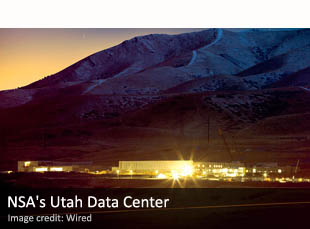
NSA's Utah Data CenterBy JOSEPH FITSANAKIS | intelNews.org
A lengthy United States government report into the post-9/11 communications interception program by the National Security Agency says it was limited in both usefulness and effectiveness. The report examines the controversial NSA program codenamed STELLAR WIND, initiated in the wake of 9/11 on direct orders by the then-President George W. Bush. It instructed the NSA to launch an extensive program of data mining of American citizens’ information, as well as monitor their telephone conversations, Internet activity and financial transactions. The existence of STELLAR WIND was revealed in 2005 by The New York Times, based on allegations by a US government whistleblower, who three years later identified himself as US Justice Department official Thomas M. Tamm. By that time, Congress had stepped in to formally legalize the program, which many criticized as unconstitutional.

Last Friday, The New York Times received an internal report on STELLAR WIND that was produced jointly in 2009 by the inspectors general of five American law enforcement and intelligence agencies. A short, unclassified summary of the document had been published by the Department of Justice when the report had first came out. But The Times have now received a complete —albeit redacted— version of the report, following a Freedom of Information lawsuit it filed last year. According to the paper, the report includes “several paragraphs” describing “success” cases that ensured from the information derived from STELLAR WIND. However, these are all redacted. But the report also points out that the program’s secrecy made it extremely obscure even within the US Intelligence Community and thus it “hampered its effectiveness” by making it less useful. It appears that only a small, select group of Central Intelligence Agency analysts even knew of the program’s existence, while Federal Bureau of Investigation analysts and agents were effectively unable to use the program due to its “highly classified status”.

The report also states that, as of 2009, senior American intelligence officials “struggled to identify any specific terrorist attacks that had been thwarted” by STELLAR WIND. Additionally, it appears that none of the counterterrorist leads derived from the program between August 2004 and January 2006 proved useful in FBI investigations.

Macau authorities deny CIA tried to assassinate Snowden

PLA Macao GarrisonBy JOSEPH FITSANAKIS | intelNews.org
Authorities in the Chinese region of Macau have denied news reports that Chinese Special Forces averted an attempt by the United States Central Intelligence Agency to kill or capture American defector Edward Snowden. The reports were initially published on March 8 on the website of China News Service, China’s second-largest state-owned news agency after Xinhua. The news agency, which serves China’s Special Administrative Regions of Hong Kong and Macau, said that a secretive unit of the Chinese People’s Liberation Army held a private function to celebrate its success against an alleged attempt by the CIA to kill Snowden. The American former computer expert worked for the CIA and the National Security Agency before defecting to Russia in the summer of 2013. Prior to arriving in Russia, however, Snowden first sought refuge in Hong Kong, where he stayed until June 23.

According to Chinese media reports, the US sent a CIA assassination squad to Hong Kong in mid-June 2013, in an effort to either abduct or kill Snowden. However, the defector’s life was allegedly saved by men from the so-called “Sharp Swords” Special Forces unit of the PLA’s Macao Quick Reaction Platoon. The latter, which is part of the PLA’s Macau Garrison, had reportedly been urgently dispatched to Hong Kong by the Chinese government, in order to guard the high-profile American defector. Some reports suggest that a fierce firefight took place between the Chinese Special Forces troops and the CIA hit squad, which eventually left four CIA officers dead, including “a senior member of the CIA’s network in Hong Kong”. When Snowden transferred to Russia, the PLA unit returned to its base in Macau, where it remains today. Chinese news media alleged that a special “special event” was held in honor of the PLA unit, during which several of its members received “first-class merit awards” for protecting Snowden and neutralizing the alleged CIA operatives.

On Monday, however, the First Secretary of the Security Office of Macau, Wong Sin Chat, told local media that the reports of a PLA award ceremony were “nothing more than rumors”. He added that there had been no attempt by anyone to assassinate Snowden, and noted that, on behalf of Macau’s state authorities, he could “absolutely confirm” that the news reports had been inaccurate. Washington has yet to comment on the allegations.

Russian hackers accessed Obama’s email correspondence

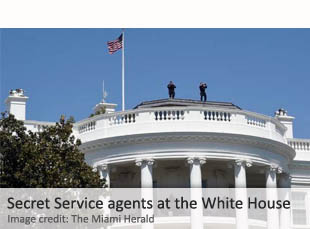
White HouseBy JOSEPH FITSANAKIS | intelNews.org
Computer hackers believed to be connected to the Russian government were able to access emails belonging to the president of the United States, according to American officials briefed about the ensuing investigation. The cyberattack on the White House was announced by American government officials in October of last year, soon after it was discovered by security experts. But The New York Times said on Saturday that the hacking was far more intrusive than had been publicly acknowledged and that the information breach resulting from it was “worrisome”. The paper said that the individuals behind the cyberattack were “presumed to be linked to the Russian government, if not working for it”. It also quoted one unnamed senior US official, who said that the group that perpetrated the hacking was “one of the most sophisticated actors we’ve seen”.

Little concrete information has emerged on the hacking, but it appears to have started with attempts to compromise computers at the US Department of State. As CNN reported earlier this month, the hackers essentially managed to take control of the State Department’s declassified computer network and exploit it for several months. In most American government departments, senior officials operate at least two computers in their offices. One is connected to the government’s secure network used for classified communications; the other is used to communicate unclassified information to the outside world. In theory, those two systems are supposed to be separate. However, it is common knowledge that the publicly linked computers often contain sensitive or even classified information. It is this unclassified part of the network that the alleged Russian hackers were able to access, in both the State Department and the White House.

According to The Times, by gaining access to the email accounts of senior US government officials, the hackers were able to read unclassified emails sent or received by, among others, President Barack Obama. The US president’s own unclassified account does not appear to have been breached, said the paper, nor were the hackers able to access the highly classified server that carries the president’s mobile telephone traffic. Nevertheless, the operation to remove monitoring files placed in US government servers by the hackers continues to this day, and some believe that the presence of the intruders has yet to be fully eradicated from the system. The Times contacted the US National Security Council about the issue, but was told by its spokeswoman, Bernadette Meehan, that the Council would “decline to comment”. The White House also declined to provide further information on the incident and the ensuing investigation.

Yemen’s Shiite rebels are not Iran proxies: US intelligence officials

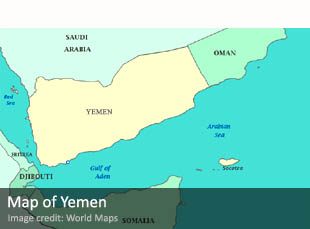
YemenBy JOSEPH FITSANAKIS | intelNews.org
American intelligence officials have cautioned against the popular narrative that Yemen’s Shiite rebels are proxies or Iran, noting that Tehran actually counseled them against conquering Yemeni capital Sana’a last year. Known as Houthis, the group formally calls itself Ansar Allah (Supporters of God) and consists almost exclusively of Zaidi tribesmen, who follow an obscure form of Shia Islam. Their denomination, which distinguishes them from Yemen’s Sunni majority, shapes their ethnic identity and has helped fuel their 20-year insurgency against the Yemeni state. In September of last year, Houthi rebels, taking advantage of the chaos caused by the spillover of the Arab Spring into Yemen, marched into Sana’a, which had been virtually abandoned by the government’s security forces, and took it over.

The surprising move caused many in the Middle East to accuse Iran, whose Shiite government maintains strong religious and ideological connections with Yemen’s Zaidi community, of using the Houthis as a proxy army in order to destabilize Saudi Arabia’s southern regions. The latter are also populated by Shiite tribes, who are ethnically affiliated with the Houthis and view Iran as a kind of spiritual homeland. In Washington, the alleged Iranian link to the Houthi insurgency has been pointed to repeatedly by lawmakers opposed to the recent agreement between the Islamic Republic and a group of nations that have come to be known as P5+1, representing the five permanent members of the United Nations Security Council plus Germany. The lawmakers argue that, while nominally agreeing to end its nuclear program, Tehran has been secretly conspiring to destabilize the entire Arabian Peninsula.

However, a report in online news agency The Huffington Post said on Monday that American intelligence officials are far from convinced that Iran is actually directing the Houthi insurgency. Citing “American officials familiar with intelligence” operations in Yemen, the New York-based news agency said Iran actively opposed the Houthis’ advance on the Yemeni capital in September of last year, and tried to prevent it. The Houthis, however, simply ignored Tehran’s advice and took over Sana’a. The Huffington Post quotes one unnamed American intelligence official who says that “it is wrong to think of the Houthis as a proxy force of Iran”. The article also quotes Bernadette Meehan, spokeswoman for the United States National Security Council, who says that “it remains [the NSC’s] assessment that Iran does not exert command and control over the Houthis in Yemen”.

If it is accurate, the US intelligence assessment would mean that Tehran is far more interested in promoting its agreement with the P5+1 than commandeering a proxy war in Yemen. Additionally, those who suggest that Yemen’s Houthis are guided by Iran appear to ignore the fact that the Zaidis follow a branch of Shiite Islam that differs markedly from Iran’s. Knowledgeable observers have pointed out that the Houthi insurgency is far more concerned with combatting local government corruption and having a say in the country’s internal power struggles than promoting Shiite Islam in Yemen and beyond.