Germany and Holland investigated Russian physicist for espionage
July 28, 2015 Leave a comment
 The German and Dutch governments allegedly joined forces to investigate a Russian supercomputer specialist, who studied in Germany and Holland, suspecting him of passing technical information to Russian intelligence. German weekly newsmagazine Der Spiegel, which published the report in its current issue, identified the physicist only as “Ivan A.” and said that the 28-year-old man was a member of a physics laboratory affiliated with the Max Planck Institute in the western German city of Bonn. According to Spiegel, Ivan A. studied in Bonn between 2009 and 2011, conducting research on quantum physics and nanophotonics, an area of study that examines the behavior of light on the nanometer scale. Much of the research in this specialized field relates to supercomputers and cutting-edge quantum computing applications.
Citing unnamed government sources, Spiegel said that Germany’s Office for the Protection of the Constitution, which is the country’s top counterintelligence agency, started to monitor the scientist once he began meeting regularly with a Russian diplomat. The diplomat, who was stationed at the consulate of the Russian Federation in Bonn, had been identified by German intelligence as a member of the Russian secret services. German counterintelligence officials thus began suspecting Ivan A. of channeling restricted technical information to Moscow via the Russian diplomat.
However, in 2013 Ivan A. relocated to the Dutch city of Eindhoven to study at the Eindhoven University of Technology, at which point German counterintelligence officers reached out to their Dutch colleagues. During one of his trips from Germany to Holland, Ivan A. was detained for several hours along with this wife at the Düsseldorf International Airport. He was questioned and his personal electronic devices were confiscated. Upon his release Germany and Holland jointly launched against him a formal investigation for espionage. Eventually his European Union residence visa was cancelled and he was expelled by the Dutch government as a danger to national security. Der Spiegel said Ivan A. returned to Russia and today denies that he was a spy.
Espionage scandals frequently rock German-Russian relations. In 2013, a German court convicted a married couple, Andreas and Heidrun Anschlag, of having spied for the Soviet Union and Russia since at least 1990. The two had used forged Austrian passports to enter West Germany from Mexico in 1988 and 1990.
► Author: Joseph Fitsanakis | Date: 28 July 2015 | Permalink: https://intelnews.org/2015/07/28/01-1744/
 A United States Navy intelligence analyst, who is serving a life sentence for spying on America for Israel, may soon be set free in an effort by Washington to quieten Israeli criticism of a recently struck international agreement on Iran’s nuclear program. Many in US counterintelligence
 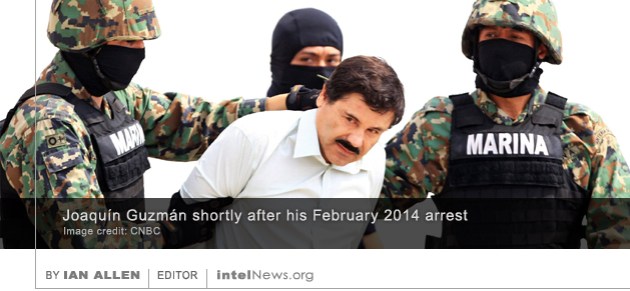 The notorious drug lord Joaquín ‘El Chapo’ Guzmán captured the attention of the world’s media a few weeks ago, when he
  Officials in China think that United States spy agencies are using casinos in Macau to entrap Chinese government employees, according to a report produced on behalf of an American-owned casino chain in the former Portuguese colony. The report was produced by a private investigator and was commissioned by Sands China, the Macau branch of a casino venture owned by American gambling magnate Sheldon Adelson. Its goal was to investigate why the Chinese-appointed authorities in Macau were hostile to the gambling industry in general and Sands China in particular.
 A government prosecutor in France has urged that a probe looking into whether the late Palestinian leader Yasser Arafat was poisoned with a radioactive substance should be dropped, because evidence shows he died of natural causes. Arafat was the founder of Palestinian nationalist group Fatah and led the Palestine Liberation Organization for over three decades before becoming the first president of the Palestinian Authority. He died in November 2004 at the Percy military hospital in Paris, France, weeks after being transferred there from his headquarters in Ramallah, West Bank. His official records indicate that he died from a stroke, which he suffered as a result of a blood disorder known as disseminated intravascular coagulation.
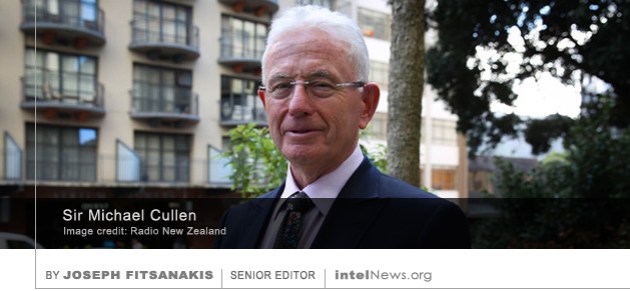 A former deputy prime minister of New Zealand, who is heading a major review of intelligence practices in the country, has said in an interview that spy agencies hurt their mission by practicing excessive secrecy. Sir Michael Cullen served as finance minister, education minister and attorney-General before serving as deputy prime minister of New Zealand, from 2002 to 2008. He was recently appointed by the government to co-chair a broad review of state intelligence agencies, with particular focus on updating the applicable legislative framework and evaluating the oversight exercised by lawmakers and the executive. The review is expected to affect the work of New Zealand’s two most visible intelligence agencies, the Security Intelligence Service and the Government Communications and Security Bureau.
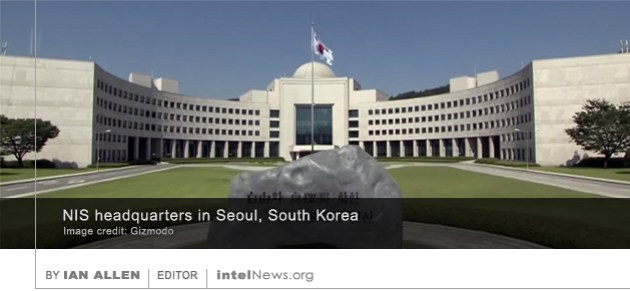 A suicide note found next to the body of a South Korean intelligence officer mentions a phone hacking scandal that has caused controversy in the country. The 45-year-old man, identified only as “Lim” by South Korean authorities, worked for the country’s primary intelligence organization, the National Intelligence Service (NIS). He was found dead late on Saturday morning inside his car, which had been parked on a deserted rural road on the outskirts of South Korean capital Seoul. According to local reports, authorities found a metal plate with burnt-out coal inside his car, which had been locked from the inside. Finding no apparent marks on his body, the police have ruled his death a suicide.
 The final piece of sealed testimony in one of the most important espionage cases of the Cold War has been released, 64 years after it was given. The case led to the execution in 1953 of Julius and Ethel Rosenberg, an American couple who were convicted of spying for the Soviet Union. The Rosenbergs were arrested in 1950 for being members of a larger Soviet-handled spy ring, which included Ethel’s brother, David Greenglass. Greenglass agreed to testify for the US government in order to save his life, as well as the life of his wife, Ruth, who was also involved in the spy ring. He subsequently fingered Julius Rosenberg as a courier and recruiter for the Soviets, and Ethel as the person who retyped the content of classified documents before they were surrendered to their handlers. That piece of testimony from Greenglass the primary evidence used to convict and execute the Rosenbergs.
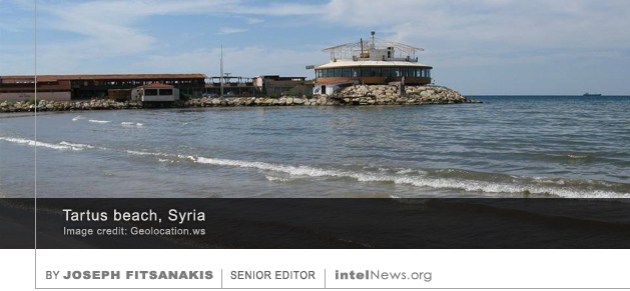 A leaked document from an American intelligence agency appears to confirm that Israeli commandos were behind the assassination of a top Syrian government official, who was shot dead outside his luxury villa on the Syrian coast in 2008. Muhammad Suleiman had been a close aide of current Syrian President Bashar al-Assad even before the latter rose to power in 2000. Once al-Assad became ruler of Syria, Suleiman was appointed special presidential advisor in the areas of arms procurement and strategic weapons. He handled intelligence affairs for the Assad regime and he was involved in weapons transfers from Iran to the Lebanese militant group Hezbollah, while also helping train Hezbollah operatives. He was also rumored to have a senior administrative role in the Syrian nuclear weapons program.
 A lawsuit against Britain’s Security Service (MI5) by a former spy, who in the 1980s infiltrated the Provisional Irish Republican Army, commonly known as IRA, is to be judged in secret, a court in London has decided. The spy, Martin McGartland, of Belfast, Northern Ireland, was recruited by the Special Branch of the Royal Ulster Constabulary in the mid-1980s. The information he supplied to the security agencies over several years is widely credited with having saved the lives of at least 50 British police officers and soldiers. His autobiographical experiences formed the basis of the 2008 motion picture 50 Dead Men Walking.
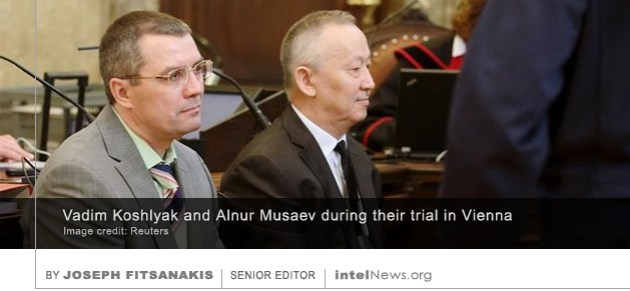 Kazakhstan’s former spy chief and a former presidential bodyguard have been acquitted by an Austrian jury, five months after a co-defendant in their double-murder trial, who was also the Kazakh president’s former son-in-law, was found dead in his Vienna cell. As intelNews has written
  The head of the main intelligence agency of the island state of Cyprus has resigned after an invoice leaked online showed that the agency made several purchases of controversial surveillance software. Andreas Pentaras, who has led the Cyprus Intelligence Service (KYP) since 2013,
 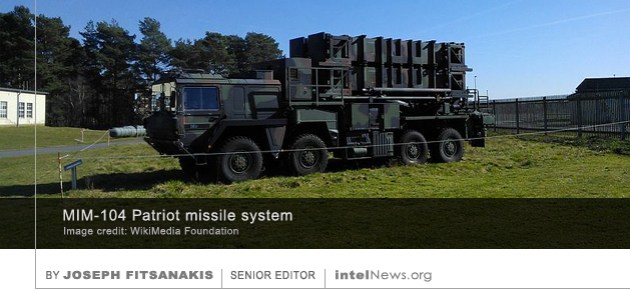 A Patriot missile system stationed in Turkey by the North Atlantic Treaty Organization (NATO) was allegedly hacked by a remote source, according to reports. German magazine Behörden Spiegel
  A fortnight ago, I gave an








Will Israeli spy Pollard receive secret spy wages after US lets him go?
July 29, 2015 by Joseph Fitsanakis 3 Comments
Stein was referring to a practice that is common among intelligence agencies, namely to deposit cash in offshore bank accounts as a way of compensating their assets. The latter can gradually access those funds during trips abroad, usually after their retirement, long after having ceased their espionage activities. If the asset is arrested or perishes, the funds are usually passed on to the asset’s surviving relatives. This method protects the asset from the prying eyes of counterintelligence agencies in the asset’s home country, and sends a message to future recruits that assets and their families will be taken care of by their handlers.
Following Pollard’s arrest in 1985, US government prosecutors repeatedly rejected the view, put forward by Pollard’s legal team, that the former US Navy analyst was a romantic who had spied on the US for Israel because he wanted to assist a small country surrounded by enemies. They told the court that Pollard had also spied for South Africa and had tried to spy for Australia, before finally settling for working for Israel. Far from being a romantic, they said, Pollard was a calculated businessman, who sought financial compensation for his services to the Jewish state. Indeed, according to the Naval Criminal Investigative Service and the Federal Bureau of Investigation, Pollard had pocketed at least $50,000 from his Israeli handers by the time of his arrest, in addition to receiving several expensive items as gifts. The spy had also been promised that Israel would deposit $30,000 every year in a Swiss bank account, which Pollard could access after his retirement.
In his article published Tuesday, Stein wonders whether Israel has continued to deposit $30,000 a year in Pollard’s reputed Swiss bank account, which is a standard practice for intelligence agencies. If the answer is yes, then the amount available today would be in the neighborhood of $1 million. If Pollard moves to Israel come November, as many believe he will, will he then have access to the money he earned by spying on the US government as an unregistered agent of a foreign power? And if so, how should this be expected to affect the already rocky relations between Washington and Tel Aviv?
Stein said he spoke to Pollard’s New York lawyer, Eliot Lauer, who called the rumors of a secret Swiss bank account “poppycock” and added that Pollard had been “secured employment and housing […] in the New York area”. Additionally, there are some who speculate that Pollard may not be allowed to leave the US as part of the conditions of his parole. At this stage, however, nobody knows for sure. Stein contacted the US Parole Commission, NCIS and the Central Intelligence Agency, but all declined comment.
► Author: Joseph Fitsanakis | Date: 29 July 2015 | Permalink: https://intelnews.org/2015/07/29/01-1745/
Filed under Expert news and commentary on intelligence, espionage, spies and spying Tagged with Eliot Lauer, espionage, Israel, Jeff Stein, Jonathan Jay Pollard, News, United States