Soviet mole penetrated Australian intelligence, says former officer
August 19, 2015 3 Comments
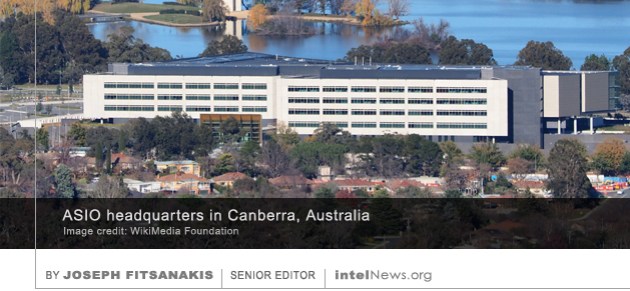 A Soviet double spy was able to penetrate the senior echelons of Australia’s intelligence agency during the Cold War, according to a retired Australian intelligence officer who has spoken out for the first time. Molly Sasson, was born in Britain, but worked for the Australian Security Intelligence Organisation (ASIO) from 1969 until her retirement in 1983. A fluent German speaker, Sasson was first recruited during World War II by the Royal Air Force, where she worked as an intelligence officer before transferring to the Security Service (MI5), Britain’s domestic intelligence agency. At the onset of the Cold War, Sasson helped facilitate the defection to Britain of Colonel Grigori Tokaty, an influential rocket scientist who later became a professor of aeronautics in London. But in the late 1960s, Sasson moved with her husband to Australia, where she took up a job with ASIO, following a personal invitation by its Director, Sir Charles Spry. Upon her arrival in Canberra, Sasson took a post with ASIO’s Soviet counterintelligence desk, which monitored Soviet espionage activity on Australian soil.
Aged 92 today, Sasson spoke publicly for the first time on Australia’s ABC News television network about her life and times. She told the reporter that she had “no doubt at all” that ASIO had been infiltrated by at least one Soviet-handled double spy in the 1970s. “If we put on an operation, it failed”, she said, adding that the Soviets “always seemed to be a step ahead of us. There must have been a tip-off. It can’t have been otherwise”, said Sasson. The 92-year-old former intelligence officer recounted one specific operation involving a Russian diplomat named Vladimir Dobrogorsky, who was believed by ASIO to be an intelligence operative. According to Sasson, ASIO counterintelligence officers were monitoring Dobrogorsky and knew the precise time and place that he was scheduled to meet with an Australian informant in downtown Canberra. However, not only did the meeting not occur, but Dobrogorsky left the Soviet embassy in the Australian capital that morning, never to return.
“I am convinced that someone within ASIO tipped him off”, said Sasson. Not only that, but when she and other ASIO officers expressed their concerns about the possible existence of a mole inside ASIO, senior agency officials dismissed them. At one point she was told to “not open this can of worms”, she told ABC News. The former ASIO officer added that the chief of the United States Central Intelligence Agency station in Canberra shared similar concerns with the ASIO’s leadership, but that they too were dismissed. Soviet intelligence operatives were notably active in Australia and New Zealand during the Cold War, as it was believed that intelligence agencies in the two Pacific Rim countries offered an easier path toward accessing British and American government secrets, due to the so-called Five Eyes agreement.
► Author: Joseph Fitsanakis | Date: 19 August 2015 | Permalink
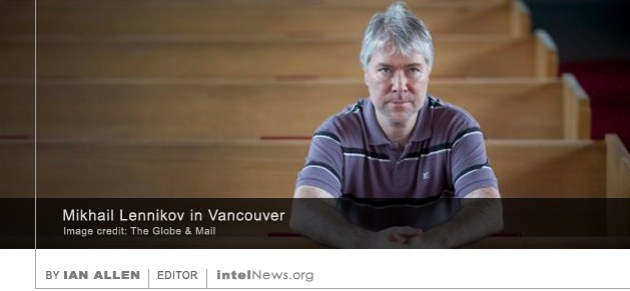 A Russian former officer in the Soviet KGB, who defied deportation orders issued against him by the Canadian government by taking refuge in a Vancouver church for six consecutive years, has voluntarily left the country. Mikhail Lennikov, who spent five years working for the KGB in the 1980s, had been living in Canada with his wife and son since 1992. But in 2009, Canada’s Public Safety Ministry rejected Lennikov’s refugee claim and
 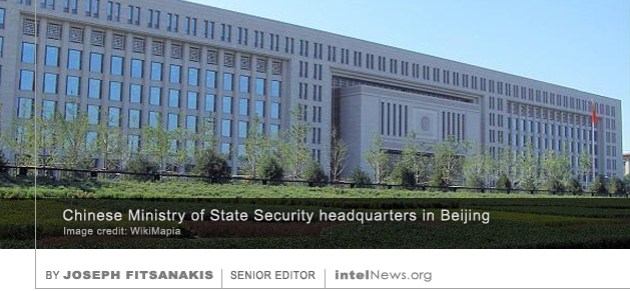 The White House has warned the Chinese government to stop deploying on American soil intelligence operatives masquerading as tourists, business executives or other false covers. Nowadays the standard practice for intelligence personnel deployed abroad is to be posted as diplomatic staff in a foreign embassy or consulate. But there are some intelligence officers who do not follow that practice. These are known as non-official-cover operatives, or NOCs in American intelligence parlance. NOCs are typically high-level principal agents or officers of an intelligence agency, who operate without official connection to the diplomatic authorities of the country that is employing them. They typically pose as business executives, students, academics, journalists, or non-profit agency workers. Unlike official-cover officers, who are protected by diplomatic immunity, NOCs have no such protection. If
 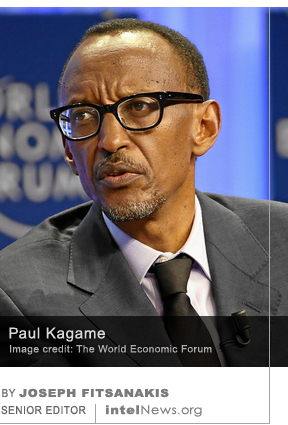 The government of Rwanda uses intelligence operatives to systematically spy on, harass, and even kill opposition figures living abroad, according to a report issued by a Canadian security agency. The report was written by the National Security Screening Division of the Canada Border Services Agency, and was partly based on information from the Canadian Security Intelligence Service (CSIS). It was released as part of a court case involving a Rwandan man living in Canada, who was accused of working as a spy for the government of Rwanda.
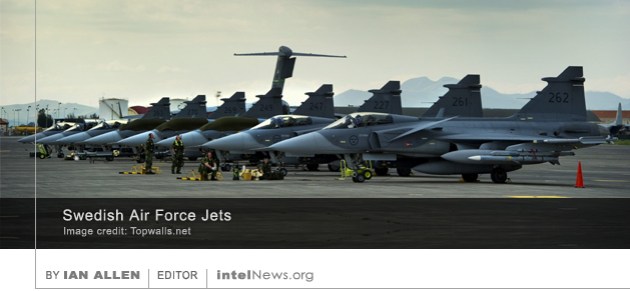 Swedish Air Force spy planes conducted reconnaissance flights over Russia on Wednesday —and there was nothing the Kremlin could do about it. The flights were part of the 1992 Treaty on Open Skies, an international agreement designed to build trust among former Cold War rivals. The treaty was first proposed by the United States in 1990, with the intention of covering all member-states of the Warsaw Pact and the North Atlantic Treaty Organization. When it was eventually signed, on March 24, 1992, it was ratified by 23 countries, including the US and Russia. An additional 11 states have joined the treaty at various times since, with Sweden joining in 2002. On Wednesday, Swedish reconnaissance airplanes conducted flights over a number of Russian military installations as part of the treaty, as they do every year during predetermined times.
 A government watchdog in Canada is preparing to hold a series of closed-door hearings to weigh accusations that the country’s intelligence services illegally spied on law-abiding activists opposing the construction of oil pipelines. The British Columbia Civil Liberties Association (BCCLA) sued the Royal Canadian Mounted Police (RCMP) and the Canadian Security Intelligence Service (CSIS) in February 2014,
 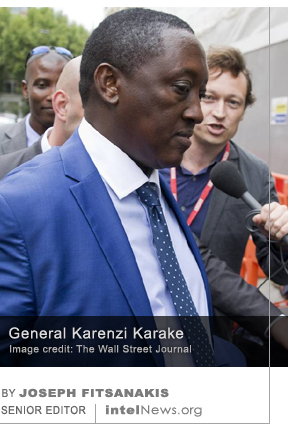 A Rwandan former intelligence chief, whose legal team is led by the wife of British former Prime Minister Tony Blair, has been freed after a court in the United Kingdom refused to extradite him to Spain to face war crimes charges. General Emmanuel Karenzi Karake, 54, was the most senior intelligence official in the administration of Rwandan President Paul Kagame. He rose to fame as a commander in the Rwandan Patriotic Front (RPF), an armed rebel group from Rwanda’s minority Tutsi tribe that fought to end the genocide inflicted upon the Tutsis by their rival Hutus. In 1994, following the death of nearly a million people, the RPF took power in Rwanda and ended the slaughter. That accomplishment caused a rapid upsurge in the popularity of Karake and other senior RPF leaders. Karake’s popularity remains strong among the Tutsis despite his dramatic falling-out with Kagame in 2010, which led to the general’s dismissal from the government.
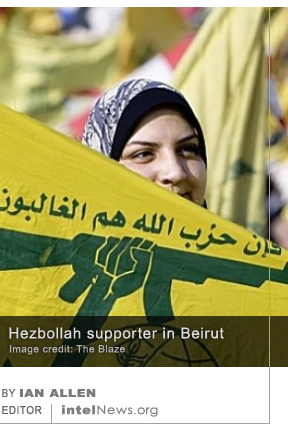 Israeli authorities have charged a Swedish citizen with working as an intelligence officer for the Lebanese militant group Hezbollah. It is believed that Hassan Khalil Hizran, 55, was born to Palestinian refugees in Lebanon, from where he emigrated to Sweden many years ago. But he was
 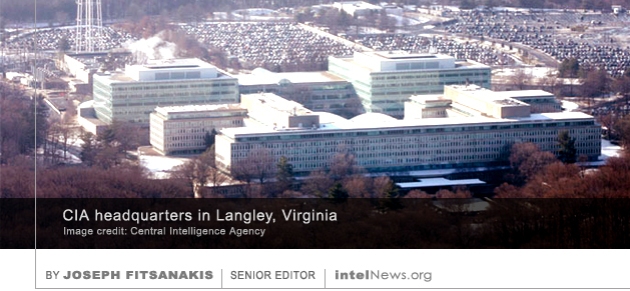 The administration of United States President Barack Obama has yet to nominate a replacement for the Central Intelligence Agency’s inspector general despite calls by Congress to quickly fill the sensitive post. The position has remained vacant since the end of January of this year, when David Buckley
 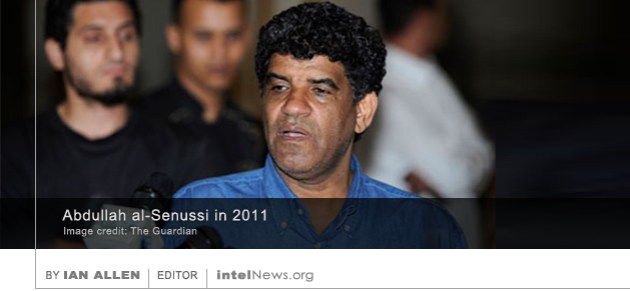 A group of American, British and Irish citizens are pressuring their respective governments to prevent the impending execution of Libya’s former intelligence strongman. Abdullah al-Senussi, 65, led Libya’s intelligence services during the regime of the country’s late dictator Muammar al-Gaddafi. Last week, however, he was sentenced to death by a court in Tripoli for his role in “inciting genocide” during the 2011 civil war that toppled Gaddafi’s regime. American, British and Irish officials are being urged to intervene to stop Senussi’s execution, so that he can help shed light on Libya’s role in international terrorist plots in the 1980s and 1990s.
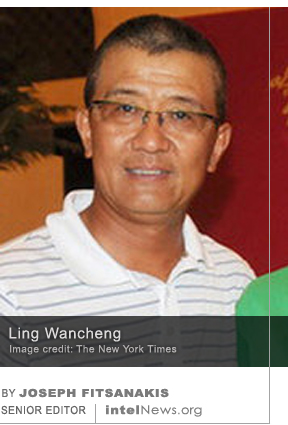 A well-connected Chinese businessman, described by officials as potentially one of the most damaging defectors in the history of modern China, is reputed to have requested political asylum in the United States. Ling Wancheng, 54, is the multimillionaire brother of Ling Jihua, a close aide of China’s former premier, Hu Jintao, who rose through the ranks of the Communist Party of China to eventually lead its Central Committee’s General Office. With the help of his brother’s connections and political influence, Ling Wancheng transformed himself from a journalist to an entrepreneur in the early 2000s. Soon after receiving his graduate degree in business administration, he founded an investment firm and joined China’s nouveau riche elite. His wealth, which is estimated to be in the hundreds of millions of dollars, coupled with his older brother’s senior position within the Communist Party, made him one of China’s most politically connected entrepreneurs.
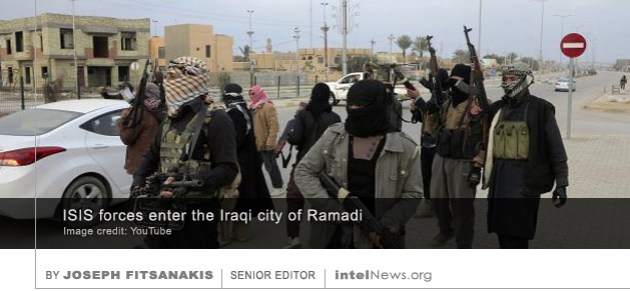 Internal reports by American intelligence agencies say that the Islamic State remains strong in Iraq and Syria, and that the group has been able to effortlessly replace its 10,000 fighters who have been killed in the past year. Despite the over $1 billion spent in the war against it by the Syrian and Iraqi governments, as well as by the West, the militant group is “fundamentally no weaker” than it was a year ago, when the United States began a bombing campaign targeting Islamic State strongholds, according to the reports. The Associated Press, which
  In 2007 I wrote in my “
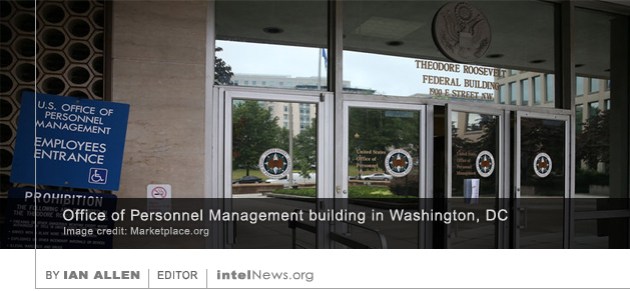 A United States Congressional review into last month’s cyber theft of millions of government personnel records has concluded that its impact will go far “beyond mere theft of classified information”. Up to 21 million individual files were








Pakistan spy chief who helped US covert activities in Soviet-Afghan war dies
August 20, 2015 by Joseph Fitsanakis 1 Comment
As head of the ISI, General Gul helped the intelligence agencies of several countries, including those of Saudi Arabia and the United States, engage covertly in the war taking place across the Hindu Kush. In particular, he helped facilitate the transfer of foreign funds and weaponry to Sunni mujahedeen forces who were fighting the Soviets. It was from within the ranks of these forces that groups like al-Qaeda and the Taliban later emerged.
General Gul was never shy about his close operational links with the Afghan Taliban and al-Qaeda. He maintained close contact with al-Qaeda founder Osama bin Laden and with the late Mullah Muhammad Omar, leader of the Afghan Taliban. However, at the conclusion of the Soviet-Afghan War, Washington gradually disassociated itself from Sunni fundamentalist groups, including the Taliban. But General Gul maintained his public support for Muslim-inspired militant groups, among them Lashkar-e-Taiba, which operates in Indian-controlled Kashmir. As America began distancing itself from its former Afghan allies, and siding instead with India, General Gul’s relations with Washington worsened dramatically. In 2009, the General gave one of many controversial interviews to the media, in which he condemned the increasing military and political collaboration between the US and India. He noted that “the Americans and Israel [are] hell-bent” on positioning India to the role of overseer of “60 per cent of the world’s trade [which] passes through the Indian Ocean”, including transport routes of “Gulf oil, bound for China and Japan”.
In later years, General Gul became a vocal critic of US foreign policy in the Middle East and Central Asia, spoke out against the US invasions of Afghanistan and Iraq, and publicly supported the Taliban insurgency against the North Atlantic Treaty Organization forces in Afghanistan. He is survived by a widow and three children.
► Author: Joseph Fitsanakis | Date: 20 August 2015 | Permalink
Filed under Expert news and commentary on intelligence, espionage, spies and spying Tagged with Hamid Gul, ISI, News, obituaries, Pakistan, Soviet War in Afghanistan