KGB spy shares details of his escape to Britain in 1985
July 6, 2015 Leave a comment
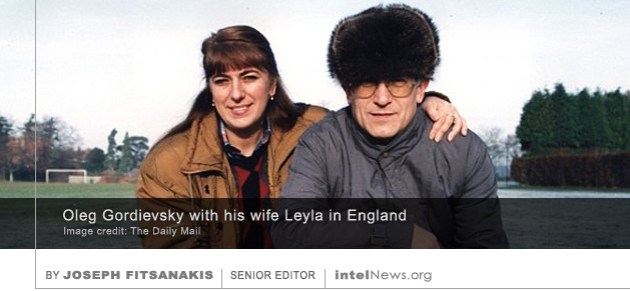 A Soviet double spy, who secretly defected to Britain 30 years ago this month, has revealed for the first time the details of his exfiltration by British intelligence in 1985. Oleg Gordievsky was one of the highest Soviet intelligence defectors to the West in the closing stages of the Cold War. He joined the Soviet KGB in 1963, eventually reaching the rank of colonel. But in the 1960s, while serving in the Soviet embassy in Copenhagen, Denmark, Gordievsky began feeling disillusioned about the Soviet system. His doubts were reinforced by the Soviet invasion of Czechoslovakia in 1968. It was soon afterwards that he made the decision to contact British intelligence.
Cautiously, Britain’s Secret Intelligence Service (known as MI6) communicated with Gordievsky, and in 1974 he secretly became an agent-in-place for the United Kingdom. Eight years later, in 1982, Gordievsky was promoted to KGB rezident (chief of station) in London. While there, he frequently made contact with his MI6 handlers, giving them highly coveted information on Soviet nuclear strategy, among other things. He is credited with informing London of Mikhail Gorbachev’s imminent ascendency to the premiership of the Soviet Union, long before he was seen by Western intelligence as a viable candidate to lead the country.
But in May of 1985, Gordievsky was suddenly recalled to Moscow, where he was detained by the KGB. He was promptly taken to a KGB safe house in the outskirts of Moscow and interrogated for five hours, before being temporarily released pending further questioning. Remarkably, however, Gordievsky managed to escape his KGB surveillance and reappear in Britain less than a week later. How did this happen? On Sunday, the former double spy gave a rare rare interview to The Times, in which he revealed for the first time the details of his escape to London. He told The Times’ Ben Macintyre that he was smuggled out of the USSR by MI6 as part of Operation PIMLICO. PIMLICO was an emergency exfiltration operation that had been put in place by MI6 long before Gordievsky requested its activation in May of 1985.
Every Tuesday, shortly after 7:00, a British MI6 officer would take a morning stroll at the Kutuzovsky Prospekt in Moscow. He would pass outside a designated bakery at exactly 7:24 a.m. local time. If he saw Gordievsky standing outside the bakery holding a grocery bag, it meant that the double agent was requesting to be exfiltrated as a matter of urgency. Gordievsky would then have to wait outside the bakery until a second MI6 officer appeared, carrying a bag from the Harrods luxury department store in London. The man would also be carrying a Mars bar (a popular British candy bar) and would bite into it while passing right in front of Gordievsky. That would be a message to him that his request to be exfiltrated had been received.
Four days later, Gordievsky used his skills in evading surveillance and shook off (or dry-cleaned, in espionage tradecraft lingo) the KGB officers trailing him. He was then picked up by MI6 officers and smuggled out of the country in the trunk of a British diplomatic car that drove to the Finnish border. Gordievsky told The Times that Soviet customs officers stopped the car at the Finnish border and surrounded it with sniffer dogs. At that moment, a British diplomat’s wife, who was aware that Gordievsky was hiding in the car, came out of the vehicle and proceeded to change her baby’s diaper on the trunk, thus safeguarding Gordievsky’s hiding place and masking his scent with her baby’s used diaper. If it hadn’t been for the diplomat’s wife, Gordievsky told The Times that he might have been caught.
After crossing the Soviet-Finnish border, Gordievsky traveled to Norway and from there he boarded a plane for England. Soviet authorities promptly sentenced him to death, but allowed his wife and children to join him in Britain six years later, after British Prime Minister Margaret Thatcher personally lobbied the Soviet government. Gordievsky’s death penalty still stands in Russia. In 2007, the Queen made Gordievsky a Companion of the Most Distinguished Order of St. Michael and St. George for services rendered to the security of the British state.
► Author: Joseph Fitsanakis | Date: 6 July 2015 | Permalink: https://intelnews.org/2015/07/06/01-1729/
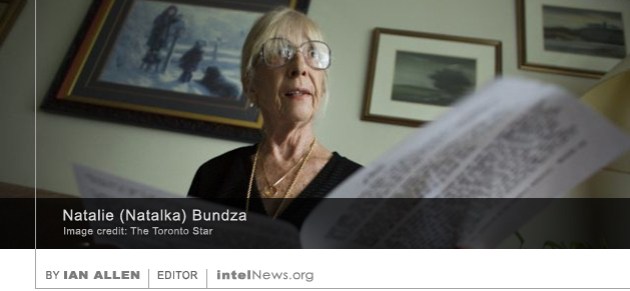 A set of declassified intelligence documents from the 1950s and 1960s offer a glimpse into the secret war fought in Canada between American and Soviet spy agencies at the height of the Cold War. The documents were authored by the United States Central Intelligence Agency and declassified following a Freedom of Information Act request filed on behalf of the Canadian newspaper The Toronto Star.
  An American former supreme allied commander of the North Atlantic Treaty Organization has warned that a possible Greek exit from the Eurozone “could become a geopolitical nightmare” for the European Union and NATO. James Stavridis, a retired four-start US Navy admiral, who served as NATO’s 16th Supreme Allied Commander Europe from 2009 to 2013, said solving the Greek crisis should not be left to the central bankers. In an article
 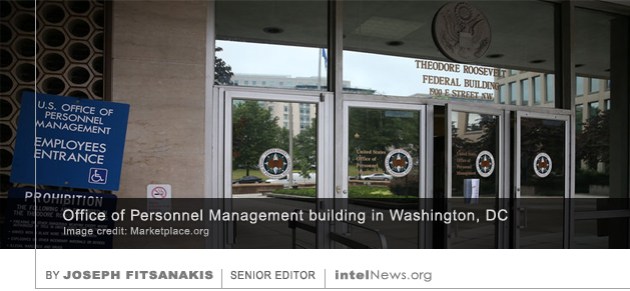 United States intelligence officials expressed concerns about a federal database containing details of security-clearance applications in the years prior to a massive cyber hacking incident that led to the theft of millions of personnel records. Up to
 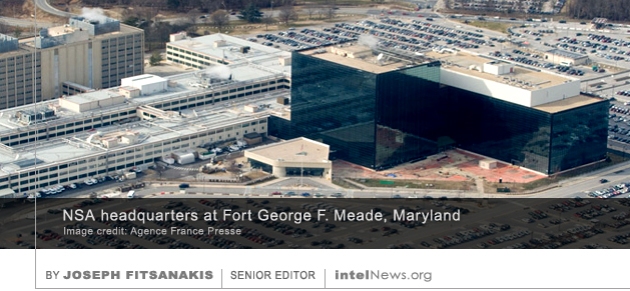 New information published by international whistleblower website WikiLeaks seems to suggest that the United States National Security Agency (NSA) collected information on export contracts by French companies and sought inside information on France’s position in international trade negotiations. According to the website, which
  Several Western countries issued travel warnings for Greece on Sunday, as the Greek government shut down all banks and imposed capital controls following the breakdown of talks between Athens and the European Union.
 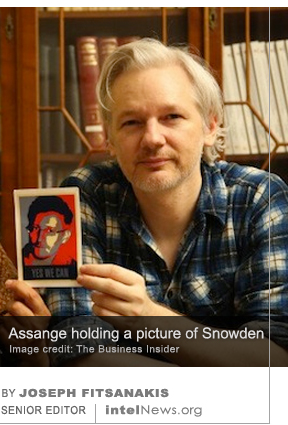 Leaders from all sides of the French political spectrum urged the French government on Thursday to offer political asylum, and even French citizenship, to the American defector Edward Snowden and to WikiLeaks founder Julian Assange. The calls were made in response to
  n in Syria and Iraq, the continuing crises in Ukraine and in Libya, as well as the financial meltdown in Greece. So there is a recognition that their intelligence agencies must continue to work together on several pressing issues.
 routine practice. However, I do believe that this regimen can easily be changed to address particular needs, through what is called a “presidential finding”, basically a direct order issued by the president of the United States to target an individual foreign leader.
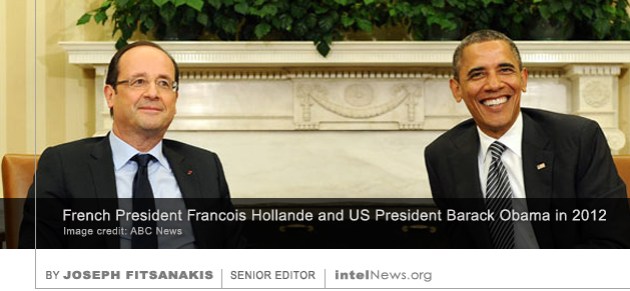 The president of France has convened an emergency meeting of the country’s highest national security forum in response to revelations that the United States spied on three French presidents. The Conseil de la Défense is to convene in Paris on Wednesday to discuss the emergence of documents that appear to implicate the US National Security Agency (NSA) in spying on Jacques Chirac and Nicolas Sarkozy, who ruled France from 1995 to 2012. The documents further indicate that the NSA may have also targeted the personal communications of Francois Hollande, France’s current head of state.
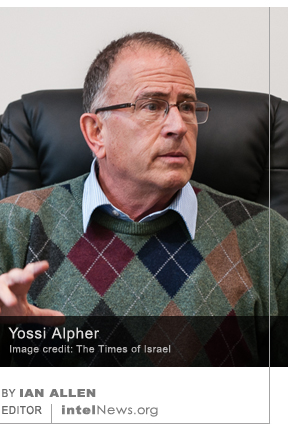 Yossi Alpher, a former Israeli intelligence officer, who was directly involved in numerous top-secret operations during his spy career, has published a new book that analyzes the overarching strategy behind Israel’s spy operations. Alpher served in Israeli Military Intelligence before joining the Mossad, where he served until 1980. Upon retiring from the Mossad, he joined Tel Aviv University’s Jaffee Center for Strategic Studies, which he eventually directed. Throughout his career in intelligence, Alpher worked or liaised with every Israeli spy agency, including the Shin Bet –the country’s internal security service.
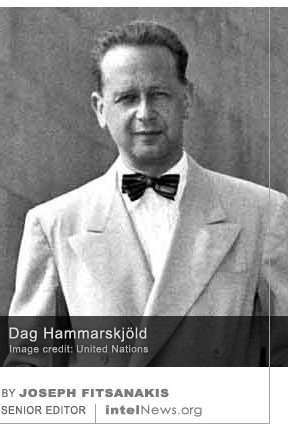 A panel of experts commissioned by the United Nations is about to unveil fresh evidence on the mysterious death in 1961 of UN secretary general Dag Hammarskjöld, who some claim was murdered for supporting African decolonization. The evidence could spark a new official probe into the incident, which has been called “one of the enduring mysteries of the 20th century”.
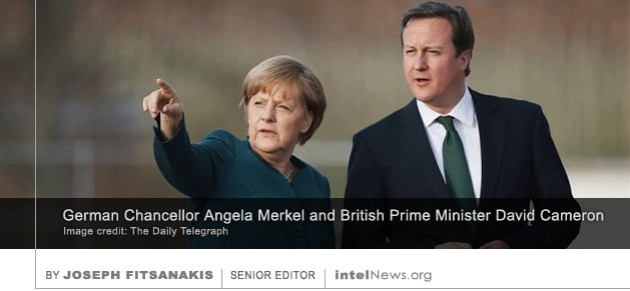 A German parliamentary committee investigating spying operations may take the German government to court in order to force it to give up secret documents on Berlin’s intelligence cooperation with Britain. The Committee of Inquiry into Intelligence Operations was set up in 2014, after files leaked by American defector Edward Snowden
 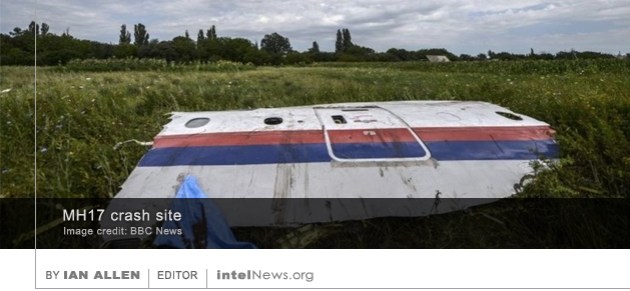 A German investigator, who is probing the downing of a civilian airliner over Ukraine nearly a year ago, says that an informant has claimed a multimillion reward for information pointing to those responsible for the attack. The investigator, Josef Resch, of Lübeck, Germany, says that a binding non-disclosure agreement does not allow him to reveal his client, who offered the $47 million reward. But he told German business magazine Capital that he is hopeful his client will soon reveal the details, since “people who pay that kind of money in exchange for information do not keep it for themselves”. However, he also hinted that his client may be an intelligence agency, who may decide to “deal with the matter without fanfare”.
 Australian law enforcement and intelligence agencies routinely use paid informants in Indonesia and Pakistan as part of a decade-old covert war against human traffickers in the Indian Ocean. This information has been revealed by The Australian newspaper in response to







Analysis: New Dutch spy bill proposes changes in approval, oversight
July 7, 2015 by intelNews 1 Comment
The services’ special powers, such as interception and hacking, can only be used for a subset of their legal tasks. That subset includes national security,
foreign intelligence and military intelligence. The government annually determines the intelligence needs of itself and other intelligence consumers; the outcome is used to focus and prioritize strategic and operational plans and activities.
The services have and hold a specific interception power, i.e., interception of communication of a specified person, organization and/or technical characteristic (e.g. IMEI, phone number, IP address, email address). This requires approval from the minister in charge. The services also have and hold a non-specific interception power —i.e., ‘bulk’ interception— but the bill expands that power from ether-only to “any form of telecommunications or data transfer”, thus including cable networks. Furthermore, the bill no longer limits the non-specific power to communication that has a foreign source and/or foreign destination, meaning that domestic communication is in scope. Like the specific power, the non-specific power requires approval from the minister in charge. The services can retain raw bulk intercepts not just for one year, as is presently the case, but for three years. Encrypted raw intercepts can be stored indefinitely, as is presently the case; the three year retention period is triggered when bulk-intercepted encrypted data is decrypted.
Certain categories of “providers of communication services” will be required, in consultation with the services, to provide access to their networks, if so requested by the services on the basis of approval from the minister. Those categories will be determined by governmental decree. The term “provider of a communication service” is derived from the term “service provider” in the Budapest Convention on Cybercrime of 2001, and is defined so as to include public telecommunication networks, non-public telecommunications networks, hosting providers and website operators. The services have and hold the right to, under certain conditions and after approval from the Minister, compel “anyone” to decrypt data or hand over keys. The approval request for that must include an indication of the conversations, telecommunications or data transfers that are targeted.
Read more of this post
Filed under Expert news and commentary on intelligence, espionage, spies and spying Tagged with AIVD (Netherlands), Analysis, intelligence legislation, JSCU (Netherlands), MIVD (Netherlands), Netherlands