News you may have missed #832 (foiled Canada terror plot)

Toronto, CanadaBy IAN ALLEN | intelNews.org |
►►Two arrested in Canada terror plot. Chiheb Esseghaier, 30, and Raed Jaser, 35, who live in Montreal and Toronto, were planning to derail a Via Rail passenger train in Toronto  with support from “al-Qaeda elements located in Iran”, Canadian police said Monday. “This is the first known al-Qaeda planned attack that we’ve experienced in Canada”, Superintendent Doug Best told a news conference. Police said the men did not receive financial support from al-Qaeda, but declined to provide more details. There was no apparent reason to think the planned attacks were state-sponsored.
►►Canada foils ‘al-Qaeda inspired’ terror attack on train. The Royal Canadian Mounted Police (RCMP) said the surveillance operation leading to the arrests of the two suspects was “a result of extensive collaborative efforts”. Chief Spt Jennifer Strachan said the two men had sought to target “a specific route, but not necessarily a specific train”. At the same time, the RCMP said they believed the plot was in the planning stage and “there was no imminent threat to the general public”.
►►Tip from Muslim community ‘helped foil’ al-Qaeda plot. Canadian lawyer Hussein Hamdani told CTV News Channel that a tip from the Muslim community helped investigators foil the alleged al-Qaeda plot. “This goes to show the partnership between the Muslim community in Canada and the RCMP and all the police services,” said Hamdani. It might not be well known but collaboration between Muslims and government agencies —like the RCMP, CSIS, Canadian Border Services Agency and the Department of Justice— is quite common, according to Hamdani.

News you may have missed #831 (Boston Marathon bombings)

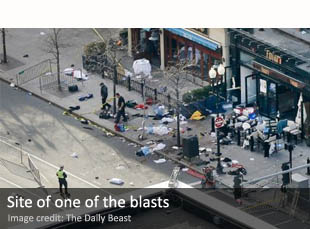
Site of one of the Boston Marathon blastsBy IAN ALLEN | intelNews.org |
►►Russia had warned FBI Tsarnaev had radical links. The Russian FSB intelligence security service shared with the FBI in early 2011 information that Tamerlan Tsarnaev, one of the brothers suspected in the Boston marathon bombings, was a follower of radical Islam. The Russians allegedly told the FBI that Tsarnaev, 26,  had changed drastically since 2010 as he prepared to leave the US to join unspecified underground groups.
►►FBI interviewed dead Boston bombing suspect years ago. The FBI admitted Friday they interviewed the now-deceased Boston Marathon bombing suspect Tamerlan Tsarnaev two years ago but failed to find any incriminating information about him. The FBI probe culminated in a sit-down interview where they probably asked him a lot of questions about his life, his contacts, his surroundings. All of this was then written in a report.
►►Ex-CIA/FBI official says Boston bombings were not terrorism. Counterterrorism expert Philip Mudd, with experience in the CIA and the FBI, told Fox News: “What I fear is that people too quickly categorize this as terrorism. This looks more to me like Columbine than it does like al Qaeda. Two kids who radicalized between themselves in a closed circle and go out and commit murder. I would charge these guys as murderers, not terrorists”.
►►Ex-US Attorney General says Boston bombings were terrorism. Michael Mukasey, Attorney General of the United States from 2007 to 2009, says that the Boston attack “was obviously a suicide operation –not in the direct way of a bomber who kills all his victims and himself at the same time by blowing himself up, but in the way of someone who conducts a spree, holding the stage for as long as possible, before he is cut down in a blaze of what he believes is glory. Here, think Mumbai”.

Is Ana Montes ‘the most important spy you’ve never heard of’?

Ana Belen MontesBy IAN ALLEN | intelNews.org |
An extensive article published today in The Washington Post Magazine revisits the largely forgotten case of Ana Belen Montes, a senior United States military intelligence analyst who was convicted in 2002 of spying for Cuba. Montes, who was arrested by the Federal Bureau of Investigation in Washington, DC, on September 20, 2001, underwent trial and sentencing in the shadow of 9/11, which might help explain the relative obscurity of her case. Still, as The Post article by Jim Popkin states, many intelligence observers view her as one of the most damaging double spies in recent American history. She entered government work as a clerk typist at the Department of Justice, and quickly received top-security clearance. It was from there that she moved to the Defense Intelligence Agency, America’s premier military intelligence organization, in September 1985. She rose meteorically through the ranks of the DIA, eventually becoming the Agency’s top Cuba analyst. Montes’ former colleagues report that she was known as “the Queen of Cuba”, a witty label that rested on her indisputable reputation as one of America’s most capable intelligence analysts on Cuba. She also came from a family with strong conservative credentials and strong connections with the US counterintelligence community. Her brother and sister were both FBI agents, and her former long-term boyfriend was a Cuban intelligence specialist for the Department of Defense. Read more of this post

News you may have missed #830 (Boston bombings analysis)

Site of one of the Boston Marathon blastsBy IAN ALLEN | intelNews.org |
►►Despite WMD fears, terrorists still focused on conventional attacks. The United States has spent billions of dollars to prevent terrorists from obtaining a weapon of mass destruction even as the bombings in Boston further show that a nuclear weapon or lethal bioagent is not necessary for causing significant harm. However, experts warn that, even though there is a considerably lower probability of a WMD attack versus a conventional strike, the much higher consequences necessitate continued US investment in prevention and preparation.
►►Why isn’t terrorism in the US a whole lot more frequent? While the horrific bombing at the Boston Marathon has brought concerns about terrorism back to the forefront of national attention, it is worth remembering that terrorism inside the United States is exceedingly rare. Over the past 40 years, just over 3 people on average have been killed by acts of terrorism per year (remove 9/11, and the average is 1.4 deaths per year). After 9/11 or an event like the Boston attack, we often think “it would be so easy to [fill in the blank] and cause massive damage.” And it’s true. Then why doesn’t it happen more often?
►►Boston bomb investigators can’t decide: foreign or domestic? Even the most experienced investigators are still trying to decide whether the Boston marathon bombs were carried out at the hands of domestic or foreign attackers. The inability to settle that question is proving frustrating to investigators. Former FBI assistant director Tom Fuentes told CNN: “I’ve run bomb scenes in Iraq and also in the US”, adding that the attack in Boston “has the hallmarks of both domestic and international, and you can see either side of that”.
►►Smoke color is key clue to analyzing Boston Marathon bombs. As a team of investigators led by the FBI begins deciphering the bombs that killed three people and wounded 150 more in Boston this week, a key clue is already in plain sight on countless videos taken during the blasts: the color of the smoke. Analyzing the color of the smoke can provide information about the explosive that powered the bombs, which in turn provides clues about its sophistication —and, possibly, that of the people who made it.

Analysis: Five dangerous myths about the Boston Marathon bombings

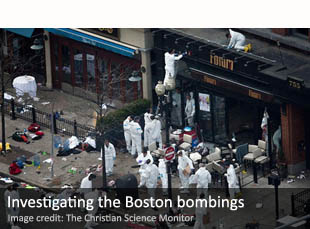
Investigating the Boston bombingsBy JOSEPH FITSANAKIS | intelNews.org |
The endless opinion pieces about the Boston bombings that have flooded the media-sphere since Monday have one thing in common: they are highly speculative and, for the most part, unreliable. At this early stage, nobody outside the security or intelligence establishments has any idea about the identity or motives behind the attacks —and if they say they do, they are lying. Even those on the inside routinely refer to the ongoing investigation as one of the most complex in the country’s post-9/11 history. As the probe continues, and the nation deals with the meaning of the Boston bombings, it is critical that some of the dangerously misinformed and premature notions about the attacks are dispelled.

To begin with, the Boston Marathon bombings were not necessarily terrorism. They were clearly calculated and indiscriminate, but in order for them to qualify as terrorism, their planners must have a broad political or ideological objective. Terrorism is a tactic used to further a political goal. There is a reason why we don’t refer to school shootings, such as the one that took place on December 14, 2013, at Sandy Hook Elementary in Newtown, Connecticut, as terrorism. They are calculated and extremely violent, but they do not contain a political motive. Before we can attach a terrorist label to the Boston bombings, we have to uncover the motive of the perpetrator(s). Barring that, the incident must be treated simply as a criminal act. Read more of this post

Technical analysis offers first clues about Boston Marathon bomber(s)

Site of one of the Boston Marathon blastsBy JOSEPH FITSANAKIS | intelNews.org |
Counterterrorism experts probing Monday’s bombings at the Boston Marathon are bound to start searching for the culprits by focusing on the technical specifications of the attacks. According to the Boston Police Department, three people were killed and at least 144 were injured —many of them critically— by the blasts, which rocked downtown Boston at 2:45 p.m. local time. The second explosion was carefully timed to coincide with the initial blast, and occurred just ten seconds later, fewer than 100 yards down the road from the site of the first explosion. At least one report stated that law enforcement teams found and dismantled up to five additional devices at the site, which had failed to detonate. But one police official later denied these reports, saying that “closer examinations led [the police] to doubt that [the devices] were bombs”. If additional devices were indeed present at the site of the blast, it is likely that they failed to detonate due to the collapse of the wireless network in Boston, which was knocked down by a sudden spurt in usage following the initial blasts. If, as it appears, these bombs were types of improvised explosive devices (IEDs), and if suicide terrorism was not involved, chances are the devices were remotely triggered using the diodes commonly found inside the speakers of inexpensive cell phones. Depending on the constitution of the bombs themselves, they could contain ball bearings, screws, or other metal fragments stuffed inside a container around some type of explosive. Read more of this post

Growing number of US officials believe al-Qaeda is finished

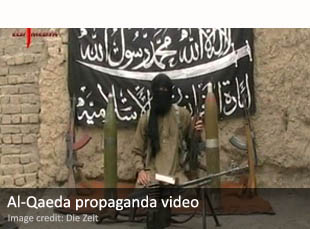
Al-Qaeda propaganda videoBy IAN ALLEN | intelNews.org |
An increasing number of government officials in the United States believe that al-Qaeda is no longer a serious threat to the homeland and are turning their attention to the next chapter of America’s security posture. Citing American defense and intelligence insiders, The Los Angeles Times claims that the militant Islamist group has been virtually decimated following more than a decade of relentless pursuit by Washington. So extensive is al-Qaeda’s operational devastation, they say, that US intelligence agencies can no longer discern any meaningful operational structure at the group’s core. Aside from its reputed leader, Egyptian physician Ayman al-Zawahiri, and a handful of others, no senior al-Qaeda lieutenant is believed to be alive. For over four years, the group’s commanders have been killed by the Central Intelligence Agency almost as soon as they have been identified, claims the paper. Al-Qaeda’s collapsing structure has led to an inevitable process of decentralization, which has rendered its surviving senior leadership virtually irrelevant to the global Islamist movement. Instead, a host of al-Qaeda-inspired factions have assumed the role of torchbearer, operating in far-flung locations such as Iraq, Syria, Mali, Yemen and Somalia. However, says The Times, these groups are motivated by strictly local issues and have neither the ability nor the will to mount large-scale attacks on American targets. The article quotes former US Deputy Assistant Defense Secretary Rosa Brooks as saying: “to the best of our information, there is nobody out there with both the desire and the capabilities to cause any serious damage to the US in any way at this moment”. Read more of this post

Middle East expert to lead France’s external spy agency

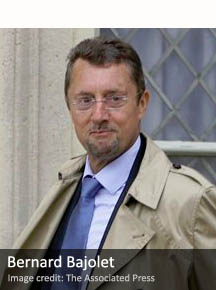
Bernard BajoletBy JOSEPH FITSANAKIS | intelNews.org |
A career diplomat, who spent many years serving in embassies in predominantly Muslim countries, has been nominated to head France’s main external intelligence agency. French President François Hollande announced on Tuesday that Bernard Bajolet has been nominated for the post of Director of France’s Directorate General for External Security (Direction Générale des Services Extérieurs, or DGSE). He will be replacing Erard Corbin de Mangoux, who has headed the 5,000-strong organization since 2008. To some extent, the change of guard at DGSE is seen as a political move, as de Mangoux is a conservative known to be close to France’s former President, Nicolas Sarkozy. However, Bajolet’s nomination is interpreted by some as part of a wider effort to recalibrate the DGSE’s operational agenda to reflect the country’s increased military involvement in predominantly Muslim parts of Africa. The 63-year-old Bajolet served for many years as a career diplomat in countries such as Bosnia, Iraq, Jordan and Syria, and is currently France’s Ambassador to Afghanistan. Prior to serving overseas, Bajolet was Deputy Director for Middle Eastern Affairs at the French Ministry of Foreign Affairs. From 2008 until 2011, when he departed for Afghanistan, he served as the first-ever intelligence advisor to the French executive under President Sarkozy. Working under the direction of the French Ministry of National Defense, the DGSE has had to reinvent itself in the post-Cold-War era, shifting its focus from the Soviet Union and the Eastern Bloc to non-state actors in North Africa and beyond. During that time, many diplomats joined the agency’s personnel, which had historically been staffed primarily by military officials. Read more of this post

News you may have missed #829

Raymond Allen DavisBy IAN ALLEN | intelNews.org |
Irish police responds to claims of IRA collusion. For nearly two years, the Smithwick Tribunal in Dublin, Ireland, has been hearing allegations that the Provisional Irish Republican Army had supporters inside the Garda Síochána, Irealand’s police force. This past week, the Garda’s Crime and Security Branch gave the Tribunal a 51-page response to the allegations. The tribunal said it “needed time to read the response” before holding another open session next week.
►►How CIA spy Raymond Davis helped turn Pakistan against the US. The New York Times‘ Mark Mazzetti has penned an excellent retrospective analysis of Raymond Allen Davis imbroglio. In 2011, the CIA contractor was arrested in Lahore for shooting dead two men who allegedly tried to rob him. Davis was only released after the US government offered monetary compensation to the families of the dead men. Mazzetti argues that the furor over the Davis incident threatened to shut down most CIA operations in Pakistan and derail the intelligence-gathering operation in Abbottabad.
►►New book explains CIA shift from spying to killing. Speaking of Mark Mazzetti, he has a new book out called The Way of the Knife: The CIA, a Secret Army, and a War at the Ends of the Earth. In it, he explores the post-9/11 transformation of the CIA from its original mission –spying– to a facilitator of targeted killings for the Pentagon. He told National Public Radio that “the CIA has become a machine for killing in many ways. The counterterrorism center has become […] the sort of beating heart of the agency that does man-hunting. And these question of ‘Should the CIA stay in the killing business?’ […] is something that is unresolved but is certainly being discussed”.

Pakistan secretly helped CIA drone strikes (act surprised)

Predator droneBy JOSEPH FITSANAKIS | intelNews.org |
For many years, Pakistan’s main spy agency secretly helped the United States launch hundreds of unmanned drone strikes on Pakistani soil, while the government in Islamabad publicly denounced them as infringements on its sovereignty. The US-based McClatchy news agency said on Tuesday it had uncovered the behind-the-scenes collaboration while reviewing “copies of top-secret US intelligence reports”. In an article published on its website, the news agency said the copies of the documents in its possession covered most of the unmanned drone strikes conducted on Pakistani soil by the US Central Intelligence Agency in the years 2006 to 2008 and 2010 to 2011. The documents allegedly show that nearly every strike had been approved by the Inter-Services Intelligence Directorate (ISI), Pakistan’s powerful spy agency run by the military. According to the McClatchy report, so close was the cooperation between the CIA and the ISI that the Pakistanis were even able to add some of their own targets to the CIA’s list of suspected militants for killing. This arrangement was arrived at during the early years of the administration of US President George W. Bush, when the bilateral cooperation between the two spy agencies reached its pinnacle. The report notes, however, that it is difficult to discern whether Pakistani civilian officials, who have been routinely denouncing the CIA unmanned drone strikes as illegal, have been aware of the full extent of the operational collusion between the ISI and the CIA. Technically, the ISI is supposed to operate under the control of Pakistan’s civilian leadership. In reality, however, the secretive intelligence agency is firmly under the control of the country’s military establishment. Read more of this post

French spy agency forced Wikipedia volunteer to delete entry

Wikipedia welcoming screenBy JOSEPH FITSANAKIS | intelNews.org |
A French intelligence agency forced a volunteer for online open-source reference site Wikipedia to delete n entry that allegedly contained classified information about French nuclear defense systems. According to the Wikimedia Foundation, which publishes Wikipedia, the entry describes a radio relay system located at Pierre-sur-Haute military radio station in south-central France. Operated by the French Air Force, the station is said to have a central role in transmitting the order to launch France’s nuclear missiles in case of a full-scale thermonuclear war. The French-language Wikipedia webpage —which has since been fully restored— mentions, among other things, that the radio masts at Pierre-sur-Haute are designed to withstand the type of shockwave experienced in a thermonuclear attack. According to the Wikimedia Foundation, it was approached in early March, 2013, by the Direction Central du Renseignement Interieur (DCRI), which is tasked with domestic security and counterintelligence. The agency asked the Wikimedia Foundation to delete the entire webpage referring to the Pierre-sur-Haute military radio station, because it said it contravened French national security law. The Wikimedia Foundation, however, refused to comply with the request unless it was accompanied with either a court order or concrete information explaining why the Pierre-sur-Haute revelations were a threat to French national security. The DCRI reportedly backed down, promising to return with a formal justification for its request. However, instead of doing so, it contacted a French-based Wikipedia volunteer, who was summoned to the DCRI’s office under threat of legal action. Read more of this post

Ex-CIA analyst says North Korea will launch strikes against South

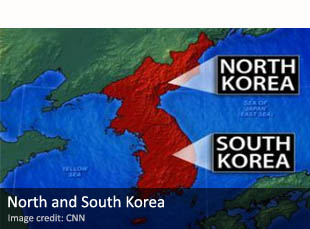
North and South KoreaBy IAN ALLEN | intelNews.org |
A former senior analyst on North Korea at the United States Central Intelligence Agency believes that the communist state will launch limited strikes against the South before moving to de-escalate the ongoing crisis in the Korean peninsula. On March 27, Pyongyang announced it was withdrawing from  the Korean Armistice Agreement, which it signed along with the United Nations and China at the end of the Korean War, in 1953. Shortly afterwards, North Korea closed all border connections with the South and disconnected the direct telephone line linking it with Seoul. It subsequently declared that it would not hesitate to launch a preemptive nuclear strike against South Korea and the United States. Pyongyang heightened its rhetoric in response to Key Resolve/Foal Eagle, a two-month-long military exercise involving US and South Koran armed forces, which includes the deployment of nuclear-armed airplanes and ships. Although some expert observers are worried, few believe that the rhetorical boxing-match between the two Koreas will result in an outbreak of hostilities. But Columbia University Professor Sue Mi Terry, who headed the CIA’s North Korea analysis unit from 2001 to 2008, believes that Pyongyang will launch military strikes against Seoul before de-escalating the tension. Speaking to Wired magazine’s Danger Room blog, Terry noted that the attack will not be nuclear, nor will it involve mass use of military force. Instead, it will be “a relative small attack” that “won’t leave many people dead”, she said. Read more of this post

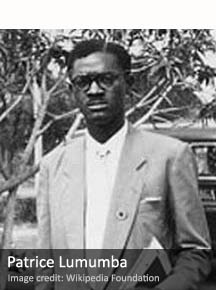
Intelligence historian calls on MI6 to declassify Lumumba files

Patrice LumumbaBy JOSEPH FITSANAKIS | intelNews.org |
An historian whose book on British intelligence prompted the claim of Britain’s complicity in the 1961 assassination Patrice Lumumba has called for MI6 to declassify its secret files on the late Congolese Prime Minister. Calder Walton is a Cambridge University-educated intelligence historian whose first book, Empire of Secrets, examines the activities of British intelligence in the last days of the British Empire. A review of the book, published by Bernard Porter in The London Review of Books in March, prompted a claim that London had organized the assassination of the iconic pan-Africanist activist, who in 1960 had become Congo’s first democratically elected Prime Minister. Many believe that the United States had a hand in Lumumba’s assassination, which was aimed at preventing him from establishing close relations between uranium-rich Congo and the Soviet Union. But British Labour politician and Life peer Lord Lea of Crondall said in a letter published in response to the review of Walton’s book that Lumumba had been killed with the help of MI6, Britain’s primary external intelligence service. He claimed he had been told so by the late Baroness Park of Monmouth, who at the time of Lumumba’s death headed the Leopoldville station of MI6. In his book, Walton, who until 2009 served as research assistant for Professor Christopher Andrew’s authorized official history of MI5, Defence of the Realm, says it is unclear who organized Lumumba’s assassination. He argues that “at present, we do not know […] whether British plots to assassinate Lumumba […] ever amounted to anything”. But speaking to The London Times on Wednesday, the historian and author urged MI6 to declassify its internal archives on the Congolese leader. Read more of this post

News you may have missed #828

Abdullah ÖcalanBy IAN ALLEN | intelNews.org |
Chinese researcher charged with stealing US drug. Chinese cancer researcher Huajun Zhao, 42, who has been working in the United States since 2006, has been charged with stealing data and an experimental compound from the Medical College of Wisconsin. The federal complaint accuses Zhao of stealing the compound, C-25, which could potentially assist in killing cancer cells without damaging normal cells. An FBI investigation turned up evidence that Zhao hoped to claim credit in China for discovering C-25. He had already claimed on a research website that he had discovered an unnamed compound he hoped to take to China.
Turkish intelligence to ‘oversee PKK retreat’. Turkey’s National Intelligence Agency, MİT, will oversee the withdrawal of Kurdistan Workers Party (PKK) militants, according to Turkey’s Deputy Prime Minister, Bülent Arınç. Last month, Abdullah Öcalan, the leader of the armed Kurdish group that has battled Turkey for 30 years, proclaimed an immediate ceasefire in PKK’s conflict with the Turkish state, which has claimed about 35,000 lives. Speaking on Turkey’s state-run broadcaster, TRT, Arınç said no legislation would be introduced to facilitate the withdrawal, but “certainly MİT will oversee it; security forces will take part in it, too”, he added.
Analysis: Controversial Bush programs continue under Obama. During the George W. Bush years, two of the most controversial elements of what was then called the Global War on Terrorism were the CIA’s rendition, detention and interrogation (RDI) program and the creation of the prison camps at Guantanamo Bay. Guantanamo Bay and the RDI program are both back in the news now, each for their own unsavory reasons. The Pentagon is requesting nearly $200 million for Guantanamo Bay infrastructure upgrades, including $49 million for a new unit for ‘special’ prisoners. Meanwhile, participation in the CIA’s controversial RDI program has resulted —for at least one person— not in prosecution or professional sanctions, but rather in a promotion.

Did MI6, not CIA, kill Congolese Prime Minister Patrice Lumumba?

Patrice LumumbaBy JOSEPH FITSANAKIS | intelNews.org |
The 1961 abduction and murder of iconic Congolese Prime Minister Patrice Lumumba was organized by British, not American, intelligence, according to a claim made this week by a British Labour politician and Life peer. Lord Lea of Crondall said in a letter published in the current edition of The London Review of Books that he was told so by Baroness Park of Monmouth, who at the time headed the Leopoldville station of MI6, Britain’s primary external intelligence service. Lumumba was a pan-Africanist activist who in 1958 helped found the Mouvement National Congolais, later becoming the organization’s leader. In 1960, he became Congo’s first democratically elected Prime Minister. However, his government soon became embroiled in the Cold-War rivalry between the United States and the Soviet Union. Many believe that Washington, fearing that Lumumba would attach uranium-rich Congo to the Soviet sphere of influence, tasked the Central Intelligence Agency with organize a coup d’état against him. It was carried out by Congolese Colonel Joseph Mobutu Sese Seko, who then ruled Congo with an iron fist until his death in 1997. In January 1961, pro-Mobutu soldiers, assisted by Belgian troops, abducted Lumumba and executed him following several days of beatings and torture. But according to Lord Lea, Baroness Park told him shortly before she died, in 2010, that she had orchestrated Lumumba’s killing on behalf of MI6. Known as Daphne Park until she entered the peerage, Park was often referred to as “the queen of spies” due to her four decades in the service of MI6. As one of the top female British intelligence officers, Park served as Second Secretary at the British Embassy in Moscow between 1954 and 1956, before being transferred to Congo in 1959. While there, she served as Consul and First Secretary at the British embassy in Leopoldville —renamed Kinshasa following Congo’s independence. Read more of this post