Spy claims against diplomat cast shadow over Anglo-Russian relations

Denis KeefeBy JOSEPH FITSANAKIS | intelNews.org |
Widespread allegations of espionage against Britain’s deputy ambassador to Russia threaten to derail the ongoing diplomatic rapprochement between Russia and the United Kingdom, according to a leading British newspaper. Painstaking efforts to rebuild Anglo-Russian relations, which crumbled after the 2006 assassination of Russian defector Alexander Litvinenko in London, are scheduled to culminate later this week, when senior Russian cabinet officials will be visiting London for a “strategic dialogue” with their British counterparts. But British newspaper The Sunday Telegraph reports that Whitehall is increasingly annoyed by persistent attacks in the Russian media against Denis Keefe, the UK’s deputy ambassador to Moscow. Keefe, a career diplomat with over 30 years in the Foreign Office, much of it during the Cold War, is a Cambridge University graduate who speaks six languages, including fluent Russian. Prior to arriving in Moscow, he served as British ambassador to Georgia, where he was stationed during the 2008 Russia-Georgia war. Almost as soon as he arrived in Russia, Keefe found himself at the center of persistent allegations in the Russian media that he is “an undercover spy, with his diplomatic position serving as a smokescreen”. Several Russian news reports have indirectly accused him of contacting dissident groups inside Russia in an effort to undermine the government of Russian President Vladimir Putin. The Telegraph, which published for the first time an account of the Russian media claims in the West, said that Russian reporters appear to hound Keefe every time he makes a public appearance in the country. In one recent instance, two journalists asked him whether he was “a spy for MI6”, Britain’s primary external intelligence agency, insisting that he give a “straightforward answer to this question”. Keefe reportedly responded that this was “not a serious question” and had “nothing to do” with him. Read more of this post

Syrian government accuses Israel of planting spy devices

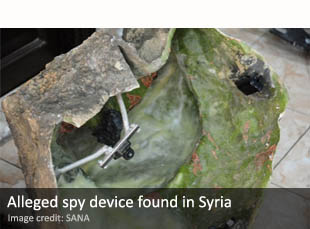
Alleged spy device found in SyriaBy JOSEPH FITSANAKIS | intelNews.org |
News media affiliated with the government of Syria accused Israel on Thursday of planting a number of spy devices disguised as rocks, which were found located near “sensitive sites” in the country. The government-owned Syrian Arab News Agency, which published photographs of the alleged spy devices, said they were discovered “in the past few days” at an unspecified region on Syria’s Mediterranean coast. Later on the same day, video footage of the devices was aired on Syrian state television. The video footage and photographs show what appear to be large-sized faux rocks. Nestled in their hollow interior are cameras, microphones, transmission devices, as well as large batteries. Syrian media reports said that the transmission gear enabled the devices to broadcast audio and video signals in real time. The camouflaged contraptions closely resemble a number of “mystery devices” found on mountain ranges around the Lebanese capital Beirut in 2010 and 2011. The electronic devices found in Lebanon were hidden under two fake boulders and consisted of surveillance cameras, electronic transmitters, as well as satellite signal reception systems. One of the devices was even connected to a third fake boulder containing long-lasting batteries, which powered the surveillance system. The devices, which were discovered by the Lebanese militant group Hezbollah, displayed manufacturing labels bearing writing in Hebrew and in English, which included the name of a company called “Beam Systems Israel Ltd”. Read more of this post

News you may have missed #825

Ben ZygierBy IAN ALLEN | intelNews.org |
►►Australian Mossad officer was facing 20 years in prison. Mossad operative Ben Zygier was facing 20 years in prison on “serious espionage” charges when he hanged himself in an Israeli prison, suggests a report published Wednesday by Australia’s Department of Foreign Affairs and Trade. The report is the first confirmation of the nature of Zygier’s indictment. Under Israeli criminal law, the only security-related crimes that carry a 20-year prison sentence fall under the heading of “serious espionage”.
►►MS-13 smuggles missile launchers and teams up with Zetas. Mara Salvatrucha, or MS-13, became El Salvador’s deadliest gang through force of numbers and the power of the handgun. Now if they weren’t deadly enough, the gang is transitioning into adopting heavier weapons while teaming up with Mexico’s Zetas. But according to a recent report, the gang is moving “away from a dependence on handguns via the acquisition of automatic rifles such as AK-47s, along with grenades, rocket propelled grenade launchers, and Light Anti-Tank Weapons”, or LAWs.
►►Secretive US anti-smuggling program marks one-year anniversary. A nascent and somewhat secretive US government anti-smuggling program is marking its first anniversary this week. It is called E2C2, shorthand for Export Enforcement Coordination Center, and 18 law enforcement and intelligence agencies use it to find links between their targets and other investigations. The E2C2 was created by presidential order in 2010, but the collaboration has evolved slowly. According to a Government Accountability Office report, the E2C2 opened nine months late, in part because of “some difficultly” between agencies over how the center would operate.

Venezuela expels US diplomats as Hugo Chávez is pronounced dead

Hugo ChavezBy JOSEPH FITSANAKIS | intelNews.org |
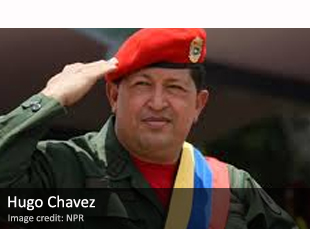
The government of Venezuela moved yesterday to expel two American diplomats from the country, shortly before officially pronouncing the death of Venezuelan President Hugo Chávez. The expulsions are seen by some as attempts to curtail communication between United States officials and the Venezuelan opposition in the aftermath of Chávez’s death. In a speech televised live on Venezuelan television on Tuesday, Vice President Nicolás Maduro said US Air Force attaché Colonel David Delmonaco, who was stationed at the American embassy in Venezuelan capital Caracas, would be expelled. “Mr. David Delmonaco has 24 hours to pick up his belongings and leave this country”, said Maduro, who is widely reputed to succeed Chávez. He added that the American attaché had been engaged in efforts “to destabilize the country”, but did not elaborate on the allegation. Shortly afterwards, Venezuelan Minister of Foreign Affairs Elias Jaua told a press conference that a second US Air Force attaché, who remains unnamed, had been declared persona non grata and would be expelled from the country along with Delmonaco. Later on the same day, US government spokesman Colonel Todd Breasseale confirmed the diplomatic expulsions. He told journalists that the US was “aware of the allegations made by Venezuelan Vice President Maduro over state-run television in Caracas”, adding that he was in a position to confirm that “our Air Attache Colonel David Delmonaco, is en route back to the United States”. But the US Department of State said it “completely reject[ed] the Venezuelan government’s claim that the United States is involved in any type of conspiracy to destabilize the Venezuelan government”. Read more of this post

British journalists worked for MI6 during the Cold War: investigation

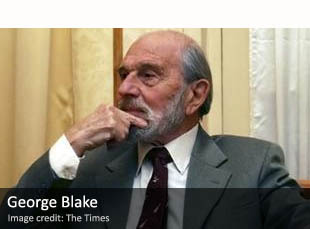
George BlakeBy JOSEPH FITSANAKIS | intelNews.org |
Numerous notable journalists working for some of Britain’s most prestigious publications routinely collaborated with British intelligence during the Cold War, according to a BBC investigation. In 1968, Soviet newspaper Izvestia published the contents of an alleged British government memorandum entitled “Liaison Between the BBC and SIS”. SIS, which stands for Secret Intelligence Service, also known as MI6, is Britain’s foremost external intelligence agency. The paper, which was the official organ of the Presidium of the Supreme Soviet of the USSR, claimed that the foreign correspondents of most leading British newspapers secretly collaborated with the British intelligence community. It also alleged that the BBC’s world radio service had agreed with MI6 to broadcast preselected sentences or songs at prearranged times. These signals were used by British intelligence officers to demonstrate to foreign recruits in the Eastern Bloc that they were operating on behalf of the UK. At the time, the BBC virulently rejected the Izvestia’s claims, calling them “black propaganda” aimed at distracting world opinion from the invasion of Czechoslovakia by Warsaw Pact troops, which had taken place some months earlier. But an investigation aired this week by the BBC Radio 4’s investigative Document program suggests that the memo published by the Soviet newspaper was probably genuine. The program says it discovered a memorandum in the BBC’s archives, which laments the embarrassment caused to MI6 by the Soviet claims. The memorandum, dated April 24, 1969, describes MI6 as “our friends”. The BBC program, which is available to listen to here, discusses the Soviets’ claims that several notable British journalists were MI6 agents. Read more of this post

Hamas ‘found tracking devices’ inside weapons bound for Gaza

Rafah Border CrossingBy JOSEPH FITSANAKIS | intelNews.org |
The Palestinian militant group Hamas said on Sunday it refused to take possession of a shipment of missiles after its weapons experts discovered they contained a number of carefully hidden tracking devices. The Egyptian newspaper Al-Youm Al-Sabea, which reported the story, said it spoke to a source “closely affiliated with weapons smugglers” in Egypt’s Sinai Peninsula, who confirmed Hamas’ claim. According to Al-Youm, the weapons shipment consisted of 28 long-range missiles stolen from the arsenal of the Libyan armed forces during the uprising that led to the overthrow of Libya’s late leader, Colonel Muammar al-Gaddafi. The shipment made its way across the border with Egypt and from there to the Sinai desert, before ending up at the Rafah Border Crossing, located between Egypt and the Gaza Strip. It was there that the missiles were inspected by a team from the Izz al-Din al-Qassam Brigades, the military wing of Hamas. The paper reported that one of the Hamas inspectors, a senior member of the al-Qassam Brigades, discovered a number of miniature tracking devices carefully concealed inside the missiles, which appeared to be active. Following the discovery, the Hamas team backed out of the purchase deal and abandoned the inspection site. Al-Youm also said that the Palestinian group has decided to terminate its contacts with a significant number of weapons smugglers operating in the Sinai, because of concerns that they may have been penetrated by Israeli and Egyptian intelligence. Read more of this post

Analysis: The Current State of the China-Taiwan Spy War

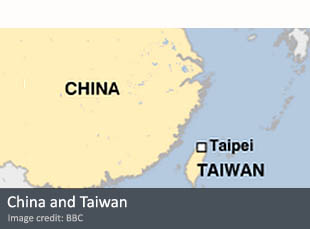
China and TaiwanBy JOSEPH FITSANAKIS | intelNews.org |
Last week I spoke about the current state of the espionage war between China and Taiwan with Tim Daiss, a Southeast Asia-based American journalist who has been covering the Asia-Pacific region for over a decade. Our discussion formed the basis of a comprehensive piece on the subject, published in British newspaper The Independent, in two parts (part one and part two). I told Daiss that the Ministry of State Security —China’s primary national intelligence agency— is not known for its technological prowess. However, the sheer size of Beijing’s intelligence apparatus is proving a good match for the more advanced automated systems used by its less populous regional rivals, including Taiwan. When it comes to traditional human intelligence, the Chinese have been known to employ time-tested methods such as sexual entrapment or blackmail, as was confirmed most recently in the case of Taiwanese Major-General Lo Hsien-che. Lo, who headed the Taiwanese military’s Office of Communications and Information, was convicted of sharing classified top-secret information with a female Chinese operative in her early 30s, who held an Australian passport. During his trial, which marked the culmination of Taiwan’s biggest spy scandal in over half a century, Lo admitted that the Chinese female spy “cajoled him with sex and money”. In addition to honey-trap techniques, Chinese spies collect intelligence by way of bribery, as do many of their foreign colleagues. In the case of China, however, a notable change in recent years has been the accumulation of unprecedented amounts of foreign currency, which make it easier for Chinese intelligence operatives to entice foreign assets, such as disgruntled or near-bankrupt state employees, to sell classified data. Read more of this post

Canada issues arrest warrant for former spy watchdog official

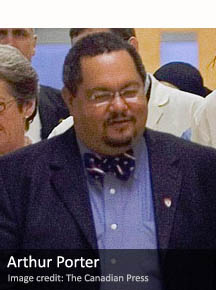
Arthur PorterBy IAN ALLEN | intelNews.org |
Authorities in the Canadian province of Quebec have issued a warrant for the arrest of a government official who until recently was responsible for overseeing the country’s primary national intelligence service. From 2008 to 2011, Dr. Arthur Porter was a member of the Security Intelligence Review Committee, which investigated grievances against the Canadian Security Intelligence Service (CSIS). In order to fulfill his Committee duties, Porter was awarded a top-secret security clearance, which allowed him access to the CSIS’ most closely held secrets. In 2004, Porter, who is a Cambridge University-educated oncologist, was appointed Director General of the McGill University Health Centre in Montréal. In that capacity, he began a business relationship with Ari Ben-Menashe, an Iranian-born Israeli lobbyist and weapons merchant, who in 1989 was arrested and charged in the United States for illegally attempting to sell military transport airplanes to Iran, in connection with the so-called Iran-Contra affair. Ben-Menashe was acquitted after claiming during his trial that he had been operating as an Israeli intelligence officer. In 2011, Porter stepped down from his post at the Security Intelligence Review Committee, after Canadian newspaper The National Post revealed that he had wired $200,000 in personal funds to Ben-Menashe. Soon afterwards, he moved to the Bahamas and attempted to stay away from the public limelight. This changed on Wednesday, however, Read more of this post

British government tries to block probe into ex-KGB officer’s murder

Alexander LitvinenkoBy JOSEPH FITSANAKIS | intelNews.org |
The family of a Russian spy, who died of poisoning after defecting to Britain, has accused the British government of trying to cover up the affair in order to avoid embarrassing Russia. Alexander Litvinenko was an employee of the Soviet KGB and one of its successor organizations, the FSB, until 2000, when he defected with his family to the United Kingdom. He soon became widely known as a vocal critic of the administration of Russian President Vladimir Putin. In 2006, Litvinenko came down with radioactive poisoning soon after meeting a former KGB/FSB colleague, Andrey Lugovoy, at a London restaurant. He died in hospital three days later. A public inquest into Litvinenko’s murder had been scheduled for May, 2013. On Tuesday, however, it was revealed that the British government had filed a written petition to limit the information disclosed in the inquest. According to The London Times, British Foreign Secretary William Hague filed a Public Interest Immunity Certificate (PIIC), which, if allowed to stand, would limit the scope of the inquest on national security grounds. It is believed that the government wishes to block information linking Litvinenko to the Secret Intelligence Service —also known as MI6— Britain’s primary external spy agency. Last December, Ben Emmerson, the lawyer representing Litvinenko’s widow, claimed that the late Russian spy was a “registered and paid” agent of MI6 and Spanish intelligence at the time of his death. Read more of this post

News you may have missed #824 (India edition)

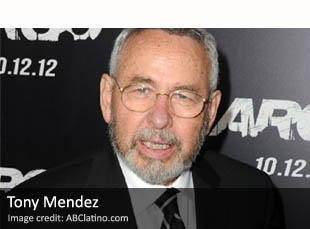
Tony MendezBy IAN ALLEN | intelNews.org |
►►CIA honed ARGO exfiltration skills in India. The Oscar-winning movie Argo has popularized the 1980 exfiltration by the CIA of a group of American diplomats from Tehran. But few know that Tony Mendez, the CIA officer in charge of the Iran operation, cut his teeth exfiltrating CIA targets in India. In his book, titled Argo, Mendez mentions the 1970 exfiltration of a Soviet defector in India codenamed Nestor. He claims that Nestor was a “huge catch” for the CIA, as he provided the Agency with “invaluable intelligence on the KGB’s operations in Central and Southeast Asia”.
►►Ex-CIA officer says al-Qaeda wanted India-Pakistan nuclear war. In his latest book, Avoiding Armageddon: America, India, and Pakistan to the Brink and Back, former CIA officer Bruce Riedel says al-Qaeda helped plan the 2008 Mumbai attacks. Its goal was to “spark a nuclear war between India and Pakistan in order to polarize the world between Islam and the ‘Crusader-Zionist-Hindu’ conspiracy”. But the group’s plan was hampered by India’s restraint and refusal to strike back using force, he argues.
►►Man passing defense info to Pakistan held in India. Reports suggest that Sumer Khan, 34, from Rajasthan’s Jaisalmer district, has been arrested for sending strategic information to Pakistan’s ISI intelligence agency via emails and mobile calls for the past three years. A source said that Khan was caught after his calls to Pakistan were intercepted by Indian military intelligence and Intelligence Bureau. The arrest comes just two days after the conclusion of India’s biggest-ever air exercise, ‘Iron Fist’, in Jaisalmer.

Former Mossad officer describes Zygier affair as ‘scandalous’

Ben ZygierBy JOSEPH FITSANAKIS | intelNews.org |
A former member of Israeli spy agency Mossad, who claims to have worked in the same covert-operations unit as Ben Zygier, has described the latter’s incarceration and subsequent death as “scandalous”. The Australian-born Zygier was a Mossad officer several years before he was placed in solitary confinement following his arrest in Israel, in February 2010. Known to the outside world only as ‘Prisoner X’, he allegedly killed himself in his cell a few months later. Earlier this month, when an Australian television program identified ‘Prisoner X’ as Zygier, the Australian government admitted it had been aware of its citizen’s incarceration and death, but chose not to extend to him diplomatic support. So far, the Mossad, Israel’s foremost covert-action agency, has remained silent on the matter. But a former Mossad operative, who uses the name Michael Ross, has weighed in with his opinion. Ross was born in Canada and converted to Judaism before joining the Mossad for 13 years, seven of which he claims to have spent in the same covert-operations unit as Zygier. Although he never met his Australian-born colleague, Ross wrote in The Daily Beast in the weekend that he and Zygier “were in the field at the same time, albeit in different units”. In his article, the former Mossad spy dismisses allegations that Zygier may have betrayed his employer, saying that he has seen no evidence that the Australian-born Jew was not dedicated to the mission of the Mossad. He argues that the circumstances surrounding Zygier’s incarceration in solitary confinement were “scandalous”, because the jailed spy presented “no danger to the public”. Instead, says the former spy, Zygier could have been dismissed from the spy service and placed under house arrest for as long as it would have been necessary for the accusations against him to be “dealt with internally”. Read more of this post

Al-Qaeda manual on how to deceive unmanned drones found in Mali

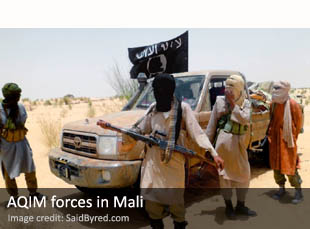
AQIM forces in MaliBy JOSEPH FITSANAKIS | intelNews.org |
A detailed manual with instructions on how to defeat the surveillance capabilities of unmanned drones has been found in a former al-Qaeda hideout in northern Mali. International news agency The Associated Press said the photocopied document, which is written in Arabic, had been left behind in a building previously occupied by members of Al-Qaeda in the Islamic Maghreb (AQIM). The militants abandoned the document while fleeing into the Sahara desert, ahead of a French military advance on the town of Timbuktu. The document is believed to have been authored by Abdallah bin Muhammad, the operational name of a Yemeni militant serving as a senior commander in the Al-Qaeda in the Arabian Peninsula (AQAP). Its earliest known date of publication is June 2, 2011, on an online Islamist forum. Since that time, it has reappeared at least three times, all in Arabic, according to The Associated Press. The version of the manual found in Mali contains nearly two dozen detailed tips on how to deceive unmanned drones. One tip advises covering the tops of vehicles with floor mats made of hay or other natural-looking material, in an effort to confuse aerial surveillance systems. Another tip proposes camouflaging the roofs of buildings with the use of reflective glass, so as to render them invisible to aerial surveillance. A third suggestion is to mix sugar with water and dirt and apply the sticky mixture onto the body of vehicles, in order to confuse the imagery sensors of unmanned drones. Read more of this post

US held secret meetings with North Korea after Kim Jong Il’s death

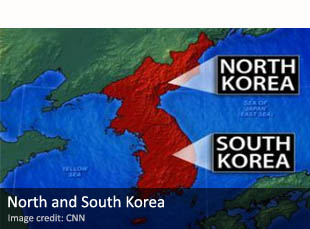
North and South KoreaBy JOSEPH FITSANAKIS | intelNews.org |
Senior United States officials traveled secretly to North Korea for talks on at least two occasions following the death of North Korean leader Kim Jong Il, according to a leading Japanese newspaper. Quoting unnamed sources from Japan, South Korea and the United States, the Tokyo-based Asahi Shimbun newspaper said last week that the American officials traveled on US military airplanes from an Air Force base on the Pacific island of Guam to North Korean capital Pyongyang. According to the paper, the visits, which took place on April 7 and August 18-20, 2012, were kept secret from both the South Korea and Japanese governments. It appears, however, that Tokyo found out about the secret flights after it was approached by amateur air traffic hobbyists, who noticed the Pyongyang-bound flights out of Guam. After analyzing air traffic patterns, officials at the Japanese Ministry of Foreign affairs contacted the US Department of State inquiring about the mystery flights. Incredibly, however, Washington refused to discuss the flights with its Japanese ally, citing national security concerns. Eventually, says Asahi, the State Department acknowledged one of the visits, but responded to persistent Japanese pressure by warning Tokyo that further inquiries on the subject “would harm bilateral relations” between Japan and the US. The Japanese daily claims that the secret flights carried a host of senior US officials, including Joseph DeTrani, then chief of the North Koran desk at the Office of the Director of National Intelligence, and Sydney Seiler, Korea policy chief at the White House National Security Council. Read more of this post

New information emerges on Hezbollah commander’s assassination

Imad MughniyahBy JOSEPH FITSANAKIS | intelNews.org |
A Lebanese newspaper has published the most detailed account to date of the 2008 assassination of Hezbollah commander Imad Mughniyah. The car explosion that killed Mughniyah in Syrian capital Damascus on February 12, 2008, is widely believed to have been the work of the Mossad, Israel’s foremost covert-action agency. Mughniyah was among the founders of Hezbollah, the Shiite militant group that controls large parts of southern Lebanon. At the time of his assassination, Mughniyah headed the Hezbollah’s security apparatus and was among the organization’s most senior intelligence officials. On Tuesday, Arabic-language newspaper al-Akhbar , which is based in Lebanese capital Beirut and is informally affiliated with Hezbollah, published a detailed article that reads like an unclassified version of the militant group’s internal investigation into Mughniyah’s killing. The article claims that “Hezbollah is absolutely positive that Israel was behind […] the operation from A to Z”. It says that Mughniyah’s assassins “were not Syrian citizens”, but rather entered Syria from abroad and stayed there six weeks while planning and executing the assassination operation. The article also claims that the Mossad recruited a Syrian expatriate, who visited Damascus on a regular basis in order to provide logistical support for the operation. This included renting a villa in the outskirts of Damascus and purchasing at least three vehicles to be used in the operation. Read more of this post

First interview in 57 years for chief of Germany’s most secretive spy agency

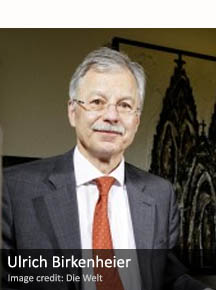
Ulrich BirkenheierBy IAN ALLEN | intelNews.org |
The head of the German military’s counterintelligence service, which is widely seen as the country’s most secretive intelligence organization, has given the first public media interview in the agency’s 57-year history. Most readers of this blog will be aware of the Federal Republic of Germany’s two best-known intelligence agencies: the Federal Office for the Protection of the Constitution (BfV), tasked with domestic intelligence, and the Bundesnachrichtendienst (BND), the country’s primary external intelligence agency. Relatively little is known, however, about the Military Counterintelligence Service (MAD), which has historically been much smaller and quieter than its sister agencies. As part of the Bundeswehr, the German armed forces, the MAD is tasked with conducting counterintelligence and detecting what it terms “anti-constitutional activities” within the German armed forces. It is currently thought to consist of around 1,200 staff located throughout Germany and in at least seven countries around the world, including Kosovo, Afghanistan, and Djibouti. Until recently, the MAD was so secret that its headquarters, located in the west German city of Cologne, bore no sign on the door. For generations, its senior leadership remained unnamed in the public domain. This changed on Monday, when Ulrich Birkenheier became the first Director of MAD to speak publicly in the nearly six decades of the agency’s existence. Birkenheier, who assumed the leadership of MAD in July of 2012, told German newspaper Die Welt that it was time for a “paradigm shift” and that the agency felt the need “to explain [its] task and work to the outside world”. In his interview, Birkenheier explained that members of the German armed forces are routinely targeted by foreign intelligence agencies, while far-right extremist groups are represented in the ranks of the German military. Read more of this post