CIA task force examines ‘Havana Syndrome’ after more officers fall ill
May 7, 2021 2 Comments
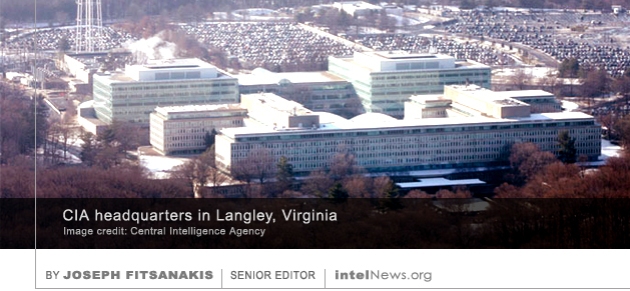
THE UNITED STATES CENTRAL Intelligence Agency has established a task force to examine recent cases of the so-called “Havana Syndrome”, a mysterious medical condition that continues to puzzle experts. The matter came to light in 2017, soon after Washington recalled the majority of its personnel from its embassy in Havana, Cuba, and at least two more diplomats from its consulate in the Chinese city of Guangzhou. The evacuees reported experiencing “unusual acute auditory or sensory phenomena” and hearing “unusual sounds or piercing noises”.
Subsequent tests showed that the diplomatic personnel suffered from sudden and unexplained loss of hearing, and possibly from various forms of brain injuries. In April of 2019 the Canadian embassy evacuated all family members of its personnel stationed in the Cuban capital over similar health concerns. A subsequent study by the National Academies of Sciences reported the collective findings of leading toxicologists, epidemiologists, electrical engineers and neurologists, who examined the symptoms experienced by nearly 40 US government employees.
There are now reports that “more than a dozen” officers of the CIA have returned to the US for medical tests, after reporting symptoms that are associated with the “Havana Syndrome”. Citing “current and former US officials and people familiar with the matter” CBS News said on Thursday that some of the officers required emergency medical evacuation after feeling sick all of a sudden. They returned to the US from three different continents in the early months of 2021, according to CBS.
A White House spokesperson told the news station that the “Havana Syndrome” continued to be an area of “active inquiry”. A spokesperson from the National Security Council added that it was not possible to discuss specifics regarding the CIA personnel. The spokesperson went on to say that a “government-wide effort” was underway to determine those responsible for the phenomenon, and to protect US government personnel serving abroad.
► Author: Joseph Fitsanakis | Date: 07 May 2021 | Permalink
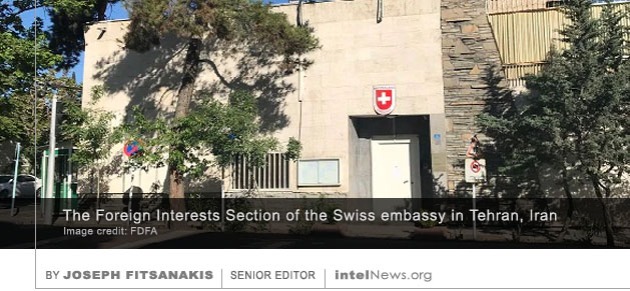
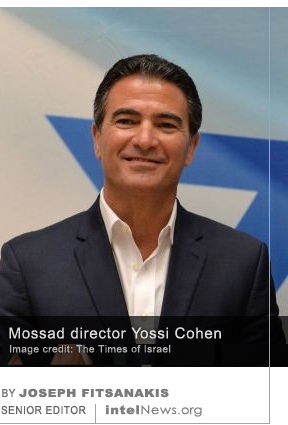 UNITED STATES JOE BIDEN reportedly told the director of Israel’s external intelligence agency, the Mossad, that Washington has “a long way to go” before rejoining a 2015 agreement aimed at halting Iran’s nuclear ambitions. The meeting between Biden and Mossad director Yossi Cohen reportedly took place last Friday, during Cohen’s visit to Washington last week, to discuss bilateral security issues with a series of American officials. On Thursday Cohen met with a number of Biden administration officials, including Secretary of State Anthony Blinken and Brett McGurk, who is the National Security Council’s Coordinator for the Middle East and North Africa.
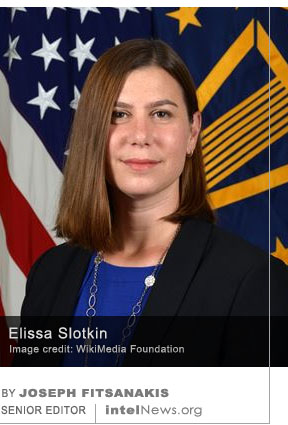 A MEMBER OF THE United States Congress, who previously worked for the Central Intelligence Agency, has called for foreign white supremacist groups to be closely monitored, warning that they have ties to American militants. Democratic Representative Elissa Slotkin, of Michigan, wrote in a letter that the US should apply the label of “terrorist organizations” to a number of foreign white supremacist groups. She argued that the move would allow US authorities to take more aggressive measures against supporters of such groups inside the US.
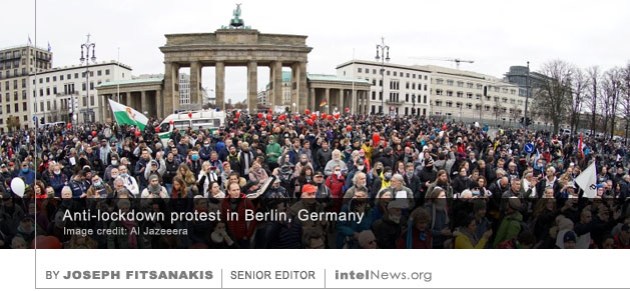 GERMANY’S DOMESTIC INTELLIGENCE AGENCY said on Wednesday it has begun monitoring groups associated with conspiracy theories surrounding COVID-19, who are “challenging the legitimacy of the state”. Germany is home to one of the most vocal anti-lockdown movements in the Western world, with public rallies against lockdown measures taking place nearly every week across the country. These rallies attract a peculiar mix of participants who come from a variety of backgrounds, including anti-vaccination proponents, various conspiracy theorists, and supporters of both far-left and far-right parties.
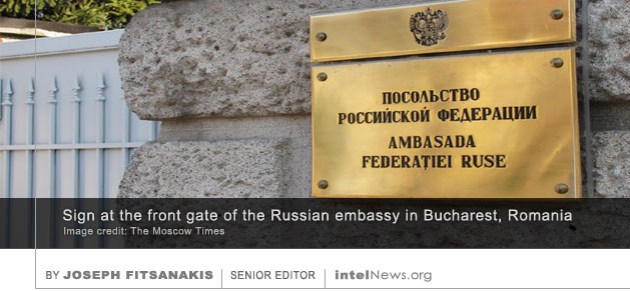 SEVERAL EASTERN EUROPEAN STATES announced plans to expel Russian diplomats this week, as Moscow declared an Italian diplomat persona non grata in a tit-for-tat dispute with Rome over espionage allegations. Earlier this month, the Czech Republic
 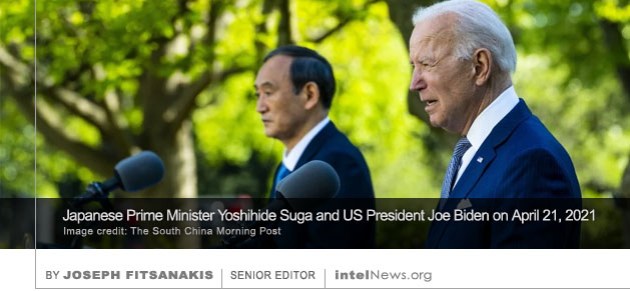 JAPAN’S AMBASSADOR TO AUSTRALIA has said he feels optimistic his country could join the Five Eyes intelligence alliance in “the near future”, adding to growing speculation on the topic. Japanese diplomat Shingo Yamagami, who has held the post of ambassador to Australia since late 2020,
  A JOINT INVESTIGATION BY Maltese and British reporters has found alleged loopholes that allow wealthy individuals from the Middle East, Asia and elsewhere to acquire European Union passports with minimum effort, in exchange for cash. The investigation concerns the so-called “cash for passports” scheme, which was launched by the government of Malta in 2014.
 ONE OF MEXICO’S MOST powerful drug cartels has reportedly used drones to attack police officers with explosives, according to local media reports. If confirmed, this incident will mark the first recorded use of drones by a Mexican drug cartel to attack law enforcement.
 A LEADING CHINESE TELECOMMUNICATIONS firm has strongly denied a claim by a newspaper that its service personnel could listen in on calls made by Dutch telephone users, including senior government officials. The report dates from 2010 and was authored by consultancy firm Capgemini on behalf of KPN, one of Holland’s largest telecommunications service providers. The Rotterdam-based firm had hired Capgemini to conduct a risk analysis on whether more equipment should be purchased from Chinese telecommunications giant Huawei. By that time the Chinese company, one of the world’s largest in its field, was already supplying KPN with hardware and software equipment.
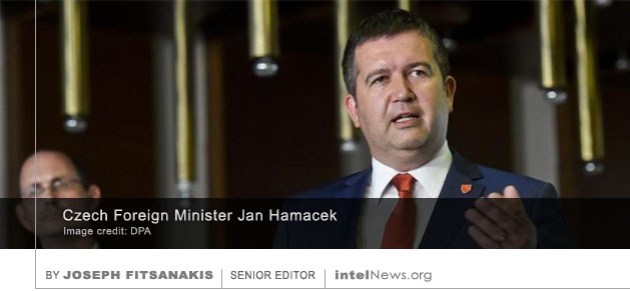 CZECH GOVERNMENT OFFICIALS SAID they would welcome the expulsion of Russian diplomats from European Union and North Atlantic Treaty Organization countries, in support of Prague’s ongoing diplomatic spat with Moscow. The Czech Republic expelled 18 Russian diplomats last weekend, in order to protest against an explosion at a remote munition depot in the east of the country, which the government claims was part of a Russian intelligence operation.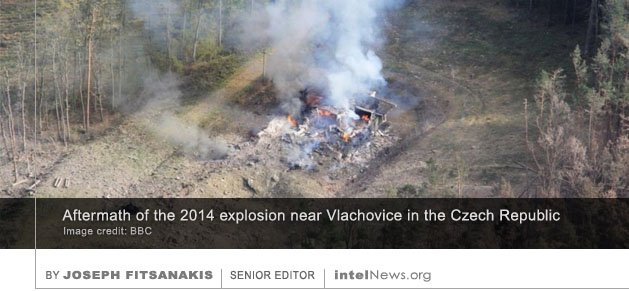








 intelNews.org
Belgian minister raises spy concerns about Chinese e-retail center at Liege airport
May 10, 2021 by Ian Allen Leave a comment
BELGIUM’S MINISTER OF JUSTICE has raised espionage concerns about a new logistics hub that is under construction in eastern Belgium by a firm operating on behalf of Chinese e-commerce giant Alibaba. The hub is currently being built on a lot adjacent to the Liège Airport, which is situated 25 miles southwest of the Dutch city of Maastricht.
Based in the Chinese province of Zhejiang, Alibaba is a multinational technology firm that specializes in e-commerce and e-retail. It is often described as the Chinese version of the American e-retail giant Amazon. Today it is among the world’s 10 wealthiest companies and among the 30 largest public firms in the world. In its effort to expand its area of operations beyond Asia, Alibaba recently announced the construction of six global logistics hubs, which will enable it to deliver products anywhere in the world within 72 hours.
Scheduled to become operational by the end of this year, the logistics center in Liège is part of that larger effort by Alibaba. When completed, the center will be operated by Cainiao, which is Alibaba’s logistics arm. When it was announced last year, the project was praised by Belgian officials in the state of Wallonia, where the hub will be based, as a great innovation that will create new jobs and other employment opportunities for local people.
But now Belgium’s Justice Minister, Vincent Van Quickenborne, has expressed concerns about the project. Speaking last Thursday before the Belgian Federal Parliament’s Committee on Justice, Van Quickenborne was asked by a parliamentarian whether the Alibaba hub posed security concerns for the state. The minister responded saying that the placement of Chinese workers and logisticians at the hub could potentially be exploited by the Chinese government to plant intelligence operatives at the airport. Additionally, the logistics center could have access to commercial and personal data of Alibaba’s European customers, and could share them with Beijing, said Van Quickenborne.
The minister claimed that, like every other Chinese firm, Alibaba is obligated to “obey the Chinese security apparatus” and hire government spies as employees when asked to do so. He added that “this interest [by the Chinese state] is not limited to intelligence and security purposes but can be viewed within a broader political and economic framework”. Van Quickenborne concluded his remarks by saying that his ministry had been warned by the Surete de l’Etat —Belgium’s counterintelligence agency— of the security dangers embedded in China’s growing economic influence in the country.
On Friday a press statement issued by the embassy of China in Brussels decried Van Quickenborne’s comments as “baseless allegations” that harmed relations between Belgium and China. The statement added that, contrary to reports in the Western media, the Chinese state does not “demand Chinese enterprises to engage in activities that breach local laws or regulations”.
► Author: Ian Allen | Date: 10 May 2021 | Permalink
Filed under Expert news and commentary on intelligence, espionage, spies and spying Tagged with Alibaba Group, Belgium, China, Liege (Belgium), Liege Airport, News, Vincent Van Quickenborne