Reports allege third man was involved in poisoning of Sergei Skripal
February 11, 2019 2 Comments
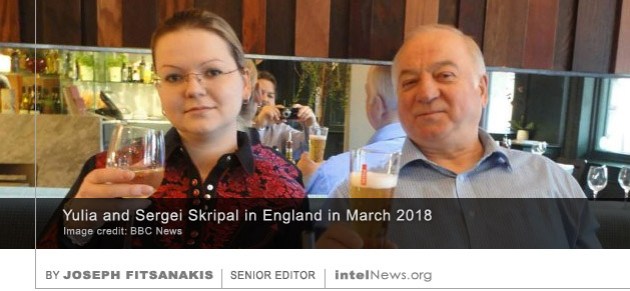 New reports from Russian investigative sites claim that a third man using a fake name was involved in the attempted assassination of former double spy Sergei Skripal in England last year. Skripal, a former military intelligence officer, was resettled in the English town of Salisbury in 2010, after spending several years in a Russian prison for spying on behalf of Britain. But he and his daughter Yulia almost died in March 2018, after they were poisoned with a powerful nerve agent that nearly killed them. The attack has been widely blamed on the Russian government, though the Kremlin denies it had any role in it. Two assailants have so far been identified by British intelligence. They have been named as Dr. Alexander Yevgenyevich Mishkin —cover name ‘Alexander Petrov’— and Colonel Anatoliy Chepiga —cover name ‘Ruslan Boshirov’. Both are said to be employees of the Russian military intelligence agency known as the Main Directorate of the General Staff of the Armed Forces, commonly referred to as the GRU. The two men spoke on Russian television last year, denying any involvement in the attack on the Skripals. Their whereabouts since their television interview remain unknown. Moscow denies that it had any role in the attack.
In October of last year, the Russian investigative news site Fontanka claimed that a third man under the name of Sergey Fedotov, may have been involved in the attack on Skripal. Last Thursday, another Russian investigative news site, Bellingcat, said that the name Sergey Fedotov appears to have been created out of thin air for operational purposes by Russia’s intelligence services. According to Bellingcat, Fedotov appears to have no past prior to 2010, when his identity was invented using the same techniques that the fake identities of ‘Petrov’ and ‘Boshirov’ were concocted by the GRU. Moreover, Fedotov’s records show that he traveled extensively in the Middle East, Asia and Europe between 2010 and 2015. The Russian news site claims that he was in Bulgaria in late April 2015, when Emilian Gebrev, a wealthy local defense industry entrepreneur, fell violently ill. Gebrev was hospitalized for signs of poisoning along with his son and one of his company’s executives for several days, eventually making a full recovery. As the Bulgarian businessman was being taken to hospital, Fedotov skipped his return flight out of Sofia and instead drove to Istanbul, Turkey, where he bought a one-way airline ticket to Moscow, says Bellingcat.
The BBC’s Gordon Corera said he contacted the Russian embassy in London and the Kremlin in Moscow. Both sources strongly refuted the Bellingcat report. A Kremlin spokesman cautioned the BBC to be skeptical about Bellingcat’s report, since “we don’t know what [its] authors based their work on [or] how competent they are”. British Police told Corera that they were “still investigating whether further suspects were involved” in the attack on Skripal and were “not prepared to discuss” details pertaining to “an ongoing investigation”.
► Author: Joseph Fitsanakis | Date: 11 February 2019 | Permalink
 Weapons supplied to the Saudi and Emirati governments by the United States and other Western nations are ending up in the hands of al-Qaeda-linked Sunni militias in Yemen, according to two separate investigations. The weapons are being supplied to the militaries of Saudi Arabia and the United Arab Emirates by the West on the understanding that they will be used in the war in Yemen. The war has been going on since 2015, when a alliance of rebel groups from Yemen’s Shiite communities formed the Houthi movement, which quickly seized control of much of the country. The Houthis effectively toppled the government, prompting a reaction by a coalition of Sunni Arab states, which see the Shiite movement as an Iranian front. In an effort to restore Yemen’s Sunni-dominated government, Western countries have supplied Saudi Arabia and the United Arab Emirates with more than $5 billion-worth of weaponry.
 The government of Israel has increased to 90 years the period during which documents belonging to intelligence and security agencies can remain secret, extending it by 20 years. Until last month, government documents produced by Israeli spy agencies, such as its external spy organization, the Mossad, or its domestic security agency, the Shin Bet, could remain hidden from public view for up to 70 years. Last year, however, the administration of Prime Minister Benjamin Netanyahu commissioned a study into the possibility of extending the classification period for such documents. Israel’s Supreme Council of Archives, a body within the Israel State Archives that advises the Office of the Prime Minister on matters of classification, recommended against extending the classification period by more than five years.
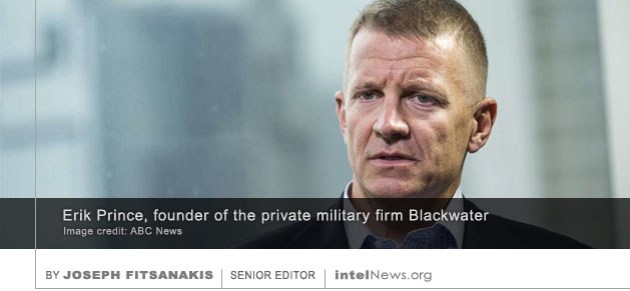 A security firm founded by Erik Prince, the former boss of the private military company Blackwater, has announced a deal with the Chinese state to operate a training facility in China’s largely Muslim Xinjiang province. In the months following the United States invasion of Iraq, Blackwater was hired by the Department of State to provide diplomatic security at several locations throughout the Middle Eastern country. By 2010, when the company was abruptly sold to a group of private investors, its tactics in Iraq had prompted international controversy. Prince went on to help found Frontier Services Group (FSG), another private security firm registered in Hong Kong. The company provides security training to personnel working for Chinese companies. Its specialization is training personnel of Chinese firms based abroad, mainly in regions of Africa.
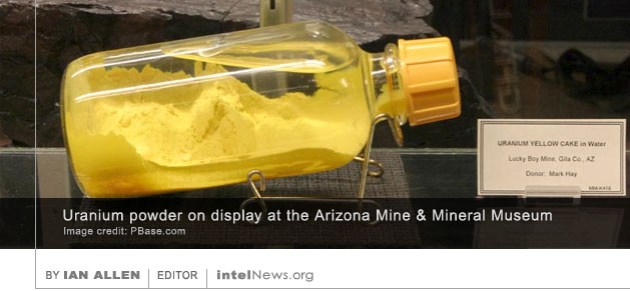 Police in Japan are investigating how a man was able to offer uranium for sale through an online auction website operated by Yahoo!, a California-based provider of Internet services. Japanese news agencies reported on Friday that the alleged product was displayed packed inside a transparent glass tube on the online auctions site. It was advertised as “Uranium 99.9%”. There was no information about the sale’s starting price on Yahoo! Auctions. The website, Yahoo! Kantan Kessai, is a rare remnant of the California-based company’s worldwide auction service, which terminated its operations in most countries between 2002 and 2008. But smaller segments survive in Taiwan, Japan and Hong Kong.
 Media reports in Pakistan claimed yesterday that “an international spying network” had been dismantled in the country following the arrests of at least five intelligence officials who were working for foreign interests.
  Morton Sobell, an American radar engineer who in 1951 was convicted of conspiracy alongside Julius and Ethel Rosenberg in one of the Cold War’s most prominent espionage cases, has died at 101 years old. His death was
 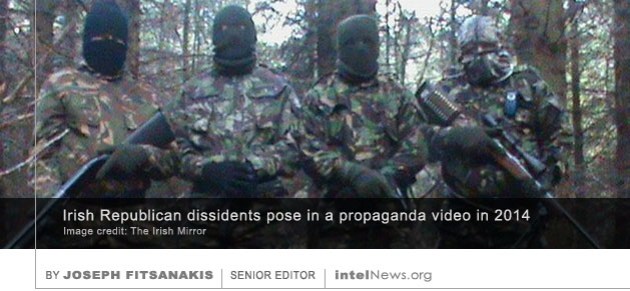 The British Security Service (MI5) has over 700 officers —more than 20 percent of its entire force— stationed in Northern Ireland, due to fears that the Brexit process might reignite the centuries-long sectarian conflict there. In 1922, nationalist rebels managed to dislodge Ireland from the British Empire. But six counties in Ireland’s north remained under British dominion, and today form the British territory of Northern Ireland. Irish nationalists have for decades engaged in an unsuccessful campaign —at times peaceful and at times violent— to unite these counties with the Republic of Ireland. Following the Good Friday Agreement of 1998, nationalist and British loyalist groups in Northern Ireland terminated their armed operations and entered the political arena, effectively sharing power in the British territory. The integration of Ireland and Britain into the European Union helped in that process by effectively bringing to an end border checks between the two countries. Thus, pro-British loyalists continued to live under British rule, while nationalists have been able to cross from Northern Ireland to the Irish Republic and back without restrictions, as if the two states were effectively unified.
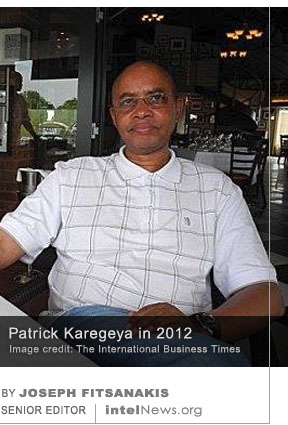 A public inquest into the 2014 killing of a Rwandan dissident and former spy chief, who had been given political asylum in South Africa, has unearthed evidence showing that South African authorities believed the killers had close links to the government of Rwanda. It also appears that the South Africans chose not to prosecute the killers in order to protect their diplomatic ties with the Rwandan government. Patrick Karegeya was a leading member of the Rwandan Patriotic Army (RPA), the armed wing of the Rwandan Patriotic Front (RPF), which was founded in 1987 in Uganda by Rwandan Tutsi refugees. In 1994, the RPA, led by Paul Kagame, took control of Rwanda, thus putting an end to the genocide of up to a million Tutsis and moderate Hutus. Soon afterwards Karegeya was named Director General of External Intelligence in the RPA, which was renamed to Rwandan Defense Forces.
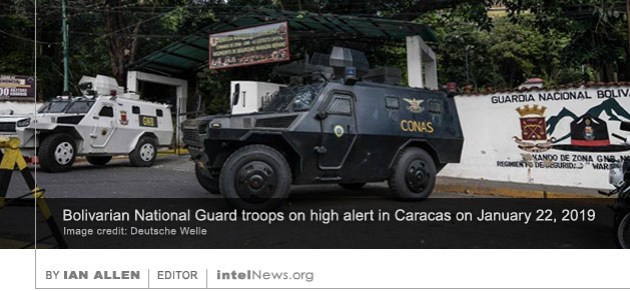 The government of Venezuela said on Tuesday that it had quelled an armed uprising by nearly 30 members of the Bolivarian National Guard (GNB) in Caracas, which sparked an all-night riot in the Venezuelan capital. On Tuesday government officials announced the arrest of 27 members of the GNB who allegedly revolted against the government of President Nicolás Maduro. Several videos were posted in pro-opposition social media accounts the night before. They showed young men in military uniforms brandishing weapons and calling on all Venezuelans to rise up against the country’s government. In one
 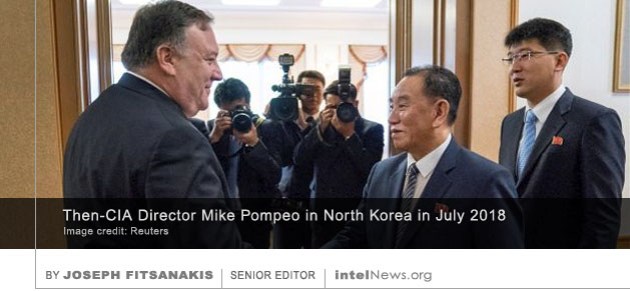 With presidential approval, the United States Central Intelligence Agency has maintained a secret channel of communication with North Korea since at least 2009, according to The Wall Street Journal. Many were surprised in 2018, when the then CIA director Mike Pompeo made a sudden visit to Pyongyang to speak with senior North Korean officials. But according to The Wall Street Journal, the CIA channel with the North Koreans had been there since at least 2009 and Pompeo simply “re-energized it” after being instructed to do so by the White House.
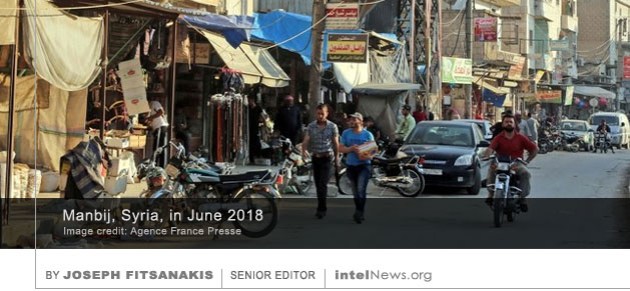 The “illusion of safety” has been blamed for the death of four American service members in northern Syria last week, after a suicide bomber attacked a restaurant, killing at least 19 people and wounding countless others. The deadly attack happened in Manbij, a small Kurdish-majority town near the Syrian-Turkish border, which American forces previously viewed as an oasis of security in the war-torn country. American troops fought alongside a coalition of Kurdish and Arab fighters who in 2016 took control of Manbij from the Islamic State of Iraq and Syria (ISIS). Since then, American forces have remained in the area —mostly to prevent a military invasion by Washington’s ally Turkey, which views the Kurds as terrorists and has threatened to destroy their armed forces.
 A judge in Spain has widened an investigation into an illegal network that spied on scores of politicians, business executives, journalists and judges for over 20 years, in return for payments by wealthy clients. At the center of the case is José Manuel Villarejo, a 67-year-old former police chief, who was arrested in November of 2017 for carrying out illegal wiretaps and remains in pre-trial custody. State prosecutors accuse Villarejo of running an illicit information-collection enterprise that violated the privacy of hundreds of unsuspecting citizens. The latter were targeted by corporate competitors and individual wealthy clients. Many of Villarejo’s targets were eventually blackmailed by the recipients of information collected by the former police chief and his network.
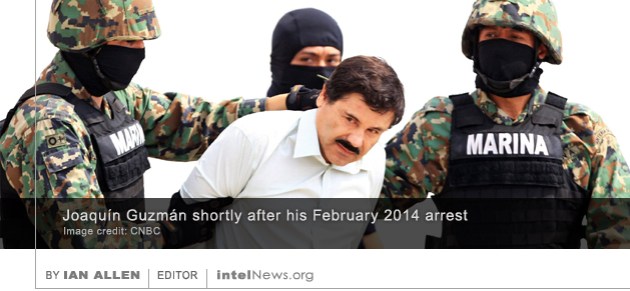 A high-profile witness has told the trial of Joaquín ‘El Chapo’ Guzmán in New York that the accused bribed the then President of Mexico, Enrique Peña Nieto, with $100 million in order to stay out of prison. Guzmán, the leader of the powerful Sinaloa drug cartel, was






 intelNews.org
Hundreds of foreign spies in Brussels, European diplomatic agency warns
February 12, 2019 by Ian Allen 3 Comments
According to Die Welt, the EEAS estimates that “approximately 250 Chinese and 200 Russian spies” are operating in Brussels. Most of these intelligence officers are allegedly embedded in their countries’ embassies, trade missions, cultural centers and other outreach facilities in the Belgian capital. There are also many intelligence operatives from Western agencies, including those of the United States, as well as from Iran, Turkey and Morocco, among other foreign nations. The report in Die Welt adds that the EEAS advised European Union diplomats to avoid certain establishments in the European Quarter of Brussels, which are believed to be heavily frequented by international spies. Among them are “a popular steakhouse and café” that are “within walking distance of the Berlaymont building” —the headquarters of the European Commission. The same building houses the offices of the EEAS.
Such warnings are not new. In June of last year, Peter Gridling, head of Austria’s main counterintelligence agency, said during a rare public appearance that Vienna —the spy capital of the world— no longer topped the list of preferred destinations for the world’s spies. He said that the Austrian capital had been overtaken by Brussels as the spy capital of Europe and added that, according to his agency’s calculations, there was a greater density of spies in Brussels than in any other European capital. When asked to specify the number of foreign intelligence operatives that are active in Vienna, Gridling said it was “in the neighborhood of hundreds of people, but certainly fewer than 1,000”. In 2012, Alain Winants, former Director of Belgium’s State Security Service (SV/SE), claimed that Brussels was home to more spies than any other city in the world.
► Author: Ian Allen | Date: 12 February 2019 | Permalink
Filed under Expert news and commentary on intelligence, espionage, spies and spying Tagged with Belgium, Brussels, counterintelligence, espionage, European External Action Service, News