East German Stasi spies questioned for evidence on Lockerbie bombing
March 22, 2019 Leave a comment
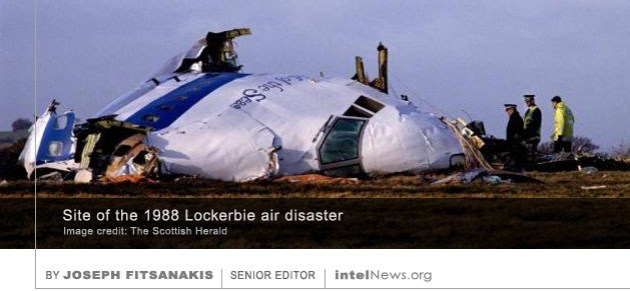 Five former officers of East Germany’s State Security Service, known commonly as the Stasi, have been questioned in Berlin over the Lockerbie air disaster at the request of British prosecutors. A total of 270 people died on December 21, 1988, when Pan Am flight 103, flying from Frankfurt to Detroit, exploded in mid-air over the Scottish village of Lockerbie. In 2001, a British court sitting in the Netherlands ruled that the bombing was carried out by Abdelbaset al-Megrahi, former head of security for Libyan Arab Airlines. Al-Megrahi was also believed to have been an officer of Intelligence of the Jamahiriya —Libya’s main intelligence service. He claimed he was innocent of the crime until his death in 2012 from cancer.
But Scotland’s independent public prosecution agency, the Crown Office and Procurator Fiscal Service, has always claimed that several other Libyan intelligence operatives helped Megrahi bring down Pan Am flight 103. Last December, the Crown Office said that it was continuing to pursue a criminal inquiry into several individuals —other than Megrahi— who were “involved in the conspiracy” to bomb Pan Am flight 103. As part of the inquiry, Crown Office prosecutors have interviewed potential suspects and witnesses, including Abdullah Senussi, former head of Libyan intelligence.
On Thursday, the German news agency DPA said that five former officers of the East German Stasi —all of them in their 70s and 80s— had been interviewed in connection to the Lockerbie bombing. The news agency said that the interviews had been conducted by German intelligence officers at the request of Crown Office prosecutors in Britain. Later on Thursday, the Berlin office of the German state prosecutor confirmed that the unnamed five individuals had been interviewed “as witnesses, not as suspects” throughout the past nine months. It gave no further information, saying that “it would be inappropriate to comment on a developing criminal investigation”.
All five former Stasi officers are believed to have provided evidence at the trial in the Netherlands that resulted in Megrahi’s conviction. Among other things, they told the court that the Libyans had contracted a Swiss businessman who manufactured the timer that detonated the Lockerbie bomb. Moreover, the 2014 documentary My Brother’s Bomber, directed by the American filmmaker Ken Dornstein, whose brother died in the Lockerbie bombing, claimed that the Stasi had closely monitored the activities of Libyan intelligence in West Germany in the years leading up to the downing of Pan Am flight 103. Some believe that the Stasi had evidence of a conspiracy by several Libyan intelligence officers to carry out the bombing.
► Author: Joseph Fitsanakis | Date: 22 March 2019 | Permalink
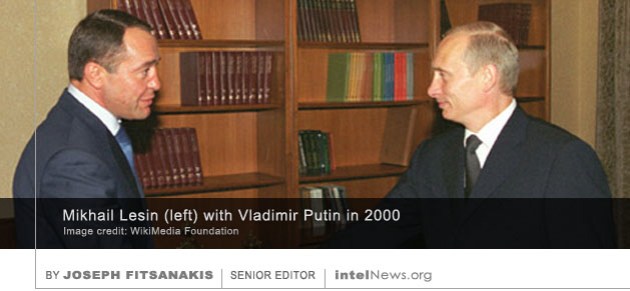 A former senior adviser to Russian President Vladimir Putin, who died allegedly by falling while intoxicated in a luxury hotel room in Washington, may in fact have been strangled to death, according to a newly released medical examination. The body of Mikhail Yuriyevich Lesin, a well-known Russian media mogul, was found in the luxury Dupont Circle Hotel on November 5, 2015. He became famous in Russia soon after the collapse of the communist system, when he founded Video International, an advertising and public-relations agency that was hired by Russian President Boris Yeltsin to run his reelection campaign in 1995.
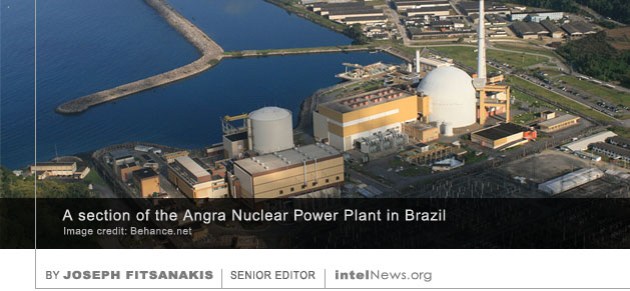 A convoy of trucks carrying nuclear fuel to one of Brazil’s nuclear plants was attacked by a heavily armed gang on Tuesday, according to police reports. The convoy was carrying uranium fuel from Resende, an industrial city in the municipality of Rio de Janeiro in southeastern Brazil. Its destination was the Angra Nuclear Power Plant in the coastal city of Angra dos Reis, which is located 100 miles south of Resende. Angra is Brazil’s sole nuclear power plant. It consists of two pressurized water reactors, Angra I and Angra II. It is owned by Eletrobras, Brazil’s state-owned power utility firm, which is also the world’s tenth largest electric utilities company.
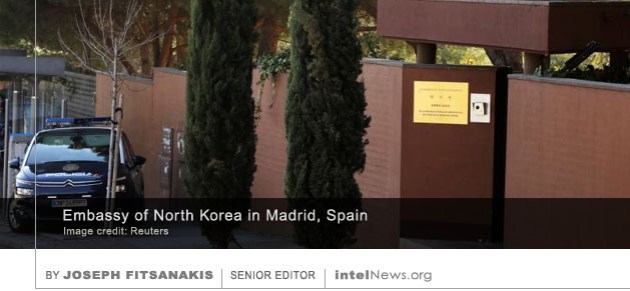 An obscure North Korean dissident group was most likely behind a violent raid on North Korea’s embassy in Madrid on February 22, which some reports have pinned on Western spy agencies, including the Central Intelligence Agency. The group, known as the Cheollima Civil Defense, is believed to be the first North Korean resistance organization to declare war on the government of Supreme Leader Kim Jong-un.
 said in English that all was fine inside the embassy. But a few minutes later, two luxury cars belonging to the North Korean embassy sped away from the building with the ten assailants inside, including the man who had earlier appeared at the front door.
 Authorities in Bosnia and Herzegovina have accused the government of Croatia of deliberately arming militant Islamists in order to damage Bosnia’s reputation and sabotage its campaign to join the European Union. The claims were aired by a Bosnian government minister on Thursday, a day after allegations of a weapons-smuggling plot by Croatia were made in the Bosnian media. On Wednesday, Zurnal, a Bosnian investigative website, alleged that the Croatian intelligence services had recruited a Bosnian national and used him to smuggle weapons and explosives into the majority Muslim country.
 Russian spy agencies use front companies to purchase directorates that contain the contact details of United States government employees, according to a new intelligence report. The contact details are contained in multi-page directories of Congressional staff members and employees of US federal agencies. They are published every January by a specialist vendor called Leadership Connect with the cooperation of a Washington, DC-based provider of publishing services. The directories contain the names, job titles, professional addresses and telephone numbers of US government employees.
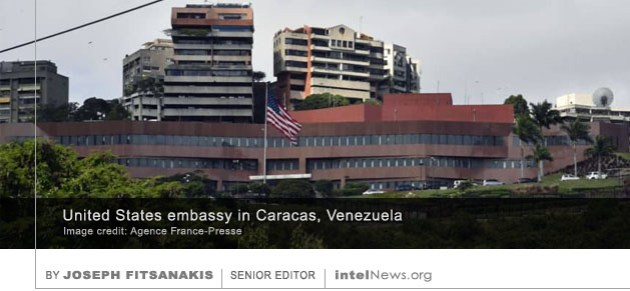 The United States said on Tuesday that it will evacuate its last few diplomats from its embassy in Caracas, as the electricity blackout in Venezuela enters its sixth day, making it the longest energy crisis in the nation’s history. Energy shortages are not new in Venezuela. The oil-rich Latin American country of 31 million people suffered two disastrous nationwide blackouts in 2009 and a third one in 2016. But the current blackout is quickly approaching the one-week mark and is believed to have caused a minimum of 20 deaths, mostly in hospitals around the country. The majority of the population currently lacks access to fuel and banking services, while there are
 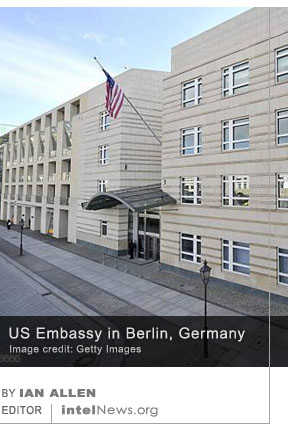 The United States has warned Germany that intelligence sharing between the two countries will be threatened if the Chinese telecommunications giant Huawei is awarded a contract to build Germany’s 5G network. The company, Huawei Technologies, is a private Chinese venture and one of the world’s leading telecommunications hardware manufacturers. In recent years, however, it has come
 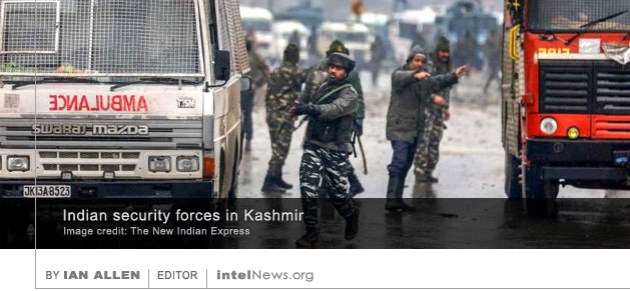 The government of Pakistan employed terrorist groups to attack India, according to Pakistan’s former president, Pervez Musharraf, who also accused India of doing the same. Musharraf, 75, took power in Pakistan in 1999 through a coup d’état supported by the country’s military leadership. The four-star Army general ruled as Pakistan’s 10th president until 2008, when he resigned from power to avoid being impeached. He currently lives in exile in the United Arab Emirates and is wanted in Pakistan for alleged crimes, including high treason. His critics accuse him of arresting several judges in 2007 and suspending the country’s constitution.
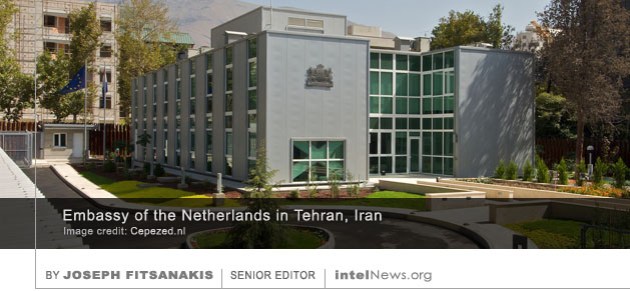 Holland said on Monday that it had recalled its ambassador from Tehran after Iran expelled two Dutch diplomats, in a deepening dispute involving the assassination of two Dutch citizens by alleged Iranian agents. In July of last year, Holland
  A computer hacking group with links to the North Korean government has a wider reach and is more sophisticated than was initially believed, according to the computer security firm McAfee. The group, dubbed Lazarus by cybersecurity experts, is believed to be connected with Guardians of Peace, the hacker team that orchestrated the 2014 attacks on Sony Pictures Entertainment. The company drew the ire of the North Korean government for producing The Interview, a black comedy based on a fictional attempt by two Americans to assassinate North Korean leader Kim Jong-un. Known collectively as ‘the Sony Pictures hack’, the attacks included the compromise of internal documents and unreleased copies of films produced by Sony, as well as personal attacks on Sony executives and members of their families. There were also attempts to damage Sony’s digital infrastructure, which cost the company an undisclosed amount in damages, believed to be in the millions of dollars.
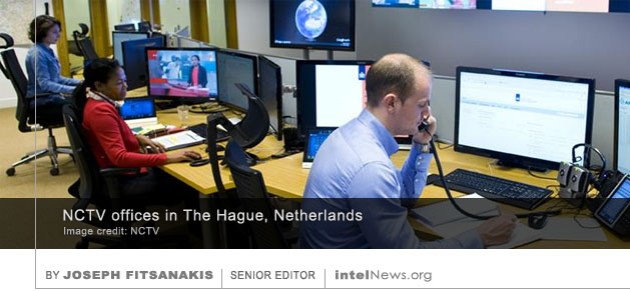 Holland’s chief counterterrorism agency has warned that, despite losing its territories in the Middle East, the Islamic State continues to recruit operatives and is ready to launch attacks in the West “at a moment’s notice”. The warning is contained in a report published last week by the Dutch National Coordinator of Counterterrorism and Security (NCTV). Established in 2005 as the Dutch National Coordinator for Counterterrorism, and renamed in 2012, the NCTV works under Holland’s Justice and Security Minister. It is responsible for analyzing terrorism threats and assessing the country’s domestic terrorism threat level.
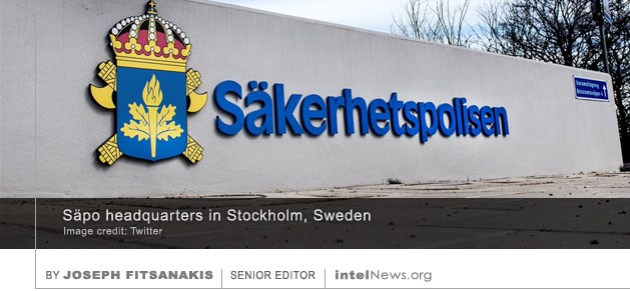 The Swedish public prosecutor’s office has confirmed media reports that a second espionage-related arrest took place in Stockholm this week. The latest arrest came just 24 hours after a man was arrested in the Swedish capital on Tuesday, allegedly for spying on behalf of Russia. As intelNews
 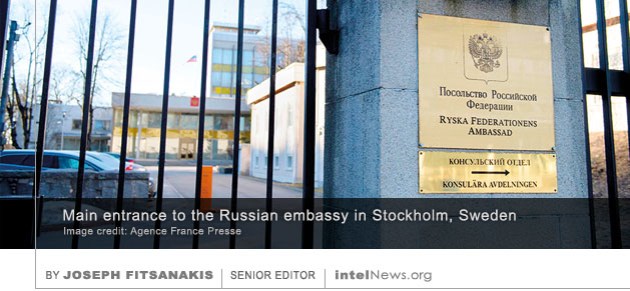 Authorities in Sweden have announced the arrest of a man who is accused of spying for Russia. The man was reportedly apprehended while meeting with a Russian diplomat in central Stockholm. The alleged spy, who has not been identified in media reports, is believed to be working for an unnamed technology company in Sweden. A report by Swedish police said that the man is working “in a field that is known to be of interest to the intelligence services of foreign powers”.







Documents show ISIS plans sleeper cell attacks in Middle East, Europe
March 25, 2019 by Ian Allen Leave a comment
Among them, said The Times, are several memoranda authored by an ISIS leader and operations planner known as Abu Taher al-Tajiki. In his memoranda, al-Tajiki informs the group’s senior leadership that he commands numerous fighters who are willing and able to carry out strikes “far away” from the Islamic State’s strongholds in the Middle East and Africa. He states that he is in regular communication with them and that they are awaiting instructions to “undertake the operations”. Al-Tajiki then calls for the creation of a Foreign Relations Office under the Islamic State’s Department of Operations, which would be tasked with launching attacks throughout Europe. He adds that the new Office can also count on the assistance of computer hackers and other technically literate Islamic State members. In another memorandum, al-Tajiki suggests the creation of what he calls “crocodile cells” in Syria and Iraq. These cells will “lurk beneath the surface” and “attack at the right moment to assassinate the enemies of Allah”, says al-Tajiki.
The Times report comes as experts warn that the Islamic State retains significant financial power, despite the loss of its territories in the Middle East. In a well-informed article in The Atlantic, David Kenner reports from Beirut that the Islamic State without its territories is a double-edged sword. On the one hand, the group cannot rely on taxation and oil revenues that used to enrich its coffers by $1 million per day during the height of its power. On the other hand, argues Kenner, the loss of its territory has freed the Islamic State from the costs associated with state-running and allows it to devote its financial resources “exclusively to terrorist activity”. These resources —cash and other assets— are formidable, says Kenner. In the words of Howard Shatz, senior economist at the Rand Corporation and an expert on ISIS’ finances, we “don’t know where it all went” after ISIS lost its territory. We do know that much of it has been invested in “legitimate commercial enterprises”, says Shatz, with the help of profit-oriented middlemen with access to markets that are as far away as Southeast Asia and the Caribbean. A lot of it is hidden in suitcases and boxes throughout Iraq, Syria and Turkey. All of it is intended to be used to fund terrorist attacks, warns Kenner.
► Author: Ian Allen | Date: 25 March 2019 | Permalink
Filed under Expert news and commentary on intelligence, espionage, spies and spying Tagged with Abu Taher al-Tajiki, counterterrorism, Islamic State, News, terrorism