Saudi government secretly abducting its critics from abroad, say dissidents
August 17, 2017 1 Comment
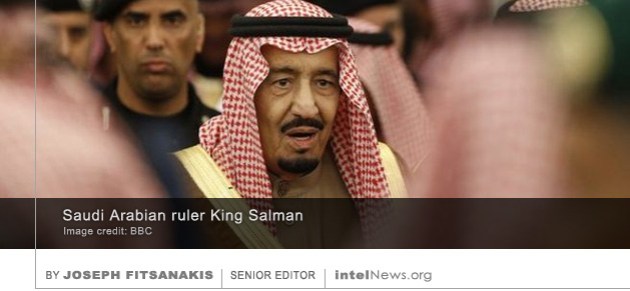 At least three prominent Saudi dissidents living in Europe, who openly criticized Saudi Arabia’s system of government, have been illegally abducted by the country’s monarchy in the past two years, according to a report by the BBC. All three, who are members of the Saudi royal family, are missing, believed to be dead or held against their will in Saudi Arabia. But the country’s government will not comment on their fate.
According to the BBC World Service, one of the missing dissidents is Prince Turki bin Bandar, a former major in the Saudi police force. In 2010, the prince began falling out with the Saudi royal family over a disputed inheritance. He was reportedly arrested and imprisoned. Once released from prison, in 2012, he moved to France, from where he began criticizing the Saudi government by posting videos and messages on social media. But his messages calling for political reform and an end to corruption in Saudi Arabia stopped in the summer of 2015 when, according to his friends, he disappeared. One of them, the blogger Wael al-Khalaf, told the BBC that Prince Bandar was visiting Morocco where he was detained following a request by the Saudi government. It is believed that he was then deported to Saudi Arabia, where he remains today, almost certainly against his will.
Another Europe-based Saudi royal, Prince Saud bin Saif al-Nasr, has been missing since 2015. His disappearance came after a year-long social-media campaign in which he called for the prosecution of senior Saudi officials for backing the overthrow of the now deposed Egyptian President Mohammed Morsi. In September 2015, shortly before his disappearance, Prince Nasr had publicly endorsed two anonymous open letters —allegedly written by a Saudi prince— calling for the violent overthrow of the Saudi monarchy. According to the BBC, Prince Nasr was the only Saudi royal to publicly and openly endorse the letters. He then disappeared and is presumed to be in Saudi Arabia.
The third case, that of Prince Khaled bin Farhan, is more complicated. The prince was living in Switzerland and was a prominent figure among Saudi exiles calling for political reforms in their homeland. In 2003, he took a flight from Milan to Rome on a private jet, which, according to the BBC, had been provided to him by a Russian-Italian company seeking to strike a business deal with him. But Prince Farhan alleges that the trip was a ruse, and that the jet took him instead to Saudi Arabia, where he was imprisoned. Seven years later, the Saudi government allowed him to seek medical treatment in the United States. But when he arrived in Boston, Massachusetts, the prince immediately filed a criminal complaint against his abductors in the Swiss courts. Amazingly, in 2016 he was convinced by the Saudi government in Paris, where he was living at the time, to use a Saudi government plane to visit his ailing father in Cairo, Egypt. But, predictably, the airplane took him and his 18-member entourage —which included non-Saudi citizens— to Riyadh. When the jet landed, Prince Farhan was “dragged […] from the plane” by heavily armed guards while “screaming at his team to call the US embassy”, according to two members of his entourage who spoke anonymously to the BBC.
The two anonymous sources told the British broadcaster that they had their passports taken away and were kept in a hotel for three days without being allowed to use a telephone to contact their family abroad or their country’s embassy in Saudi Arabia. They were then allowed to “fly to a destination of their choice” with their expenses paid by the Saudi government. The BBC said it contacted the Saudi government seeking information about the three missing royals, but Saudi officials declined to respond to questions.
► Author: Joseph Fitsanakis | Date: 17 August 2017 | Permalink
 Germany has launched an unprecedented investigation into three officers of Switzerland’s intelligence agency on suspicion that they spied on German tax investigators who were probing the activities of Swiss banks. News of the investigation comes three months after authorities in Germany
 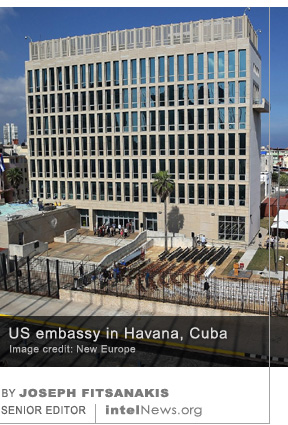 Authorities in Cuba, the United States and Canada are investigating reports that several foreign diplomats stationed in Havana have been experiencing severe hearing loss in recent months.
  Russian intelligence services say they have foiled a large-scale bomb plot, after raiding an explosives laboratory belonging to the Islamic State and arresting four suspects. The four men were allegedly planning to target the Moscow Metro transit system and a busy shopping center in the Russian capital. In a statement released to the media this morning, the Russian Federal Security Service (FSB) did not specify the intended targets of the plotters. But it said it had arrested four people during an early morning raid at an explosives laboratory located in the Moscow suburbs. The FSB said that its officers
  The role of the CIA in funding and helping to organize anti-Soviet groups inside the USSR has been known for decades. But, as intelNews explained in
 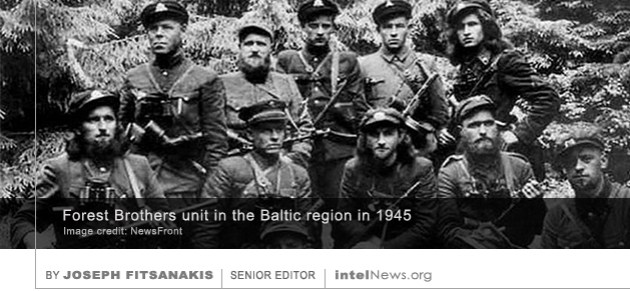 Recently declassified documents from the archive of the Central Intelligence Agency detail financial and material support given by the United States to groups of armed guerrillas in Soviet Latvia in the 1950s. The documents, initially marked ‘Top Secret’ but now declassified, show that the CIA was aware and supported the activities of an anti-Soviet guerrilla army known as ‘the Forest Brothers’. Known also as ‘the Forest Brethren’, the group was formed in the Baltic States in 1944, as the Soviet Red Army established Soviet control over the previously German-occupied states of Estonia, Latvia and Lithuania. The Soviet Union had previously occupied and annexed the three Baltic countries, in a failed attempt to pre-empt Germany’s eastward military expansion. Groups like the Forest Brothers consisted of the most militant members of anti-Soviet groups in the Baltic States, many of whom were ideologically opposed to Soviet Communism.
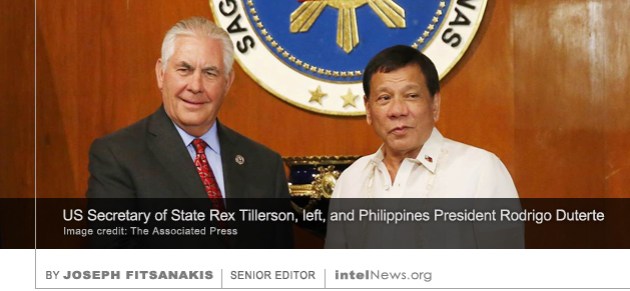 The United States is reportedly weighing plans to launch airstrikes in the Philippines, against militant groups that are affiliated with the Islamic State of Iraq and Syria. However, some American officials are skeptical about reports of possible airstrikes, while Philippine government officials claim no such action is necessary. For more than 40 years, the Philippine army has been fighting a counterinsurgency campaign against secessionist Moros in the country’s southwest. The region is home to most of the Philippines’ Muslim population, which constitutes around 6 percent of the country’s overall population. In recent years, some Muslim secessionist groups, including the most formidable, Abu Sayyaf, have pledged allegiance to the Islamic State of Iraq and Syria, known as ISIS.
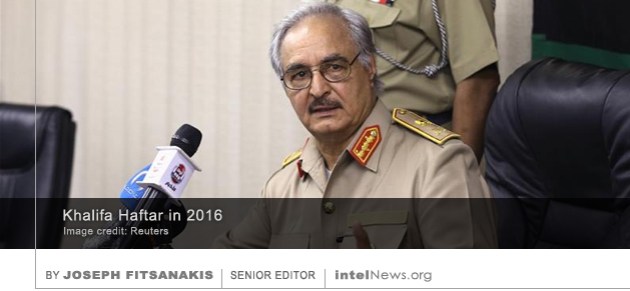 Israel is secretly providing military assistance to Khalifa Haftar, commander of the Libyan National Army, one of the factions in the Libyan Civil War, according to a British-based publication. Libya has remained in a state of war since 2011, when a popular uprising backed by the West and its allies led to the demise of the country’s dictator, Colonel Muammar Gaddafi. Currently the strongest faction in the ongoing Libyan Civil War is the eastern-based Tobruk-led Government, which is affiliated with the Libyan National Army (LNA). The commander of the LNA is Field Marshal Khalifa Haftar, an old adversary of Colonel Gaddafi, who lived in the United States under Washington’s protection for several decades before returning to Libya in 2011 to launch his military campaign.
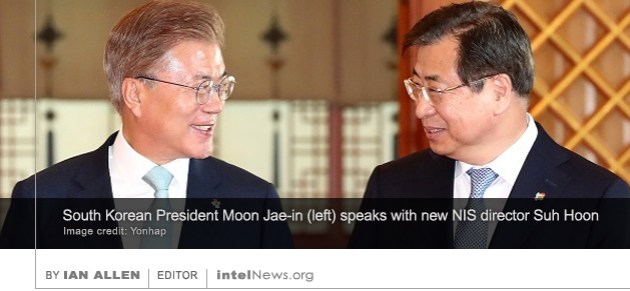 An internal investigation has found that the intelligence agency of South Korea tried to steer the result of the 2012 presidential election in favor of the conservative candidate, and placed liberal politicians under surveillance in the run-up to the election. South Korea’s intelligence agency, the National Intelligence Service (NIS) has fallen into disrepute in recent years, after it was found to have secretly sided with conservative political candidates for public office.
 The decision by the White House to terminate American support for rebels in war-torn Syria could backfire by causing the suddenly unemployed fighters to join jihadist organizations, according to experts. The United States’ support for the rebels began in secret in early 2013, after the then US President, Barack Obama, instructed the Central Intelligence Agency to provide covert support to fighters in Syria. The CIA then joined forces with spy agencies from Britain, France, Saudi Arabia and the United Arab Emirates, to assist fighters affiliated with the Free Syrian Army. At that time, Washington saw the Free Syrian Army and forces affiliated with it as ideologically moderate. It also agreed with the group’s main aim, which was to topple the regime of Syrian President Bashar al-Assad.
 Nearly half a billion of American taxpayers’ funds were wasted by contractors hired by the United States government to train Afghan intelligence personnel, according to a scathing report by a Congressional body. The funds were spent between 2010 and 2013 by the US Department of Defense, in order to train several thousand members and a few dozen aspiring trainees of the Afghanistan National Defense and Security Forces (ANDSF). Two companies, Legacy Afghanistan R&D and Afghanistan Source Operations Management, oversaw the training program. It was primarily executed by a contractor, Imperatis Corporation, and a subcontractor, New Century Consulting, at a total cost of $457 million to the US taxpayer.
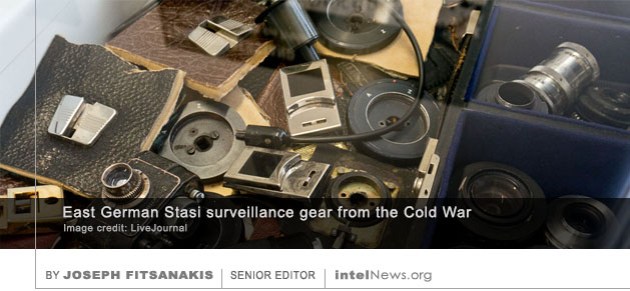 State-sponsored industrial espionage aimed at stealing foreign technical secrets may boost a country’s technological sector in the short run, but ultimately stifles it, according to the first study on the subject. The study is based on over 150,000 declassified documents belonging to the East German Ministry for State Security, known as Stasi. The now-defunct intelligence agency of communist-era East Germany was known for its extensive networks of informants, which focused intensely on acquiring technical secrets from abroad.
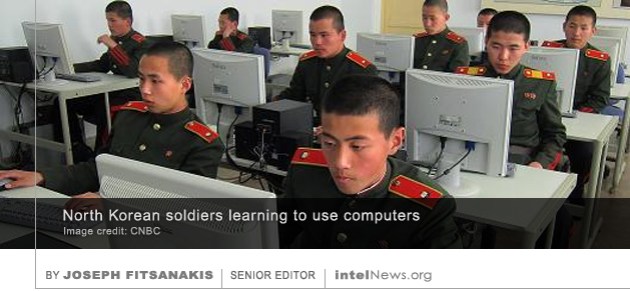 North Korea’s intelligence establishment has shifted its attention from spying for political gain to spying for commercial advantage –primarily to secure funds for the cash-strapped country, according to a new report. Since the 1990s, the Democratic People’s Republic of Korea (DPRK) has used computer hacking in order to steal political and military secrets from its rivals. But there is increasing evidence that Pyongyang is now deploying armies of computer hackers in order to steal cash from foreign financial institutions and internet-based firms. This is the conclusion of a new report by the Financial Security Institute of South Korea, an agency that was set up by Seoul to safeguard the stability of the country’s financial sector.
 A cyber espionage group that has alarmed security researchers by its careful targeting of government agencies has links to the Iranian state, according to a new report. The existence of the group calling itself CopyKittens was first confirmed publicly in November of 2015. Since that time, forensic analyses of cyber attacks against various targets have indicated that the group has been active since at least early 2013. During that time, CopyKittens has carefully targeted agencies or officials working for Jordan, Saudi Arabia, Turkey, Israel, the United States, and Germany, among other countries. It has also targeted specific offices and officials working for the United Nations.







CIA warned Barcelona police two months ago about possible Islamist attack
August 18, 2017 by Joseph Fitsanakis Leave a comment
In the hours following the attack, several observers noted that Barcelona was always an obvious target for the Islamic State, given that the group had already perpetrated terrorist attacks in Berlin, London, Paris and Brussels. They also raised questions about the low level of police presence and the absence of anti-vehicle barrier systems in Barcelona —one of Europe’s busiest tourist destinations. Late on Thursday, the Catalan newspaper El Periódico reported that, two months ago, the CIA alerted the Mossos d’Esquadra, the autonomous police and security service of Catalonia, of a possible terrorist attack by the Islamic State. According to the Barcelona-based daily, the CIA even mentioned La Rambla as the main target of Islamist militants.
Even before the CIA issued its warning, the Islamic State had directed several threats against Spain since 2014, when the group first appeared in Syria. As El Periódico said, the group’s followers “consider themselves obligated to re-establish Islam” in areas that were ruled by Muslim leaders in the past. For much of the medieval period, Spain and Portugal were known as Al-Andalus, and were ruled by a succession of Muslim caliphs. The Spanish daily also reported that a Twitter account associated with the Islamic State issued several warnings against Spain two weeks ago. Specifically, on July 30, the account twitted a series of messages that read: “We will implement the caliphate in Spain and will recover our land. Impending attack on Al-Andalus, God willing”. Similar threats had been issued a year ago on social media, but were later disregarded after they failed to materialize, said El Periódico.
► Author: Joseph Fitsanakis | Date: 18 August 2017 | Permalink
Filed under Expert news and commentary on intelligence, espionage, spies and spying Tagged with Barcelona (Spain), CIA, Islamic State, Mossos d'Esquadra, News, Spain, terrorism