Alleged Israeli spying device concealed inside fake rock found in Lebanon
September 11, 2017 1 Comment
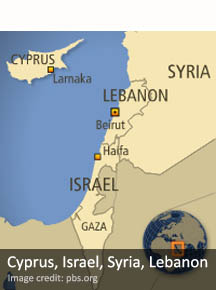 A sophisticated spying device disguised as a rock, which was allegedly planted by Israeli intelligence, was found by Lebanese Army troops on a hill located a few miles from the Lebanese-Israeli border. The discovery was reported early on Saturday by several Lebanese news websites, including Al-Mayadeen and Al-Manar, which are closely affiliated with Hezbollah. Al-Manar said that the spy device had been found in the outskirts of Kfarchouba, a predominantly Shiite Lebanese village, located in Arkoub, 100 miles southeast of Lebanon’s capital, Beirut. Kfarchouba’s location is extremely strategic, as the village overlooks northern Israel on the south and the Golan Heights on the east. It has been bombed by Israel several dimes between the 1970s and today, and is remains heavily militarized.
Reports from Lebanon said that a Lebanese Army patrol found the device hidden inside a fake rock, which had been placed on a hill outside Kfarchouba. The device had been placed in direct view of a major Lebanese military outpost, known as Rawisat. As soon as the device was detected, the patrol reportedly called in the Lebanese Army’s intelligence corps for support. Technical experts soon examined the discovery and determined that it contained a sophisticated thermographic camera. Also known as infrared or thermal imaging cameras, thermographic cameras capture images using infrared radiation, instead of using visible light, as is the case with commonly used cameras. This allows them to capture relatively clear images in the darkness, and are thus used for military operations that require night vision. Some Lebanese websites published photographs showing parts of the alleged spy device, which appear to bear writing in Hebrew.
This is not the first time that alleged Israeli spy devices have been found in southern Lebanon. In September of 2014, one person was killed when a mysterious device found near the Lebanese village of Adloun suddenly exploded as Hezbollah troops were examining it. It was later suggested that the device had been attached by Israeli troops to the Hezbollah-owned telecommunications network that spans southern Lebanon. Hezbollah said that the device had been remotely detonated by an Israeli drone in order to prevent it from being reverse-engineered. Two other devices found by a Lebanese Army patrol in the same region in October of 2009 suddenly exploded, as Lebanese security personnel were approaching. A Lebanese Army official said on Sunday that the device found in Kfarchouba will be dismantled by Lebanese Army engineers.
► Author: Joseph Fitsanakis | Date: 11 September 2017 | Permalink
 The Turkish government has refused to comment on reports from Iraq, which suggest that Kurdish forces have captured at least two senior Turkish intelligence officers. News of the arrests first
 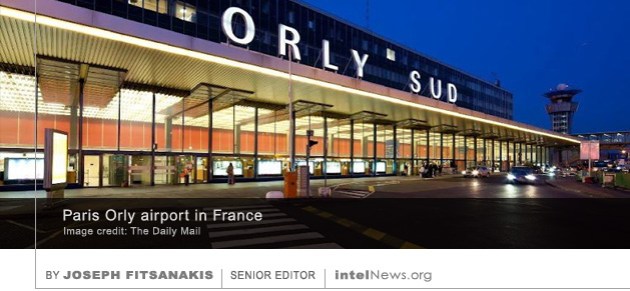 A French police officer has been charged with illegally sharing secret government documents in an espionage case involving France’s border police and diplomats from Morocco and Algeria. According to information published by the French daily Libération, the police officer supplied Moroccan intelligence with classified information about France’s border-control policies and procedures. He also gave the Moroccans information about the movements in France of Moroccan nationals and senior Algerian government officials.
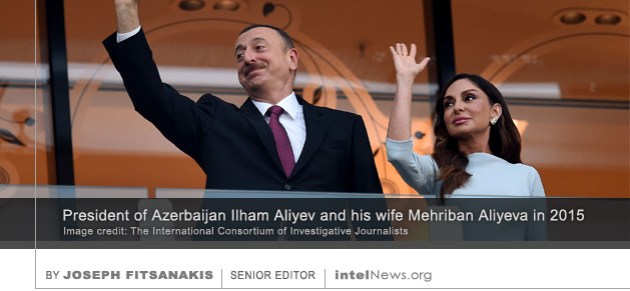 An investigation by a consortium of European newspapers has uncovered details of a massive slush fund worth nearly $3 billion, which was allegedly used by Azerbaijan’s governing elite to bribe officials, business leaders and journalists at home and abroad. The fund was operated out of Baku, the capital of the former Soviet state, which is routinely accused of human-rights abuses. Western countries, including the United States,
  The Parliament of Australia is reportedly reviewing the use of cell phones built by a Chinese manufacturer, after an Australian news agency expressed concerns about the manufacturer’s links with the Chinese military. The cell phone in question is the popular Telstra Tough T55 handset. It is made available to Australian parliamentarians though the Information, Communications and Technology (ICT) unit of the Department of Parliamentary Services (DST). Any parliamentarian or worker in Australia’s Parliament House can order the device through the Parliament’s ICT website. According to data provided by the DST, 90 Telstra Tough T55 cell phones have been ordered through the ICT in the current financial year.
 American officials have revealed more information about a mysterious sonic device that is believed to have caused numerous diplomats to suffer hearing loss and other serious ailments. Last month, the Associated Press
 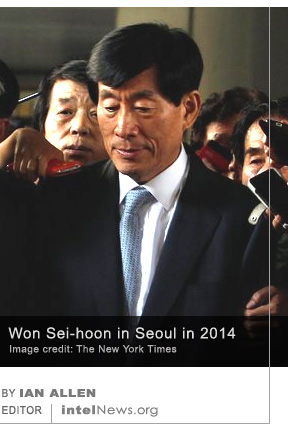 The former director of South Korea’s main intelligence agency has been sent to prison for organizing a large-scale illegal campaign to influence the result of the country’s 2012 presidential election. Won Sei-hoon headed the NIS from 2008 to 2013, during the administration of conservative President Lee Myung-bak. During the 2012 presidential election, Won ordered a group of NIS officers to “flood the Internet” with messages accusing liberal political candidates of being “North Korean sympathizers”. One of those candidates, Moon Jae-in, of the left-of-center Democratic Party of Korea, is now the country’s president. Mr. Moon succeeded his main right-wing rival, Park Geun-hye, who resigned in March of this year following a series of financial scandals. She is now facing charges of bribery, abuse of power, leaking government secrets, and corruption.
 American troops deployed in Syria have exchanged fire with rebels that were until recently supported by the United States Central Intelligence Agency. In 2013, soon after the outbreak of the Syrian Civil War, the then-US President Barack Obama instructed the Central Intelligence Agency to provide covert support to fighters in Syria. Acting on the president’s directive, the CIA promptly joined forces with spy agencies from Britain, France, Saudi Arabia and the United Arab Emirates, to assist fighters affiliated with the Free Syrian Army. At that time, Washington saw the Free Syrian Army and forces affiliated with it as ideologically moderate. It also agreed with the group’s main aim, which was to topple the regime of Syrian President Bashar al-Assad.
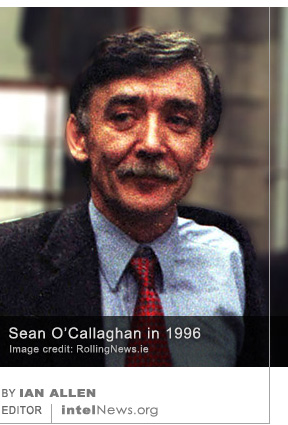 Sean O’Callaghan, one of the most contentious figures in the history of the Provisional Irish Republican Army, has died in Jamaica. He was born in County Kerry, Republic of Ireland, in a strongly republican family, which sided with opponents of the Ango-Irish treaty and fought against the official Irish government in the Irish Civil War of 1922-1923. In 1971, aged just 17, O’Callaghan joined the Provisional Irish Republican Army, which fought to unite British-controlled Northern Ireland with the independent Republic of Ireland. Not long after, O’Callaghan was arrested by the Garda Síochána (Irish police) in his home county of Kerry, when a small quantity of explosives he was hiding in his parents’ house accidentally detonated.
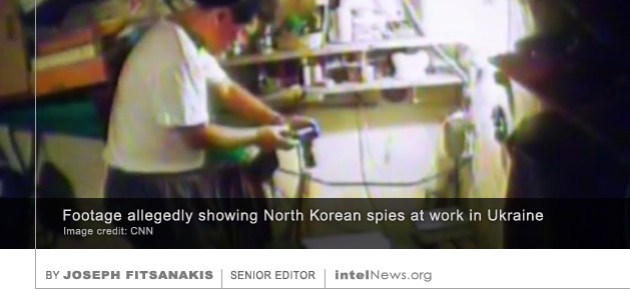 Ukrainian authorities have released rare surveillance footage filmed during a sting operation that ended with the capture of three North Korean spies. The North Koreans, two of whom are now serving prison sentences in Ukraine, had traveled there in 2011 believing they would be given missile technology secrets. Last July, North Korea surprised missile technology experts by successfully testing two intercontinental ballistic missiles (ICBMs). Government-controlled media in Pyongyang claimed that North Korean ICBMs were capable of reaching the United States’ mainland.
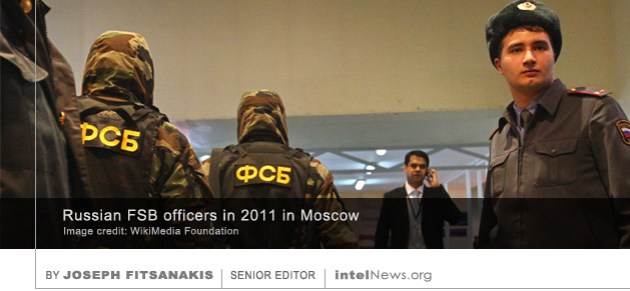 Two senior officers in the Russian intelligence services were charged with treason after they were found to have helped the United States catch two notorious Russian hackers, according to reports in the Russian media. Sergey Mikhailov was a career officer in the Federal Security Service —a descendant of the domestic section of the Soviet-era KGB— which is often referred to as Russia’s equivalent of the United States Federal Bureau of Investigation. Mikhailov had risen through the ranks of the FSB to eventually head the agency’s Center for Information Security. Known in Russia as CIB, the Center is tasked with investigating electronic crime in the Russian Federation.
 Canadian spy organizations are working with domestic and international agencies in response to reports that several Canadian far-right activists attended the “Unite the Right” rally in Charlottesville, Virginia, earlier this month. The rally drew the attention of the world’s media after violent clashes between protesters and counter-protesters left a woman dead. Two Virginia State Police officers were also killed when a helicopter used in crowd control in Charlottesville crashed near the site of the demonstrations. The rally, which took place on August 11 and 12, drew members of various white supremacist, white nationalist, neo-Nazi and neo-Confederate groups. There were also heavily armed members of a self-styled militia at Emancipation Park, where a soon-to-be-removed statue of the late Confederate General Robert E. Lee became the focal point of the far-right demonstrators.
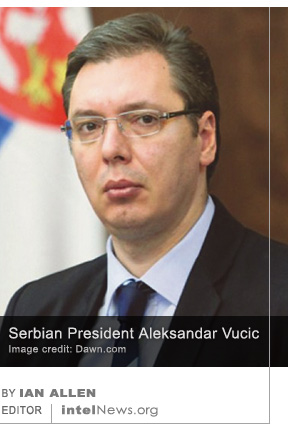 Serbia recalled its entire diplomatic staff from its embassy in the Former Yugoslav Republic of Macedonia on Monday, claiming that it wanted to protect its diplomats from “offensive intelligence activities” directed against them. The move came without warning and surprised journalists in the two former Yugoslav republics. No official reason was given for the
  Australia has expressed concern about a plan by a Chinese telecommunications company to provide high-speed Internet to the Solomon Islands, a small Pacific island nation with which Australia shares Internet resources. The company, Huawei Technologies, a private Chinese venture, is one of the world’s leading telecommunications hardware manufacturers. In recent years, however, it has come under scrutiny by Western intelligence agencies, who view it as being too close to the Communist Party of China.








Ex-spy chief jailed as elite power struggle widens in oil-rich Kazakhstan
September 12, 2017 by Joseph Fitsanakis 2 Comments
For many years, Dutbayev enjoyed unchallenged power, which was afforded to him by way of his close links to the presidential palace. But in 2006, he resigned from his top KNB post in the aftermath of the murder of popular Kazakh opposition politician Altynbek Sarsenbaev. Ten members of a specialist commando unit within the KNB were found guilty of Sarsenbaev’s murder. He was killed soon after he announced his decision to compete electorally against President Nazarbayev. But Dutbayev was never personally censured by the government. Then, in December of last year, Dutbayev was arrested on charges of “divulging government secrets”. The former spy chief’s trial began in July of this year, but was conducted in its entirety behind closed doors.
This past Monday it was reported that Dutbayev was sentenced to 7 ½ years in prison for espionage on August 24. It is not known why Dutbayev’s sentence was announced to the country’s media more than two weeks after it was formally imposed by the court. Additionally, Kazakh authorities have said nothing about who Dutbayev is believed to have divulged government secrets to, or why. Three alleged accomplices of Dutbayev, including former senior KNB officials Erlan Nurtaev and Nurlan Khasen, were also sentenced to between three and five years in prison for espionage.
Many observers believe that the jailing of the KNB officials is part of a broader power struggle that is currently taking place between rival factions competing to succeed President Nazarbayev. Kazakhstan’s leader has ruled the former Soviet Republic with an iron fist since before its independence from the USSR in 1991. The KNB appears to be a central player in the unfolding power struggle between the country’s governing elites. Almost exactly nine years ago, a Kazakh intelligence officer tried unsuccessfully to abduct another KNB former director, Alnur Musaev, who was living in self-imposed exile in Austria at the time. Many believe that he was acting under Nazarbayev’s direct orders. In 2014, two Kazakh men, believed to be KNB officers, tried unsuccessfully to abduct Viktor Khrapunov, Kazakhstan’s former Minister for Energy and Coal, who also served as mayor of Almati, before leaving Kazakhstan for Switzerland.
Dutbayev is reportedly already in prison. He is believed to be sharing a cell with Serik Akhmetov, Kazakhstan’s former prime minister, who is serving 11 years for alleged corruption.
► Author: Joseph Fitsanakis | Date: 12 September 2017 | Permalink
Filed under Expert news and commentary on intelligence, espionage, spies and spying Tagged with corruption, Erlan Nurtaev, Kazakhstan, KNB (Kazakhstan), Nartai Dutbayev, News, Nurlan Khasen