CCTV footage shows assassination of North Korean leader’s half-brother
February 22, 2017 1 Comment
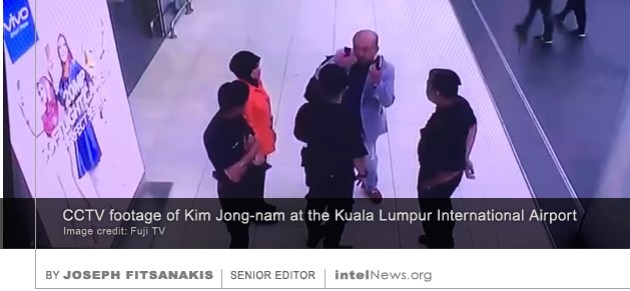 A Japanese television channel has aired footage showing the alleged assassination of the half-brother of North Korean leader Kim Jong-un, who died in Malaysia on Monday. Investigators believe that Kim Jong-nam, half-brother of North Korea’s supreme leader, and grandson of North Korea’s founder Kim Il-Sung, died after being deliberately poisoned by two women at the Kuala Lumpur International Airport. Shortly prior to his death, he reported that two women approached him at the Kuala Lumpur International Airport and splashed his face with liquid poison —though some reports suggest that he was injected with a poisoned needle. According to Malaysian media, Kim was about to board a flight to Macau, where he had been living in exile since 2007. American and South Korean officials believe that he was killed on orders of the North Korean government in Pyongyang.
The footage —seen here in its entirety— is low quality and appears to have been taken from closed-circuit television (CCTV) cameras at the airport. It was aired by Fuji TV, a Japanese television station based in Tokyo, Japan. The filmed sequence shows a man dressed in blue jeans, dark blue shirt and gray jacket, who closely resembles Kim, heading toward the low-budget departures hall of the Kuala Lumpur International Airport. In subsequent footage he is shown being grabbed from behind by a woman wearing a white long-sleeved shirt, while another woman rapidly approaches him and assaults him from the front. The woman standing behind him appears to quickly put her hands over his face and pull rapidly backwards. The entire attack sequence lasts no more than two seconds, after which both women rapidly walk away. A stunned Kim then hurriedly stumbles away from the scene of the attack, and is seen approaching airport personnel. They direct him to a group of police officers. Another camera shows him trying to describe to the officers the attack that just took place, pointing to his face with his hands. The officers are then seen escorting him to a secure area of the airport.
Fuji TV did not reveal how it acquired the footage, and the connection between it and the death of Kim has not been independently verified or commented on by Malaysian authorities. However, regional observers have confirmed that the airport shown in the footage is indeed the low-budget departures hall of the Kuala Lumpur International Airport. Malaysian authorities have arrested four people, two men and two women, in connection with the attack. One of the men carries a North Korean passport; the other man carries a Malaysian passport, while the two women are in possession of Vietnamese and Indonesian travel documents. Authorities in Kuala Lumpur say they are still looking for four North Korean men who appear to have left the country shortly after the attack on Kim.
► Author: Joseph Fitsanakis | Date: 22 February 2017 | Permalink
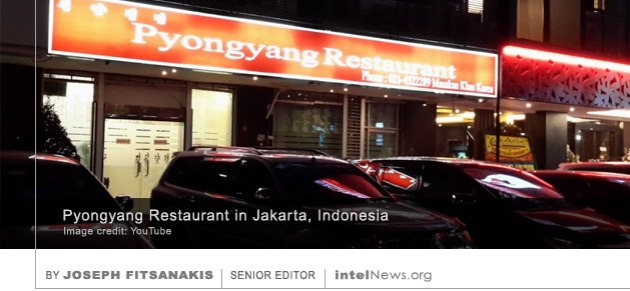 Indonesian authorities said on Sunday that they will investigate a North Korean restaurant in the country, after a Singaporean news agency claimed it was being used as a center for espionage. The announcement comes amidst heightened tensions between North Korean and its neighbors, following the
 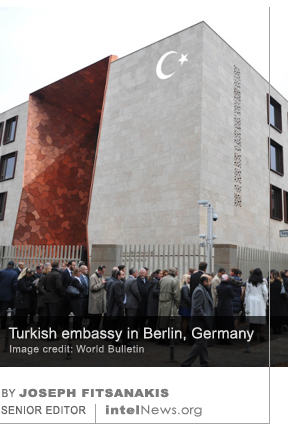 Turkish state agencies have asked the country’s diplomats stationed all over Europe to spy on Turkish expatriate communities there, in an effort to identify those opposed to the government, according to a German report. The government of Turkish President Recep Tayyip Erdoğan accuses members of the so-called Gülen movement of orchestrating a military coup in July of last year, which resulted in an armed attack on the country’s parliament and the murder of over 200 people across Turkey. The Gülen movement consists of supporters of Muslim cleric Fethullah Gülen, who runs a global network of schools, charities and businesses from his home in the United States. The government of Turkey has designated Gülen’s group a terrorist organization and claims that its members have stealthily infiltrated state institutions since the 1980s.
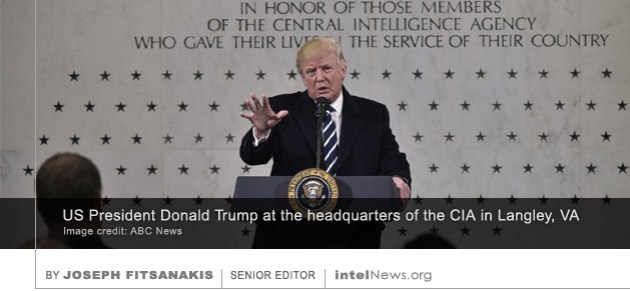 In a leading article published on Wednesday, The Wall Street Journal alleged that American intelligence officials are choosing to withhold sensitive intelligence from President Donald Trump, fearing that it might be compromised. The WSJ, America’s leading newspaper by circulation, which is highly influential in conservative circles,
 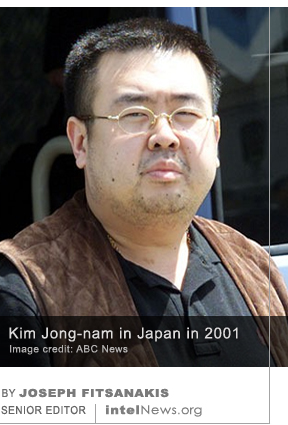 Two women have been arrested in the past 48 hours in connection with the assassination of Kim Jong-nam, half-brother of North Korea’s supreme leader, who died in Malaysia on Monday. Kim, the grandson of North Korea’s founder Kim Il-Sung, died after two women approached him at the Kuala Lumpur International Airport and splashed his face with liquid poison. Some reports suggest that he was injected with a poisoned needle.
  The half-brother of North Korean Supreme Leader Kim Jong-un has been killed in an audacious attack in Malaysia, reportedly by two female assassins who used a poisonous substance to murder him. Kim Jong-nam, was the eldest son of Kim Jong-il, and grandson of Kim Il-Sung, who founded the Democratic People’s Republic of Korea in 1948. However, he left the country in 2007, reportedly after it became clear that his younger half-brother, Kim Jong-un, was the regime’s preferred successor to his father, Kim Jong-il.
 The ongoing security crisis in the United States reached new heights last night as Michael Flynn, President Donald Trump’s national security advisor, resigned. In his letter announcing his decision, the former general
  number of former insiders warn that senior intelligence officials are —in the words of former National Security Agency officer
  Mr. Trump summarily fired the head of the Department of Justice and openly
  inconceivable magnitude, with implications that may well shape the future of America and its place in the world.
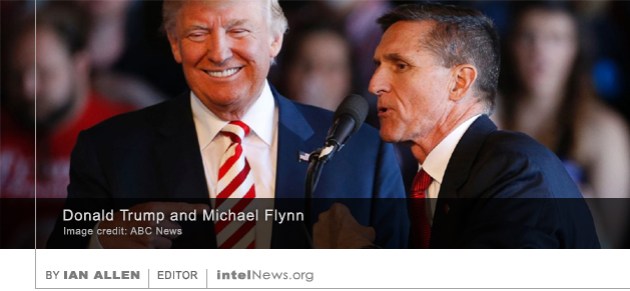 A senior aide to Michael Flynn, National Security Adviser to United States President Donald Trump, will have to step down from his post because his application for a security clearance was rejected, say sources. Flynn had chosen Robin Townley, a former intelligence officer in the US Marine Corps, to serve as Senior Director for Africa on the National Security Council, a forum chaired by the president, which makes key decisions on domestic and foreign issues. Townley, who is described as “one of Flynn’s closest deputies”, held a top-secret security clearance for many years during his government career. But joining the National Security Council requires a so-called “sensitive compartmented information” clearance. This elite-status clearance allows designated individuals to access government programs and operations that are deemed highly sensitive.
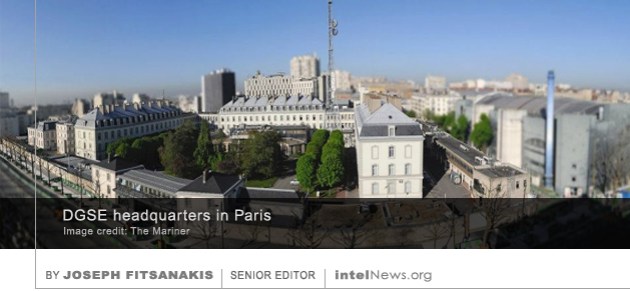 France’s primary intelligence agency warned the country’s government this week that Russia has launched a secret operation to try to influence the outcome of the upcoming French presidential election in favor of the far right. According to the Paris-based weekly newspaper Le Canard Enchaîné, France’s Directorate-General for External Security (DGSE) has notified the country’s leadership that a covert operation by the Kremlin is already underway, and is expected to intensify in the run-up to April’s election. The spy agency allegedly believes that Russian efforts aim to promote Marine Le Pen, leader of the ultra-right National Front. Le Pen wants to curb immigration to France and remove the country from the European Union.
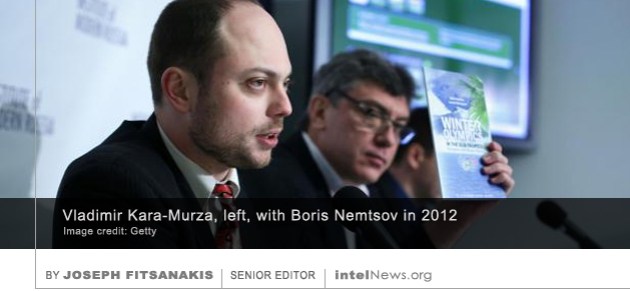 A prominent member of the Russian opposition and vocal critic of the Kremlin, is fighting for his life in a Moscow hospital as a result of “acute poisoning from an undefined substance”, according to his doctors. Vladimir Kara-Murza, 35, is a senior figure in the Open Russia Foundation, a political pressure group founded by Mikhail Khodorkovsky. Khodorkovsky, an ultra-wealthy Russian businessman who was once estimated to be worth over $15 billion, has been living in Switzerland since 2013. Immediately prior to that, he served a 10-year prison sentence in Russia for tax evasion. In 2013, Kara-Murza was a member of a network of Putin critics who helped organize opposition protests in Moscow and Saint Petersburg. He also co-authored a number of reports accusing the administration of Russian President Vladimir Putin of corruption.
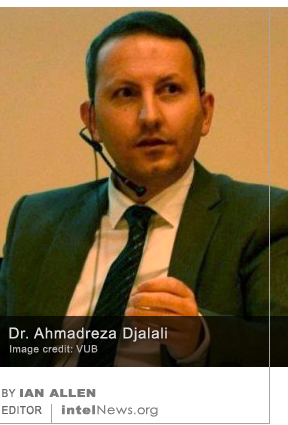 An Iranian scientist who works at a university in Belgium has been sentenced to death in Iran, allegedly for spying. According to his family and his employer in Belgium, Dr. Ahmadreza Djalali is currently in prison in Tehran. Dr. Djalali, 45, is professor of disaster medicine at the Vrije Universiteit Brussel (VUB), a Dutch-speaking university located in the Belgian capital. For the past few years, Dr. Djalali has been based in Italy, where he teaches in the VUB’s European Master’s program in Disaster Medicine. According to an
 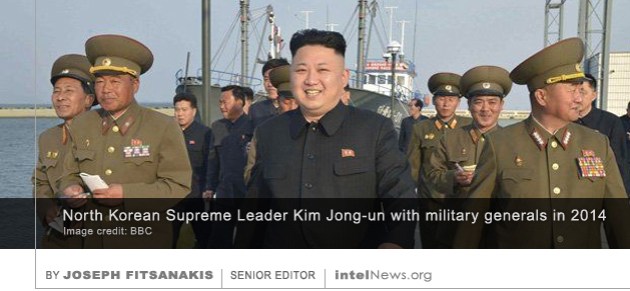 Observers of North Korean politics raised alarm bells over the weekend, as it emerged that Supreme Leader Kim Jong-un fired his spy chief, interfering for the first time with a state institution that had not until now experienced major purges. The news circulated on Friday, following a report by South Korea’s Ministry of Unification —Seoul’s government department responsible for promoting the reunification of Korea. The ministry said that, according to its sources in the North, General Kim Won-hong had been dismissed from his post as Minister for State Security.
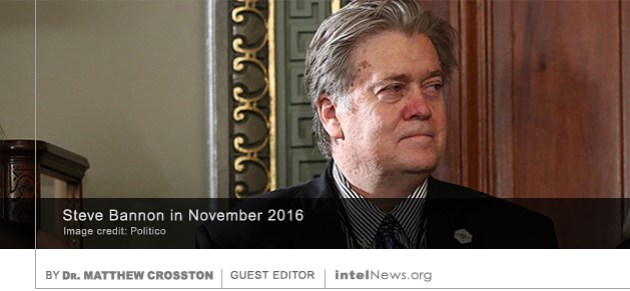 There has been much consternation and confusion over the maneuverings engineered by United States President Donald Trump with the National Security Council (NSC). By now everyone knows the Chairman of the Joint Chiefs of Staff and the head of the Office of the Director of National Intelligence (ODNI) have been essentially demoted down to Principals Committee meetings, with the no-doubt unsatisfying caveat that “when their specific expertise” is needed they will be asked to attend the main Principals meeting with the President. The irony, of course, is that both of these offices have always been oversight and unifying leadership positions: the Chairman of the Joint Chiefs oversees and coordinates discussion and debate between the heads of all the military branches while the ODNI was basically created to go do the thing the Department of Homeland
 Security was initially meant to do after 9/11 —coordinate and improve communication and cooperative transparency across the entire US Intelligence Community. It is therefore somewhat mystifying as to why two deeply experienced actors with comprehensive knowledge of military and intelligence affairs writ large would be inexplicably categorized as ‘knowledge specialists’, not required for the big general meeting. It is not like the ODNI came into the NSC meetings pre-Trump as the ‘Basque subject matter expert’ alone, or the Chairman of the Joint Chiefs laid claim to being the world’s only ‘Gulf of Aden’ maritime security specialist. While it is still too early to know, it seems a logical bet that there is some personality conflict or discomfort between these two men and the incoming member(s) that Trump has designated. Safe money is on General Michael Flynn. But since that right now will remain unsubstantiated rumor and gossip, we are left with nothing but conjecture.
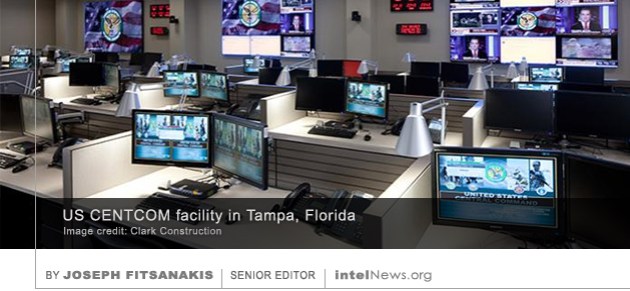 Whistleblowers say mismanagement, amateurism and cronyism are plaguing a multimillion-dollar American psychological operation aimed at countering online propaganda by the Islamic State. The program, known as WebOps, was established by the United States Department of Defense during the administration of US President Barack Obama. Its stated goal is to counter efforts by the Islamic State (also known as the Islamic State of Iraq and Syria —ISIS) to spread propaganda and recruit followers using online social media. Since its creation, it has been administered by the US Central Command’s Information Operations Division. But its implementation has been contracted to Colsa Corporation, a private company based in the US state of Alabama. The company specializes in providing services for US government agencies, some of which include the use of specialized software that utilizes information found on social media.






 intelNews.org
Trump administration instructs CIA to halt support for anti-Assad rebels in Syria
February 23, 2017 by Ian Allen 7 Comments
However, it appears that the CIA was instructed nearly a month ago by the White House to freeze all assistance to these rebel groups. Correspondents from the Reuters news agency said they confirmed the change in policy by speaking to senior rebel commanders from five armed groups operating under the FSA. These commanders told Reuters that they had not been given any official reason for the sudden termination of all CIA assistance. The change coincided with the change of guard at the White House, from Barack Obama to Donald Trump. Some in Washington, as well as some members of rebel factions in Syria, are concerned that the change in the CIA’s stance might denote a broader policy shift in the White House. During his election campaign, Mr. Trump said repeatedly that he would end America’s overt and covert support for the FSA and would focus instead on defeating the Islamic State.
But the rebel commanders themselves told Reuters that the freeze in CIA support was due to a wave of renewed attacks against them by Jabhat Fateh al-Sham, a Sunni militant group that was previously affiliated with al-Qaeda. The rebels said that the CIA was concerned that weaponry provided to the FSA would end up in the hands of jihadist militants, so it temporarily halted its support until Jabhat Fateh al-Sham could be pushed back by FSA forces. Reuters published comments by two anonymous officials who were familiar with the CIA’s operations in Syria. They told the newspaper that the freeze of the CIA’s program had “nothing to do with US President Donald Trump replacing Barack Obama in January”. Additionally, said Reuters, Mr. Trump’s policy in Syria remains unknown. Several newspapers and news agencies contacted the CIA asking for comments, but the agency declined all requests on Wednesday.
► Author: Ian Allen | Date: 23 February 2017 | Permalink
Filed under Expert news and commentary on intelligence, espionage, spies and spying Tagged with CIA, Donald Trump, Free Syrian Army, Jabhat Fateh al-Sham, News, Syria, Syrian Civil War, United States