Lebanese president says Israel is behind businessman’s murder in Angola
January 5, 2017 Leave a comment
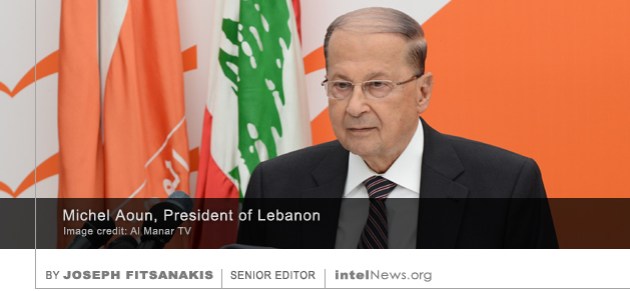 The president of Lebanon said on Wednesday that Israeli intelligence was behind the killing of a Lebanese businessman who was shot dead by a team of assailants last weekend in southwestern Africa. Amine Bakri, 54, who was from southern Lebanon, had lived and worked in Angola since his mid-20s. He was a well-known businessman in the Angola capital Luanda, where he owned a number of factories that make furniture and various medical equipment. On Sunday, Bakri was driving on an unpaved road in the Angolan capital, when his vehicle was ambushed by a group of three armed assailants. According to media reports, one of the men shot the windshield of Bakri’s car and then proceeded to shoot him in the head at close range. The men fled the scene and Bakri was transported to a local hospital, where he soon died from his wounds.
Initial reports stated that Bakri’s killing resulted from a botched robbery by a local gang of youths. But the murdered man’s nephew and business partner, Mohammad Maatuk, told Lebanese media that the men who ambushed his uncle were not interested in money. Maatuk told the Lebanese news website an-Nahar that the men did not give Bakri an opportunity to offer them money or other valuables. Instead they opened fire almost immediately and fled the scene in a calm, pre-arranged, professional manner, said Maatuk.
On Wednesday, the newly elected President of Lebanon, Michel Aoun, opened the weekly meeting of the Lebanese government by announcing that there was “information that the [Israeli intelligence agency] Mossad was behind this operation” to kill Bakri in Lebanon. He added that the Lebanese Ministry of Foreign Affairs and Immigration was “collecting information” in light of new evidence about Israel’s alleged involvement. According to media reports, Aoun did not provide details about the evidence that the Mossad was behind Bakri’s murder. Nor is there any information about the reasons why Israel might want Bakri dead.
Angola is home to a sizeable Lebanese community, whose members concentrate mostly in Luanda. As of this morning there has been no information about whether Amine Bakri was in any way related to Imad Bakri. Bakri, a Shiite Lebanese merchant in Luanda, has been identified in several intelligence reports as a link between the Shiite Lebanese militant group Hezbollah and UNITA, the Western-supported right-wing rebel group that lost in the Angolan Civil War and today is the country’s second-largest political party. Bakri’s body is expected to arrive in Lebanon today. It will be transported to the Iraqi Shiite city of Najaf, where he will be buried.
► Author: Joseph Fitsanakis | Date: 05 January 2017 | Permalink
 A man at the center of the first case of Chinese nuclear espionage in United States history will be pleading guilty on Friday, according to court documents. This could mean that the alleged spy has decided to give the Federal Bureau of Investigation (FBI) details of Chinese nuclear espionage in the US. The accused man is Szuhsiung ‘Allen’ Ho, a Taiwanese-born engineer and naturalized American citizen. Ho was arrested by the FBI in April on charges of sharing American nuclear secrets with the government of China.
 Since 2008, when we launched intelNews, it has been our end-of-the-year tradition to take a look back and highlight what we think were the most important intelligence-related stories of the past 12 months. In anticipation of what 2017 may bring in this highly volatile field, we present you with our selection of the top spy stories of 2016. They are listed below in reverse order of significance. This is part two in a two-part series; you can access part one
  There had been rumors for some time about a possible expulsion of Russian diplomats from the United States, in response to alleged Russian interference in the 2016 US Presidential election. The White House confirmed the rumors on Thursday morning, by
  Since 2008, when we launched intelNews, it has been our end-of-the-year tradition to take a look back and highlight what we think were the most important intelligence-related stories of the past 12 months. In anticipation of what 2017 may bring in this highly volatile field, we present you with our selection of the top spy stories of 2016. They are listed below in reverse order of significance. This is part one in a two-part series; part two is
  United States President Barack Obama has signed a new law that designates $160 million to set up a government center for “countering foreign propaganda and disinformation”. The law authorizes the US departments of State and Defense to work with other federal agencies in establishing the new body. Its precise tasks are not yet known, nor is the role in it —if any— of intelligence agencies, though the Director of National Intelligence is mentioned in the
  On Saturday, Nigerian President Muhammadu Buhari made a
 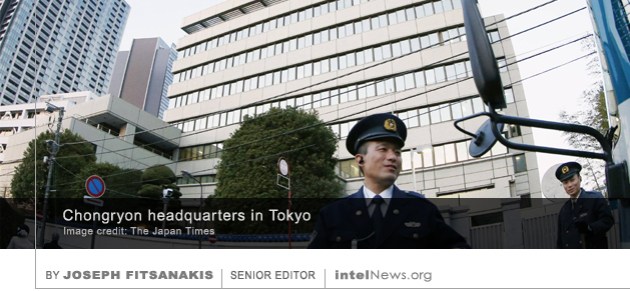 Students who have pledged allegiance to North Korea are being taught advanced courses in nuclear physics and control engineering in Japan, which violates United Nations sanctions, according to human rights campaigners. The students take classes at Korea University, a higher-education institution located in in Kodaira, a western suburb of the Japanese capital Tokyo. The University is funded directly by the government of North Korea through Chongryon, a pro-Pyongyang organization otherwise known as the General Association of Korean Residents in Japan. The group represents tens of thousands of ethnic Koreans living in Japan, who are ideologically affiliated with Pyongyang.
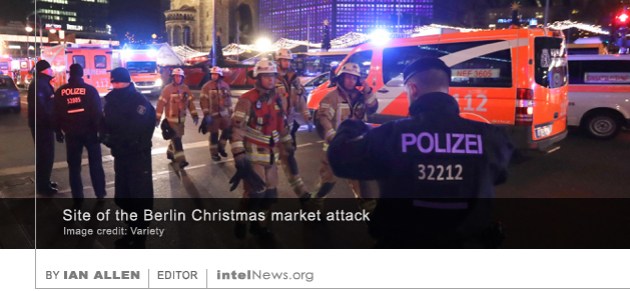 The central suspect in the Berlin Christmas market attack had been on the radar of German security agencies since January of this year, because he had links with radical Islamists and sought to buy guns for a terrorist attack. Anis Amiri, 23, left his native Tunisia in 2011, soon after the outbreak of the so-called Arab Spring there. He lived in Italy for three years before arriving in Germany in July 2015. In April of this year, he applied for an asylum in Germany. According to German authorities, Amiri was arrested multiple times in Tunisia for drug-related offenses. He is also believed to have used at least six different aliases since moving to Europe, and to have claimed to be a citizen of Lebanon and Egypt at different times.
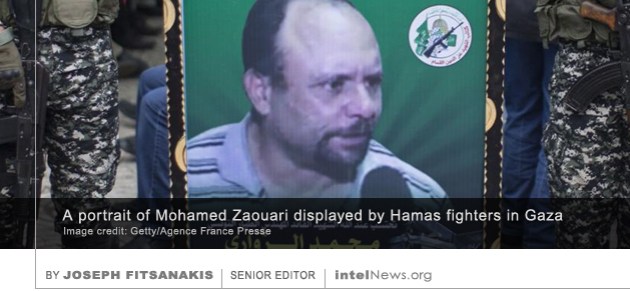 Despite persistent silence from Tel Aviv, commentators there seem increasingly convinced that Israeli spies were behind last week’s killing of an aviation engineer who worked for the Palestinian militant group Hamas. The man, Mohamed Zaouari, 49, was a Tunisian national who had spent over a decade creating an innovative aerial drone program for the Palestinian group that controls the Gaza Strip. He was
  A senior aviation engineer who headed the unmanned aerial vehicle program of the Palestinian militant group Hamas, has been shot dead outside his home in Tunisia by a group of assailants using gun silencers. Mohamed Zaouari, 49, was a Tunisian national who had spent over a decade creating an innovative aerial drone program for Hamas, the Palestinian group that today controls the Gaza Strip. He had lived outside of Tunisia for much of his life, most recently in Syria, where he is believed to have worked as an engineer in a private firm, while also consulting with the Palestinian group. He had returned to Tunisia in 2011, following the upheaval in the country that sparked the so-called Arab Spring.
 A reported discord between British and German intelligence services, which began in 2014, allegedly persists and now constitutes the “biggest rift between [the] secret services” of the two countries “since World War II”. According to British newspaper The Daily Mail, the Germans accuse Britain of working with the United States to spy on Berlin, while the British government says German intelligence agencies cannot be trusted to safeguard classified information. In an
 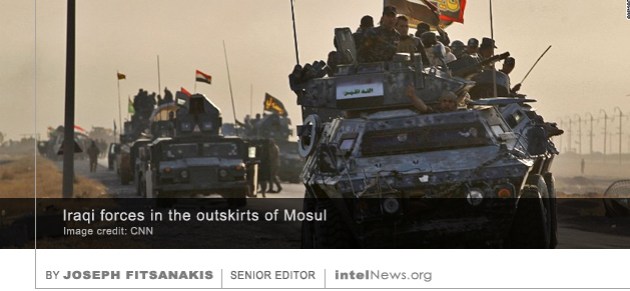 Western military and intelligence agencies are deploying extra analysts to comb through unprecedented amounts of digital data collected from Iraqi regions that have recently been recaptured from the Islamic State. The information is contained in thousands of laptops, hard drives, flash drives and cell phones left behind by retreating Islamic State forces in and around the northern Iraqi city of Mosul.
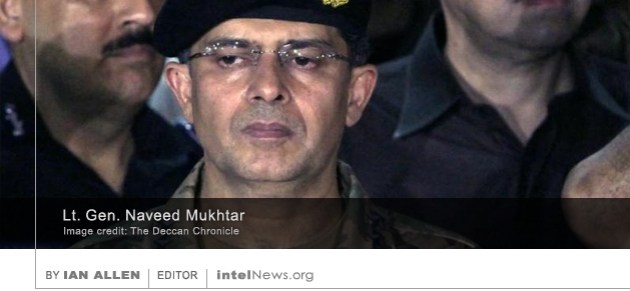 A new director, with considerable experience in counterterrorism, has been appointed to lead Pakistan’s Inter-Services Intelligence (ISI), believed by some to be one of the most powerful spy agencies in the world. Pakistan’s Ministry of Defense announced on Sunday that Lt. Gen. Naveed Mukhtar will be replacing Lt. Gen. Rizwan Akhtar, who has led the ISI since November of 2014. The






 intelNews.org
Indonesia halts joint military training with Australia ‘over espionage fears’
January 6, 2017 by Ian Allen 1 Comment
The unexpected announcement was made by a spokesman of the Indonesian National Armed Forces, who said that “all forms of cooperation with the Australian military, including joint training” would be “temporarily withheld”. When asked about the reasons behind the sudden move, the spokesman said it was “due to multiple reasons”, but refused to give specifics. Later on Wednesday, Indonesian officials said some print material had been found at the training center in Perth, which offended the Indonesian people. But Australian media suggested that the Indonesian government had decided to terminate the joint military training program because it feared that its special forces troops would be recruited as spies by the Australians. Some reports brought up some relevant comments made in November of last year by a senior Indonesian military official, General Gatot Nurmantyo. The general said he had ended military cooperation between troops under his command and their Australian colleagues due to fears that his troops may be compromised by the Australians during training.
But Australia’s Minister of Defense, Marise Payne, rejected that Australian espionage activities were behind Jakarta’s surprise decision. Speaking on ABC Radio on Wednesday, Payne said it was “not the case” that Australian intelligence officers had tried to recruit Indonesian soldiers. That “is something which we would not countenance”, she said. In 2013, Indonesia withdrew its ambassador from Canberra and terminated all military and intelligence cooperation with Australia, after it emerged that Australian spies had targeted the communications of the Indonesian President and other senior officials. But tensions subsided in August of 2014, when the two countries signed a joint agreement aimed at curbing their intelligence activities against each other. The last time Australia and Indonesia halted military cooperation was in 1999, when it was revealed that Kopassus troops had taken part in human rights abuses in East Timor. But the joint training was resumed in 2002, after the Bali bombings, which killed 202 people, many of them Australian tourists.
► Author: Ian Allen | Date: 06 January | Permalink
Filed under Expert news and commentary on intelligence, espionage, spies and spying Tagged with 0 Argentine Admiral fired over espionage scandal, Australia, Australian Special Air Service Regiment, Gatot Nurmantyo, Indonesia, Kopassus, Marise Payne, military cooperation, News