Notorious Russian arms dealer ‘refused US offer for lighter sentence’
August 10, 2016 1 Comment
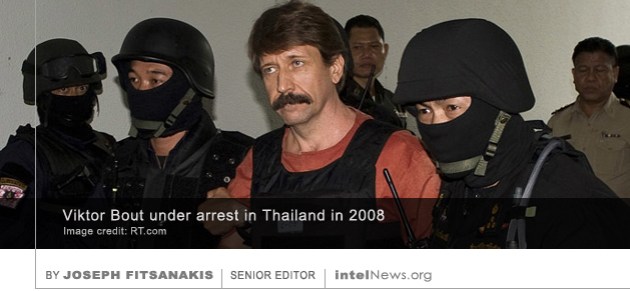 The wife of Viktor Bout, the imprisoned Russian arms dealer dubbed ‘the merchant of death’, said he rejected an offer by his American captors who asked him to testify against a senior Russian government official. Born in Soviet Tajikistan, Bout was a former translator for the Soviet military. After the end of the Cold War, he set up several low-profile international air transport companies and used them to transfer large shipments of weapons that fueled wars in Africa, Asia, Latin America and Europe. He made millions in the process and acquired international notoriety, which inspired the Hollywood blockbuster Lord of War. But his business ventures ceased in 2008, when he was arrested in Bangkok, Thailand, by the United States Drug Enforcement Administration, with the cooperation of the Royal Thai Police. He was eventually extradited to the US and given a 25-year prison term for supplying weapons to the Afghan Taliban, and for trying to sell arms to the Revolutionary Armed Forces of Colombia (FARC). Bout is currently serving his sentence at the Brooklyn Metropolitan Detention Center in New York.
In a newspaper interview on Tuesday, Bout’s wife, Alla Bout, said her husband could have gotten away with a considerably lighter sentence had he agreed to testify against a senior Russian government official. Speaking to Moscow-based daily Izvestia, Alla Bout said her husband had been approached by American authorities after being extradited to the United States from Thailand. He was told that US authorities wanted him to testify against Igor Sechin, a powerful Russian government official, whom American prosecutors believed was Bout’s boss. In return for his testimony, US prosecutors allegedly promised a jail sentence that would not exceed two years, as well as political asylum for him and his family following his release from prison. Alla Bout added that her husband’s American lawyers were told by the prosecution that the ‘merchant of death’ “would be able to live in the US comfortably, along with his wife and daughter”, and that his family could stay in America during his trial “under conditions”. Alla Bout claimed she was told this by Bout himself and by members of his American legal team.
From 2008 to 2012, Sechin, who has military background, served as Russia’s Deputy Prime Minister. Today he heads the Board of Directors of Rosneft, a government-owned oil extraction and refinement company, which is considered one of the world’s most powerful business ventures. Many observers see Sechin as the most formidable man in Russia after Russian President Vladimir Putin. He is also believed to be a senior member of the Siloviki, a secretive group of government officials in the Putin government who have prior careers in national security or intelligence. Although Bout and Sechin have never acknowledged having met each other, some investigators of Bout’s weapons-trading activities believe that the two were close allies. It is believed that the two men first met in Angola and Mozambique in the 1980s, where they were stationed while serving in the Soviet military. But the two men deny they knowing each other. According to Alla Bout, Viktor told his American captors that he “never worked for Sechin and did not know him in person”. He therefore turned down the prosecution’s offer and was handed a 25-year sentence. When asked by the Izvestia reporters whether Bout was simply protecting the powerful Russian government official, Alla Bout insisted that the two “have never even met, not once”.
► Author: Joseph Fitsanakis | Date: 10 August 2016 | Permalink
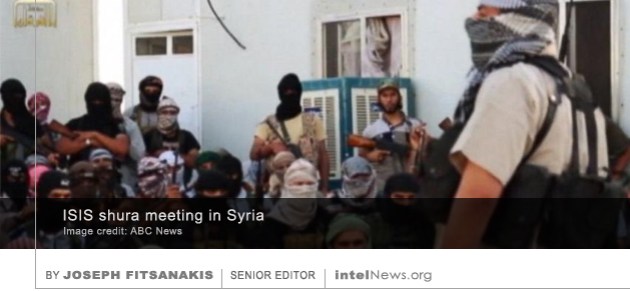 The Islamic State has set up a secretive intelligence agency whose task is to set up sleeper cells abroad and has already sent “hundreds of operatives” to Europe and Asia, according to information emerging from interrogations of suspects. According to The New York Times, the information about the intelligence agency comes from “thousands of pages” of intelligence files from American, French, Belgian, Austrian and German agencies. The documents include information from interviews with captured members or defectors from the Islamic State, which is otherwise known as the Islamic State in Iraq and Syria (ISIS).
 Authorities in Iran have admitted that they executed a former scientist for the country’s nuclear program, who claimed that he was abducted by the United States after disappearing from Iran for a year. Shahram Amiri worked for the Atomic Energy Organization of Iran, the government body that is responsible for operating and regulating the country’s nuclear installations. But in the summer of 2009, while on a religious pilgrimage to the Saudi Arabian city of Mecca, Amiri disappeared. Iranian authorities
 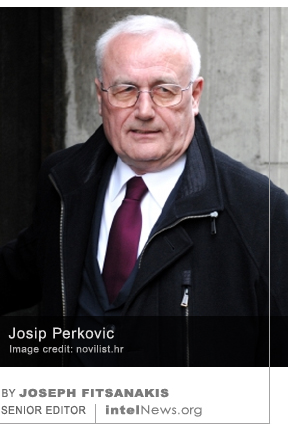 A German court has given life sentences to two senior intelligence officers in Cold-War-era Yugoslavia, who masterminded the murder of a Croat dissident in 1983. Josip Perković and Zdravko Mustać, both former senior officials in the Yugoslav State Security Service, known as UDBA, were
 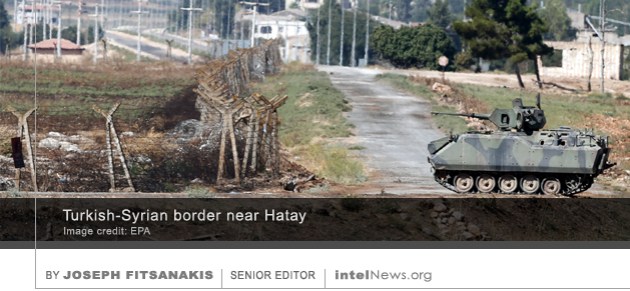 Turkish police have detained nine citizens of Trinidad and Tobago who were on their way to Syria, allegedly to join the Islamic State. They are believed to have traveled from Trinidad and Tobago to Caracas in Venezuela, and from there to Amsterdam, Holland, before flying to Turkey. Turkey’s Daily Sabah newspaper said on Monday that the nine men were
  An internet website that offered free URL shortening services appears to have been a front created by British intelligence in order to spread messages and monitor activists involved in protests in Iran and the Arab world. The website was used heavily during the Iranian presidential election protests of 2009, which became known as the Iranian Green Movement. After a brief hiatus, the website was used again in 2011, as the Arab Spring revolts in North Africa and the Middle East were intensifying. The information pointing to the use of the website comes from documents leaked by Edward Snowden, the American former intelligence employee who has been granted political asylum in Russia.
 According to the predominant media narrative, the United States is constantly defending itself against cyber-attacks from countries like China and Russia. But, as intelNews has
 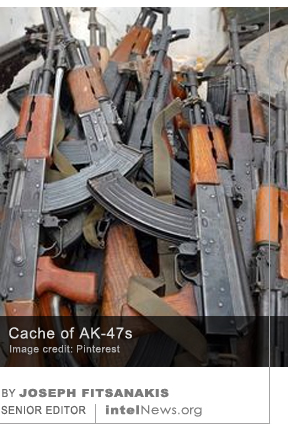 Unprecedented quantities of weapons and ammunition worth in nearly $1.5 billion have been procured from Eastern Europe and sent to Syria to arm nearly every side in the ongoing civil war, a study has found. The weapons are transported through the Balkans and sold legally to countries bordering Syria, including Jordan, Saudi Arabia and Turkey. Once there, they are secretly transported to Syria for use in the bloody five-year civil war, which has so far killed or displaced millions. The
 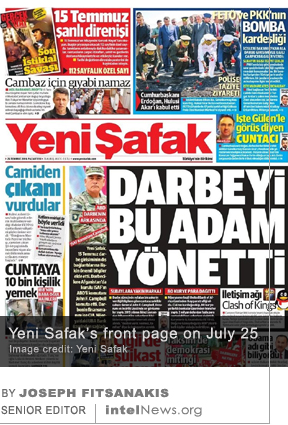 American officials have strongly denied accusations in the Turkish press that Washington was behind the failed July 15 coup in Turkey. On July 25, Yeni Şafak, a popular Turkish daily, alleged that the failed coup had been funded and organized by the United States government. The newspaper, which is headquartered in Istanbul, is known for its conservative political stance and close links to the AKP, the party of Turkish President Recep Tayyip Erdoğan. Its editorials typically reflect the AKP’s position on the political affairs of the day.
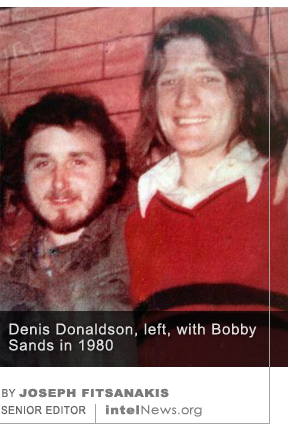 Police in Ireland say they have arrested two individuals in connection with the 2006 killing of a senior member of the Irish Republican Army, who had previously been outed as a spy for the British state. Denis Donaldson joined the Provisional IRA as a volunteer in mid-1960s, before the outbreak of the Troubles, which rocked Northern Ireland from the late 1960s until 1998. He was trained in paramilitary operations in Lebanon and participated in many IRA actions. He served time at the Long Kesh Detention Centre along with IRA volunteer and Member of Parliament Bobby Sands, who died in the famed 1981 Irish hunger strike. After Sands’ death, Donaldson stood as a general election candidate in Belfast East for Sinn Féin, the IRA’s political wing. In the process, he became a close associate of Sinn Féin President Gerry Adams. In 2000, shortly after the end of the IRA’s 30-year military campaign, Sinn Féin appointed Donaldson as the administrator of its parliamentary group in Stormont, the devolved Northern Irish parliament.
 For the first time in history, India has refused to extend temporary residency visas for three senior Chinese media correspondents, effectively expelling them from the country, allegedly for espionage activities. All three reporters are employees of China’s state-run Xinhua news agency. They include Xinhua’s bureau chief in the Indian capital, New Delhi, Wu Xiang, and the agency’s Mumbai bureau chief, Lu Tang. A third journalist, She Yonggang, also based in Mumbai, has been asked to leave India by no later than July 31.
 Russian and Turkish authorities will not confirm or deny reports that the Kremlin warned Turkey’s intelligence services about an impending coup on July 15, several hours before tanks appeared on the streets of major Turkish cities. On Wednesday, several
 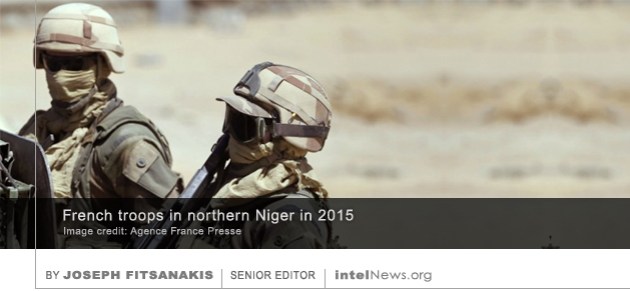 The death of three French Special Forces soldiers in Libya has prompted the first public acknowledgement by France that its troops are involved in “dangerous intelligence operations” in the North African country. The acknowledgement was made on Wednesday in an official statement issued by Jean-Yves Le Drian, France’s Minister of Defense. In the statement, Le Drian said he “regretted the loss of three French officers who expired while on mission in Libya”. The








US Congressional probe finds DoD intelligence on Islamic State was altered
August 11, 2016 by intelNews Leave a comment
The allegations prompted two separate investigations, one by the Department of Defense and one by a task force consisting of Republican members of three committees in the US House of Representatives —namely the Committee on Armed Services, the Permanent Select Committee on Intelligence, and the Defense Subcommittee of the Committee on Appropriations. According to The Daily Beast, the committees have now concluded their five-month investigation and are preparing to release a 10-page report before the end of August. Citing three unnamed US officials, the website claims that the soon-to-be-released report will corroborate claims by DIA analysts that their intelligence reports were deliberately doctored in order to make American efforts against ISIS seem more successful than they have been.
According to the three officials, who are reportedly “familiar with the task force’s findings”, the 10-page document will not corroborate claims that the pressure on the intelligence analysts was exercised by senior sources inside the White House. But they told the website that the Congressional investigation could continue after the release of the report. The Daily Beast said it contacted CENTCOM for a comment on the story, but was told that the Pentagon body has yet to receive the task force report. Meanwhile, the Pentagon’s own investigation into the analysts’ allegations continues and expected to release its findings by the end of 2016.
► Author: Joseph Fitsanakis | Date: 11 August 2016 | Permalink
Filed under Expert news and commentary on intelligence, espionage, spies and spying Tagged with CENTCOM, DIA, DoD Inspector General, intelligence analysis, Islamic State, News, United States, US House of Representatives, US House of Representatives Committee on Appropriations, US House of Representatives Committee on Armed Services, US House of Representatives Permanent Select Committee on Intelligence