 An expanding alliance between two of the most powerful armed groups in Afghanistan, the Taliban and the Haqqani Network, is reshaping regional power dynamics and possibly altering the course of the ongoing Afghan war. It was last summer when it was announced that Sirajuddin Haqqani, the leader of the notorious Haqqani Network based in southeastern Afghanistan, had been appointed deputy leader of the Taliban. The move, which brought together two groups that traditionally acted autonomously, was seen as largely symbolic at the time. But observers are now suggesting that the two groups are actively integrating more than ever before, and that their increasing cooperation is drastically changing the dynamics of the bloody Afghan war.
THE HAQQANI NETWORK
The Haqqani Network dates from the mid-1970s, when a group of pro-royalist Pashtuns took up arms against the government of Mohammad Daud Khan, a former cabinet minister who in 1973 led a coup that overthrew the country’s king, Mohammad Zahir Shah. The group, founded by Jalaluddin Haqqani, was actively supported by Pakistan, which perceived Khan’s government as pro-Soviet. As it became increasingly clear that the Soviet Union would invade the country, Pakistan’s assistance to the Haqqani Network was augmented by support from Saudi Arabia and the United States. During the Afghan-Soviet War of the 1980s, the Haqqani Network formed a major backbone of the anti-Soviet resistance. The group, and the Pashtun tribes that form its base in Afghanistan and Pakistan, have remained in a state of war against various invaders ever since. Today the Haqqani Network is led by Jalaluddin’s son, Sirajuddin Haqqani, who has closely followed in his father’s footsteps. He has continued to pledge allegiance to the Taliban by recognizing its commander-in-chief, Mullah Akhtar Mansour, as the Leader of the Faithful —essentially the Emir of the Islamic caliphate. At the same time, however, like his father, Siraj has maintained the Haqqani Network as an autonomous entity that operates based on its own command structure and tactical priorities.
THE HAQQANI-TALIBAN ALLIANCE
The deepening cooperation between the Haqqani Network and the Taliban must be examined within the context of the failed efforts to broker a peace treaty between the Afghan government and the Taliban. In early 2016, the Quadrilateral Coordination Council, set up by the United States, China, Pakistan and the Afghan government, sought to bring the Taliban to the negotiation table, so that an official peace treaty could be put in place between them and Kabul. Throughout that time, however, the Afghan government has become increasingly weaker, faltering under the weight of its own ineptitude, corruption and sectarian divisions. The growing discontent against it among the people, as signified by the rise in mass immigration by young Afghans, has weakened Kabul’s trustworthiness as a national actor and strengthened the Taliban. At the same time, the Taliban, although strong, are not unilaterally capable of solidifying their power across the country unless they have the support of the many autonomous tribes and clans. For that reason, Taliban leader Mullah Mansour has spearheaded a policy of consolidation between his forces and regional groups, including the Haqqani Network.
The latter are also extremely capable militarily, having maintained a powerful armed force since the late 1970s, with its own heritage, traditions and command structure. During the 1980s, they were trained and supplied with ample war materiel by Saudi, Pakistani and American intelligence agencies, while also developing their own funding channels abroad. Today, Siraj Haqqani’s mother, who is an Arab, and many of his brothers, are located in the Persian Gulf, and are able to pursue alliances between the Network and oil-rich Arab donors. The group also maintains a large network of shell companies that operate internationally and bring in a substantial revenue to the group. Consequently, due to their strong financial backing, Haqqani forces are well-trained, well-supplied and have near-unparalleled military capabilities in the region. They are currently one of a handful of groups that have shown to be capable of striking at the heart of the Afghan government inside Kabul. Alongside their military prowess, Haqqani forces maintain an efficient, parallel administrative infrastructure in southeastern Afghanistan, which includes a justice  system, job centers, taxation offices and community militias. The administrative and military efficiency of the Haqqani Network only adds to the strength of the Taliban and places them in a renewed position of power vis-à-vis Kabul.
THE PAKISTANI FACTOR
Along with the Haqqanis and the Taliban, the Pakistanis have also gained strength in the past year as a regional actor. There is little doubt that the Haqqani Network, which operates a series of bases inside Pakistan’s North Waziristan region, maintains close connections with Inter-Services Intelligence directorate (ISI), Pakistan’s powerful spy agency. These links, which were forged in the 1980s during the Afghan-Soviet War, continue unabated and often —though not always— allow the Pakistanis to use the Haqqani Network as a proxy group to advance their interests in Afghanistan. Islamabad does not want India to dominate the region and has done more than any other regional actor to maintain the Taliban, Haqqanis, and other Pashtun groups as strong rivals to the central government in Kabul. By strengthening the role of the Haqqanis, which, unlike the Taliban, the US officially classifies as a terrorist group, Islamabad is making it more difficult for Washington to reach out to the Taliban in search of a comprehensive peace treaty. This development spells more violence and war in Afghanistan for the foreseeable future, as local and regional actors appear to be positioning themselves for a showdown between the Afghan government and its tribal rivals.
► Author: Joseph Fitsanakis | Date: 10 May 2016 | Permalink
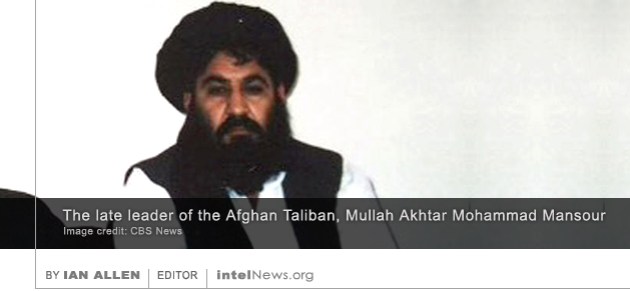 Frequent trips to Iran caused the demise of the late leader of the Afghan Taliban, Mullah Akhtar Mohammad Mansour, who was killed in a secret American operation on May 21. The death of Mansour, who had led the Afghan Taliban since July 2015, when he succeeded Mullah Mohammad Omar, was announced by the Taliban on May 26. Early reports stated that Mansour was killed while traveling to the Pakistani city of Quetta from Iran. He is believed to have been visiting family or seeking medical treatment in Iran, which he appears to have entered using a forged passport.
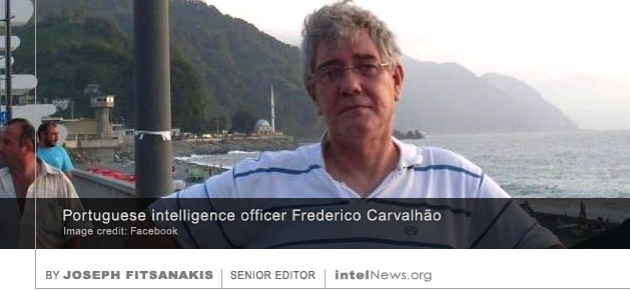 A Portuguese intelligence officer arrested a week ago in Rome, allegedly while passing classified documents to his Russian handler, may have accomplices with access to North Atlantic Treaty Organization (NATO) secrets. IntelNews
  A Russian intelligence officer, who posed as a banker in the United States, has been handed a prison sentence by a court in New York. Evgeny Buryakov, 41, posed as an employee of the New York branch of Vnesheconombank, a Russian state-owned bank headquartered in Moscow. However, in January 2015, the Federal Bureau of Investigation
 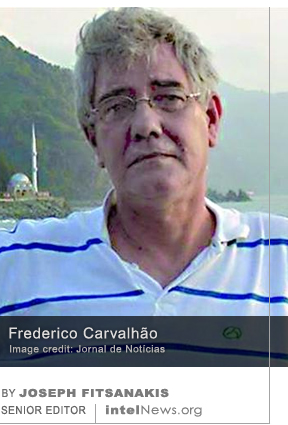 Two intelligence officers, one Russian and one Portuguese, have been arrested by Italian authorities on charges of espionage. The arrests took place in Rome on Monday by Italian police, who were reportedly accompanied by Portuguese counterintelligence officers. It is suggested in Portuguese media that the two men were arrested in the act of exchanging classified documents and money. The Portuguese intelligence officer has been identified in
  The American operation that killed the leader of the Afghan Taliban, Mullah Akhtar Mohammad Mansoor, on May 21, was unprecedented in more ways than one. It marked the first known effort by the United States to neutralize the leadership of the Afghan Taliban. It was also the first US drone strike in Pakistani Baluchistan, a region that is far removed from the Federally Administered Tribal Areas, where American operations have traditionally focused. Mullah Mansour’s killing also marked the most high-profile American incursion into Pakistani territory since the May 1, 2011 attack that killed al-Qaeda co-founder Osama bin Laden.
  Ironically, just hours before killing Mansour, Washington was calling the Taliban to join the negotiation table for peace talks with the Afghan government. So what exactly was America’s intention in killing the leader of the Afghan Taliban?
 killed the group’s leader.
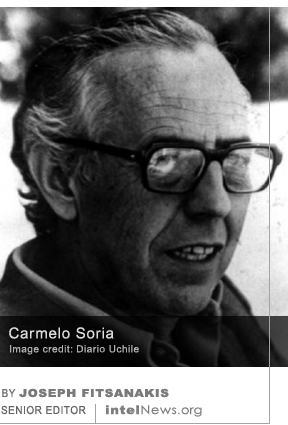 The Supreme Court of Chile will request that the United States extradites three individuals, including an American former professional assassin, who are implicated in the kidnapping, torture and murder of a United Nations diplomat. Carmelo Soria was a Spanish diplomat with dual Chilean nationality, who in the early 1970s was employed in the United Nations Economic Commission for Latin America and the Caribbean. In 1971, when the leftist Popular Unity party won Chile’s elections and became the nation’s governing coalition, Soria became an advisor to the country’s Marxist President, Salvador Allende. After the 1973 violent military coup, which killed Allende and overthrew his government, Soria used his diplomatic status to extend political asylum to a number of pro-Allende activists who were being hunted down by the new rightwing government of General August Pinochet.
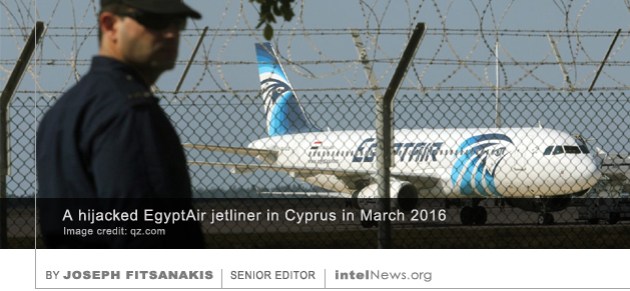 Egypt’s aviation minister has joined the head of Russia’s domestic security service, unnamed US intelligence sources, as well as a host of aviation security experts, in seeing terrorism as the most likely cause behind the EgyptAir MS804 air disaster. That is despite the absence of a clear ‘smoking gun’ and silence from the Islamic State, which leads many to still caution that the possibility of an accident should not be ruled out. The regularly scheduled flight departed Paris, France, late on Wednesday, heading for Cairo, Egypt. But it disappeared from radar screens just minutes after entering Egyptian airspace and is now believed to have crashed into the Mediterranean Sea.
 In the early hours of Thursday, May 19, EgyptAir, Egypt’s national airline carrier,
  efforts. The group has remained silent since early this morning, when EgyptAir announced the disappearance of flight MS804. However, it typically waits for several hours, and sometimes days, before assuming responsibility for high-profile attacks.
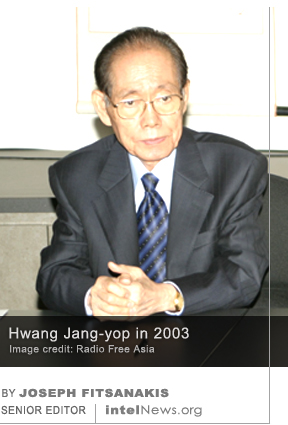 An appeals court in Seoul has upheld the conviction of a South Korean member of a spy cell that planned to assassinate the most senior North Korean defector to the South. The man, identified in media reports only by his last name, Park, is a South Korean citizen who allegedly helped a North Korean spy cell “based in China” plan the assassination of Hwang Jang-yop. In 1997, Hwang caused a sensation on both sides of the border when he defected to the South. A former secretary of the Korean Workers’ Party, Hwang was Pyongyang’s primary theorist and the ideological architect of juche, the philosophy of self-reliance, which is North Korea’s officially sanctioned state dogma. He was also believed to have ideologically mentored North Korean Supreme Leader Kim Jong-il, the father of the country’s current Supreme Leader, Kim Jong-un. Until his
 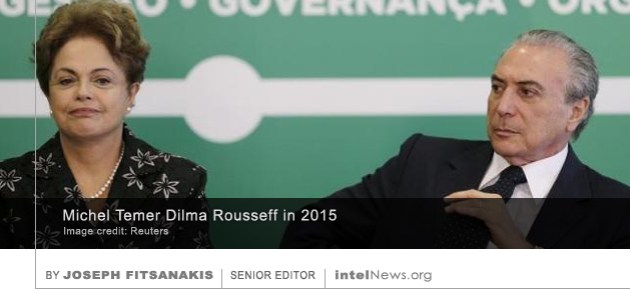 The new acting president of Brazil briefed American diplomats on sensitive political matters in 2006, according to cables published by the international whistleblower website WikiLeaks. Michel Temer is leader of the Brazilian Democratic Movement Party, known as PMDB. Although it is one of Brazil’s largest political parties, the PMDB has been unable to muster enough electoral support to govern the country on its own. As a result, under Temer’s leadership, the PMDB has been a partner of every governing coalition in Brazil since 1995. During the administration of leftwing President Dilma Rousseff, Temer held the post of Vice President.
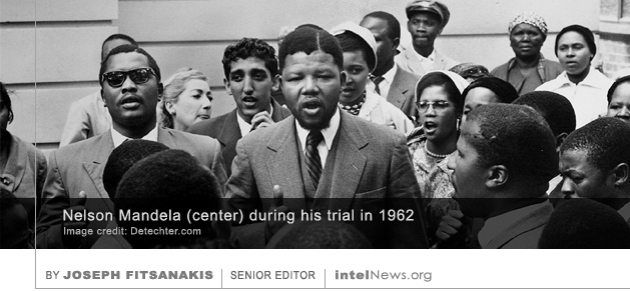 The arrest of Nelson Mandela in 1962, which led to his 28-year incarceration, came after a tip from the United States Central Intelligence Agency, according to an American diplomat who was in South Africa at the time. At the time of his arrest, Mandela was the head of uMkhonto we Sizwe (MK), an organization he founded in 1961 to operate as the armed wing of the anti-apartheid African National Congress (ANC). But the white minority government of South Africa accused Mandela of being a terrorist and an agent of the Soviet Union. The US-Soviet rivalry of that era meant that the ANC and its leader had few supporters in America during the early stages of the Cold War.
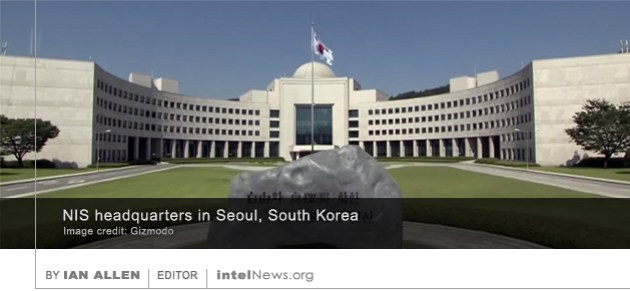 The intelligence agency of South Korea has admitted it made an error when it claimed earlier this year that North Korean authorities had executed one of the regime’s most prominent military figures. On February 10, South Korean newspapers printed a series of articles suggesting that Pyongyang had executed General Ri Yong-gil, who led the Korean People’s Army (KPA), holding post that was equivalent to the United States’ chairman of the Joint Chiefs of Staff. The articles said at the time that the information about General Ri’s execution came directly from the National Intelligence Service (NIS), South Korea’s primary external spy agency. The general had allegedly been executed after being found guilty of “factionalism, abuse of power and corruption”. The reports added that General Ri had turned into an alcoholic and was in poor health as a result. Speculation as to the reason for General Ri’s alleged execution brought up the possibility that he had led an opposition faction within the KPA. This, in turn, led some analysts to speculate that the administration of Kim Jong-un was close to collapse.
 Over 50 journalists and their contacts were systematically spied on by the Polish intelligence services between 2007 and 2015, according to the former director of an anti-corruption watchdog. Until 2009, Mariusz Kamiński led the Central Anti-Corruption Bureau, which was set up by the office of the Polish Prime Minister in 2006 to address corruption in the country. The body is also responsible for monitoring the operations of Poland’s intelligence services, including the Internal Security Agency (ABW).






 intelNews.org
Ex-Mossad chief calls on Israel to speak with Hamas
June 1, 2016 by Joseph Fitsanakis Leave a comment
Halevy was speaking last week at an annual conference hosted in New York by the Israel-based newspaper The Jerusalem Post. During a panel entitled “Does the World Have an Answer to Islamic Terror?”, Halevy said it was time for Israel to speak to Hamas about the possibility of a peace treaty. The former Mossad director said he knew that “senior figures in the United States” had already established contacts with the Palestinian militant group, which controls the Gaza Strip. He also said that he knew “with certainty” that the leadership of Hamas was prepared to consider some kind of a “temporary settlement” based on the promise of the establishment of a Palestinian state along the pre-1967 Six-Day War borders. “The leadership of Hamas knows that they have no chance of destroying Israel”, said Halevy, adding that “now is the time to talk to Hamas”. According to the retired spy, a temporary settlement between Israel and Hamas that seeks to establish a Palestinian state would amount to a start in negotiations for a recognition of the state of Israel by Hamas. Halevy criticized Israel for refusing to speak with Hamas, saying that “as long as Israel refuses to talk with Hamas, and in the absence of any other alternative, [Hamas] has no option but to do what it does now”.
Last week was not the first time that Halevy has called for Israel to negotiate with Hamas. In July 2014, he told the American television network CNN that there were numerous radical groups in the Gaza Strip that were more threatening to Israel’s security than Hamas, not to mention Sunni Islamist groups like the Islamic State, which posed a much more pertinent challenge to regional stability. Two years earlier, n 2012, Halevy had issued a public call for dialogue between Israel and Iran, saying that “the Iranians, in their heart of hearts, would like to get out of their conundrum”, referring to Tehran’s nuclear program.
► Author: Joseph Fitsanakis | Date: 01 June 2016 | Permalink
Filed under Expert news and commentary on intelligence, espionage, spies and spying Tagged with Efraim Halevy, Hamas, Israel, Mossad, News, Palestine