Experts warn about Brexit’s effects on European, NATO cooperation
June 27, 2016 Leave a comment
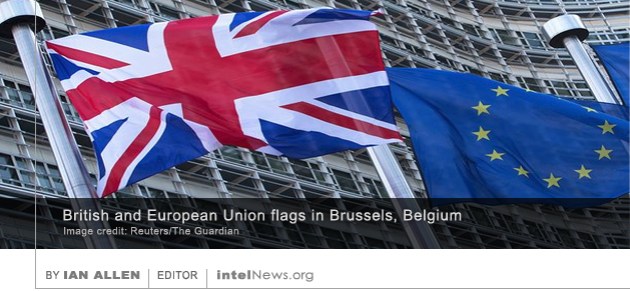 After Thursday’s Brexit vote, European and American security officials have tried to pacify concerns about major disruption of longstanding Western security cooperation arrangements. But experts stress that the international security landscape will be significantly impacted by Britain’s decision to leave the European Union (EU). As early as Thursday night, British defense, military and intelligence officials launched a marathon of phone calls in order to reassure their European and American counterparts that the United Kingdom was not going to retreat from its role in security pacts with Europe and the North Atlantic Treaty Organization (NATO).
On Friday, the office of NATO Director General Jens Stoltenberg issued a statement assuring the public that Britain’s decision to leave the EU would not impact on NATO’s security arrangements. On Sunday, however, a new statement by Stoltenberg appeared to revise his earlier comments. It argued that Britain was “the biggest provider of security in Europe” and that its eventual exit from the EU “matters”, adding that the West’s security situation post-Brexit was “more unpredictable […] than before”. Citing security officials from both sides of the Atlantic, including Stoltenberg, The Wall Street Journal opined on Sunday that Brexit “could have a profound effect on global security”, but stressed that its precise impact remains uncertain. Some officials warned that, in the long run, Britain’s exit from the EU would weaken its military, which is Europe’s most powerful. This could happen through a possible breakup of the country, with Scotland and Northern Ireland splitting from the United Kingdom in reaction to Brexit. Alternatively, Britain’s worsening economic situation could prove detrimental to its overall defense spending.
On Saturday, United States Navy Admiral (ret.) and former NATO commander James Stavridis, argued that NATO will benefit from Brexit, because it will allow the United Kingdom to devote “more resources and manpower to support” NATO’s mission. There will also be a “reduction in the […] battlefield competition between NATO and the EU”, said Adm. Stavridis, which “will likely produce a stronger NATO”. Others, however, disagreed. Citing several current and former officials, The Wall Street Journal warned that Britain’s exit from the EU would result in the loss of a quarter of the EU’s combat power. That could prompt Germany, France, and other EU nations to increase their military spending, in order to advance a more unified defense policy among EU nations. That could bring about a unified EU military headquarters, or even a joint European Army, which NATO has traditionally resisted, as it believes it would duplicate resources and undermine transatlantic cooperation. But with Britain leaving the EU, a staunch pro-NATO voice that strongly objected to the creation of a European Army ceases to exist. That could open the door to the creation of a European Army, say experts.
Last but not least, the UK was a strong player lobbying in favor of instituting EU-wide sanctions against Russia in the wake of the war in eastern Ukraine and Russia’s annexation of Crimea. With London now removed from the decision-making center in Brussels, the voices from EU member states like Spain, Italy and Greece, which argue for abandoning the sanctions against Moscow, are likely to grow louder, said The Wall Street Journal.
► Author: Ian Allen | Date: 27 June 2016 | Permalink
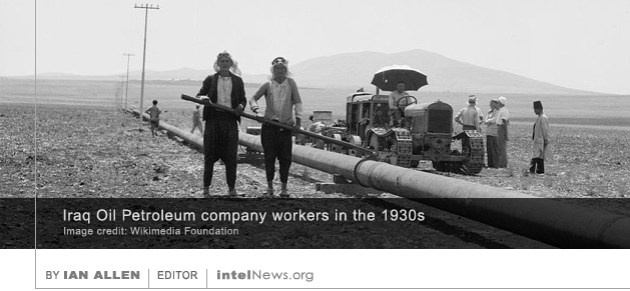 Recently uncovered documents shed further light on an ultra-secret plan, devised by the British and American governments, to destroy oil facilities in the Middle East in the event the region was invaded by Soviet troops. The
  Western experts and intelligence officials are warning that the recent military gains made against the Islamic State of Iraq and Syria (ISIS) are not enough to damage it, and may in fact make the group stronger in the long run. Undoubtedly, the impressive momentum of ISIS, which calls itself the Islamic State, has been curtailed, and the image of invincibility that it once projected is no longer there. Observers estimate that the Sunni militant group has lost nearly a fifth of its territory in Syria, while it is no longer in control of about half of the land it used to occupy in Iraq. As a result of these territorial defeats, ISIS has lost a third of its oil production, which is believed to account for half of its overall revenue. Earlier this month, US President Barack Obama
  Senior United States intelligence officials have filed parole documents arguing that an American Navy analyst, who was recently released from prison after serving a 30-year sentence for spying for Israel, continues to pose a threat to national security. Jonathan Jay Pollard is a former intelligence analyst for the United States Navy, who has was jailed in 1985 for selling American government secrets to Israel. During his trial, the US government successfully argued that Pollard was one of the most damaging spies in American history, having stolen a high volume of classified documents in a relatively short period of time.
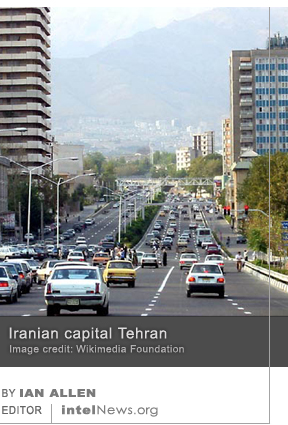 Iranian intelligence officials said on Monday that they foiled “one of the largest terrorist attacks ever planned” against the country, allegedly plotted by Sunni militants aiming to inflict mass casualties during the month of Ramadan. A statement by the Islamic Republic’s Ministry of Intelligence said that the attacks had been planned to take place simultaneously in the capital Tehran and several other Iranian cities. Iranian state-owned news agencies reported that an unspecified number of suspects had been arrested and were under interrogation by the authorities.
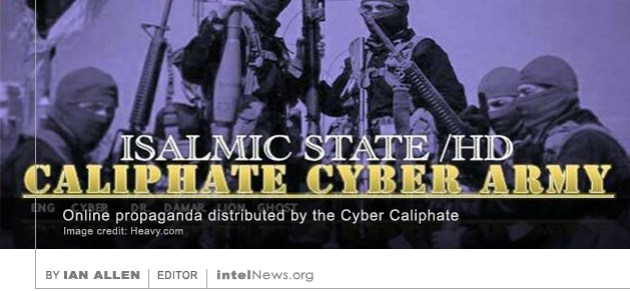 A German intelligence report alleges that the so-called ‘Cyber Caliphate’, the online hacker wing of the Islamic State, is in fact a Russian front, ingeniously conceived to permit Moscow to hack Western targets without retaliation. The group calling itself Cyber Caliphate first appeared in early 2014, purporting to operate as the online wing of the Islamic State of Iraq and Syria (ISIS), later renamed Islamic State. Today the Cyber Caliphate boasts a virtual army of hackers from dozens of countries, who are ostensibly operating as the online arm of the Islamic State. Their known activities include a strong and often concentrated social media presence, and computer hacking, primarily in the form of cyber espionage and cyber sabotage.
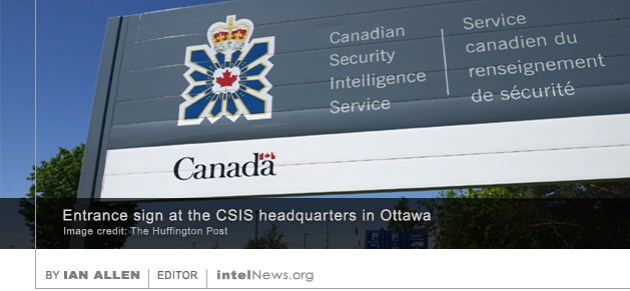 A report by Canada’s primary intelligence agency warns in stark language that Russia is “retooling its military for a fight” and appears to be “mobilizing for war”. The classified report was
 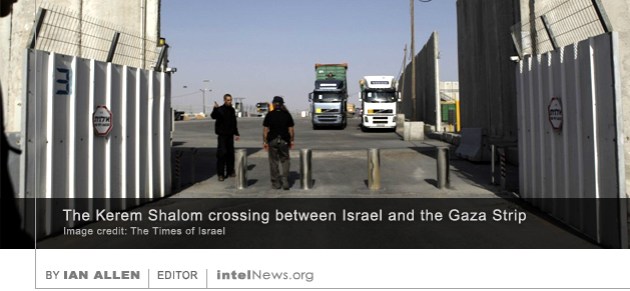 A senior member of the military wing of Hamas, the Palestinian militant group that governs the Gaza Strip, is believed to have defected to Israel. News of the rumored defection first appeared on the website of Al-Hayat al-Jadida, the official newspaper of the Palestinian Authority, which is based in the West Bank. On Tuesday, Al-Hayat said that the man, a member of the Izz ad-Din al-Qassam Brigades, Hamas’ military wing, had not been seen for several days.
 Former directors of the Central Intelligence Agency, the National Security Agency, as well as several 3- and 4-star generals and admirals have launched a new effort to control the sales of guns in the United States. The effort is certain to attract attention after last weekend’s deadly mass shooting in Orlando, Florida. The group, which calls itself Veterans Coalition for Common Sense, is led by former CIA Director David Petraeus, former CIA and NSA Director Michael Hayden, and US Army General (ret.) Stanely McChrystal. The group’s advisory committee includes recognizable figures such as that of Admiral Eric Olson, who led US Special Operations Command from 2007 to 2011 and was the first US Navy SEAL to be appointed to four-star rank. Other advisory committee members include high-ranking veterans from every branch of the US Armed Forces, such as R. Adm. Jamie Barnett, Brig. Gen. Stephen Cheney and Air Force commander Lt. Gen. Norman Seip.
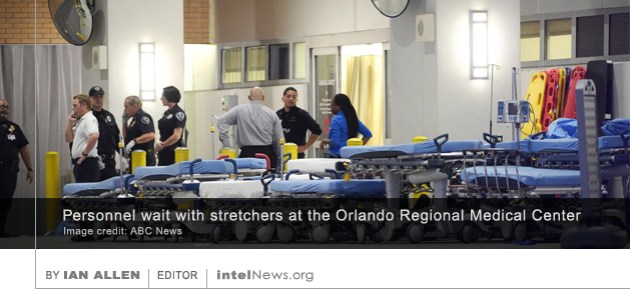 Out of the myriad of questions emerging from Sunday morning’s massacre in Orlando, two are perhaps most pressing. One concerns internal security in the United States; the other relates to the broad strategy of the Islamic State, the militant Sunni Muslim group that claimed responsibility for the bloody attack. The two topics are closely related.
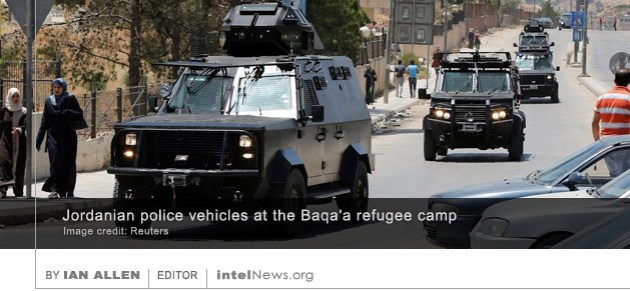 A rare armed attack on a Jordanian intelligence agency facility has left five people dead, including three intelligence officers. The attack took place on Monday at the General Intelligence Department (GID) building in the Baqa’a refugee camp, located just north of the capital Amman. Built in 1968, Baqa’a is the largest of Jordan’s 10 government-sanctioned refugee camps, and houses 100,000 Palestinians —approximately 10 percent of the country’s 1 million-strong Palestinian population.
 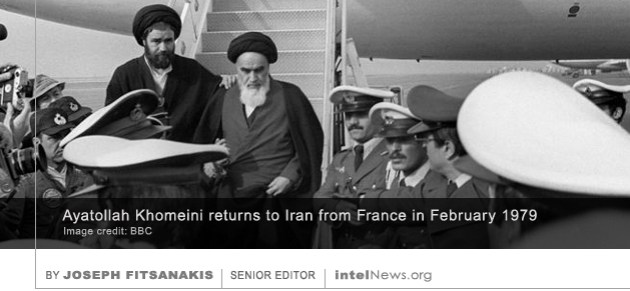 Newly declassified files show that Ayatollah Khomeini, who led Iran after the 1979 Islamic Revolution, had a secret channel of communication with the United States, and even sent a personal letter to US President Jimmy Carter. On January 16, 1979, after nearly a year of street clashes and protests against his leadership, the king of Iran, Mohammad Reza Shah Pahlavi, fled the country for the US. His decision to leave was strongly influenced by his American advisors, who feared that Iran was heading toward a catastrophic civil war. The Shah’s departure did little to calm tensions in the country. Protesters —many of them armed— engaged in daily street battles with members of the police and the military, who remained loyal to Pahlavi. Meanwhile, a national strike had brought the Iranian oil sector to a standstill, thereby threatening to bring about a global energy crisis. Moreover, the country was home to thousands of American military advisors and the Iranian military was almost exclusively funded and supplied by Washington. The Carter administration worried that the weaponry and technical knowledge might fall into the hands of a new, pro-Soviet government in Tehran.
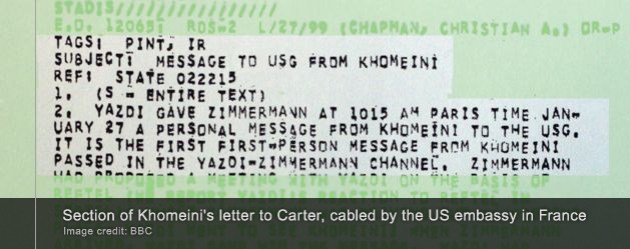 Nine days later, on January 27, Dr. Yazdi gave Zimmerman a letter written by Khomeini and addressed to President Carter. The letter, which addressed Carter in the first person, was cabled to the Department of State from the US embassy in Paris and, according to the BBC, reached the US president. In the letter, Khomeini promises to protect “America’s interests and citizens in Iran” if Washington pressured the Iranian military to stand aside and allow him and his advisers to return to Iran. Khomeini’s fear was that the royalist Iranian military would not allow a new government to take hold in Tehran. But the exiled cleric was aware of America’s influence in Iranian military circles, which at the time were effectively under the command of General Robert Huyser, Deputy Commander of US Forces in Europe, who had been dispatched to Tehran by President Carter. Before answering Khomeini’s letter, the White House sent a draft response to the embassy in Tehran for input and advice. But Khomeini did not wait for Washington’s response. On February 1, he returned to Iran, where he was greeted by millions of people in the streets and welcomed as the next leader of the country. Meanwhile, Washington had already instructed General Huyser to rule out the so-called “option C”, namely a military coup carried out by the Iranian armed forces.
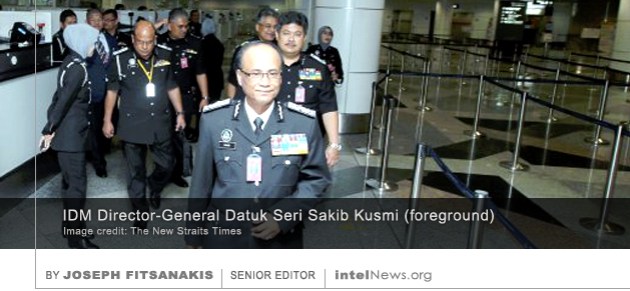 As many as 100 Malaysian immigration officers are implicated in a widening investigation involving the deliberate sabotage of the country’s electronic passport control system. The investigation, which began over three months ago, focuses on a criminal ring of immigration personnel at the Kuala Lumpur International Airport (KLIA), one of Southeast Asia’s major travel hubs.
 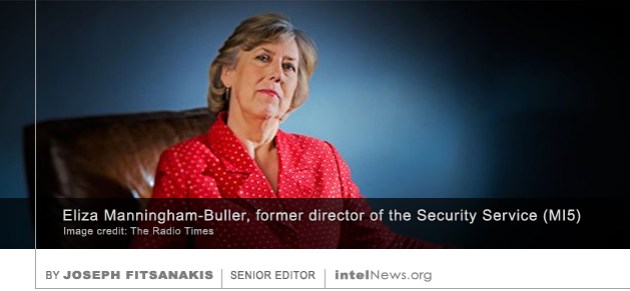 Relations between two of Britain’s most powerful intelligence agencies, MI5 and MI6, suffered a “serious and prolonged breakdown” during the American-led war on terrorism. Citing sources in the British government, the London-based Guardian newspaper said on Tuesday that the two agencies entered an extensive row over Britain’s support for extraordinary rendition. The policy refers to the government-sponsored abduction of individuals and their extrajudicial transfer across national borders. It was widely practiced by the administration of US President George W. Bush, despite its connection to documented cases of torture of terrorism detainees, in countries like Egypt, Libya, and Jordan.







Harassment of diplomats is part of escalating US-Russian ‘gray war’
June 28, 2016 by Ian Allen 3 Comments
According to The Post, some of the harassment can be characterized as routine, and involves Russian intelligence personnel conducting surveillance of American diplomats, taunting them at social events, or bribing local journalists to report negatively on their activities. But these pranks have allegedly become uglier and even criminal after 2014. The Post said that it had read “a series of secret memos” sent to the State Department by US embassies and consulates in Russia and Europe, which suggest that the increasing harassment of American diplomats is connected to the sanctions imposed by the US on Russia after its military intervention in Ukraine. In some instances, Russian intelligence operatives broke into the homes of American diplomats at night and rearranged the furniture, or turned on all the lights and electronic equipment before leaving. In another case, a US diplomat’s children were followed to school, while another’s car tires were slashed repeatedly, said the paper.
The State Department’s press secretary John Kirby told The Post that incidents of overt harassment of US diplomatic personnel by Russian government employees had indeed increased. Norm Eisen, America’s former ambassador to the Czech Republic, told the paper that the intimidation was part of “the gray war” between Washington and Moscow, which has escalated following Russia’s intervention in the Ukraine.
A statement from the Russian embassy in Washington denied that the Russian government was behind the alleged incidents. But it went on to state: “In diplomatic practice there is always the principle of reciprocity and, indeed, for the last couple of years our diplomatic staff in the United States has been facing certain problems”. This statement can be seen to imply that Russia is responding to instances of intimidation of its diplomats by US authorities. The statement added: “The deterioration of U.S.-Russia relations […] was not caused by us, but rather by the current [US] administration’s policy of sanctions and attempts to isolate Russia”. The Post said that US Secretary of State John Kerry raised the issued directly with Russian President Vladimir Putin during his visit to Moscow in March, but that the harassment has continued. US President Barack Obama is apparently aware of the situation, but has ordered US intelligence agencies “not to respond with similar measures against Russian diplomats”, said the paper.
► Author: Ian Allen | Date: 26 1 June 2016 | Permalink
Filed under Expert news and commentary on intelligence, espionage, spies and spying Tagged with diplomacy, John Kirby, News, Norm Eisen, Russia, Russian embassy in the US, United States, US embassy in Russia